

Chile stretches over 2,600 miles across South America, from the otherworldly sand dunes of the Atacama Desert in the north to the stunning fjords of Patagonia in the south. There’s a LOT to see and do in this dynamic country, but you can pack in a ton of adventures, even if you just have a short period of time. Here’s the ultimate 10 day Chile itinerary to make the most of your time in this beautiful corner of our planet.

This post may contain affiliate links. If you make a purchase through them, we may receive a small commission, for which we are extremely grateful, at no extra cost to you.
Chile itinerary
Day 1: Santiago
Most travelers’ first stop in Chile is its biggest and capital city, Santiago, which also happens to be home to the country’s largest airport, Arturo Merino Benítez International Airport. The airport is just a 20 minute Uber ride from downtown Santiago.
Go on a walking tour of Santiago
My favorite thing to do in a new city is to go on a walking tour of its downtown, where a local can share more about its history and culture. Chile has a rich history, with a blend of Indigenous roots, Spanish colonization, and its geographical isolation from the rest of South America, which, in turn, has informed the cultural identity of Santiago.

There are plenty of affordable walking tours, like this option, where you’ll get to explore some of the most important sites in the city, including the Plaza de Armes, the Museum of Pre-Columbian Art, and Cerro Santa Lucia.
Get empanadas for lunch
Empanadas may have originated in Argentina, but they’re certainly beloved in Chile as well.
Head over to Emporio Zunino, an empanada house that dates all the way back to the 1930s. Get an empanada stuffed with gooey Andean cheese and some fresh squeezed fruit juice to wash it down.
Visit Cerro San Cristobal
Santiago is a beautiful city, with an incredibly diverse array of architectural designs that are surrounded by the snow-capped Andes mountains.

Climb up to the top of Cerro San Cristobal, a hillside that towers hundreds of feet above Santiago below. From here, you’ll get stunning views of the surrounding city and the Andes Mountains in the distance. At the summit, there’s also a small chapel, Santuario de la Inmaculada Concepción, with a 72 foot tall statue, Blessed Virgin Mary, on top of it.
If you’re unable to climb the almost 800 feet to the summit, you can alternatively take the teleférico (i.e., an aerial tramway) from this station to the top. I’d also suggest taking the teleférico on the way down—the views along the way are fantastic!
Explore Barrio Bellavista
End your afternoon by moseying around Barrio Bellavista, a bohemian neighborhood that’s home to colorful murals and artsy boutiques.
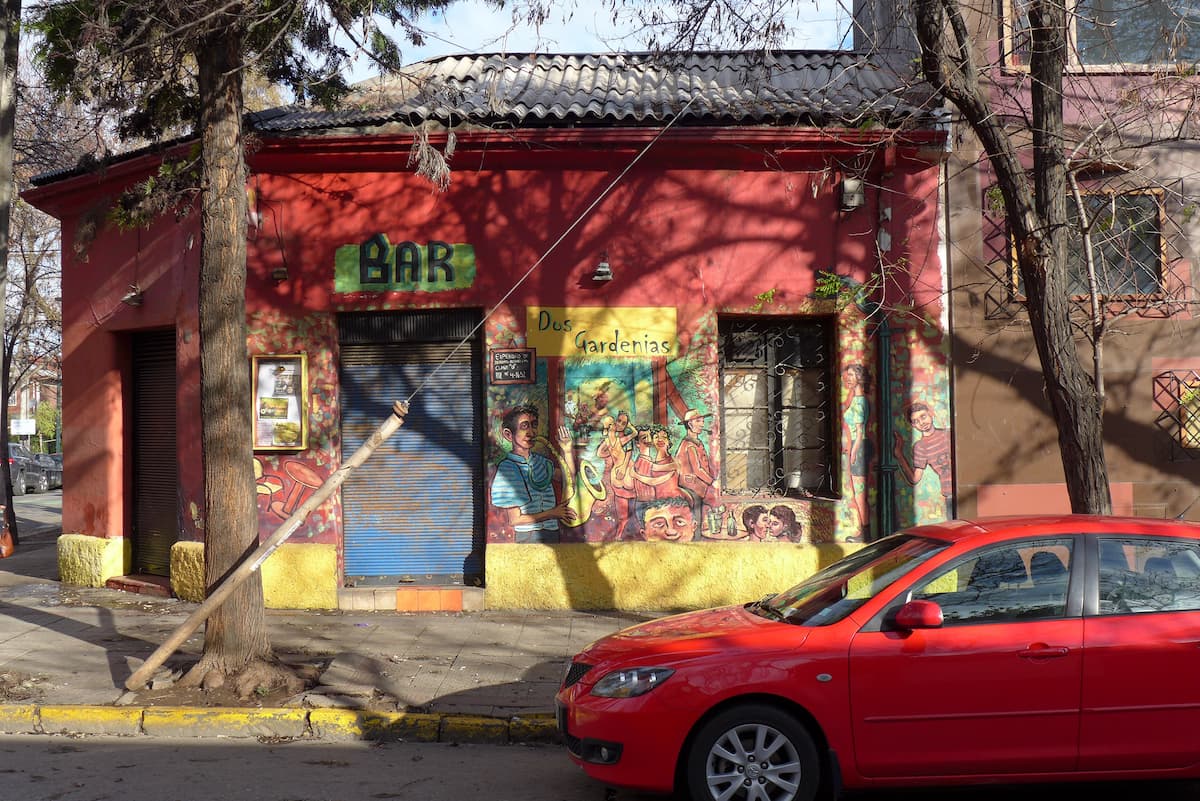
If you’re interested in literature, the beloved poet and Nobel laureate, Pablo Neruda, has a home here that now serves as a museum, with an excellent audioguide (included in the admission price!) that delves into his unique life and his impact on the country. Otherwise, mosey around Patio Bellavista, an open air shopping area with trendy eateries, upscale souvenir shops, and colorful street art.
Pssst… certain parts of Santiago are unsafe, especially at night. Bellavista is generally an okay neighborhood during the day, but can get pretty sketchy once the sun goes down. Accordingly, I wouldn’t recommend hanging out in this neighborhood past 6 PM and would suggest getting an Uber to your next destination.
Grab dinner in Barrio Italia
Barrio Italia is one of the most charming neighborhoods in Santiago, with a quirky mix of bohemian boutiques, thrift stores, and lively cafes. It also is one of the safest neighborhoods in the city, so it’s a great place to hang out for dinner and drinks.
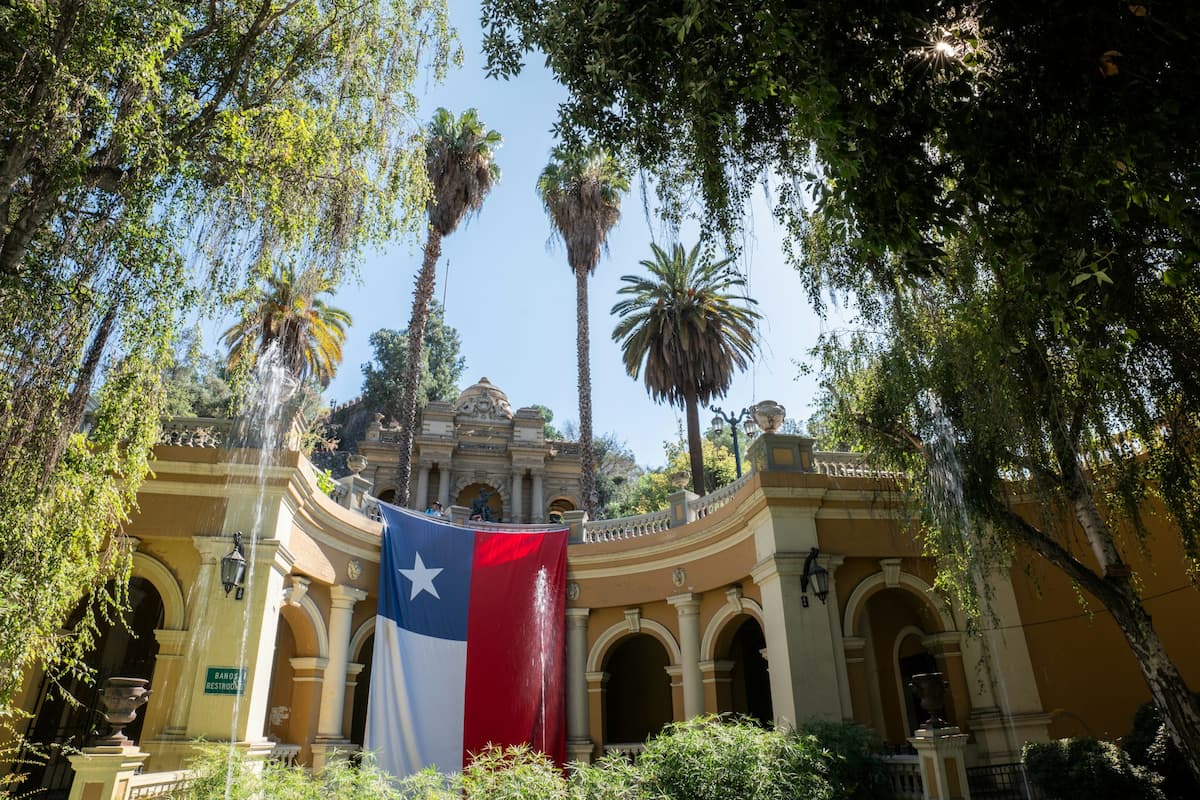
For dinner, pop into La Argentina Pizzería, which dates back to the 1930s and dishes up arguably the best pizza in Santiago (would you expect anything less from Barrio Italia?). Cocina 1305 is another great option that serves creative takes on traditional Chilean cuisine—don’t miss the lucuma merengue for dessert!
If you’re still up for a nightcap, Bar Cerros de Chena offers a ton of different Chilean craft beer and pisco varieties to try, as well as live music most weekends.
Where to stay in Santiago
I’d suggest staying in either Barrio Italia or its neighbor, Providencia, given that they’re typically quite safe in the evenings and early mornings and for their plentiful amenities for visitors, like restaurants, bars, and hotels.
For example, Hotel Maison Italia 1029 is an upscale boutique hotel, housed in a historic building, in the heart of Barrio Italia. There’s lots of thoughtful perks included in your stay, like a welcome drink on the top floor or a complimentary breakfast every morning in the airy cafe on its ground floor (the pineapple jam here is to DIE for!).

For something a bit more budget-friendly, consider the Park Plaza Bonaparte Boutique in Providencia, another boutique hotel, tucked away in a quiet, leafy neighborhood. The hotel offers everything you need during your stay in Santiago, from an outdoor swimming pool and a lovely terrace to in-room coffee and an onsite restaurant.
Day 2: Day trip to Valparaiso
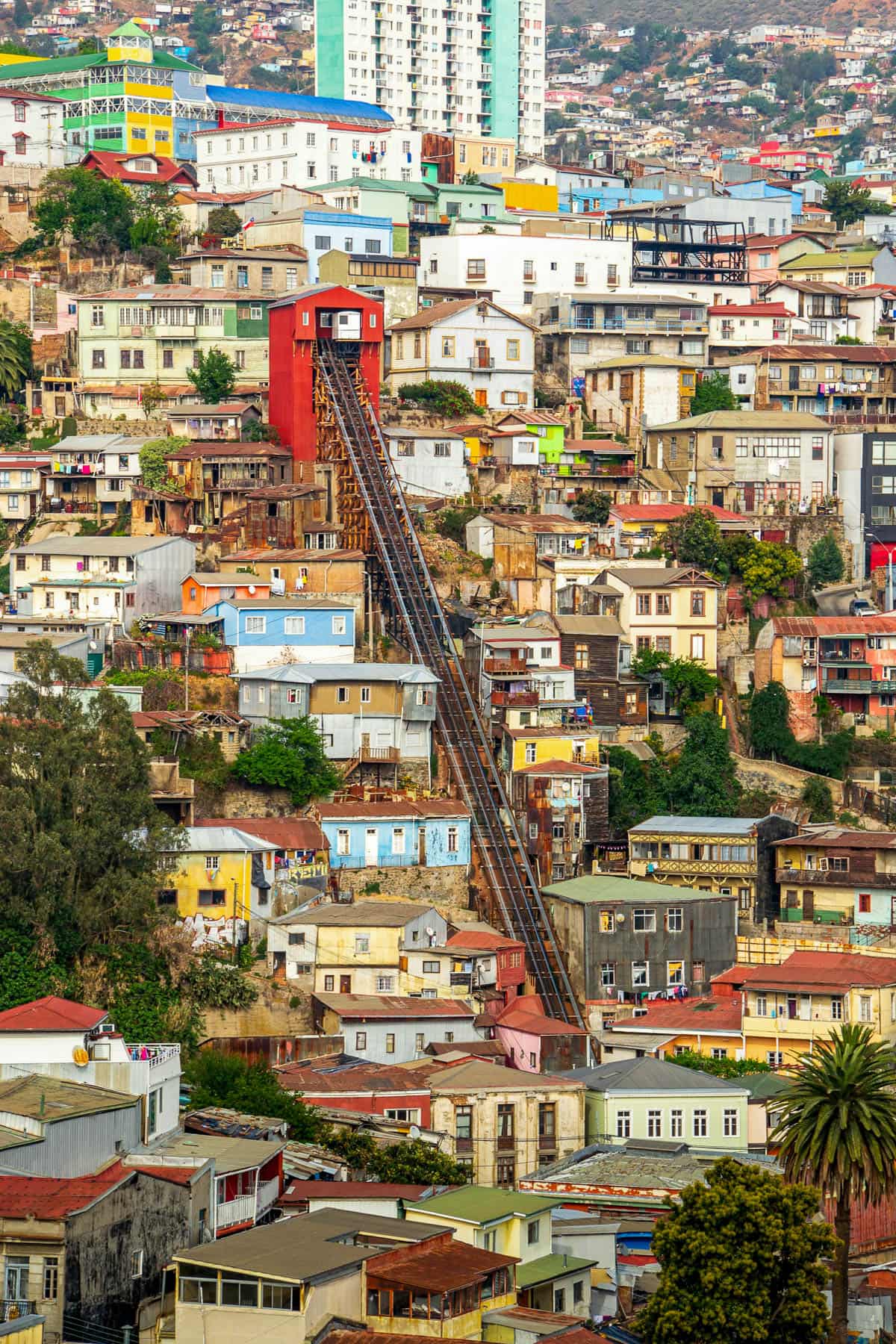
While Santiago is a huge bustling metropolis, I actually think the port city of Valparaiso, located an hour and a half east of the capital, is a much more interesting stop for most visitors. With colorful buildings, a historic seaport that’s recognized as a UNESCO World Heritage Site, and a vibrant art scene, Valparaiso is frequently called the San Francisco of Chile.
You have a few options for taking a day trip from Santiago to Valparaiso.
Go with a tour
If you’re nervous about traveling around Chile by yourself or not great with Spanish, you might want to consider going with a group tour. Unfortunately, there have been reports of increased crime targeting tourists in Valparaiso and your risk of something negative happening vastly decreases when you’re traveling with a local guide, who knows what to look out for. Plus, it’ll be MUCH easier to stop at one of Chile’s celebrated wineries in the nearby Casablanca Valley with a tour—did you know that Chile is the largest producer of wine in Latin America and the fifth largest producer of wine in the world?!
There’s plenty of day tours from Santiago to Valparaiso.

For example, on this group tour option, you’ll get to enjoy some beach time and seaside lunch at Viña del Mar, take a walking tour through the heart of Valparaiso, and end the day at a winery (typically, with VERY heavy pours!). Alternatively, on this private option, you’ll get to stroll around the streets of the historic seaport with your guide and can decide whether you want to add on sites, like Pablo Nurada’s seaside home or a Casablanca Valley winery.
On your own
If you’d prefer to go on your own, you can take a two hour bus from Santiago to Valparaiso. The area directly around the bus terminal is extremely dodgy, so I’d suggest only having a small amount of cash on you and grabbing an Uber here to the popular tourist areas of Cerro Concepción or Cerro Alegre neighborhoods.
Both of these neighborhoods are known for their cobblestone streets, lined with colorfully painted houses; trendy restaurants; colorful murals; and stunning views of the nearby ocean.
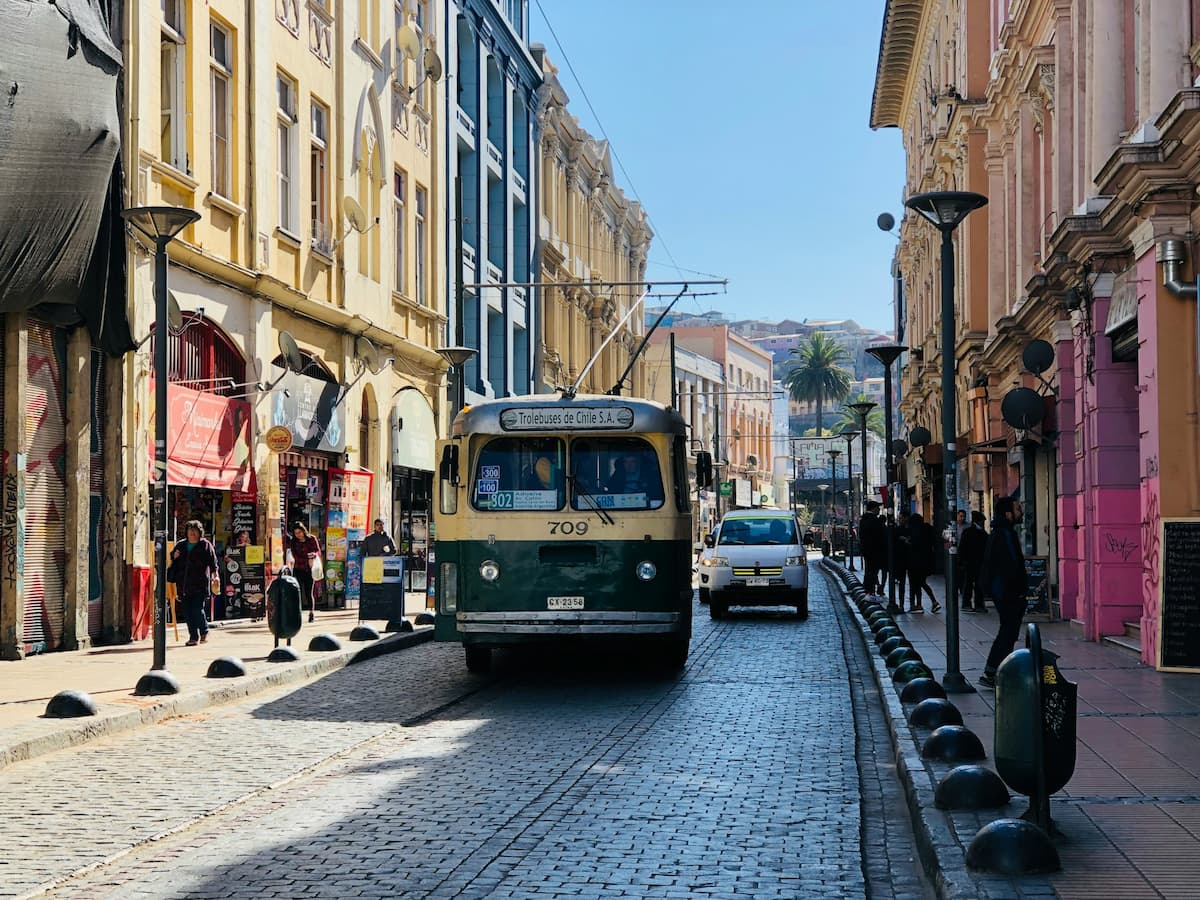
Valparaiso is essentially built into a series of hills, overlooking the Pacific (I told you it has strong San Francisco vibes!), so be prepared to do some SERIOUS walking here. Luckily, though, both neighborhoods have funiculars, dating back to the late 1800s, that were integrated into the neighborhood to make it easier for locals that lived high on the hillsides. Today, you can still ride in these century-old cars that clatter up and down the neighborhoods’ steep hillsides, with the views of the city and sea below getting better with each foot that you climb.
Beyond just enjoying the vibrant buildings and beautiful views of these neighborhoods, there’s also a number of museums that you can enjoy here, including The National Naval and Maritime Museum, The Natural History Museum (admission here is free!), and The Valparaiso Fine Arts Museum.
Additionally, if you missed Pablo Neruda’s house in Santiago, you can explore his La Sebastiana home here, which has been declared a National Historic Monument of Chile. Touring the home is like getting a small glimpse into Neruda’s creative mind, thanks to its playful decor, quirky layout, and breathtaking views of the city’s hillsides and the Pacific Ocean.
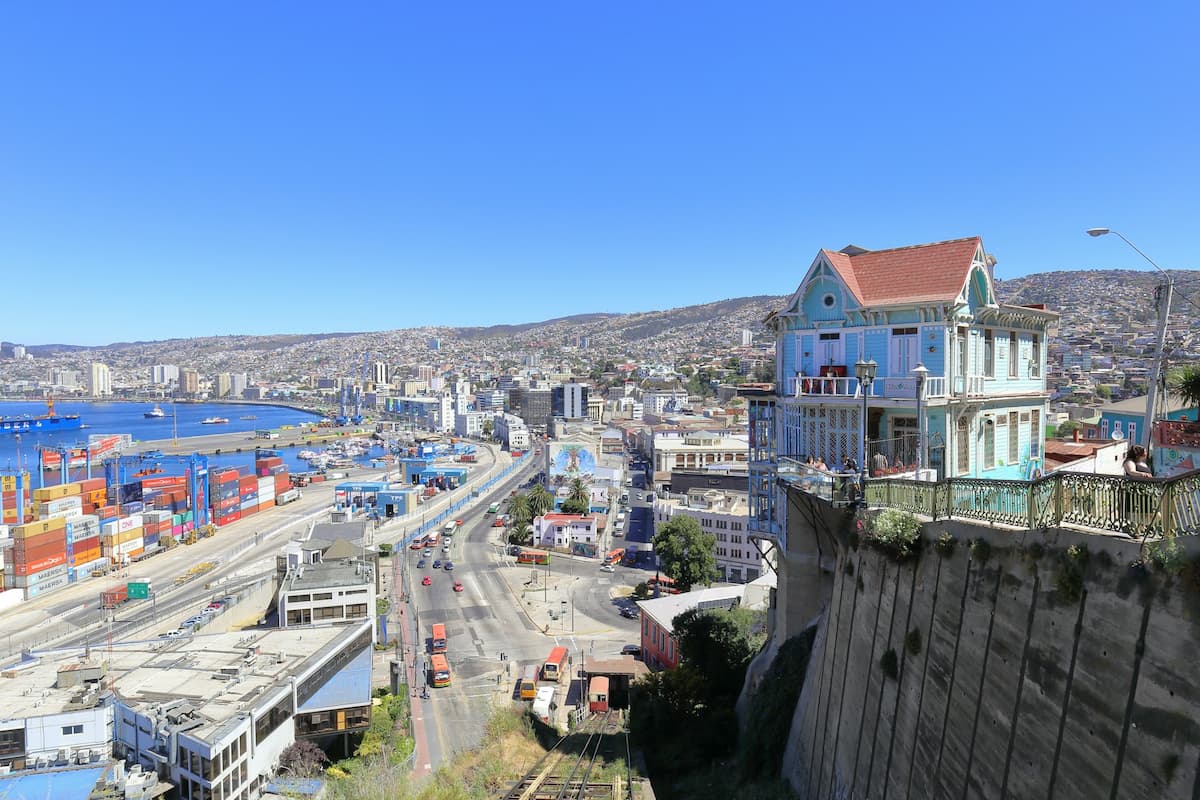
If you want to grab lunch in Valparaiso, I’d suggest trying Restaurant La Concepcion, for great ceviche and views of the ocean, or Rosmarino, creative takes on Chilean cuisine that’s served in a century-old house.
Due to safety concerns, I would recommend heading back to the bus terminal no later than 5 PM to catch the bus back to Santiago.
Dinner in Santiago
Back in Santiago, I’d suggest getting dinner near your hotel.

If you’re staying in the Providencia neighborhood, I’d suggest trying Chile’s ridiculously massive sandwiches at Fuente Alemana, a local institution that’s been serving monstrosities since 1954. Alternatively, for the Barrio Italia neighborhood, try Cachapas Don 70, a Venezuelan restaurant that specializes in cachapas, a savory corn pancake that’s stuffed with cheese.
Day 3: Travel to the Atacama Desert
Fly to Calama
Time to move on from city life! Grab breakfast at your hotel and then head to the airport to catch a two hour flight to El Loa Airport in Calama, the best airport to fly to explore the Atacama Desert.
Head to San Pedro de Atacama
The next few days of your Chile itinerary will be dedicated to exploring the gorgeous Atacama Desert, which is known for its massive volcanoes, dramatic sand dunes, and otherworldly rock formations. In order to explore the desert, you’ll want to base yourself in the small town of San Pedro de Atacama, located about an hour and a half drive from Calama.
Generally, I’d recommend renting a car while you’re here, as there’s no public transit to get around and the attractions are spread out over hundreds of miles.

However, the roads here range from not very well-maintained to absolutely horrific and the conditions in the Atacama Desert, which range from dry and scorching during the day to freezing cold at night, could potentially be very dangerous if you have car trouble here.
Accordingly, if you’re not confident in changing a tire or are otherwise nervous about driving on not great roads, you might want to consider just relying on tours to get around (I’ll provide links to tour options to all of the sites we’ll be hitting over the next few days!). For example, you can book a shared roundtrip transfer from the airport in Calama to San Pedro de Atacama.
Lunch in San Pedro de Atacama
After your busy morning of flying and driving, fuel up in town.

My husband, Justin, and I spent a week in San Pedro de Atacama and tried as many restaurants as we could. Our favorite places are Emporio Andino, with tasty empanadas and freshly baked pastries, and Rincon de Sal, which has REALLY tasty burgers and fries.
Spend the afternoon exploring Valle de la Luna and Valle de Marte
There’s tons of things to do in San Pedro de Atacama and the surrounding area, but most of them are at least an hour’s drive from town.
After a busy morning, I’d suggest hitting some of the attractions that are right outside of town, including Valle de la Luna, a GORGEOUS ecological preserve with a couple of hiking trails and viewpoints, and Valle de Martes, which is known for its massive sand dunes that are popular for sandboarding. If you’re up for it, there are several outfitters in town where you can rent sand boards.

Be sure to hit sunset at Mirador de Kari, a viewpoint that overlooks Valle de la Luna. It was one of the best sunset spots that we hit during our seven month stint exploring South America!
Dinner in San Pedro
For dinner, I’d suggest heading to Pizzería El Charrúa, a cozy spot that dishes up delicious thin-crust pizzas (we had a great Margherita pizza here!) or Las Delicias de Carmen for traditional Chilean dishes.

Afterwards, it’s worth moseying around San Pedro for a bit—there’s tons of bars with two-for-one cocktail specials, so grab a pisco sour to end the day.
Where to stay in San Pedro de Atacama
If you’re on a budget, Hostal Mama Tierra offers a mix of private and shared rooms in a big rustic home, full of colorful blankets and hammocks and laidback vibes. The complimentary breakfast here is incredible (pancakes! scrambled eggs! bread! muesli!) and they’ll even pack you one to go if you’re leaving early on a tour.

If a hostel is not your vibe, Hotel Desertica offers a much more upscale experience, with each of the suites housed in its own hut, complete with a super comfortable bed and enormous shower. Plus, there’s even a lovely little pool to cool off in if you’re visiting during the scorching summer months.
Day 4: Explore around the Los Flamencos National Reserve in the Atacama Desert
Below, we’re outlining how you should spend your day if you have a rental car. If you opted to not get a rental car, you can stop at all the same stops on this tour or this small group option. With both options, you’ll leave early in the morning and be back in San Pedro for dinnertime.
Explore Piedras Rojas and Lagunas Altiplánicas
This morning, we’re going to be heading two hours southeast of San Pedro to explore some of the Atacama Desert’s most otherworldly landscape, including Piedras Rojas, an emerald green lake surrounded by bulbous red boulders; and Lagunas Altiplánicas, two salt lagoons that serve as home to flamingos and vicuñas.

Visiting Piedras Rojas and Lagunas Miscanti and Miñiques, which are both overseen by the itty bitty town of Socaire, is a tiny bit confusing.
Prior to your visit, you need to purchase a timed entry ticket on this website operated by the town. It’s a bit confusing, but, assuming you want to see both sites, you need to purchase a combination ticket that specifies which of the attractions you’ll stop at first (I’d recommend selecting the following option: “First the southern hot water salt flats ‘Piedras Rojas’ + Second, the Miscanti and Miniques Lagoons”).
On the day of your visit, you get to this office in Socaire an hour before your timed entry ticket is for (e.g., if your timed entry ticket is for 8:30 AM, you need to get to the office no later than 7:30 AM). Here, you’ll have to give the attendant some information, like your license plate number and they’ll give you your ticket, which you’ll have to show to attendants in the park.

If you purchased the ticket option I recommended above, drive to Piedras Rojas first, which is about an hour south of the ticket office. There’s a short loop trail here, alongside a salt lagoon, with milky green waters that’s rimmed with massive red boulders. If you visit on a calm day, you can see a perfect reflection of the surrounding mountains in the lake’s waters.
Afterwards, drive 45 minutes north to Lagunas Altiplánicas, two salt lagoons sitting at the base of the Cerro Miñiques volcano. There is a walking path along the lakes’ shores, where you can take in views of their deep blue waters and, most importantly, the wildlife that lives here. When we visited, there were several flamingoes feeding in the lake and saw DOZENS of vicuñas grazing along its shoreline.

Get lunch in Socaire
To be honest, it’s kind of slim pickings with respect to restaurants in the Atacama Desert, but, since you need to drive back towards San Pedro de Atacama, I’d suggest making the hour drive back to the town of Socaire and stopping for lunch, like at Cocineria San Santiago or Cocineria Comunidad De Socaire.
Both of these places serve pretty simple Chilean food, but it’ll get the job done!
See flamingoes at Laguna Chaxa
Laguna Chaxa is a brackish lagoon that’s located in the Salar de Atacama, the largest salt flat in Chile. The lake is known for a few things—its waters’ beautiful reflections of the surrounding mountains on a calm day and the three species of flamingoes that live here.

There’s a nice walking path for you to mosey around the lake and take photos of the flamingoes from different angles and a small visitor center to learn more about these quirky birds and the surrounding environment.
Pssst… on your drive back to San Pedro de Atacama from here, be sure to stop at this massive sign for “Tropico de Capricornio” or the Tropic of Capricorn. If you need to brush up on your old time-y navigational terms, the Tropic of Capricorn is one of five major latitudinal lines on Earth and demarcates the southernmost point on the planet where the sun is directly overhead at local noon.
Have dinner in San Pedro de Atacama
I’d suggest eating at one of the restaurants suggested above that you haven’t hit yet.
Go stargazing
Due to its cloudless skies, limited light pollution, and high elevation, the Atacama Desert is known for having some of the most beautiful night skies on the planet.

If you have a rental car, you can drive a bit outside of town—for example, to the Mirador San Pedro de Atacama—and watch the stars twinkle to life. Alternatively, if you’d rather learn more about constellations and get to see some of the celestial bodies above through a telescope, you can join a tour, like this one (which includes a glass of wine under the stars!).
Day 5: Enjoying geysers and hot springs in the Atacama Desert
Explore the El Tatio Geysers for sunrise
The Atacama Desert is home to the El Tatio Geysers, which have a bunch of impressive titles, including being home to the largest geyser field in the Southern Hemisphere AND the third largest on Earth, plus the highest altitude geyser field on the planet.
Even though El Tatio is very geothermally active, the best time to actually see its steam is in the early morning, when the day is still cool and the light is soft. Accordingly, it’s become the most popular spots to include on your Atacama Desert itinerary for watching sunrise over the geysers, spewing boiling water and steam.

Be sure to bring lots of warm layers though—the geyser field sits at a whopping 4,320 meters above sea level, so it gets FROSTY here in the early morning.
This is the only place in the Atacama Desert that I’d caution against driving on your own, even if you have a rental car. The road here is really poorly maintained, with ENORMOUS potholes along the way, which could be really dangerous when you’re driving in the dark of the wee hours of the morning. Justin and I live in our RV fulltime and are accustomed to driving down pretty terrible National Forest roads, but even we decided to turn around here (while we were driving in broad daylight!), due to the sketchy conditions!
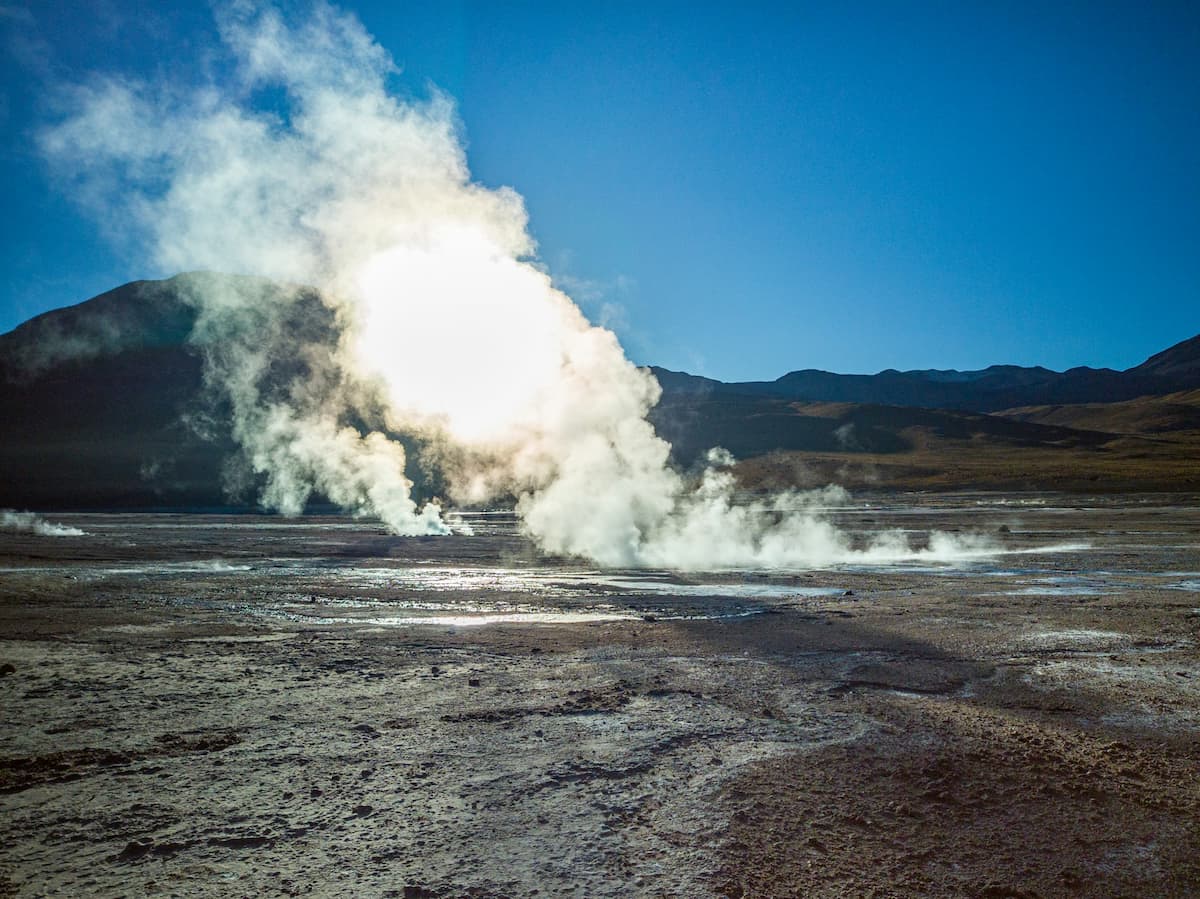
Instead, you can go with a tour and grab a couple of extra hours of sleep during the drive there, like this option that includes a hearty breakfast and a stop at a lagoon, known for its flamingoes.
If you do decide to drive there on your own, please be sure to double check that you have a spare tire and that you know how to change it!
Spend the afternoon soaking in the Puritama Hot Springs
Like any good geothermal hotspot, the Atacama Desert is home to hot springs, including Puritama. These springs are absolutely gorgeous—a series of crystal clear pools, feeding into one another by waterfalls, surrounded by the arid desert.
The springs are open for two time slots every day—either 9:30 AM to 1:30 PM or 2:30 PM to 6 PM every day—so I’d suggest coming in the afternoon. Be sure to buy tickets online ahead of time—they often sell out in advance!
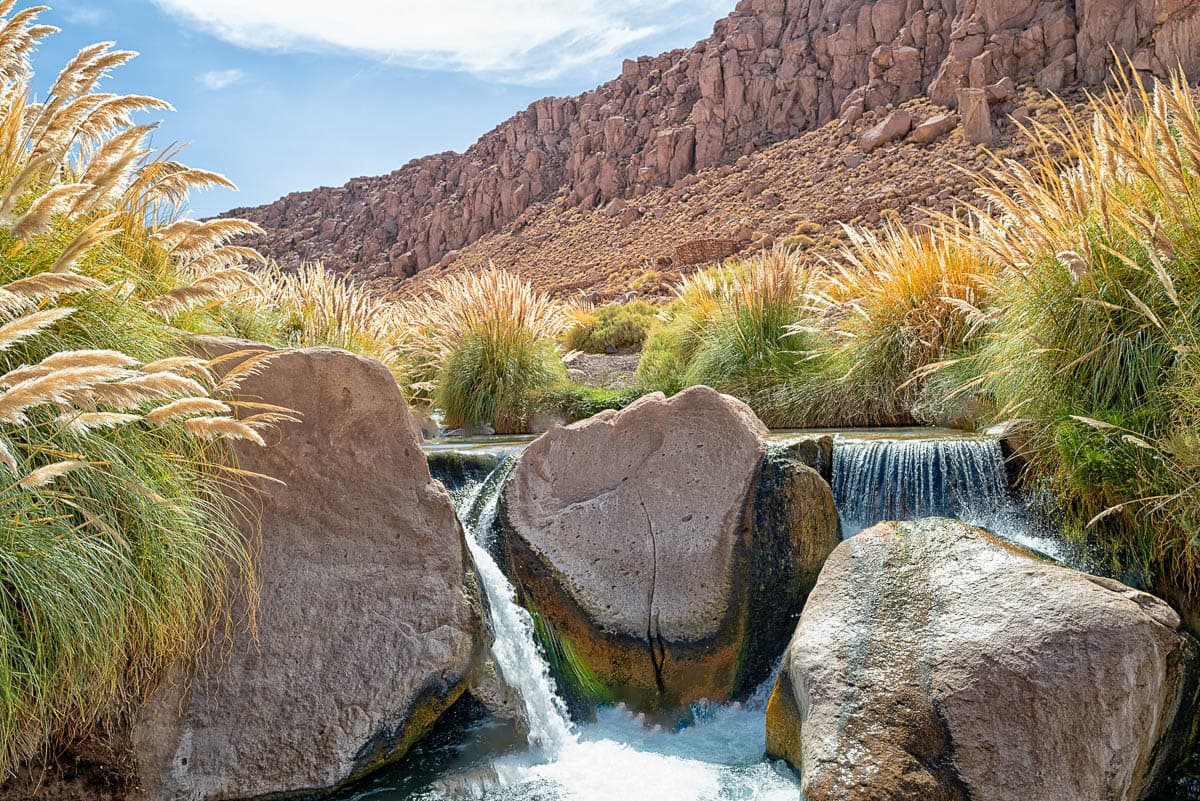
If you decide to brave the drive to El Tatio on your own, the hot springs are located en route back to San Pedro. Otherwise, they’re accessible via a 35 minute drive north of town (the portion of road that leads here is maintained well enough for most slow and careful drivers) or with this afternoon transfer.
Enjoy dinner back in San Pedro de Atacama
End your time in the Atacama Desert back in San Pedro de Atacama with a nice dinner. We loved Adobe, an upscale restaurant that serves creative takes on Chilean cuisine and often has live music. Don’t miss the sopapillas and the mushroom ceviche!
IMPORTANT NOTE: This Chile itinerary is designed for travelers that are visiting during South America's spring through fall seasons—i.e., October through April. If you visit outside of these months, I would recommend skipping  Punta Arenas or anywhere in Chilean Patagonia, given the cold and snowy weather; inaccessible hiking trails; and seasonal closures.

Instead, you might want to consider visiting Rapa Nui (otherwise known as Easter Island) or the pisco and wine producers of La Serena and the Elqui Valley.
Day 6: Travel day to Punta Arenas
Fly to Punta Arenas
Drive back to the El Loa Airport in Calama and catch a flight down to the port city of Punta Arenas, which will be your springboard to explore Chilean Patagonia.

Since both of these airports are on the smaller side, there’s usually only a flight or two per day that, with connections, take less than 12 hours, so I’d recommend booking ahead to get the best flight available!
Explore Punta Arenas
Today is most likely going to be pretty much totally dedicated to traveling from the northern part of Chile down to its southern tip.

But, if you happen to get to Punta Arenas on the earlier side, here’s a few things you could consider doing around town:
- Sign up for the afternoon tour of Austral Brewery, which is the southernmost brewery in the world!
- Hit up one of the museums, like Museo de Historia Natural Río Seco to learn more about the flora, fauna, and geology of Chilean Patagonia, or the Museum of Remembrance, which highlights the colonial history of this region
- Get a birds eye view over the city at Mirador Del Estrecho, which takes about an hour and a half to walk to from downtown Punta Arenas. On a clear day, you can see all the way down the Strait of Magellan to Tierra del Fuego, otherwise known as the “End of the World”!
Dinner in Punta Arenas
Punta Arenas is usually used as a gateway to explore Patagonia and not necessarily a destination in and of itself. But the city definitely punches above its weight with respect to its food scene with seriously good restaurants, ranging from lowkey empanada stands to more upscale eateries.

If you’re looking for something quick and easy after a long day of travel, Em Panaderia has some of the best empanadas in the country or, if you’re in the mood for a sit down meal, Luan’s Restaurant is a family run joint with authentic Chilean dishes, friendly service, and a quirky atmosphere (don’t miss the calafate sour!).
Where to stay in Punta Arenas
If you’re on a budget, Hostal Victoria, which is more of a guesthouse than a hostel, offers private bedrooms, some of which come with shared or private bathrooms. This guesthouse is cozy, with nautically themed decorations, and there’s a simple, yet delicious complimentary breakfast every morning.
If you’re looking for a more upscale stay, La Yegua Loca is SUCH a cool boutique hotel housed in a 1920s mansion, with quirky rooms that are themed around Patagonia’s ranching history. The staff here go above and beyond to make you feel comfortable—it seriously feels like you’re staying in a friend’s home!
Day 7: Isla Magdalena and travel to Puerto Natales
Visit penguins at Isla Magdalena
While most visitors usually just kind of skip over Punta Arenas to head to the epic mountains and majestic fjords of Patagonia, there’s something REALLY cool near the city that’s worth adding to your Chile itinerary—penguins!
There’s an island near Punta Arenas, Isla Magdalena, that has one of the largest penguin colonies in Chile, with up to 120,000 Magellanic penguins. The penguins come here to breed and raise their chicks, so they’re only found here during Chilean summer, from October through March.

So join a tour, like this option, where you can walk on Isla Magdalena with these adorable birds, plus some of the other incredible wildlife that call this area home, like the 1,500 sea lions that live on the neighboring Isla Marta and unique Antarctic seabirds, like imperial cormorant, albatrosses, and petrol.
If you’re SUPER into seeing penguins, you can alternatively visit the only king penguin colony outside of Antarctica from Punta Arenas, like on this tour, where you’ll cross the Strait of Magellan to an island in Tierra del Fuego. Just be prepared for a VERY long day (between 12-14 hours) of traveling to the island, spending only about an hour or so with the penguins, and getting back to Punta Arenas around 9 PM.
Have lunch in Punta Arenas
Most Isla Magdalena tours get back to Punta Arenas in time for lunch. Some of our favorite places in Punta Arenas include:
- La Yegua Loca for creative takes on Chilean cuisine (the pistachio lava cake is NOT to be missed!)
- La Luna, which has an eclectic vibe, beer that’s brewed in house, and impressive portions, and
- Kiosko Roca, a Punta Arenas institution that dates back to 1932 and serves up banana milkshakes and simple Chilean sandwiches.

Head to Puerto Natales
Penguins are cool and all, but most travelers come to Patagonia to see its dramatic mountains and alpine lakes. And, to do that, you should head to the small town of Puerto Natales, which is the gateway to Torres del Paine National Park, a must-see on any Patagonia itinerary.
There’s usually a bus to Puerto Natales, a little over three hours to the north of Punta Arenas, that departs every hour or so, from around 7 AM to 9 PM.
Go on a tour of Last Hope Distillery
Puerto Natales is home to the Last Hope Distillery, which produces hand-crafted gin using local ingredients, like calafate (a unique berry that only grows in Patagonia).
If you can swing it, try to get here at 5:30 PM, where there’s a free distillery tour. When we visited, the owner himself—who was a bit of a goofball—showed us around on one of the most engaging and interactive distillery tours we’ve been on.
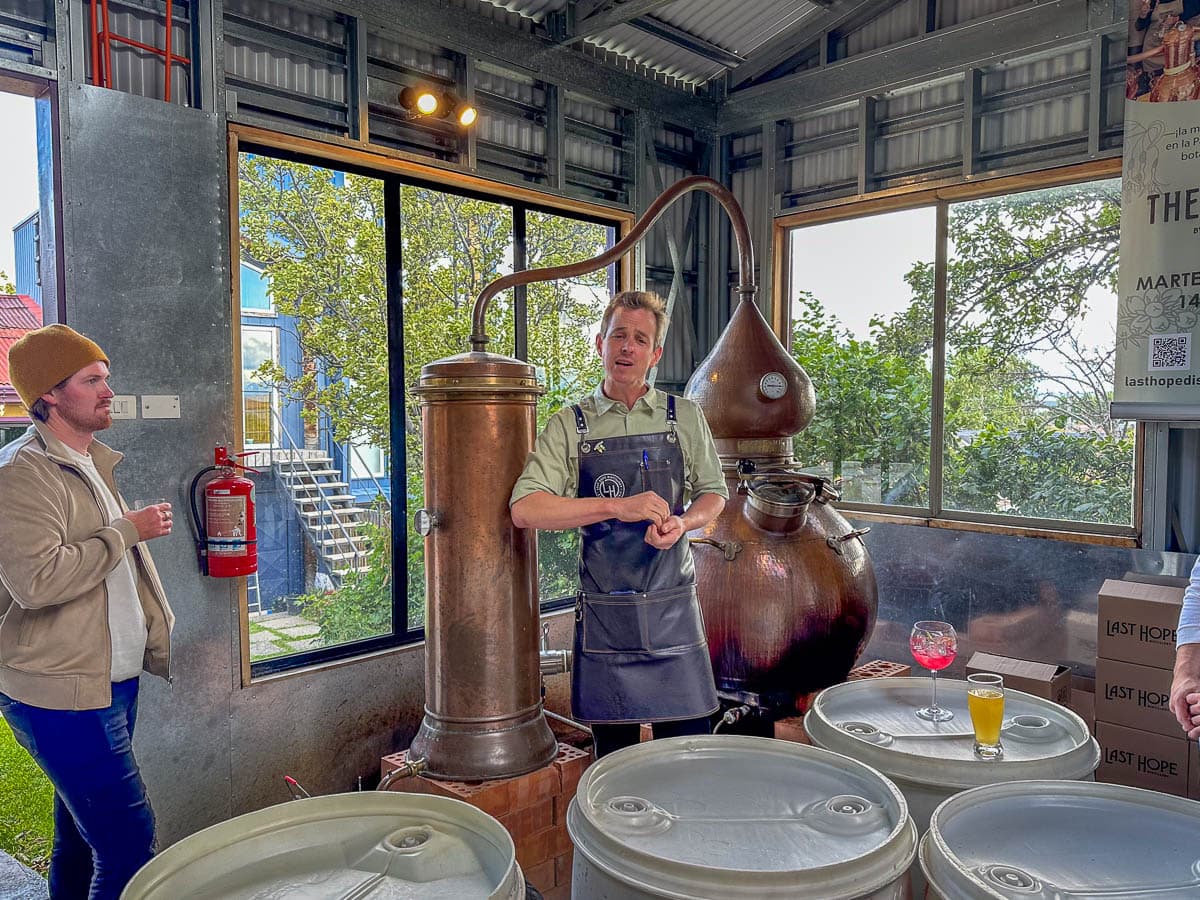
If not, they still serve up tasty cocktails and a buzzy bar to relax in.
Dinner in Puerto Natales
The town basically serves as a base camp for Torres del Paine National Park and, accordingly, has kind of a laidback, outdoorsy kind of vibe. Accordingly, there’s plenty of restaurants that have a friendly, relaxed atmosphere, like Cafe Artimaña, which brews its own beer, or La Guanaca for wood-fired pizzas.
Pssst… before you head to bed for the night, be sure to pick up any last minute gear, like trekking poles or a tent, at the outfitters in Puerto Natales. Rental Natales is a solid outfitter with decent gear that you can either rent online or in person and stays open until 10 PM daily.
Where to stay in Puerto Natales
If you’re on a budget, Hostal Baquedano is a family-owned and operated property that offers rooms with private bathrooms, an excellent complimentary breakfast, and any luggage storage you may need while you’re in Torres del Paine.

For something a bit more bougie, Hotel Simple Patagonia sits on the shores of the Última Esperanza Sound, with stunning views over the water, while still being within walking distance of all of the outfitters, restaurants, and bars in town. The property has a modern, airy vibe, with TONS of glass walls, providing views of the surrounding water and mountains, and spacious, yet cozy rooms.
Day 8: Torres del Paine National Park
Head to Torres del Paine National Park
Pick up a rental car in Puerto Natales and start the drive, bright and early, to the Laguna Armaga entrance of Torres del Paine National Park.

You’ll need to purchase an entrance ticket to the national park online at least 24 hours before your visit, which you’ll need to show to rangers once you’re in the park. There’s no cell service in the park, so be sure to take a screenshot of the QR code and confirmation email for your ticket.
Alternatives to getting a rental car
Rental cars can be expensive in Patagonia, plus driving in other countries can be daunting. So, if getting a rental car isn’t your jam, you have other options of getting to and around the national park.
If you’d prefer to get around via public transit, you can catch an early morning bus from Puerto Natales to the Laguna Amarga entrance of Torres del Paine National Park.

After checking in with the rangers at the entrance, most travelers opt to take a shuttle provided by Hotel las Torres from the ranger station to the Torres del Paine Welcome Center, where the park’s hiking trails and accommodations are located. The shuttle costs 4,000 CLP (cash only!) and takes about 15 minutes.
Alternatively, you can just stay in Puerto Natales for the rest of your trip and join a day trip, like this small group trek or this tour, which handles all of the transportation and logistics of hiking up to Mirador Base las Torres, the most iconic viewpoint in the national park.
Park at your accommodations
We’re about to head off on a long and butt-kicking hike, so check in and leave your rental car and luggage at your accommodations for the night.
To be honest, there aren’t really any budget accommodations near Torres del Paine, but for the most affordable stay near the park, book a campsite or hostel bed at Refugio Central. People come from all over the world to hike the W Trek or the O Trek, which are both multi-day hikes through the national park, so booking any kind of stay here is EXPENSIVE and competitive. Accordingly, be sure to book ahead of time!

If you’ve got a bit more budget to play around with, EcoCamp Patagonia has cool geodesic domes for glamping; a fantastic onsite restaurant (with three course dinners!); and INSANE views of the Cordillera del Paine mountains.
And, if you’ve REALLY got room in your budget, Hotel Las Torres is one of the nicest properties in Patagonia that’s set at the foot of Paine Massif, the mountain that the iconic Torres del Paine formation sits on top of. Beyond its location, Hotel Las Torres provides a luxurious all-inclusive experience, with an exceptional onsite restaurant and spa; world-class service; and thoughtful details throughout the property, like self-service espresso machines.
Insider tip: You'll need to bring along your passport and the tourist card that you receive from the immigration officers when you cross into Chile to Torres del Paine National Park. Without these items, you'll have to pay 20% more tax on various things, including accommodations!
Hike to Mirador Base las Torres
If you only have time to do one hike in Torres del Paine, it has to be up to Mirador Base las Torres Trail, which leads up to the three famed rock spires that tower over a turquoise lake below.
The trail is definitely on the challenging side, clocking in at 12.5 miles long and over 3,300 feet of elevation gain. But it’s totally worth it, in my opinion—along the way, you’ll get epic views of the electric blue waters of Nordenskjöld Lake, rugged canyons, rushing rivers, and the breathtakingly beautiful Andes Mountains.

Mirador Base las Torres actually closes at 4 PM to prevent hikers coming down in the dark, so it’s essential that you start this hike as early as you can. As mentioned above, be sure to leave Puerto Natales bright and early and don’t dawdle when checking in to your accommodations.
Have dinner at your accommodations
You’ve had a long and busy day, so grab an early dinner and promptly pass out.
Day 9: Torres del Paine National Park
Head to Pehoe
Grab breakfast at your accommodations and drive over to Lake Pehoe, a glacial lake, with turquoise waters, that sits in the shadow of the Cordillera del Paine mountain range.

If you don’t have a rental car
From the Central area, you’ll need to get the Hotel las Torres shuttle back to the Laguna Amarga ranger station.
From there, you should take the Bus del Sur bus to the Pehoe stop at 9 AM. There should be plenty of room on this bus, given that lots of hikers get off at the Laguna Amarga stop to start their hikes. However, if you’re nervous about getting a seat during the busy season, you can always email sac@bussur.com to reserve your seat ahead of time (tickets for intrapark transfers are not available online).
There’s only a few buses that come each day (you can check the schedule here), so don’t miss the 9 AM departure!
Hit the hiking trails
You can easily access some of the best hikes in Patagonia around Lake Pehoe, like:
- Mirador Condor, a 1.5 mile moderately challenging trail that leads up to a viewpoint over Pehoe Lake. True to its name, this is also an excellent spot to see Andean condors.
- Lake Pehoe Boardwalk, a very short and easy stroll that starts from this parking lot, near the Explora Hotel. You’ll walk along a wooden boardwalk to one of the most iconic views of the park’s rugged mountain peaks.
- Mirador Salto Grande, an easy trail which leads to a beautiful turquoise waterfall, fed by Lake Nordenskjöld
You can also consider hopping on a catamaran across Lake Pehoe from the Pudeto port to Refugio Paine Grande, one of the most popular mountain huts in the park. If you luck out with visiting on a warm, sunny day, there’s nothing that beats sitting on the upper deck of the boat, taking in the views of the impossibly blue water and the rugged mountains of the national park. You are required to book catamaran tickets online ahead of time.

If you’re looking for even more of an adventure, you can hike for approximately five miles along the Glacier Grey trail to Mirador Lago Grey, a viewpoint that overlooks a 17 mile long sheet of ancient ice and the glacial lagoon that it feeds. Just be mindful of the time here—the last catamaran from Paine Grande back to Pudeto is at 6:40 PM.
Dinner in Puerto Natales
Make the two hour drive back to Puerto Natales and get dinner at one of the restaurants recommended above.
Pssst… if you’re not into hiking, there are still plenty of things to do in Torres del Paine National Park. For example, this puma tracking tour is SOOOO high on my bucket list during our next trip to Patagonia or this day tour lets you see some of the most beautiful sites in the park, by stopping at a series of scenic overlooks and short, easy walking paths.
Day 10: Fly out of Punta Arenas
Travel to the Presidente Carlos Ibáñez del Campo International Airport in Punta Arenas
Sadly, it’s time to say goodbye to this beautiful country.
Depending on what time your flight departs, you can consider grabbing breakfast in Puerto Natales, like at Alveoli Bakery (I still dream of their maracuya croissants!) or Chocolatería Patagonia Dulce.

Then, grab a bus from Puerto Natales back to Punta Arenas, take an Uber from the bus station to the airport, and hop on your flight back home.
I hope this Chile itinerary has helped give you some ideas of what to do in this beautiful and colorful country. Do you have any questions about planning your trip here? Let us know in the comments below!
