

Alaska is one of the most exciting places to explore, offering visitors the chance to do everything from cold water snorkeling to paddleboarding through ice caves on a glacier. With so many adventures packed into one beautiful state, it can be hard to know what to pack for the Last Frontier.
My husband, Justin, and I spent three months exploring Alaska, from its rugged coastlines to literally on top of some of its ancient glaciers and have figured out exactly what you need to bring along to enjoy this magical corner of the planet. Here’s our ultimate Alaska packing list to make the most of your time in the Last Frontier.
This post may contain affiliate links. If you make a purchase through them, we may receive a small commission, for which we are extremely grateful, at no extra cost to you.
Who is this Alaska packing list for?
Alaska is actually the least visited state, receiving just 2.7 million tourists per year.
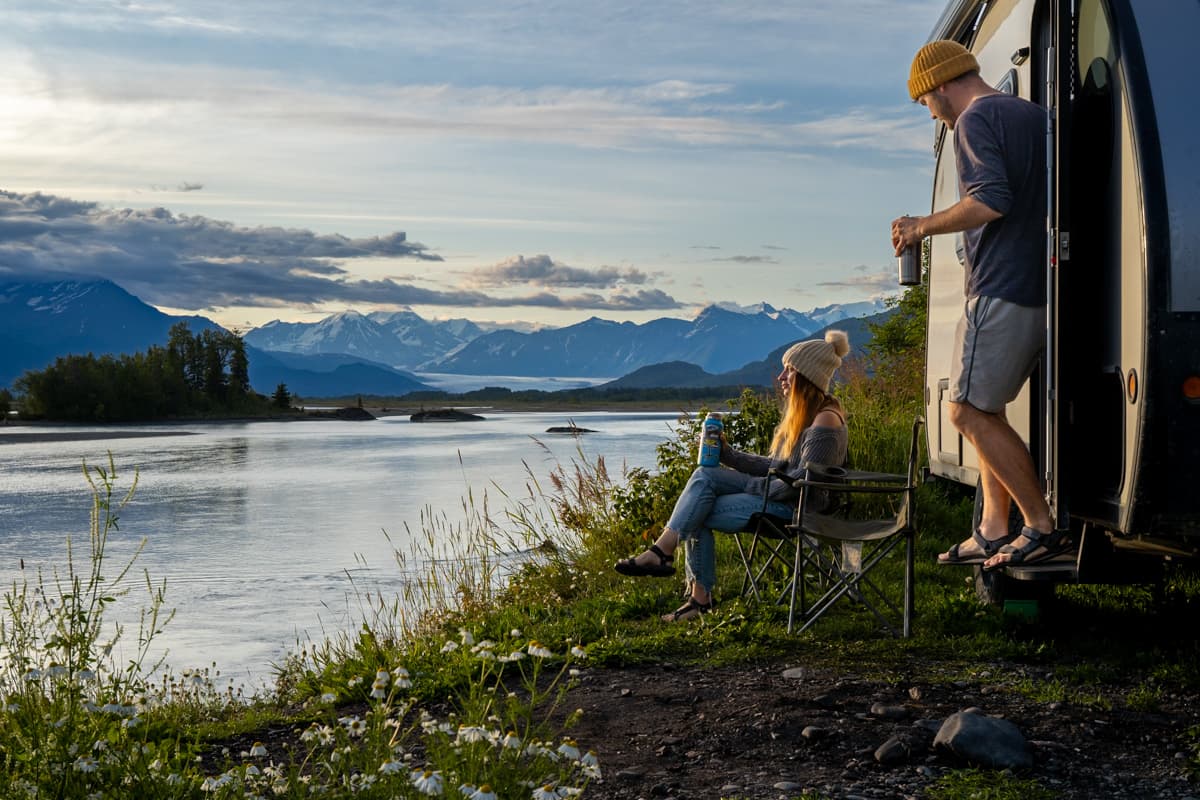
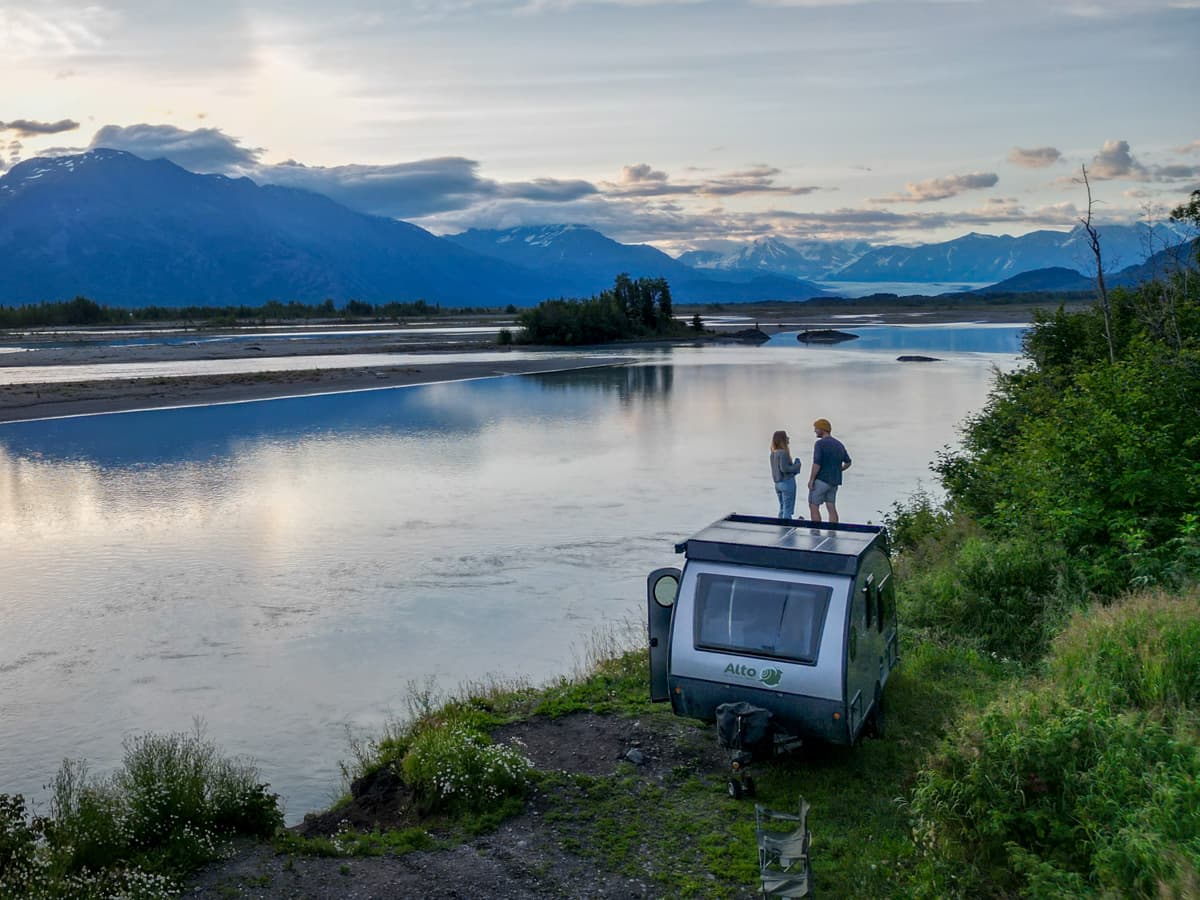
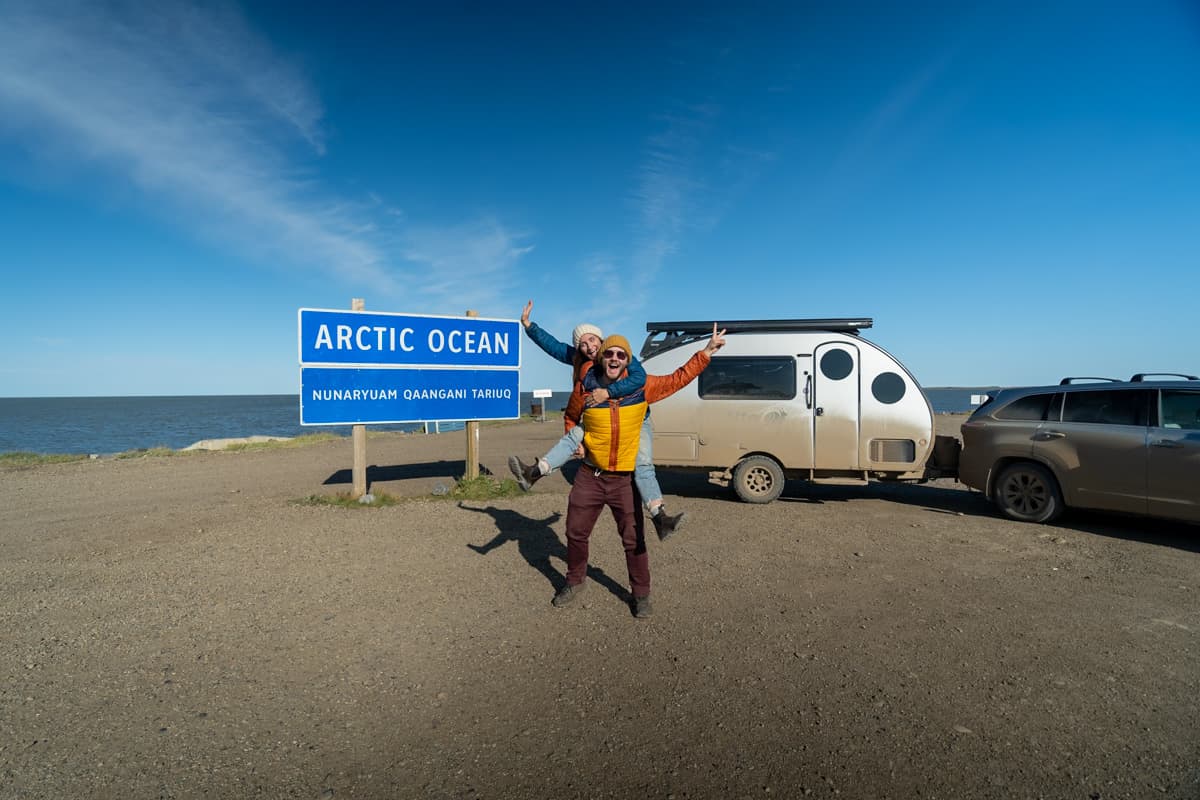
The vast majority of these travelers arrive by an Alaskan cruise, with the remaining one-third flying here and a measly three percent driving or taking the ferry up to the 49th state. Justin and I are actually in that 3%—we drove our RV through Canada, did a massive Alaska road trip, and eventually, even up to the Arctic Ocean.
There’s a TON of overlap between what kind of items all of these travelers should pack, but there are a few differences, depending on how you get up to Alaska.
For example, we included a couple of sets of fancier clothing in this packing list, in case your cruise line has a formal night—but you might be able to leave your cocktail dress at home if you’re driving to Alaska in your RV, like us. On the other hand, you should absolutely pack bear spray if you’re road-tripping to Alaska, but you’re strictly not allowed to bring it if you’re going on a cruise or flying here.
We’ve noted, throughout this post, which type of traveler should bring certain items and when you should leave them at home. So, we wrote this packing list for anyone going to Alaska—whether you’re going by ship, plane, or car—just keep in mind that not every item may make sense for you!
Additionally, this Alaska packing list is meant for travelers visiting in the warmer months (i.e., May through September)—you’ll need a lot more layers—and cold heartiness—if you’re visiting in the winter!
What to pack for Alaska
In this section, we go into detail about all the things you should pack and why. We’re also including a simple Alaska packing list at the bottom of this article, if you’d rather just have a straightforward list, without me blathering on.
Clothes
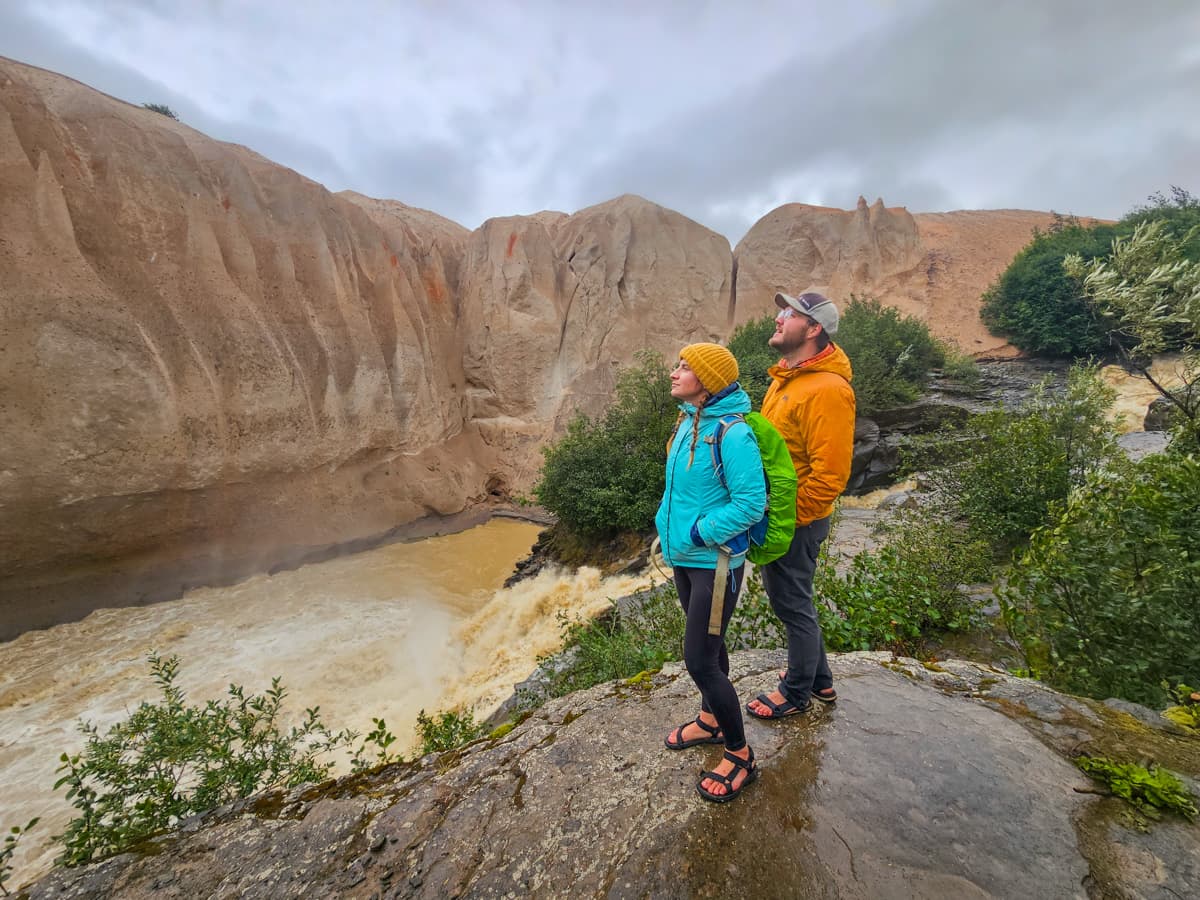
The weather is ALL over the place in Alaska—so come prepared for pretty much anything! We had hot and muggy days in Fairbanks, where I was sweating in my tank top and shorts, and other days where I was wearing my rainjacket on top of my puffer jacket and I was still cold!
Speaking of rainjackets, be sure to bring some good waterproof clothing. Having lived in the Pacific Northwest for several years, I thought that I had grown accustomed to a decent amount of precipitation, but Alaska takes rainy to a whole different level! I’d also try to stick to fabrics that are quick-dry, in case you get caught in an unexpected downpour.
Finally, I gave some vague guidelines on how many articles of clothing you should bring, which assumes you’re visiting Alaska for around 10 days. Depending on whether your itinerary is much shorter or longer than that and your willingness to do laundry while you’re in Alaska, feel free to adjust accordingly!
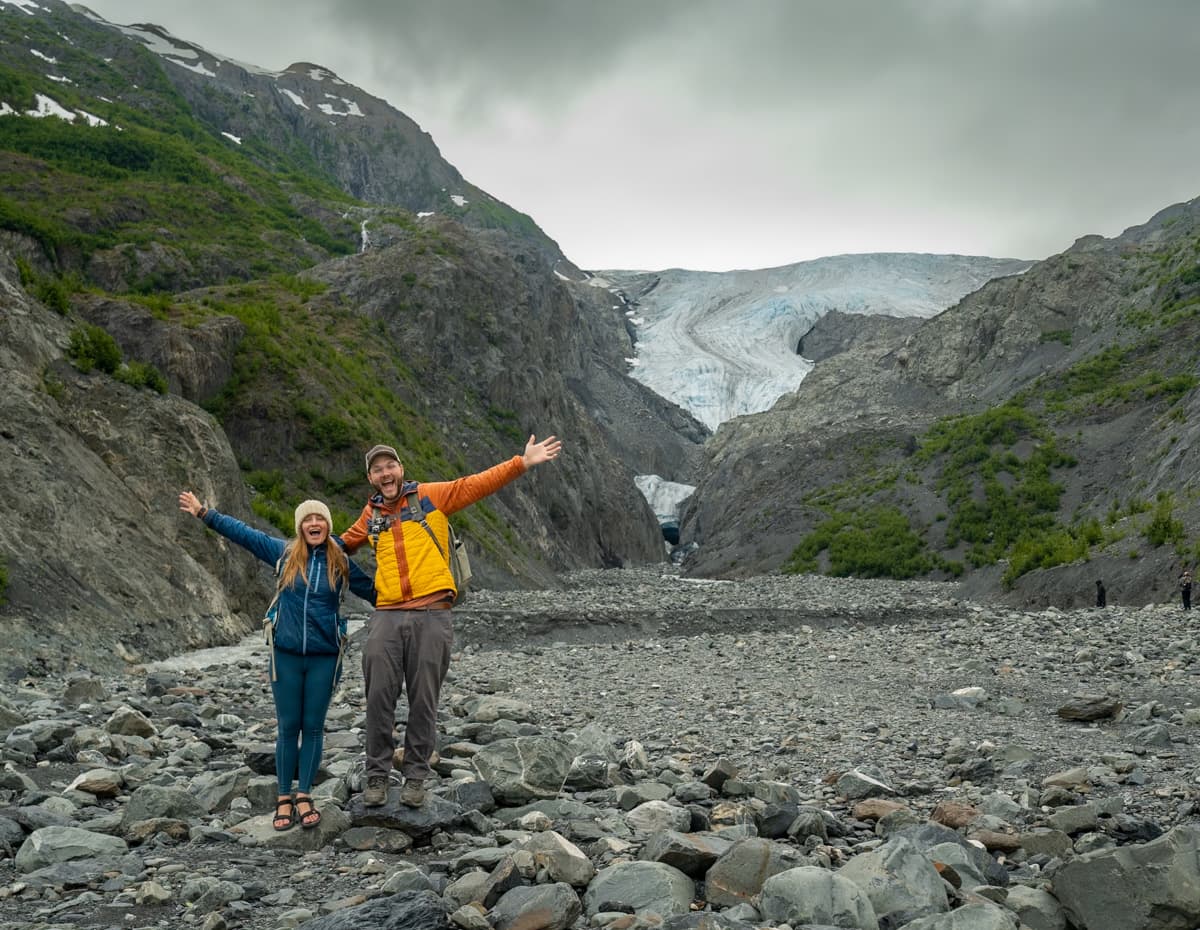
1. Puffer jacket
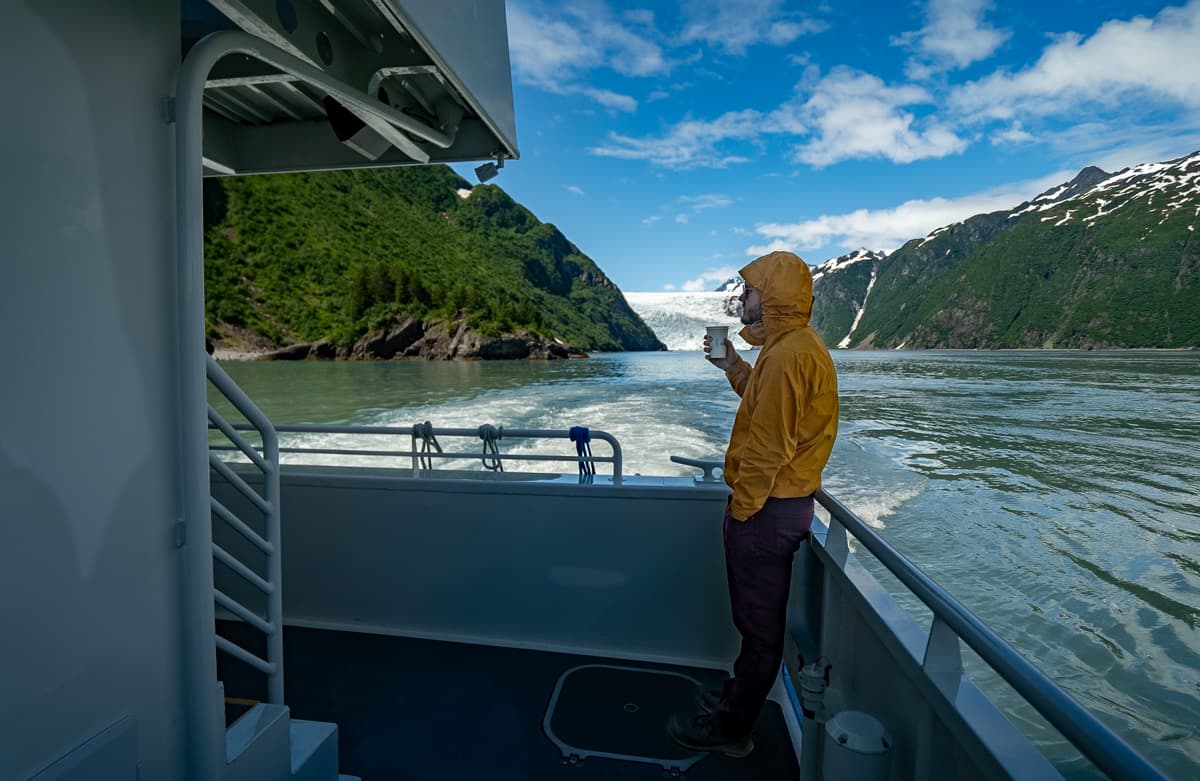
You won’t need a puffer jacket all of the time, but you’ll definitely find yourself reaching for it quite a few times, whether you’re standing on the outside deck of a whale watching cruise or going for an early morning hike. This is the jacket that I have (and love!) and this is Justin’s.
2. Shirts
Given the unpredictable weather here, I’d recommend bringing a mix of different shirts, including tank tops, t-shirts, and long-sleeve tees.
The interior of Alaska, like up near Denali or Fairbanks, tends to feel a lot warmer in the summertime than along the coastline, so if you’re just doing an Alaskan cruise along the coast, you can probably skip the tank tops and bring along a few more long-sleeved tees.
Here’s what I’d recommend for women:
- Tank top or crop top (x2)
- T-shirt (x4)
- Long-sleeve tee (x4)
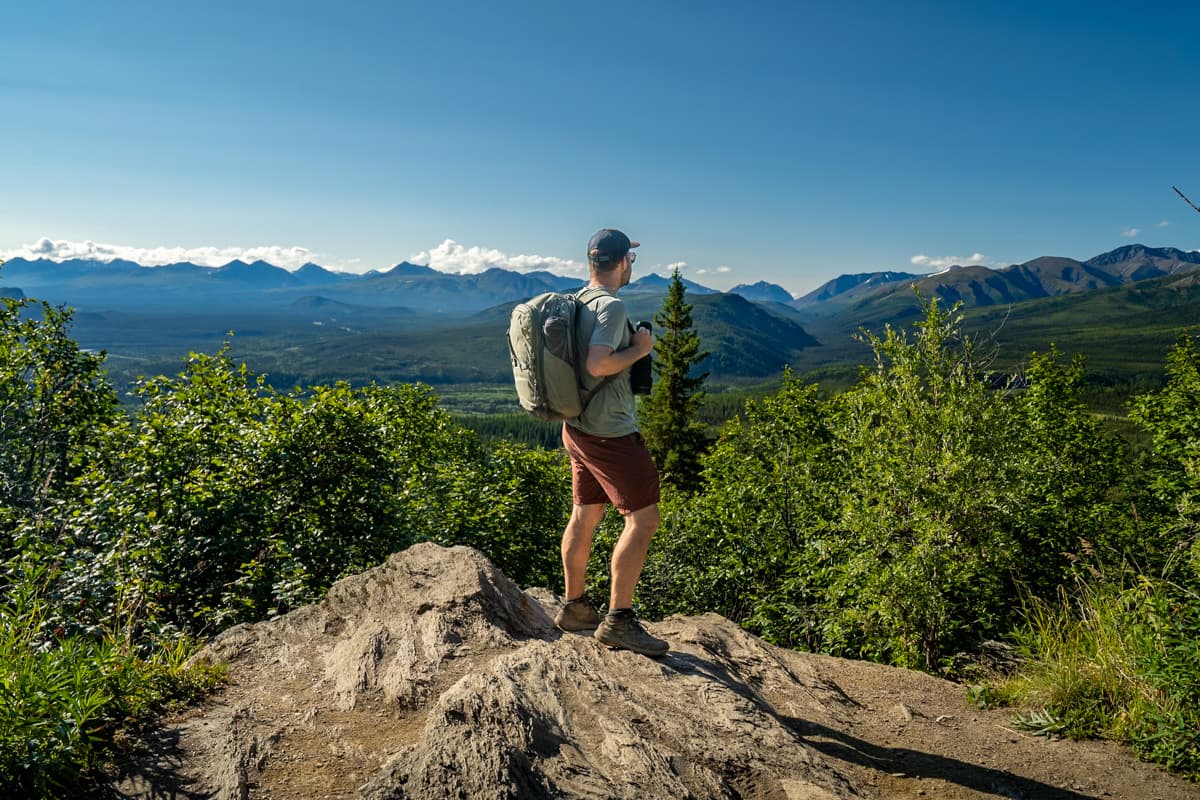
Here’s what I’d recommend for men:
- T-shirt (x4)
- Long-sleeve tee (x4)
3. Pull-over
The temperature in Alaska is dynamic, with really chilly mornings and nights and much warmer days—so having a warm, cozy pull-over is a staple!
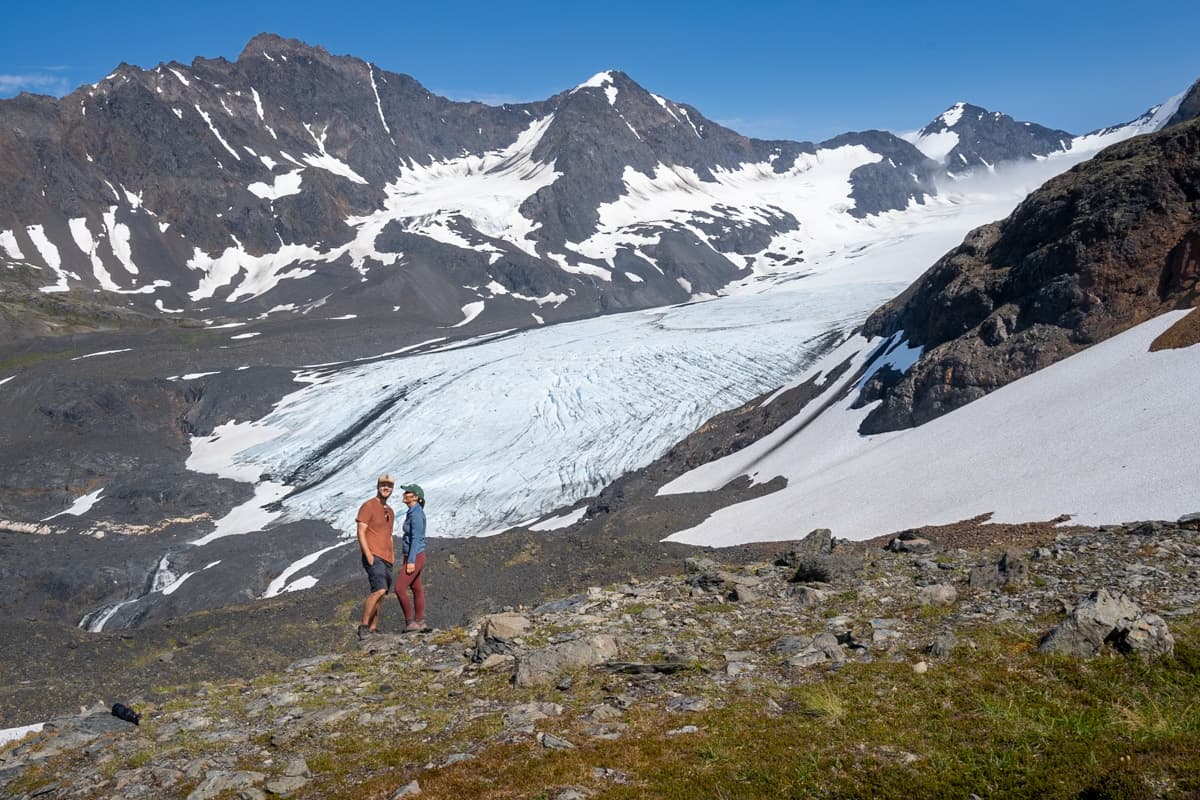
I’ve had my Patagonia Better Sweater for years and years and LOVE it, and Justin has this cozy zip-up.
4. Pants (x4)
Prioritize packing pants that you can move around in, like hiking, getting in and out of Zodiac boats, kayaking, ice climbing—Alaska is all about the adventure!
I’d also suggest generally steering clear of jeans. As mentioned above, it rains quite a bit in Alaska and, whether you’re standing on the deck of your cruise ship to watch some nearby humpback whales or finishing up a hike, nothing is worse than walking around in wet jeans!
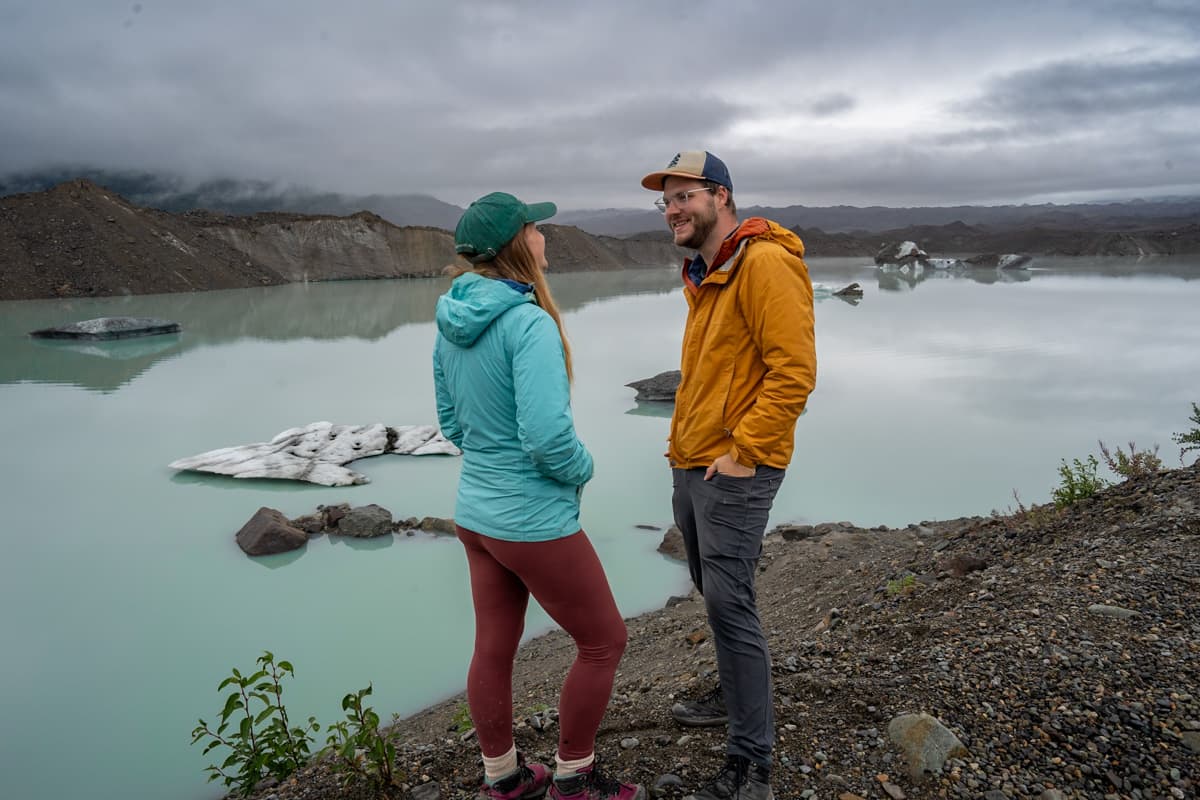
Justin has several of these pants and they’re great—you can dress them up to go to dinner or wear them on a hike. Plus, the dark colors help hide mud (which is omnipresent on hiking trails in Alaska!).
I always have a hard time finding hiking pants for women that are stretchy, flattering, and don’t look super dorky. BUT I recently picked up a pair of these pants and have fallen in love with them—the fabric is quick-dry and SUPER durable.
I’d also suggest bringing a few pairs of yoga pants, which work great whether you’re hiking or just want to wear something comfy and casual to lunch.
5. Shorts (x2)
Again, if you’re strictly going to be on a cruise and exploring along Alaska’s coastline, you might not need any shorts, due to the cooler, breezier weather. But if you’re planning on spending any time exploring inland, having a couple of pairs of shorts on hand might come in handy on an unusually warm day.
Justin wears these shorts pretty much 100% of the time (he’s basically a cartoon character!).
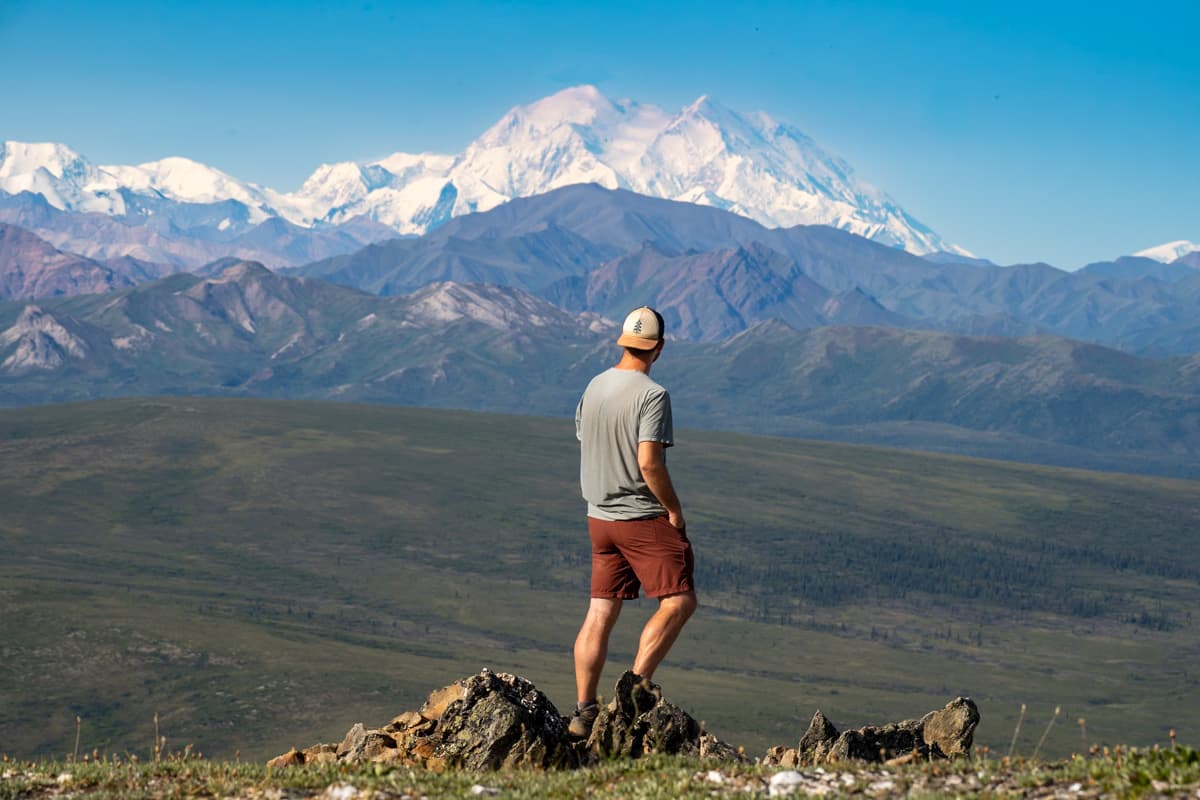
I have two pairs of this kind of shorts and love the mesh liner and how breathable the fabric is.
6. Underwear (x7)
7. Bra (x3)
Obviously, only if you’re a boob-haver!
8. Socks (x7)
I like getting merino wool socks, which are warm, moisture-wicking, and odor-absorbing, so you can use them more than once, if needed. Here’s an option for men and here’s an option for women.
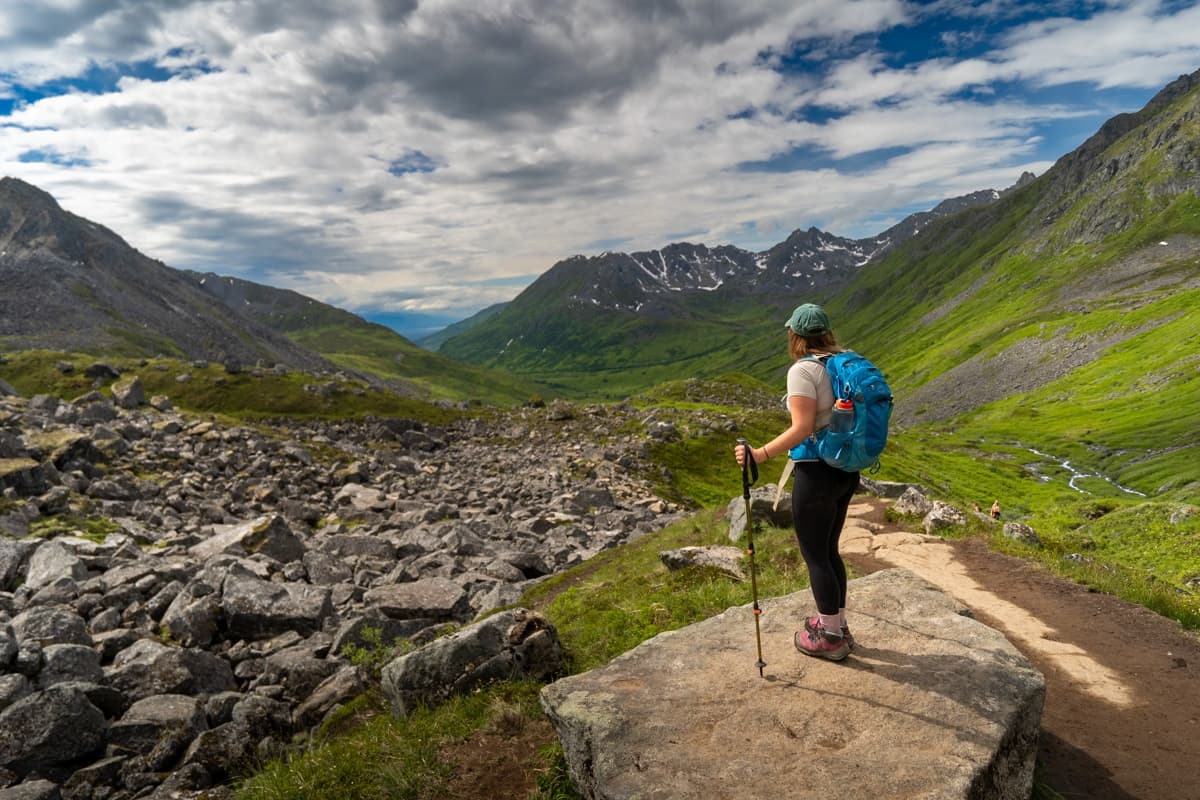
9. Rainjacket
You know that phrase “there’s no such thing as bad weather, only bad gear”? That should DEFINITELY be your mantra in Alaska! I’m not sure if we got unlucky with a particularly rainy summer, but it rained a LOT while we were in Alaska—like, all day, heavy downpour kind of rain.
Justin and I are lucky enough to run our own business and, therefore, were able to work in our RV on rainy days and wait for the sunnier days to go out and explore. However, if you only have a week or so in Alaska, you’ll have to make every day count—rain or shine!
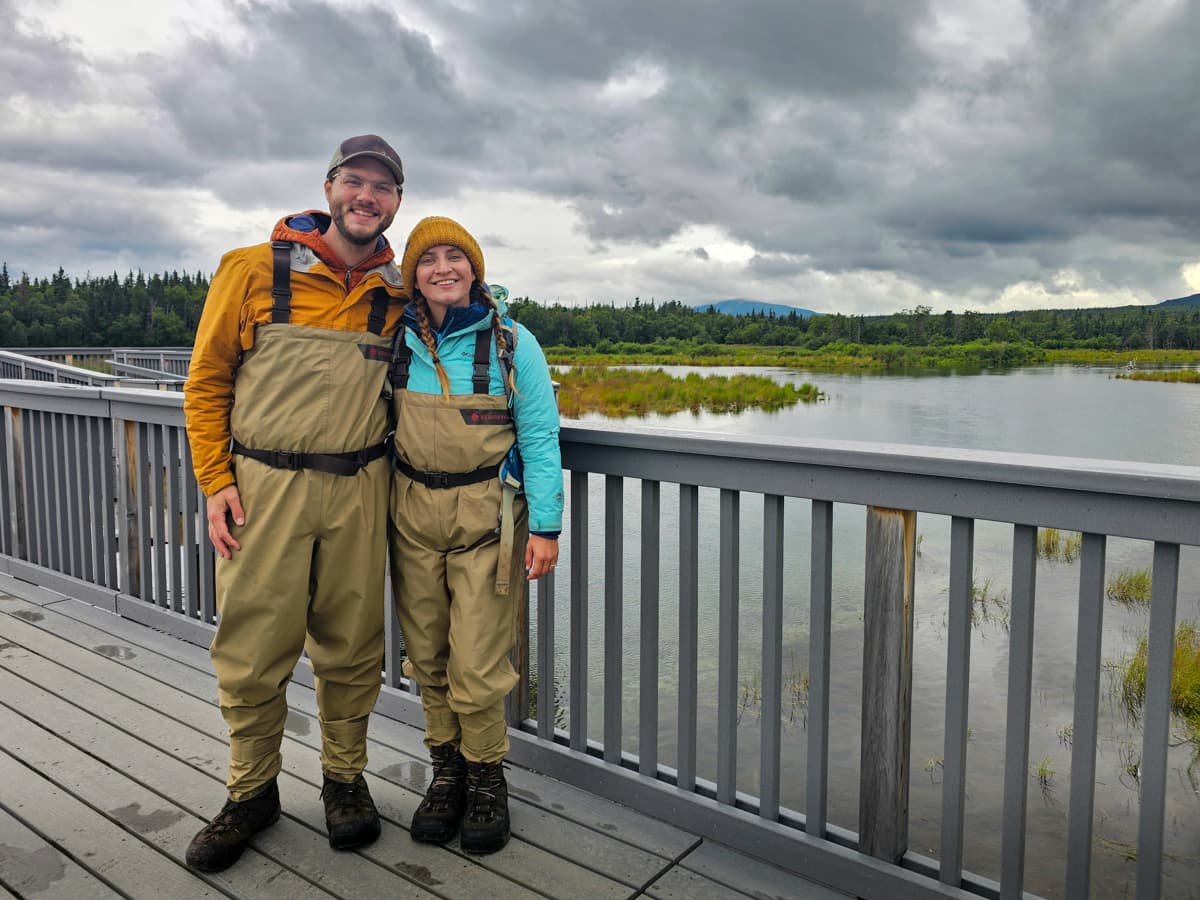
All that is to say, be sure to bring a solid rainjacket. Here’s the one that Justin’s used for years and here’s the one that I have and love.
10. Rainpants
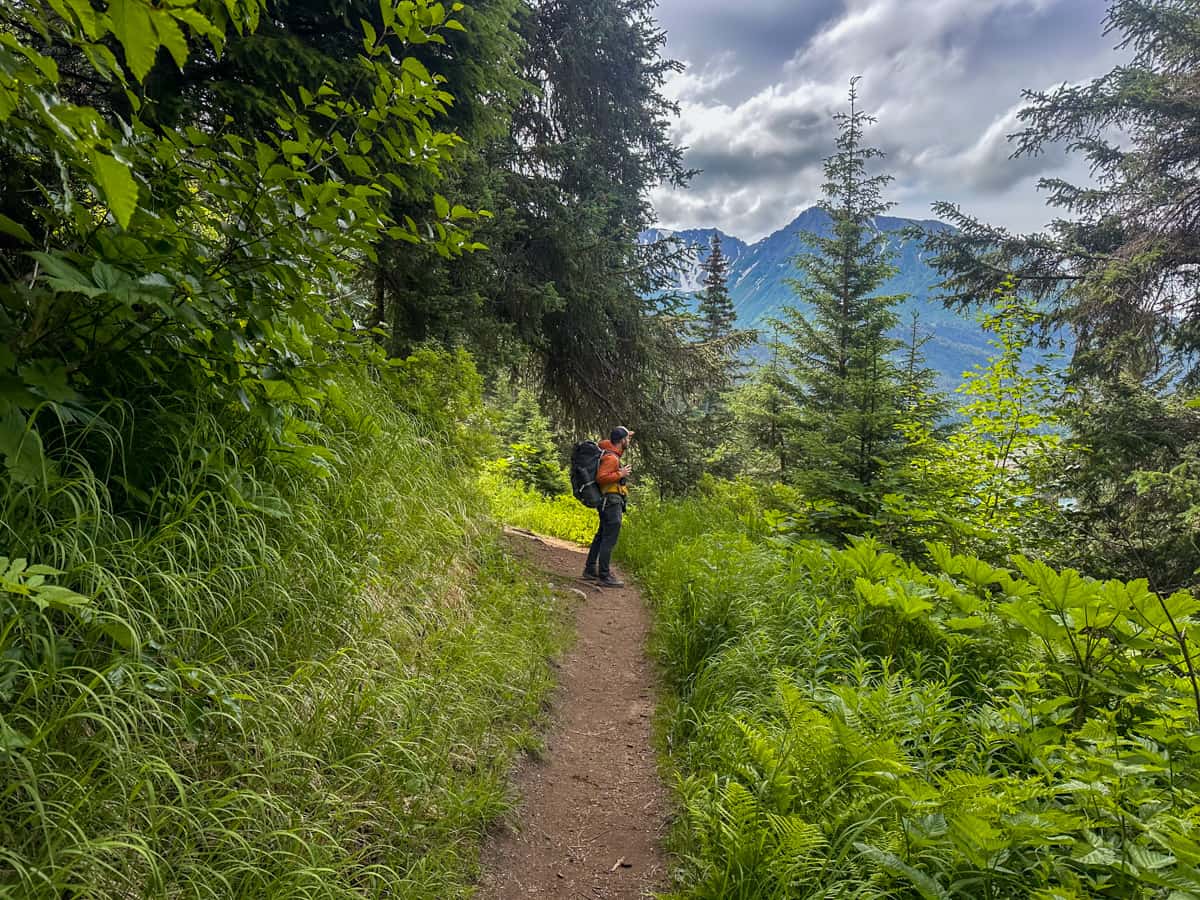
If you’re planning on doing any longer hikes in Alaska, I’d recommend packing along some rainpants, in case you get caught in a shower. A lot of trails are also quite overgrown and, if it’s rained recently, you’ll usually get pretty soaked, just from rubbing against the brush.
It’s also worth mentioning that, if you’re going on a smaller, expedition-style cruise ship (e.g., like with National Geographic-Lindblad, HX, or Uncruise), you’ll be required to bring rainpants, since you’ll be getting to land and zipping around on Zodiac boats, where you’ll get quite wet!
We’ve gone on a number of expedition cruises and have gotten our fair share of use out of our rainpants—here’s the kind that Justin has and here’s the kind that I have.
11. Swimsuit
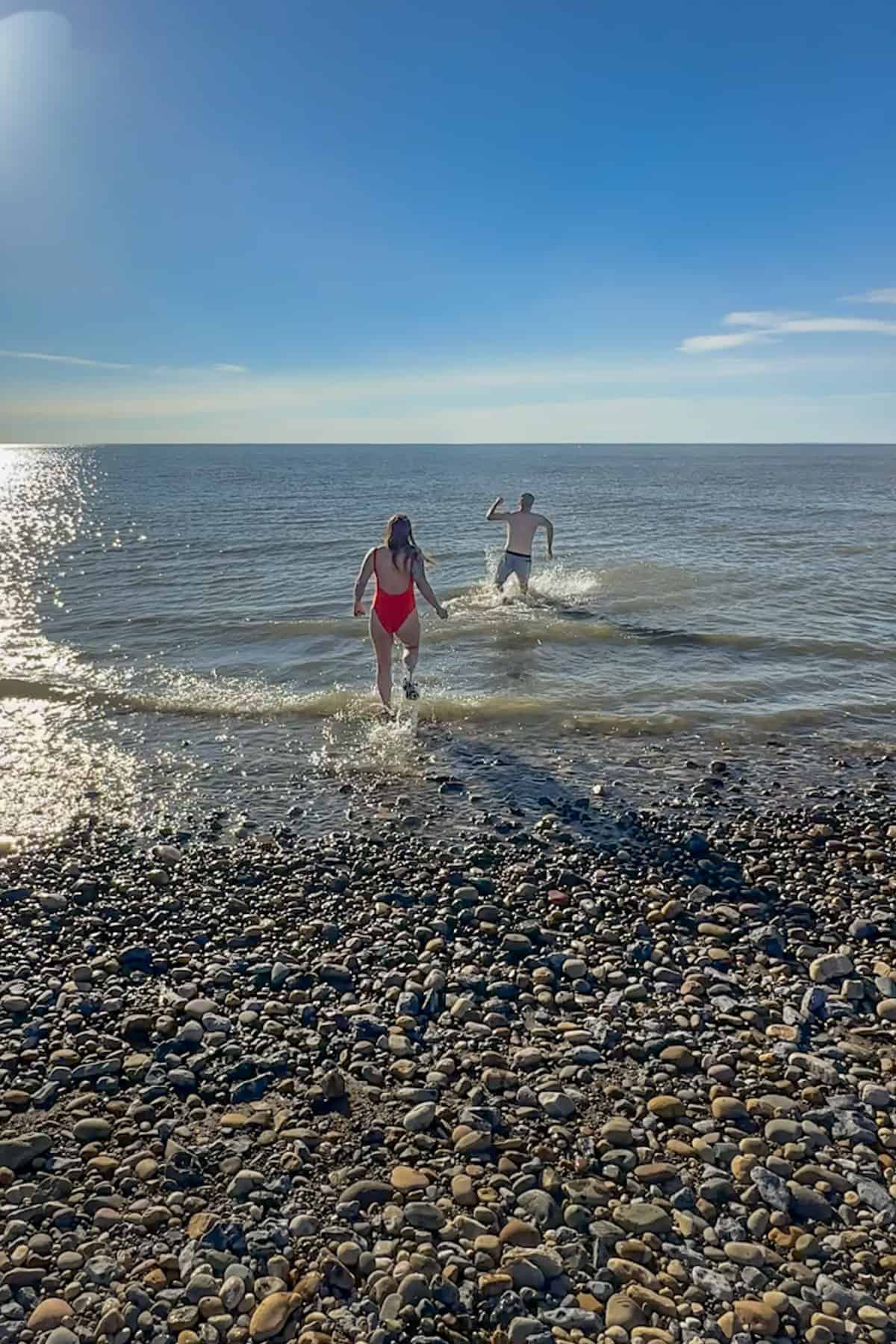
This one is a no-brainer if you’re going on a cruise (we’re allll about enjoying hot tubs on cruise ships!), but, even if you’re flying or driving to Alaska, having a swimsuit can come in handy if you’re visiting hot springs or if you’re SUPing or kayaking along the coastline.
12. Knit hat
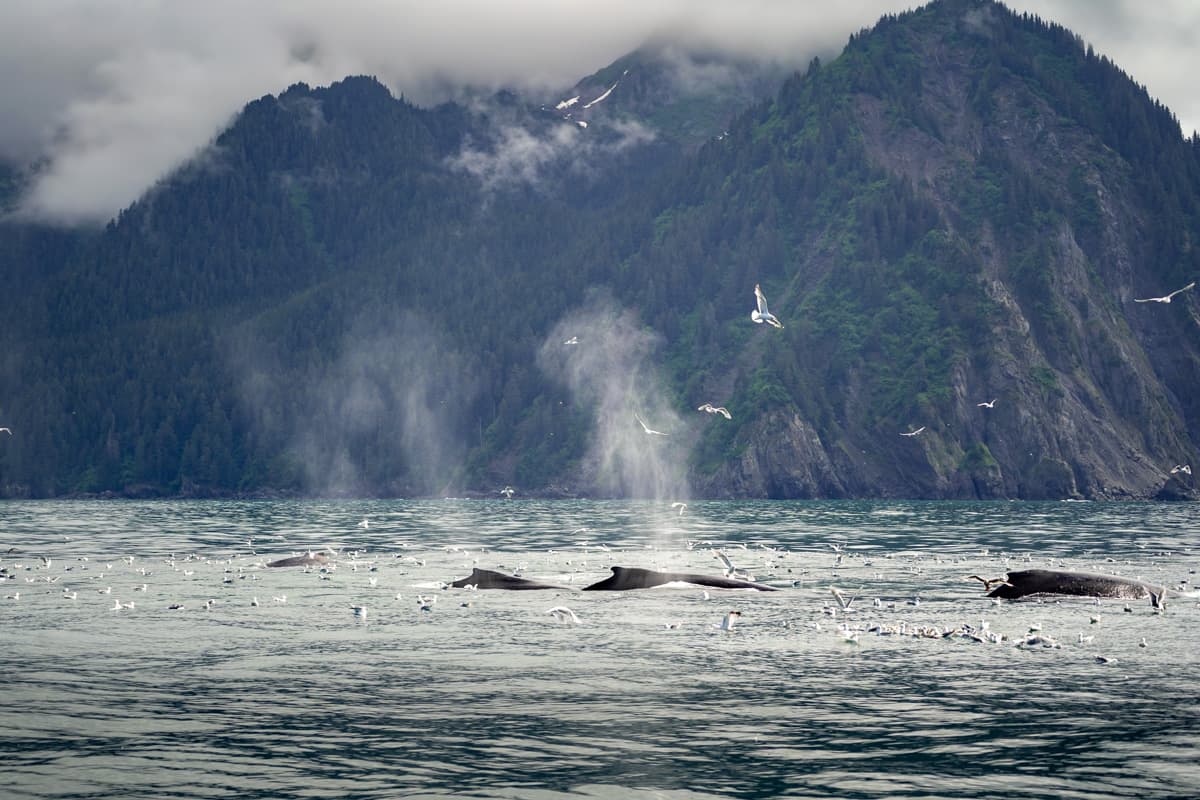
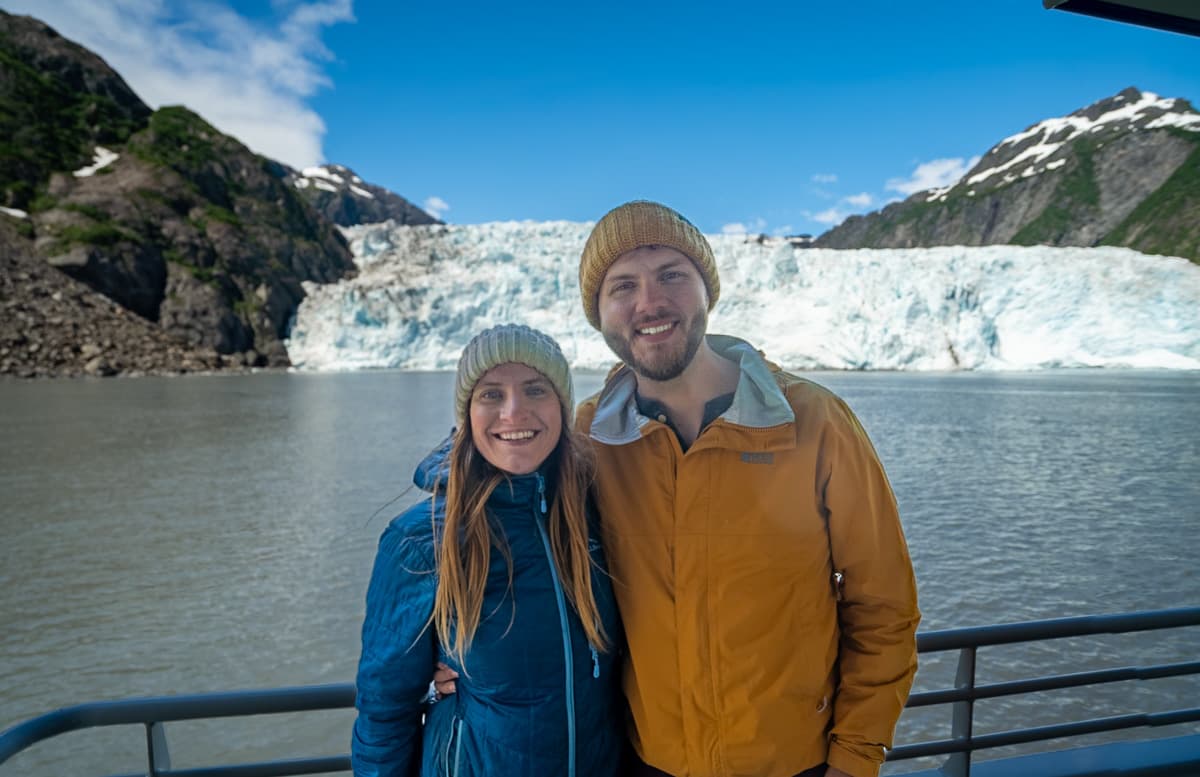
We always found ourselves reaching for our beanies on chillier mornings or when we headed out on a boat, like on the Major Marine cruise to see tidewater glaciers and all sorts of wildlife around Kenai Fjords National Park.
13. Baseball hat
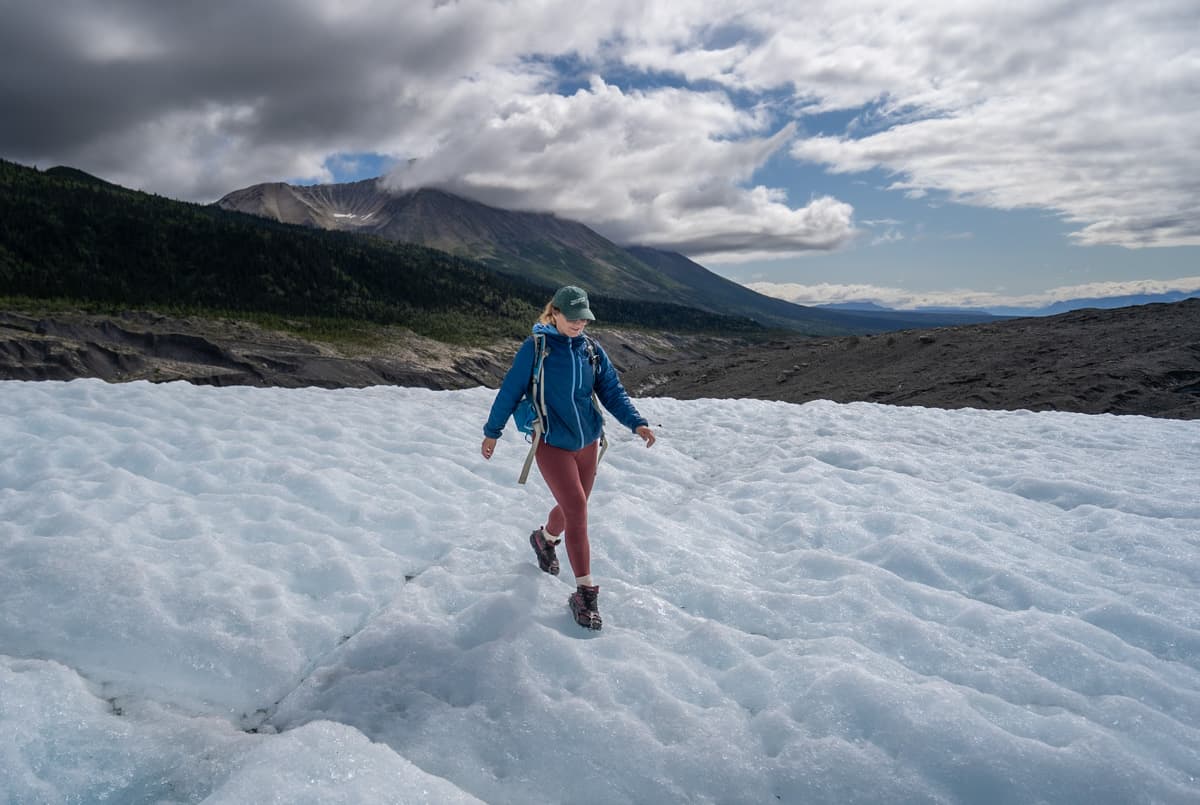
While Alaska has LOTS of cloud coverage and rain, there’s plenty of sunny days, too. Baseball hats are super helpful to protect your eyes from the sun and glare, which can be a huge issue if you’re on the water or hiking around snow or a glacier.
14. Sunglasses
15. Hiking boots
As avid hikers, we see people wearing all kinds of nonsense shoes on trails, from slip-on Vans to flip flops. Alaska is not a place where I’d recommend wearing casual shoes for hiking. The trails are ALWAYS muddy, with some of our favorite hikes in Alaska, like the Reed Lakes Trail, having really rocky sections that require some amount of scrambling.
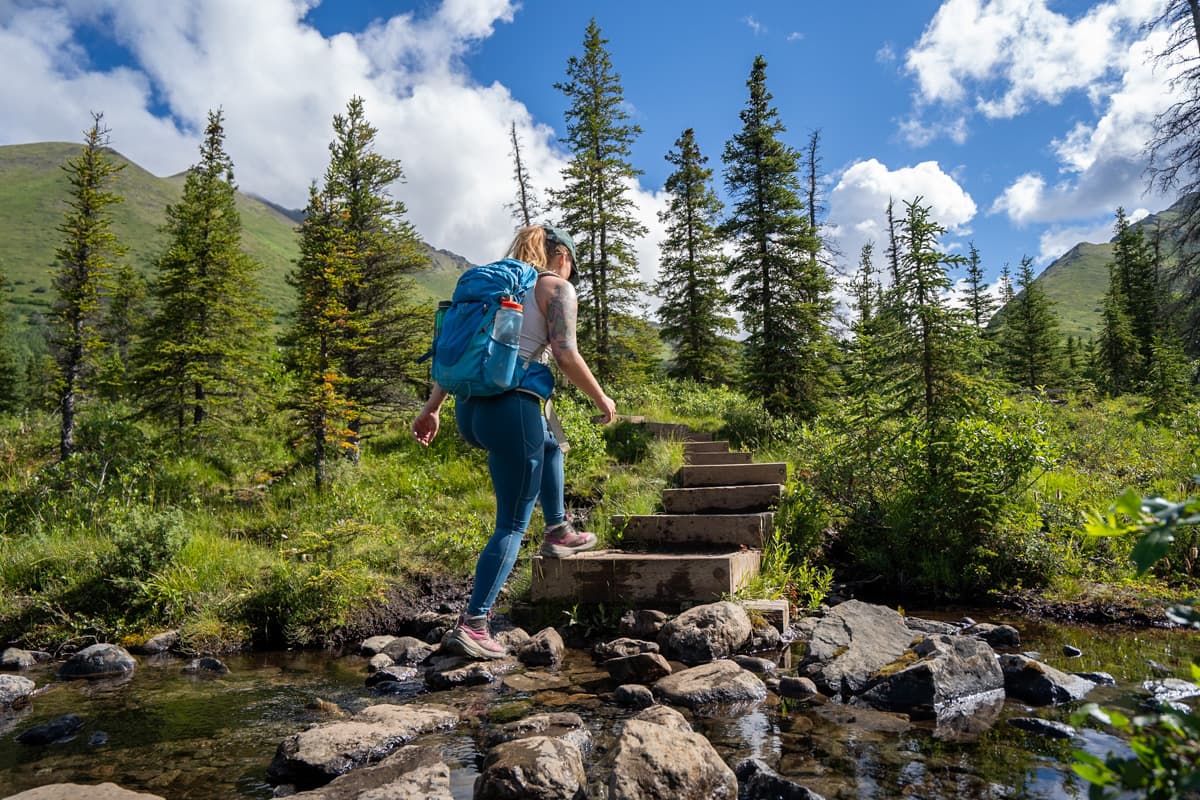
Accordingly, I’d strongly recommend bringing proper waterproof hiking boots to provide extra protection and support while you’re on the trail. Justin has had multiple pairs of these hiking boots over the years and loves how lightweight they are. And I’ve had this pair of hiking boots for the last couple of years—and they’re still going strong!
16. Hiking sandals
Confession—when we’re not on the hiking trail, we wear our Teva hiking sandals 99% of the time. It might be because we’re crunchy people who live in their RV OR it might be because of how comfortable and versatile they are, whether you’re walking on a nature trail or going kayaking.
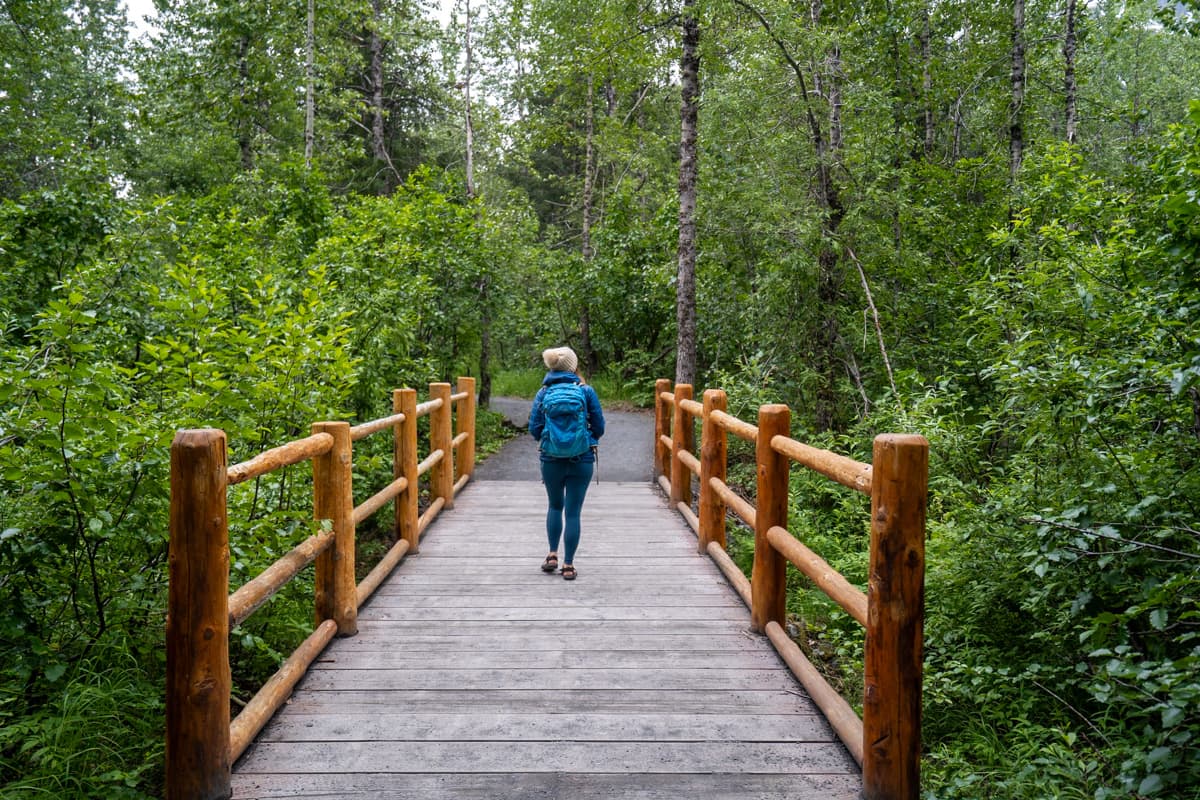
Either way, hiking sandals come in handy for lots of scenarios in Alaska—these are the pair that Justin uses and here’s the pair that I use.
17. Walking shoes
If you’re not someone who wears hiking sandals all the time, it might be a good idea to pack along some sneakers or other comfortable walking shoes that you can wear, strolling around Creek Street in Ketchikan or hanging out on the deck of your cruise ship. I’ve used Brooks for years!
18. Fancier clothes (x2), if you’re going on a cruise
If you’re going on a larger Alaska cruise line (e.g., Princess, Holland America, or Celebrity), they’ll likely have one to two formal nights (depending on how long your cruise’s itinerary is), where you’re expected to dress up if you want to eat in the Main Dining Room and participate in other onboard activities, like cocktail hours.
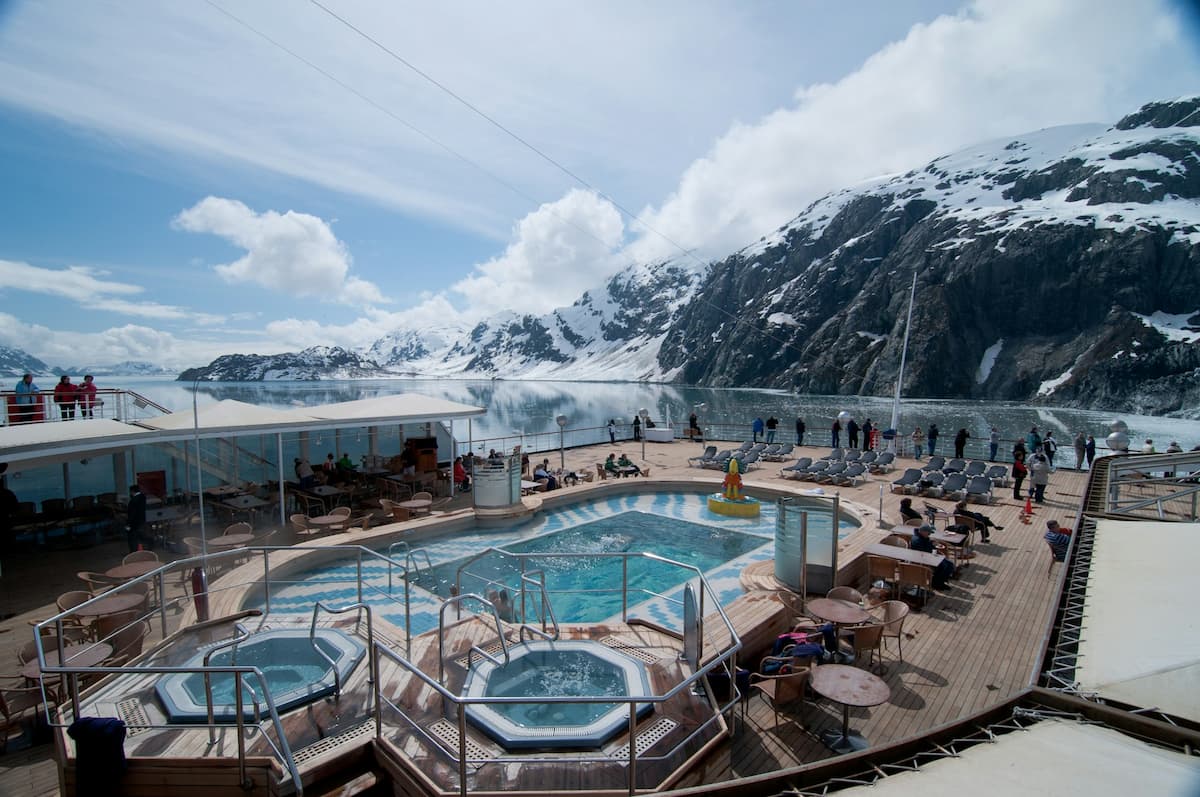
Most cruise lines don’t require tuxedos or floor-length gowns anymore, especially for more active Alaskan cruises, and, instead, suggest cocktail dresses or a nice blouse and skirt for women and button-down shirts and slacks for men. However, I’d suggest double checking your cruise line’s dress codes, since they can vary!
If you’re going on an expedition cruise line, like HX or Lindblad, these typically do not have established formal nights. Whenever we’ve been on expedition cruises, people tend to dress up a bit more for the Captain’s Dinners, at the start and the end of the cruise, but you’d be totally fine with a nicer sweater or button-up shirt.
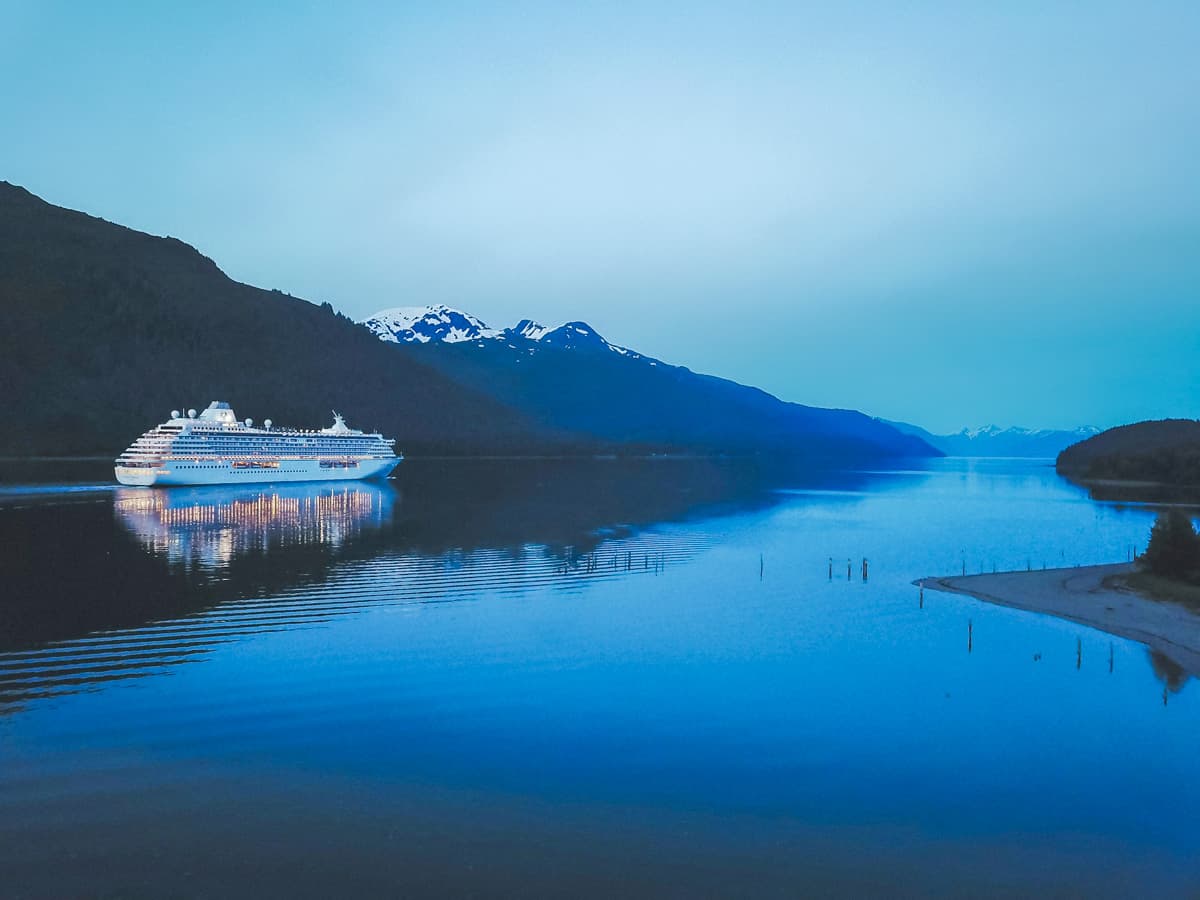
And, if you’re not a cruiser, I’d leave the fancier outfits at home, given that Alaska is SUPER casual. You’ll definitely fit in more wearing yoga pants and hiking boots to most restaurants than you would wearing cocktail attire!
Outdoor gear
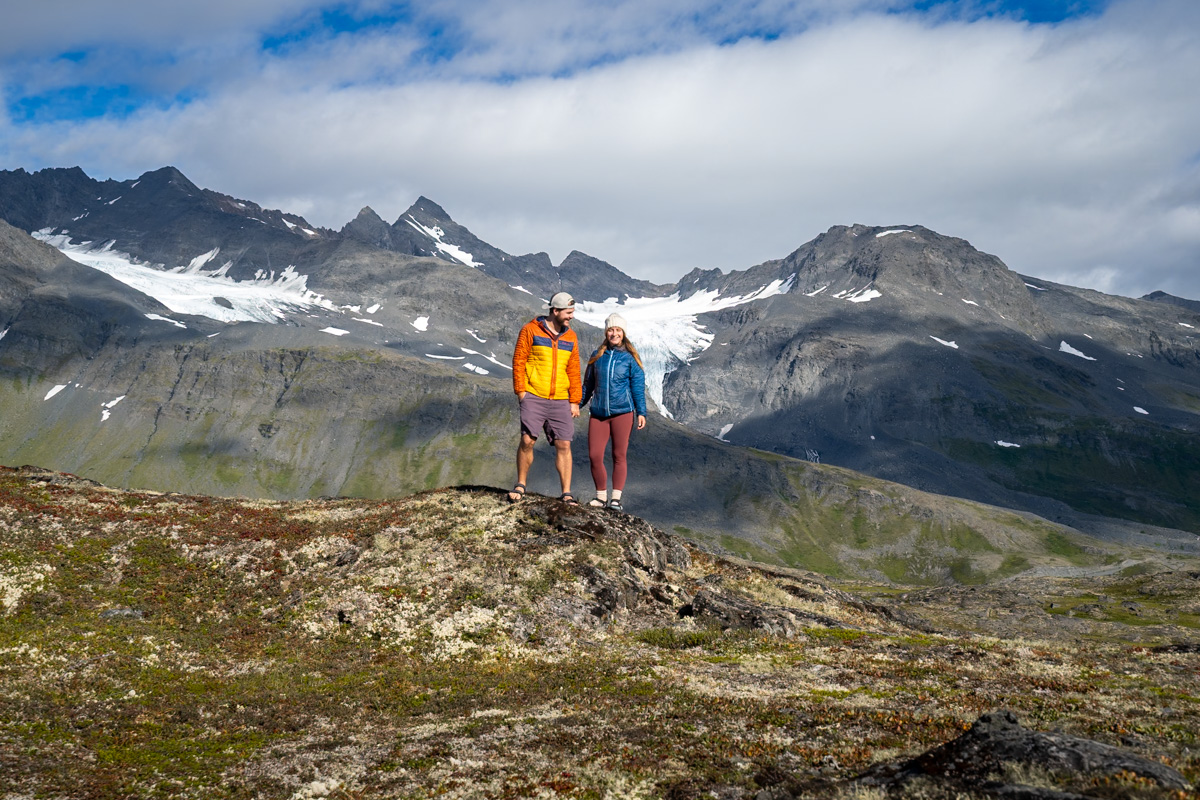
The whole reason people go to Alaska is to take in the wild landscapes and wildlife and get up to all kinds of cool outdoor adventures. Here’s what I’d bring for all that adventuring!
1. Backpack
Even if you don’t think you’ll be doing any hardcore hiking, I’d suggest bringing along a daypack, where you can throw your water bottle, camera, rainjacket, and any other essentials you might have for the day inside.
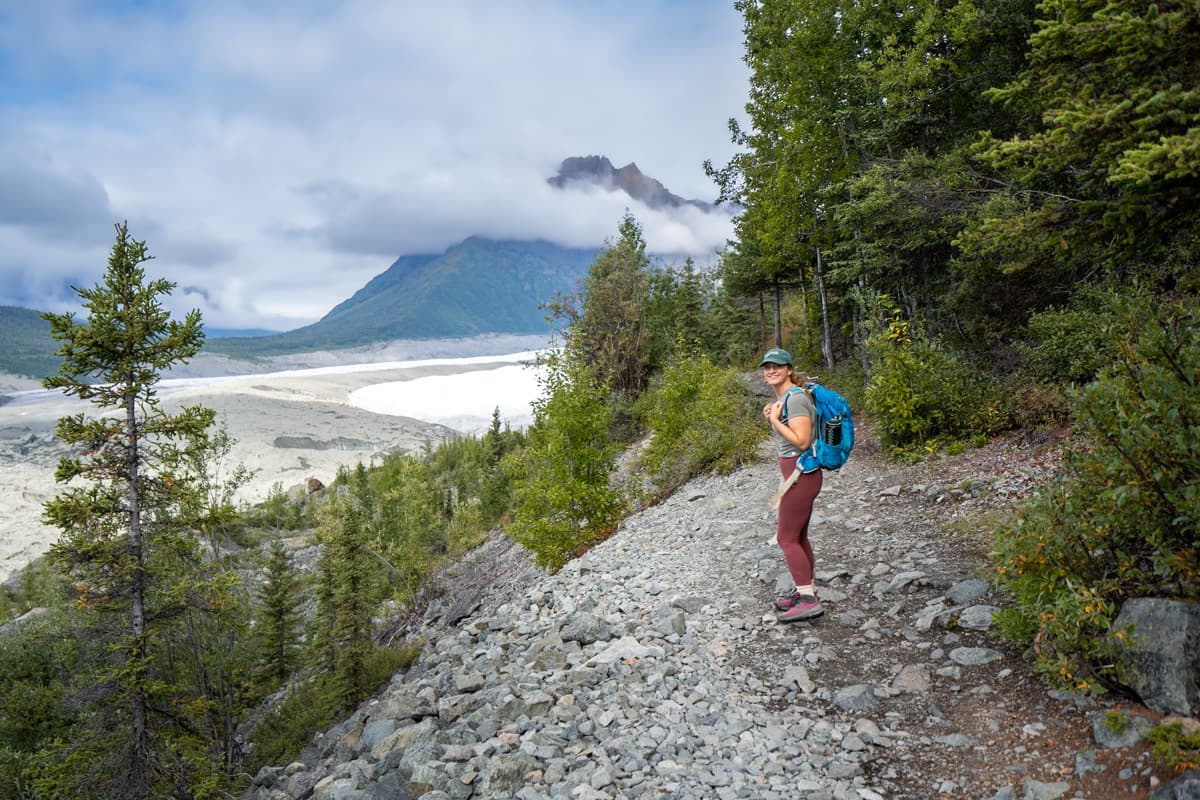
I’ve had this backpack for years and love it—it has so many awesome features, from a packable rainfly, bands to hold your trekking poles and water bottles, and an extremely breathable design (no sweaty backs!). Here’s the equivalent for men.
2. Drybag
Whether you’re zipping around by Zodiac, whitewater rafting, or kayaking, it’s really nice to have a drybag to throw your cellphone, camera, and other gear you want to keep dry in. We’ve had this one for years—it packs down super small and has come in handy for a variety of purposes (we’ve even used it as a laundry bag!).
3. Refillable water bottle
We’re big fans of refillable water bottles—they’re better for the environment than disposable ones AND keep you nice and hydrated, whether you’re hanging out on the deck of a cruise ship or checking out some of the best hikes in Denali National Park.
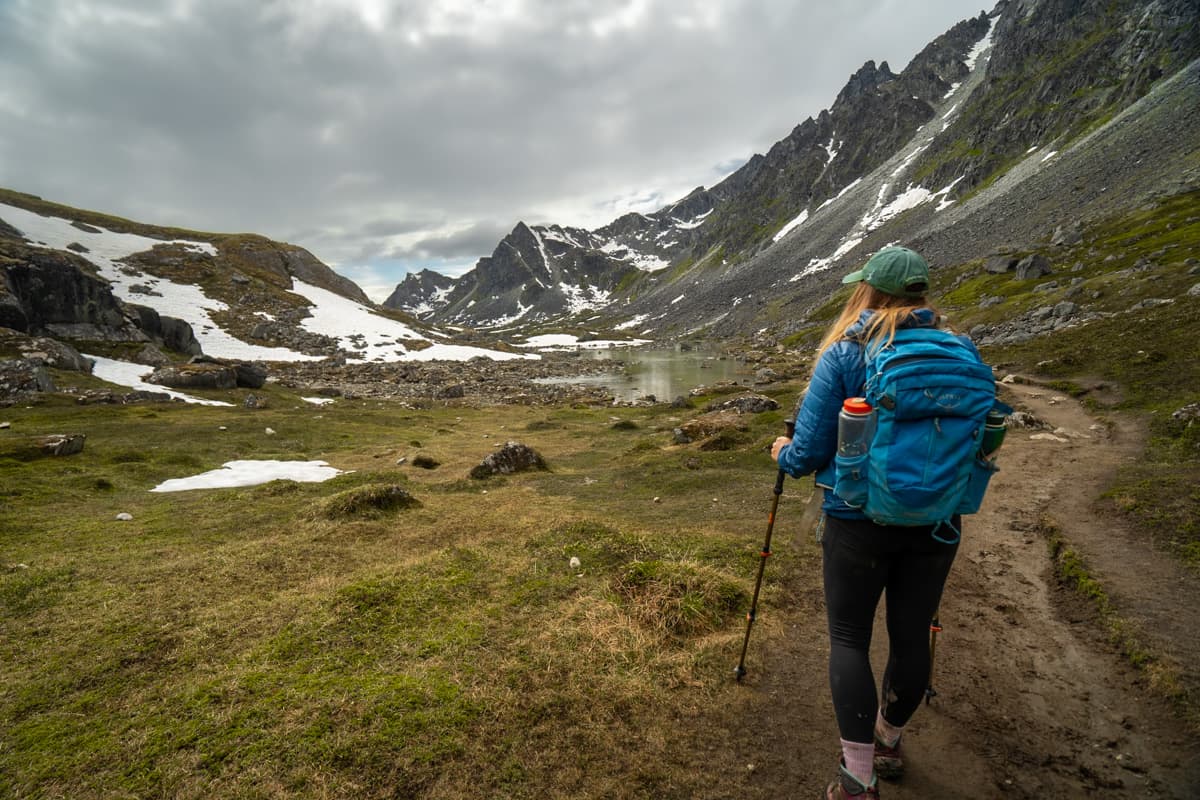
We each have one of these comically enormous Nalgene bottles that we bring with us on every hike and LOVE them!
4. Trekking poles
Between the steep elevation gain on many of the best hikes in Alaska and the incessantly muddy terrain, I’d strongly recommend packing trekking poles if you plan to do any hiking.
Truth be told, I used to be weirdly judgy about other hikers that used trekking poles, but, after purchasing some to use on a particularly tough trail, I am a CONVERT—they add so much stability when hiking on rocky, uneven terrain and are a lifesaver on my 30-something year old knees!
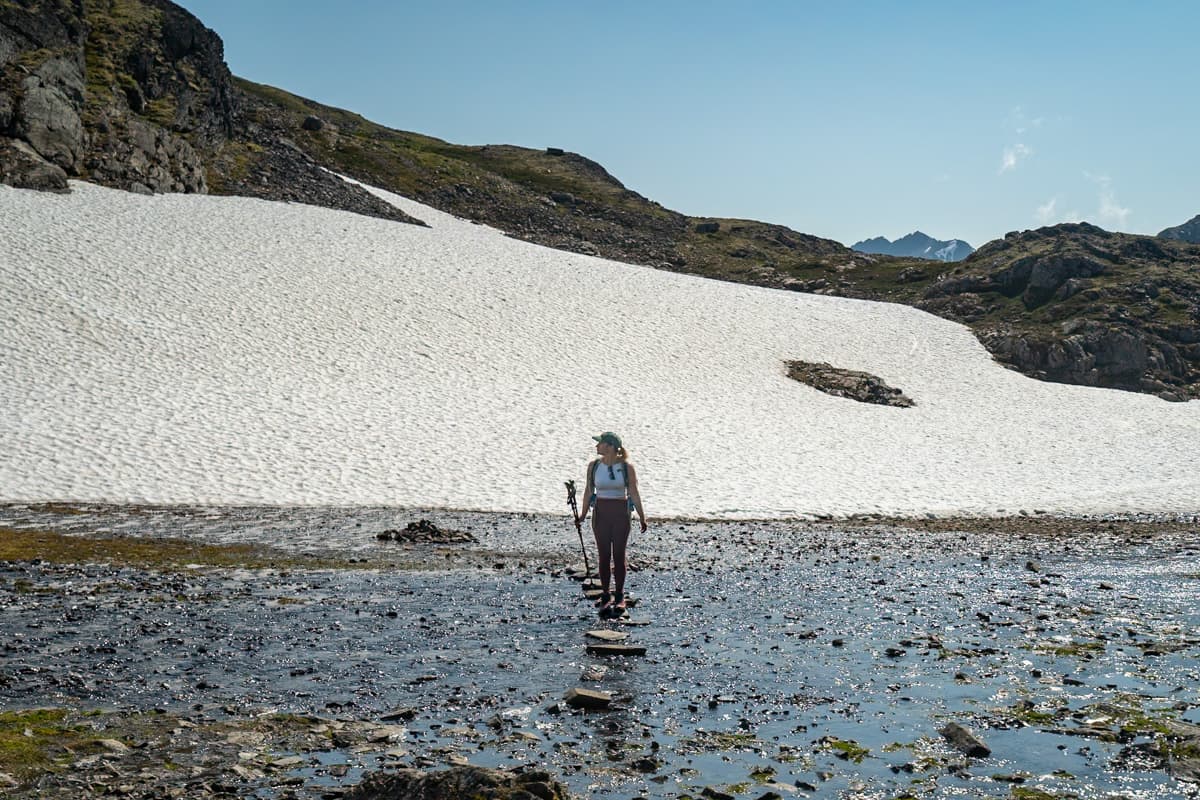
Just remember that if you’re flying anywhere with trekking poles, they’ll need to go in your checked bag!
5. Microspikes
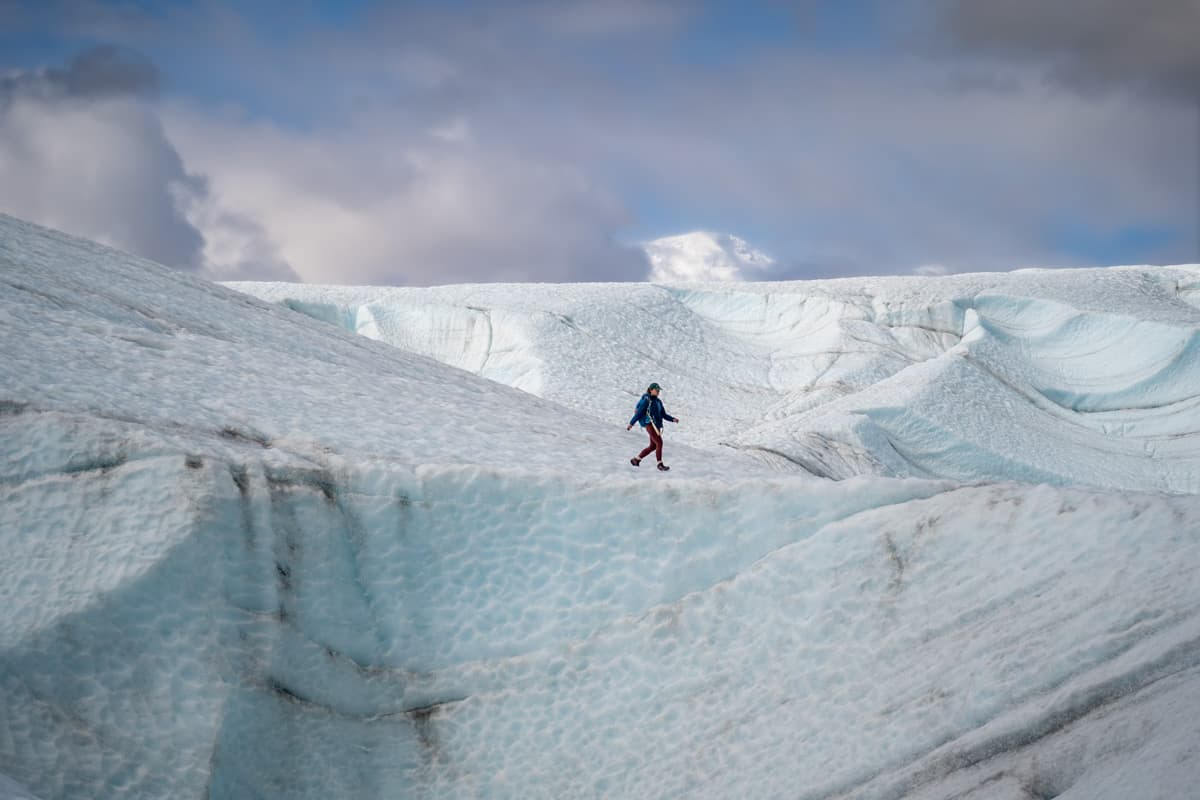
Depending on when you’re visiting Alaska, you might encounter snow and ice on hiking trails, where microspikes will provide much needed extra traction.
For example, when we hiked the Harding Icefield Trail in early July, the latter quarter of the trail was totally covered in ice and snow (I actually glissaded down part of the mountain on this trail!), and we busted out our microspikes for hiking directly on the glacier along the Root Glacier Trail.
The rest of this gear probably doesn’t make a ton of sense if you’re traveling to Alaska via cruise ship and primarily doing shorter excursions throughout the day. However, if you’re road tripping around Alaska, either in a car or an RV, you might want to consider bringing some of this gear with you, depending on your itinerary.
6. Camping gear
Some of our favorite memories in Alaska were when we used our backcountry camping gear, including camping right next to an iceberg-laden lake along the Grewingk Glacier Lake Trail or sleeping in our tent behind an electrified fence to see the bears in Katmai National Park.
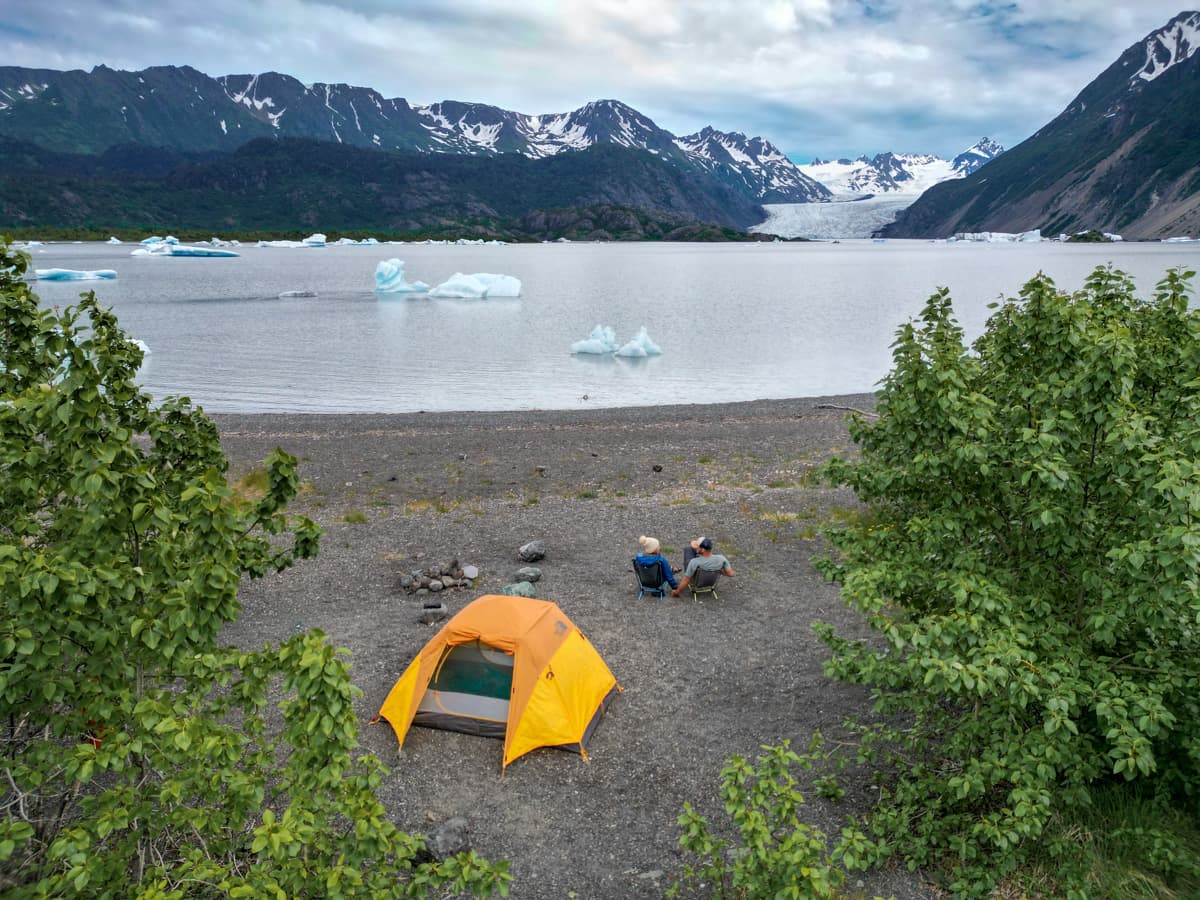
Camping gear typically takes up a lot of space, so I wouldn’t recommend packing this along as a “just in case” kind of thing. However, if you have time in your Alaska itinerary to squeeze in some camping (and some room in your luggage!), I’d definitely recommend it!
7. Bear spray
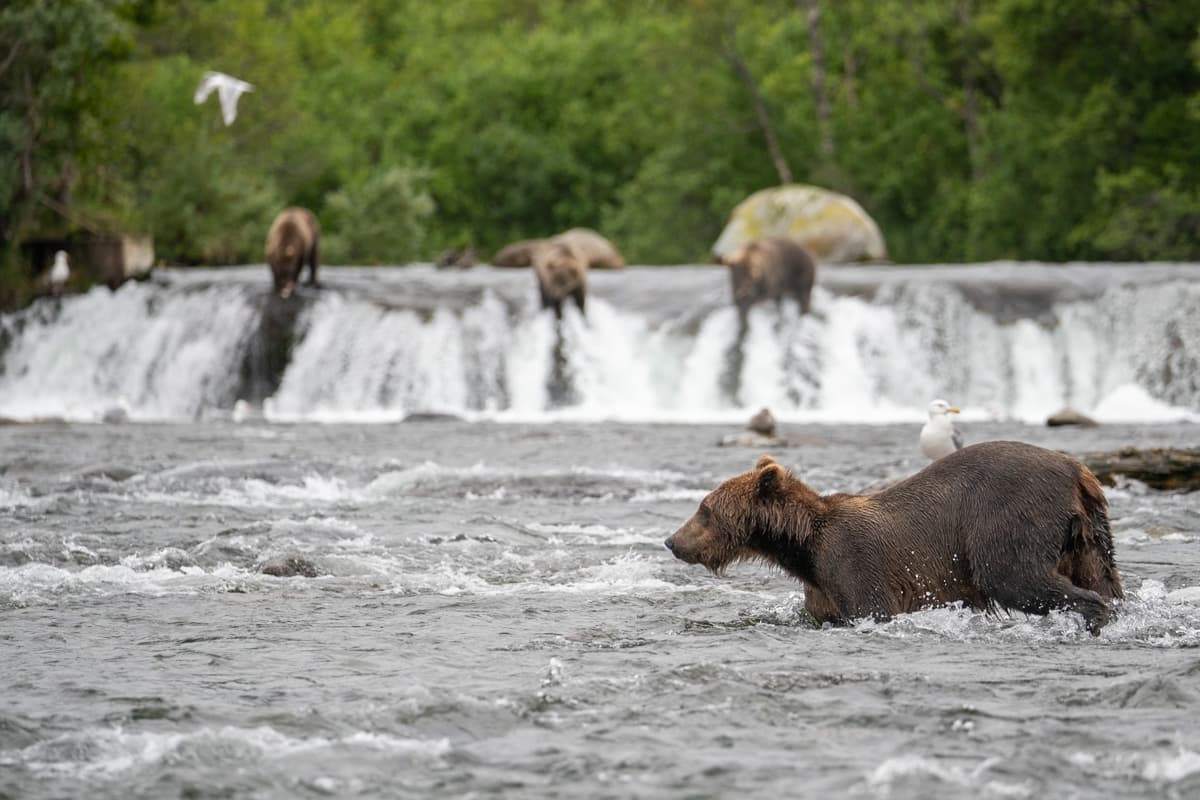
Alaska has, by far, the densest population of bears in the United States, with 100,000 black bears and 30,000 grizzly bears.
Other than when we went out of our way to see bears in Katmai or at the Fish Creek Observation Wildlife Platform in Hyder, Alaska, we didn’t see any while we were out adventuring, but we did see a TON of bear scat on pretty much every hiking trail. So they’re definitely around!
Accordingly, I’d recommend bringing along some bear spray, which temporarily deters bears, so that you can get away, in the unlikely event one becomes aggressive with you.
You can only pack this with you if you’re driving to Alaska, as cruise lines and airlines do not allow bear spray onboard. You can always pick up some at the REI in Anchorage, if needed!
8. Inflatable kayak or SUP
Again, this is really only something I’d suggest packing if you’re driving or RVing to Alaska, given how much room it takes up. But if you are in that elusive 3% of travelers that are driving to Alaska, I’d definitely consider picking up an inflatable kayak or SUP, given how many cool opportunities there are to paddle around the state!
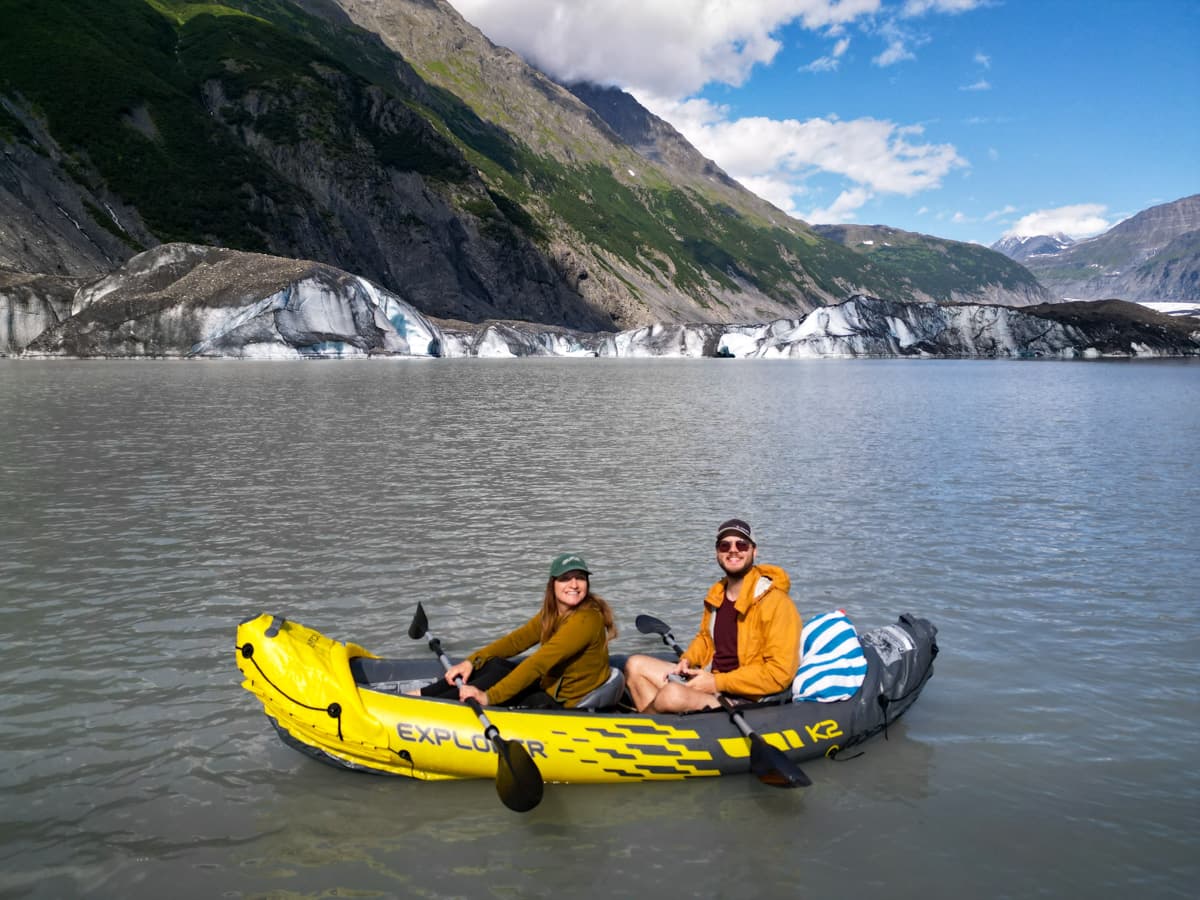
For example, one of the most fun things we did in Valdez, an adorable town that’s tucked along the coastline of the Prince William Sound, was kayak on the Valdez Glacier Lake, paddling between icebergs and up to the massive glacier face. We also got to kayak around a pingo, a unique Arctic landform caused by permafrost, in the Arctic Ocean when we drove up the Dempster Highway to Tuktoyaktuk—definitely a once-in-a-lifetime kind of experience!
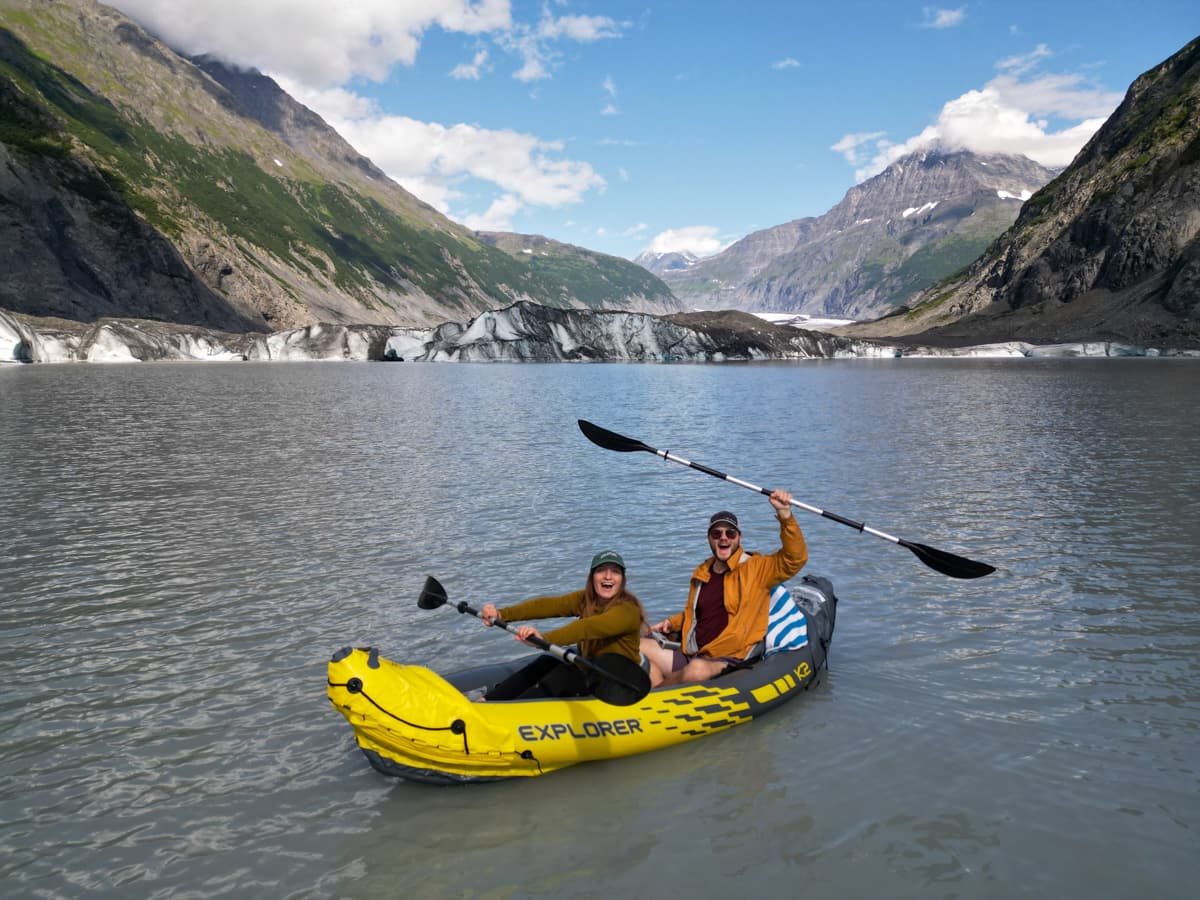
Obviously, there are serious risks associated with paddling around icebergs or glaciers, in near freezing water. It’s incredibly important that you closely examine your gear for any leaks or other issues before getting in the water, know and follow safety precautions if you’re paddling near icebergs and glaciers, and keep an eye on the weather. Kenai Fjords National Park has a helpful guide on things to keep in mind regarding cold water paddling in Alaska.
9. Headlamp
If you’re visiting from late June through early August, you might not need a headlamp, given that Alaska will be experiencing the Midnight Sun (basically, 24/7 daylight!).
However, if you’re visiting outside of this timeframe, headlamps can come in handy, if you’re planning on doing any camping or hikes around sunset or sunrise.
10. Satellite communicator
Even touristy places can feel surprisingly remote in Alaska.
For example, hiking to the Grewingk Glacier Lake is one of the most popular things to do in Homer, a VERY touristy town along the coastline of the Kenai Peninsula—and yet, we were the only ones camping there overnight. Similarly, one of the best things to do in Denali National Park is to hike off-trail—and, with a whopping 9,600 square miles of raw wilderness here, there’s a good chance you won’t run into a single soul for miles and miles around you.
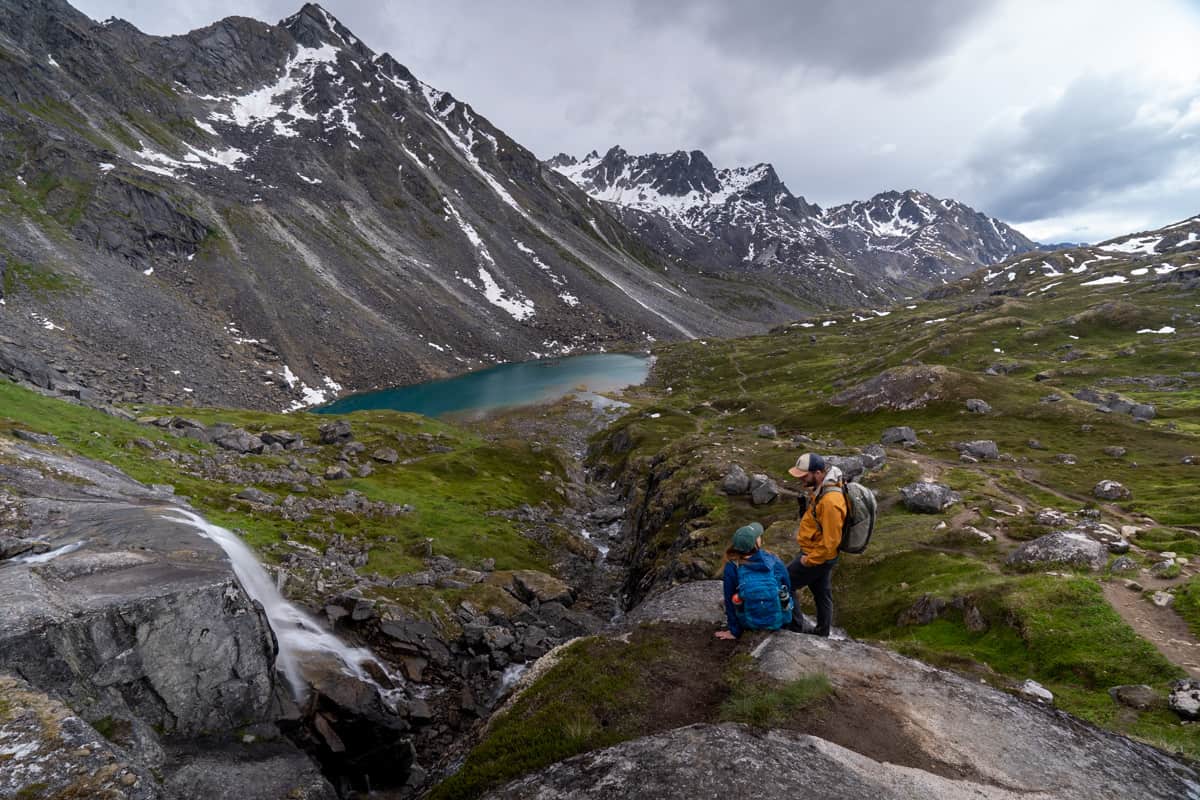
So, it’s definitely a good idea to have a satellite communication device on hand, in case something happens while you’re out adventuring. Between the rugged terrain, unpredictable weather, and epic wildlife here, there’s seemingly endless things that could possibly go wrong!
Tech gear
1. Cell phone
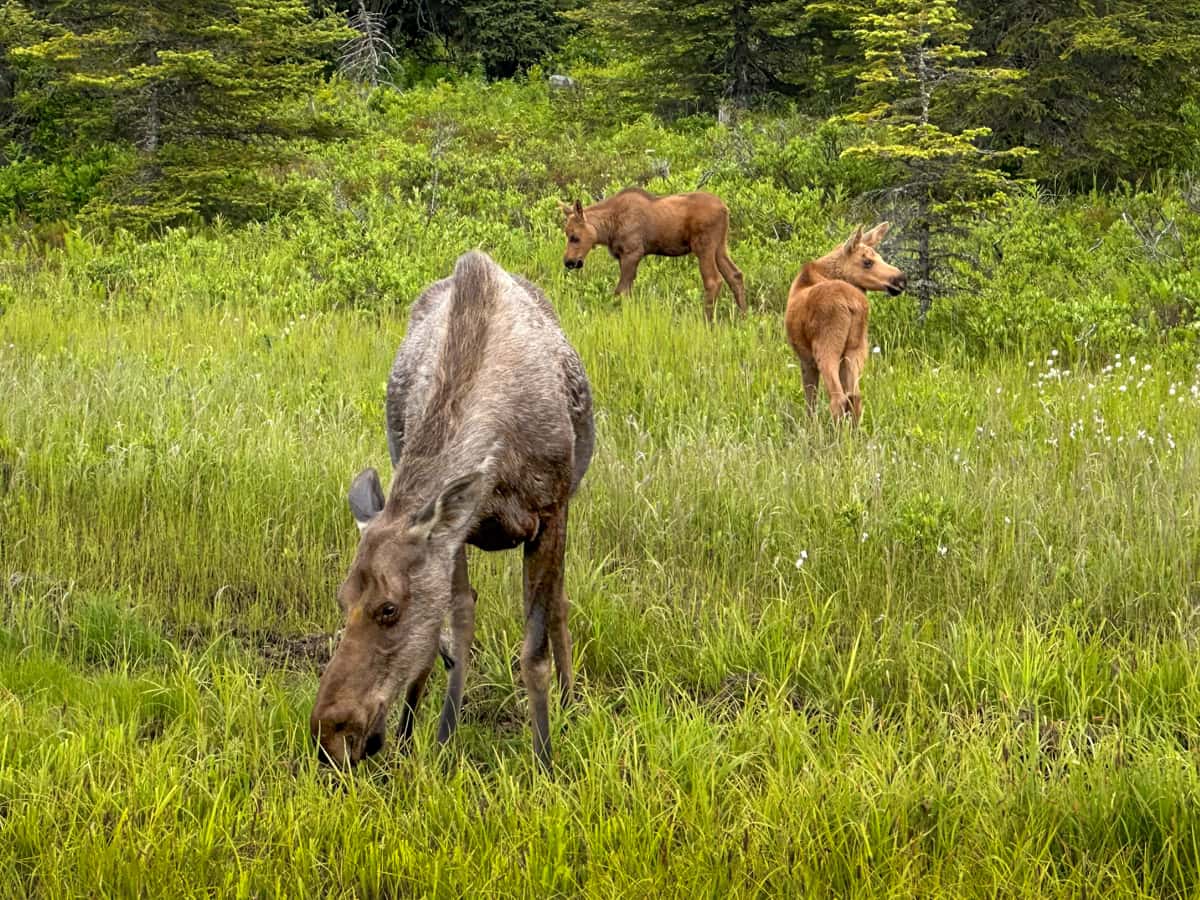
It’s worth flagging that actual cell service is pretty hit or miss in Alaska, even in densely populated areas. However, I’d recommend bringing your cell phone everywhere, so you have a great camera at the ready, if you happen to pass a stunning mountain vista or a moose ambles by (it happens more often than you think in Alaska!).
2. Battery pack
We usually throw a power bank in our backpack, in case one of our cell phones or cameras dies. We bought this one for our honeymoon to Japan (almost a decade ago!) and it’s still going strong!
3. Charging cables
4. Camera
If you’re a photography enthusiast, buckle up because Alaska is an absolute DREAM, with low-hanging clouds, epic mountainscapes, and so much incredible wildlife.
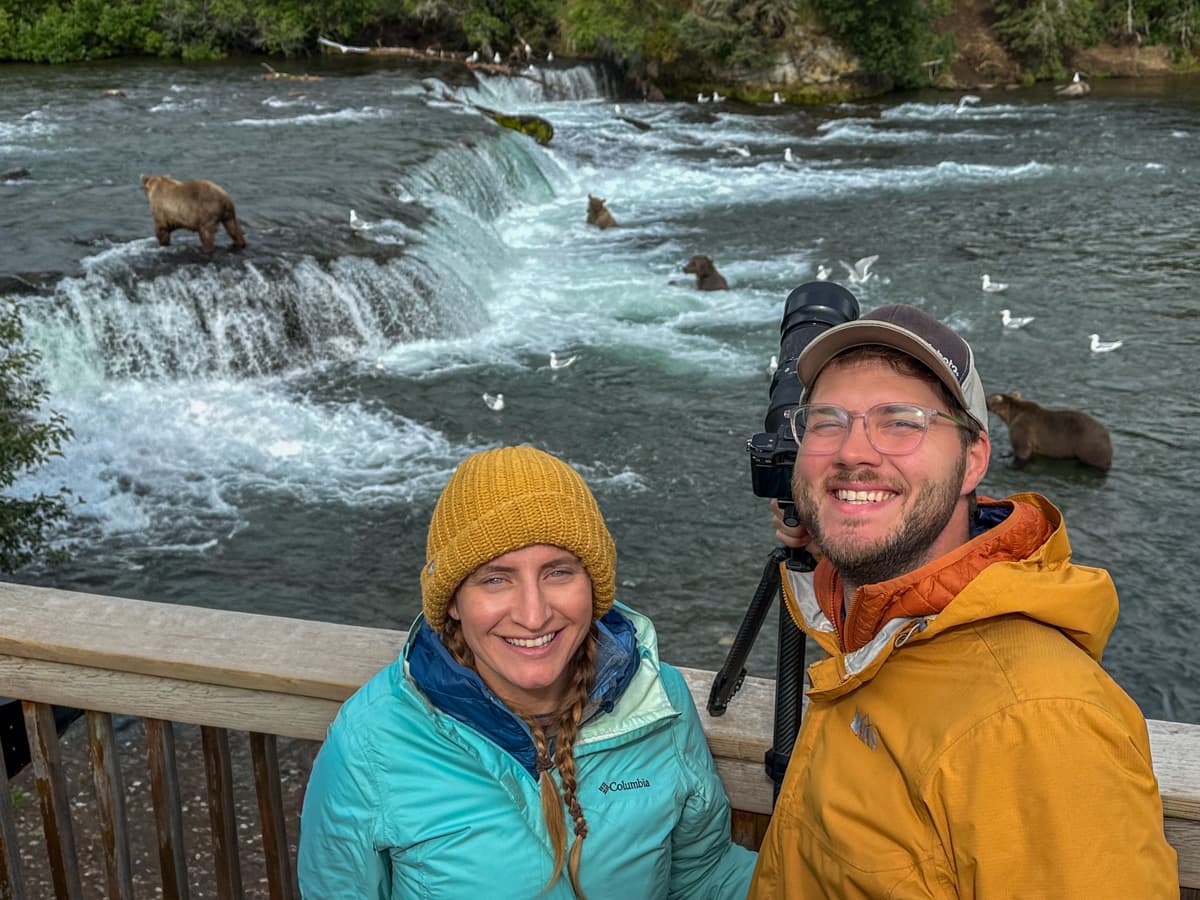
We love our Sony A7iii, which does an awesome job of taking both photos and videos and striking a balance between being lightweight and affordable. It’s an older model, though, so if you’re looking to invest in something more up-to-date, here’s the current model.
Pssst… most mirrorless cameras and lenses, including our own, are weather-resistant, but are not truly waterproof. We usually don’t worry too much about our gear if it’s just sprinkling, but if it’s full on raining (as it is wont to do in Alaska), we have this waterproof camera cover that we throw on it so it doesn’t get ruined.
5. Lenses
Any photographer worth their salt knows that a camera body is nothing without decent lenses.
For Alaska, I’d recommend bringing along a wide-angle lens for landscape shots (we use this one) and a zoom lens, to play around with lens compression and for wildlife shots.
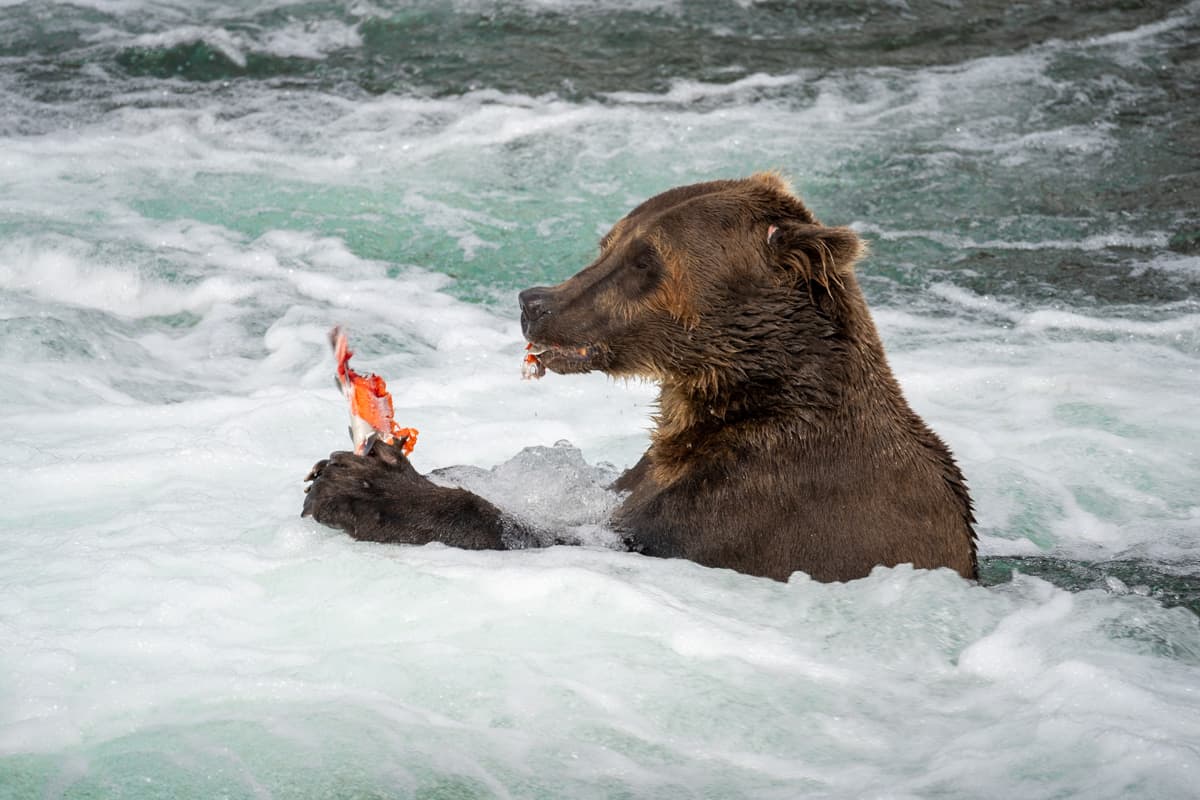
After our trip to Alaska, we ran out and bought this Sigma 60-600mm lens, so that we can get even closer shots of wildlife. This lens has been an absolute game-changer—the range is absolutely wild and the image stabilization, even at 600mm, is so impressive!
6. Tripod
Whether you want to take photos of yourself on a mountaintop or take shots of whales off your cruise ship, having a tripod definitely comes in handy. We invested in this tripod a few years ago and are obsessed—it’s so lightweight and fits into a water bottle pocket!
7. Insta360
We used to use a GoPro as our action camera, but recently decided to give Insta360 a try and are CONVERTS.
You can use it with the invisible selfie stick to get drone-like shots, even in places where drones aren’t allowed, like national parks. Plus, it can help you capture things you’re not even aware of (e.g., we recently went snorkeling in Antarctica and didn’t realize we had been snorkeling with a penguin, until we spotted it in the 360 degree footage afterwards!).
The only thing that I’d flag about using the Insta360 is that if you plan to use it underwater—like if you’re going snorkeling in Ketchikan or you think you might get the chance to get up close and personal with some whales in Glacier Bay National Park—lI’d strongly recommend getting a dive case, which helps the Insta360 properly stitch underwater footage.
We didn’t realize that we needed to use the divecase underwater and used our Insta360, without one, while we snorkeled through Silfra, between two tectonic plates, in Iceland (one of the coolest things we’ve ever done!) and will forever be kicking ourselves—the footage is basically unusable.
8. Capture Clip
If you’re an outdoor adventure AND photography enthusiast, I can’t recommend getting a Capture Clip enough. This little metal clip securely attaches your camera to your backpack strap or your belt and allows you to effortlessly release it with just the push of a button.
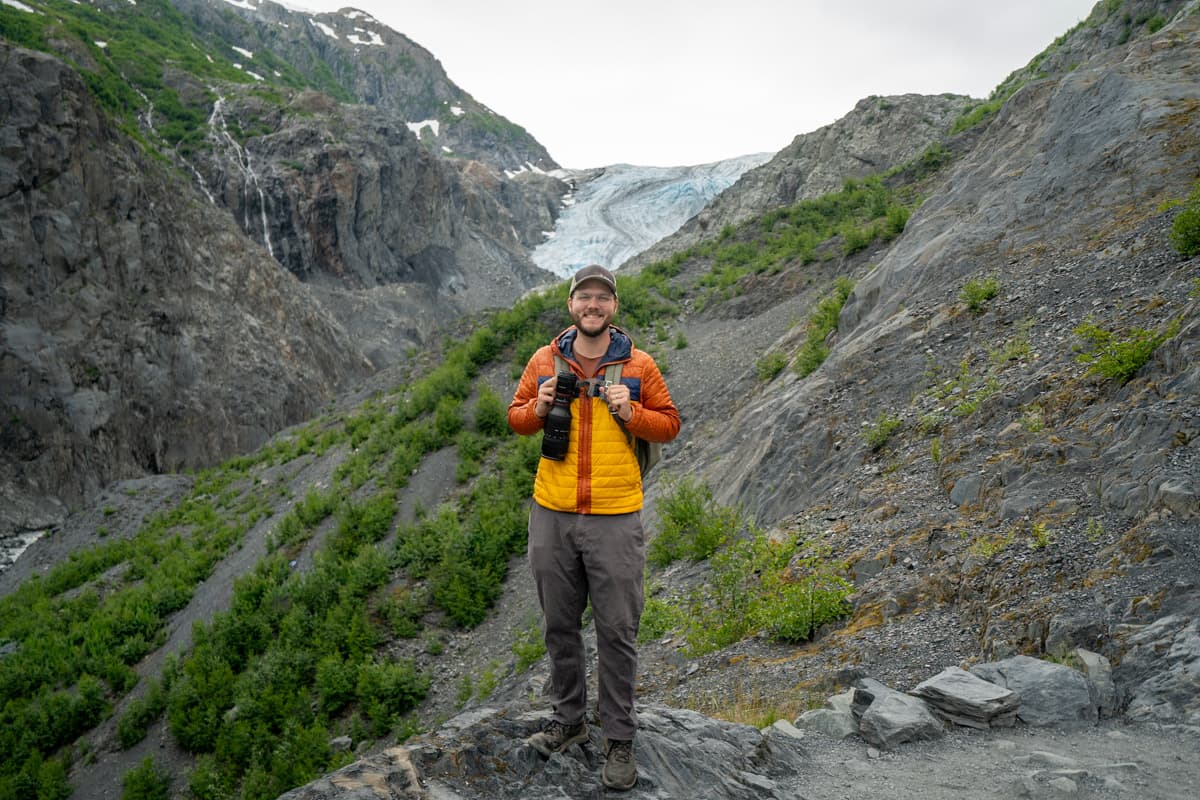
Before we had Capture Clips (we now own FOUR of them!!), we used to always have our cameras stashed away in a camera bag or our backpack—nothing has upped our photography game more than just having unencumbered access to our cameras and lenses!
9. Drone
Drones are not allowed everywhere in Alaska (for example, they’re prohibited in all national parks), but there are still plenty of areas, like most state parks and National Forests, that are drone-friendly.
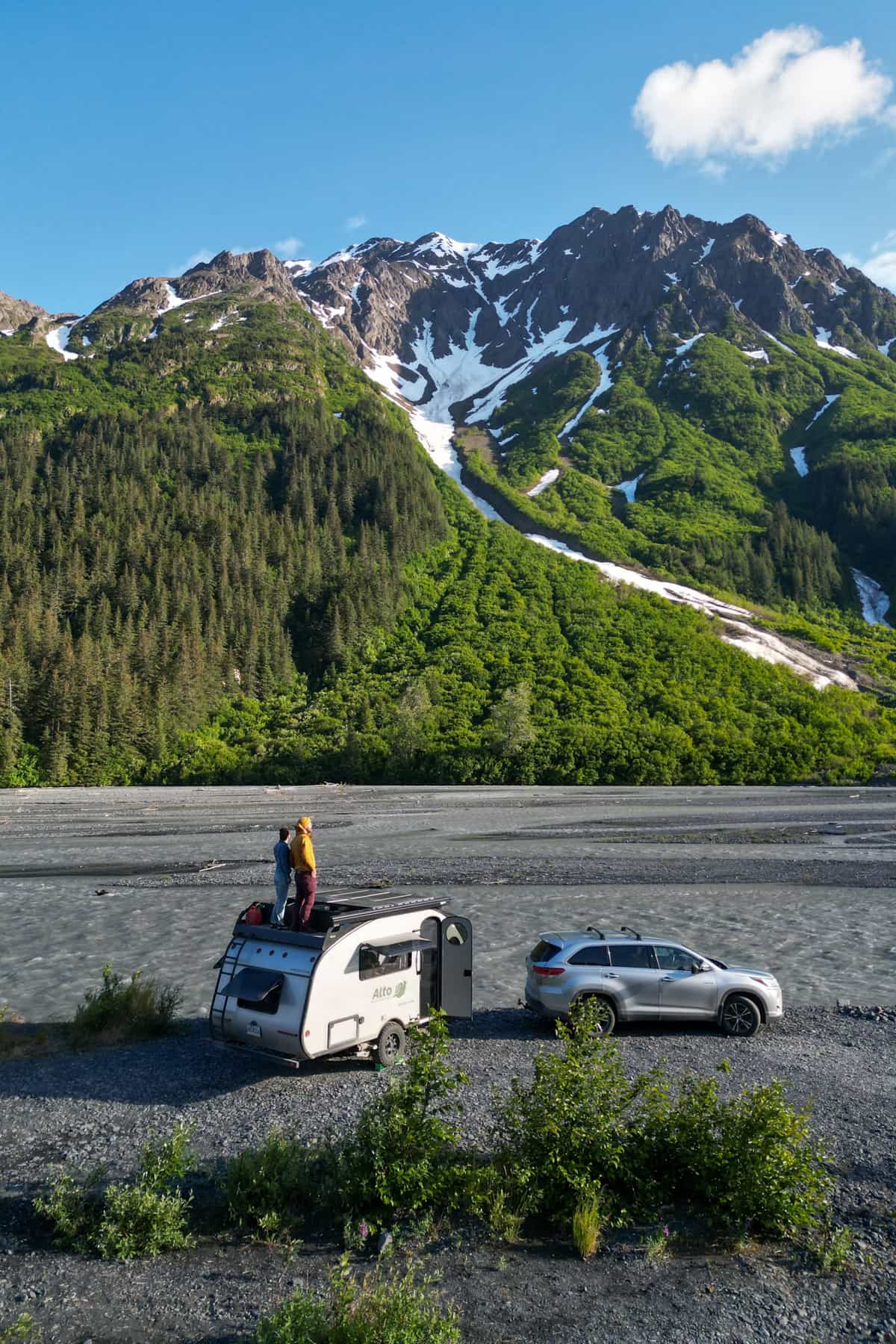
Alaska looks epic enough at ground level, but you can get absolutely WILD videos and photos to get a birds-eye perspective, using a drone. We have the DJI Mini 3 Pro, which takes horizontal AND vertical videos and is under 249 grams for flying in Canada!
Toiletries
1. Sunscreen
The sun can be surprisingly intense in Alaska, especially if you’re on the water or around ice or snow.
2. Bugspray
You know that old joke about how the state bird of Alaska is a mosquito? We were totally bracing ourselves for the bugs to be absolutely HORRENDOUS here—and, to be honest, they really weren’t too bad in most places, with a handful of exceptions (I’m looking at you, Denali National Park and Kachemak Bay State Park).
Still, mosquitoes and other biting insects can be annoying, even if they aren’t quite as intense as old jokes might make you think. So bring plenty of bugspray!
3. Deodorant
4. Toothbrush
5. Toothpaste and floss
6. Glasses, contacts, and contact solutions, if needed
7. Medication
Miscallaneous
1. Passport
Cruise ship travelers and people driving to Alaska will likely have to travel through both Canada and the United States. You’ll need your passport to get into one (or both!) of these countries, depending on your citizenship!
2. America the Beautiful Pass
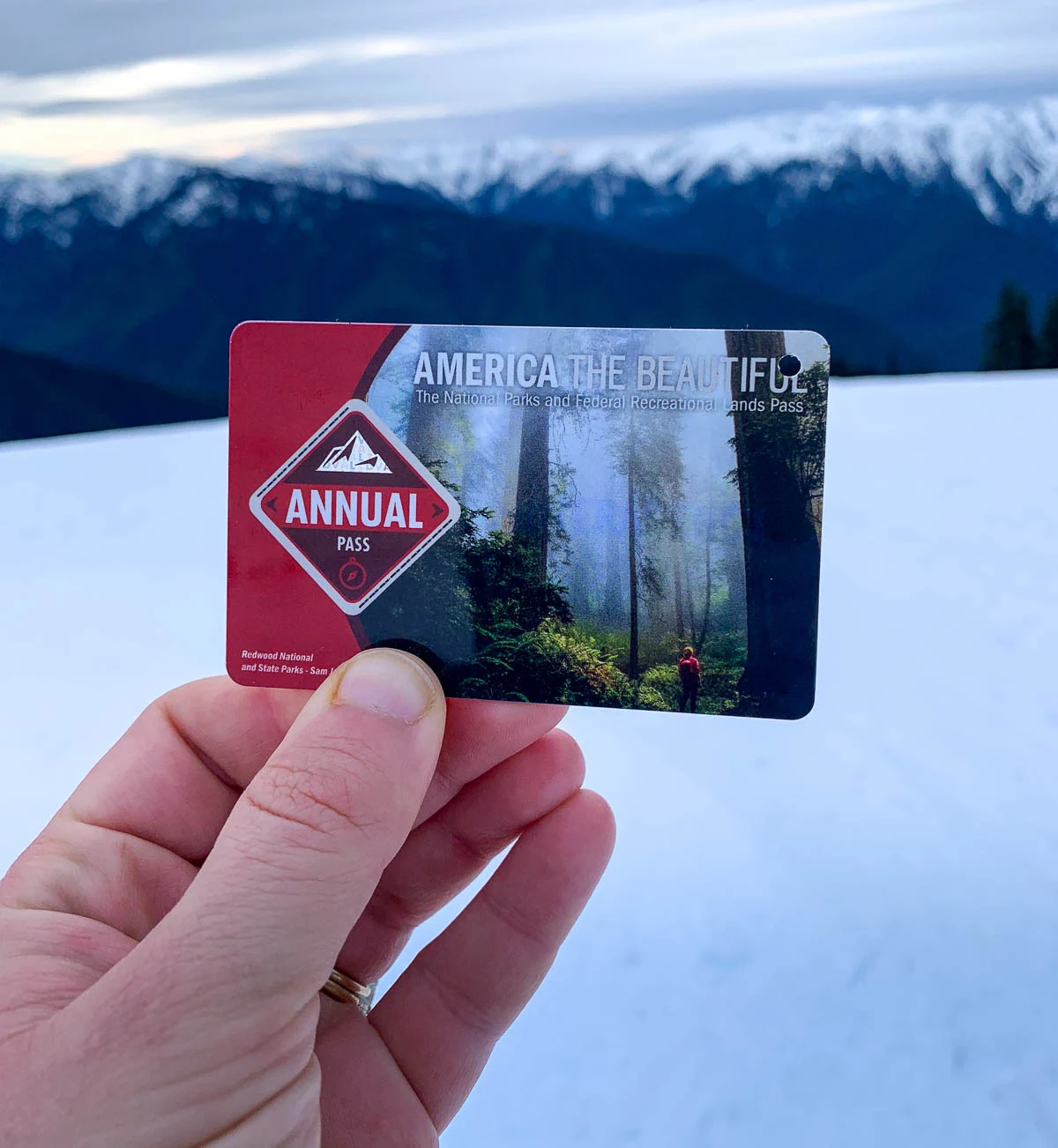
Denali is the only national park in Alaska to charge an entrance fee, costing $15 per person for a week in the park. Still, if you’re planning on going to multiple national parks in a year, I’d strongly suggest picking up an America the Beautiful Pass, which costs just $80 and gets you (and up to three other people) into all of the U.S. National Parks and 2,000 other public lands for free for a year!
3. Sleep mask
Remember what I said about the Midnight Sun? It’s ALWAYS bright in Alaska in the summertime, so unless you’re staying someplace that has INCREDIBLE blackout curtains, I’d strongly recommend bringing a sleep mask to help you get some shuteye.
4. Binoculars
Alaska has so much epic wildlife, from horned puffins to caribou and orcas. You might get close and spot these creatures up close, but, most of the time, they’re going to be pretty far away.
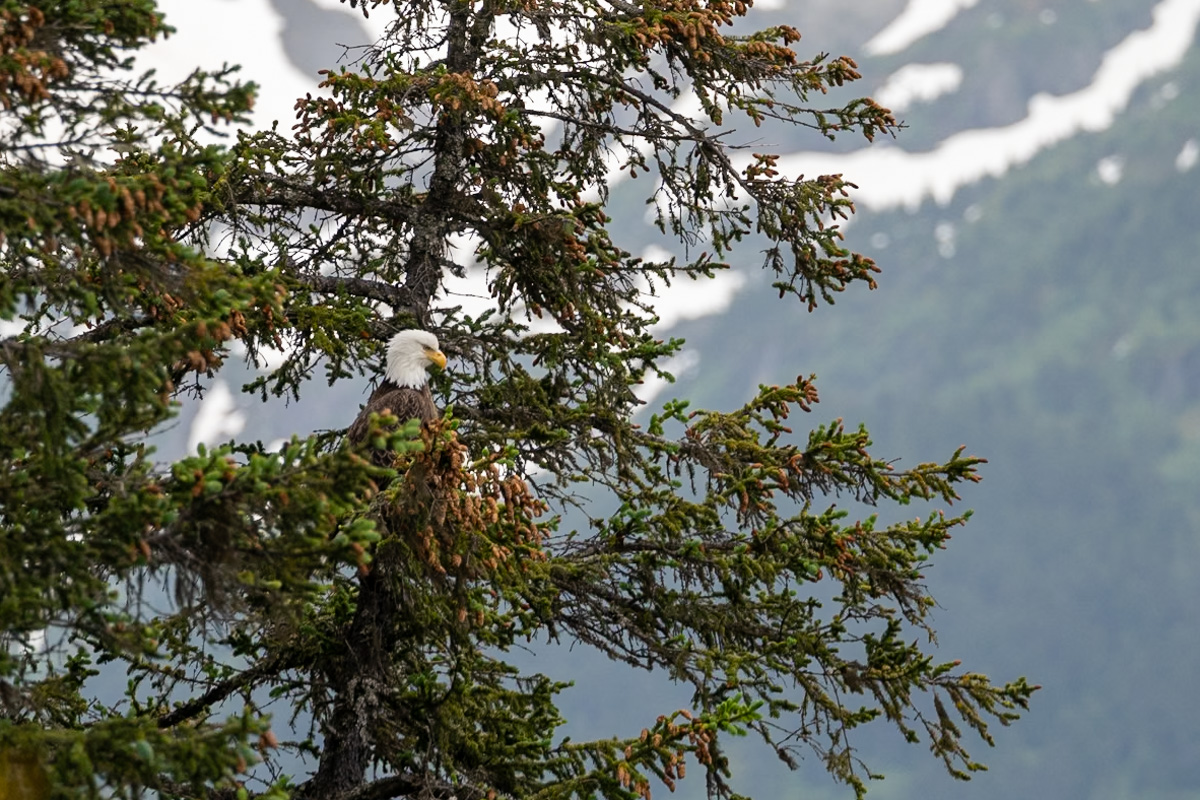
I got tired of not being able to see wildlife very well while we were in Alaska and picked up a pair of binoculars. Now, I permanently leave them in my hiking backpack—you never know when there’s a cool bird or creature that you can scope out in the distance!
Road trip gear
This section is really only applicable to people driving or RVing to Alaska.
There seems to be a LOT of anxiety amongst travelers about how bad the roads are here. But, after personally driving the Alaska Highway, the Stewart-Cassiar Highway, and alllll over Alaska, I personally think the quality of the roads (or lack thereof) is SUPER overblown—most of the roads, save for a few, are totally fine.
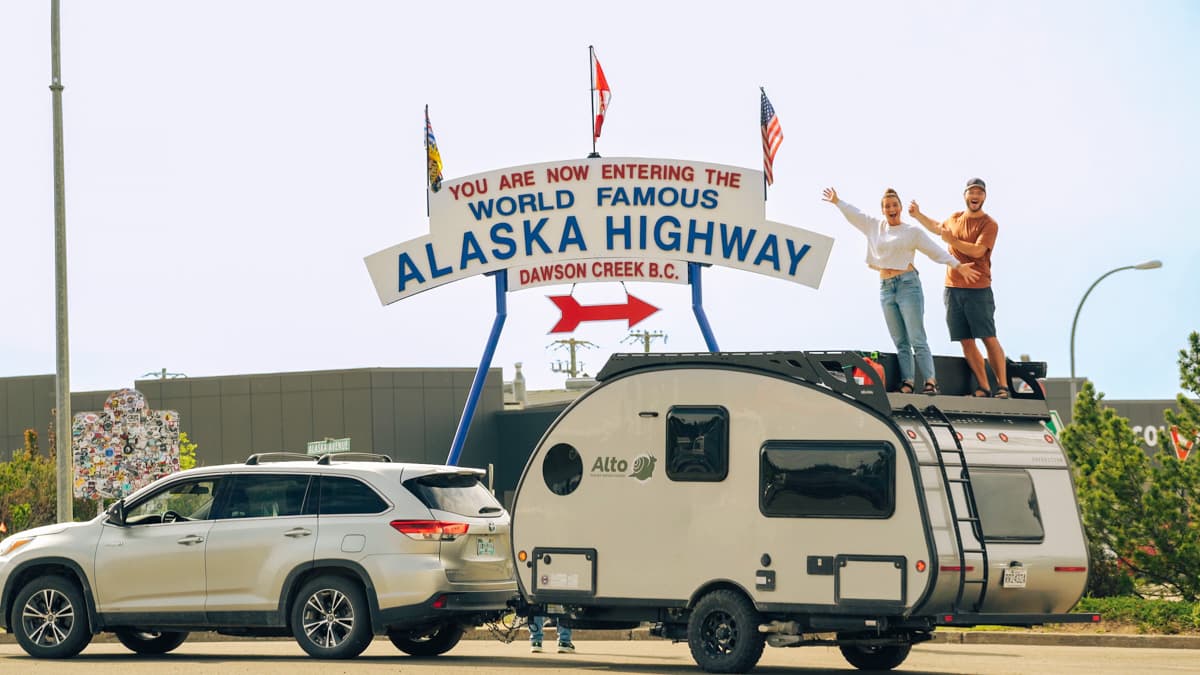
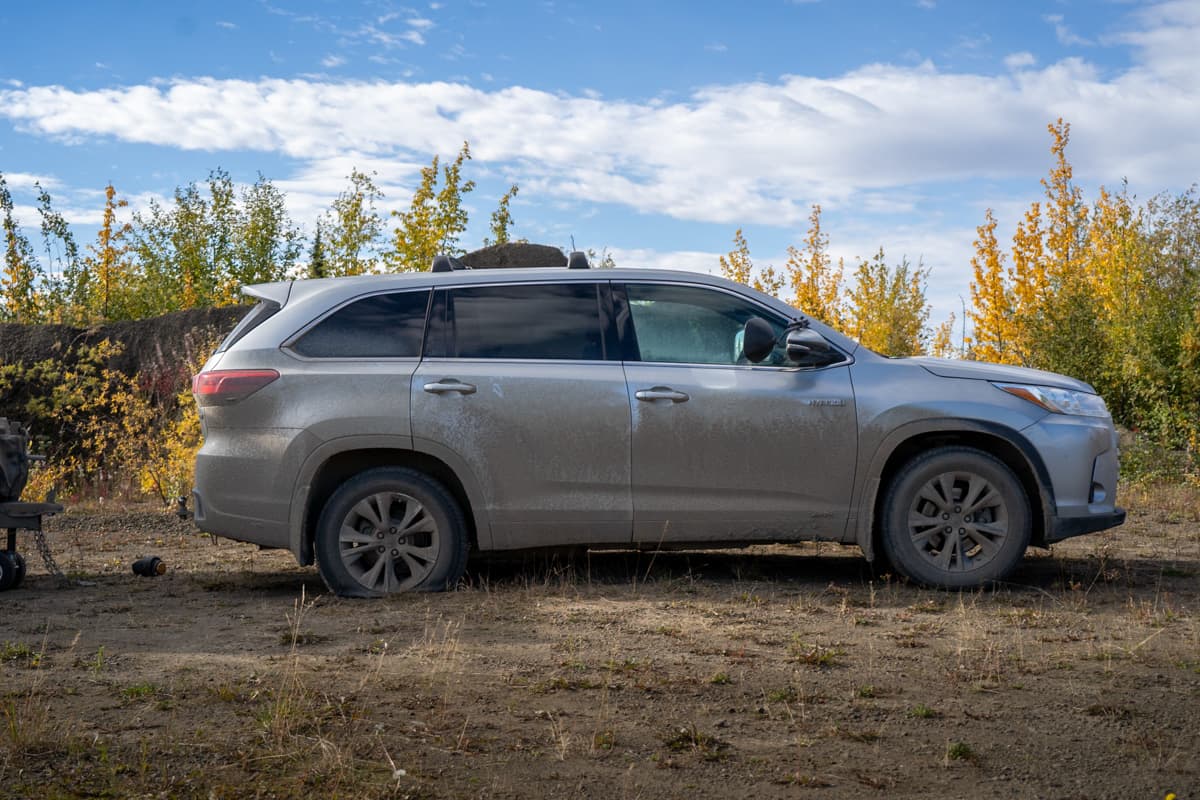
That being said, the vast majority of Alaska is super remote and can have surprisingly limited resources. For example, we unsuccessfully tried for several days to find a full-size spare tire for our SUV before driving the notorious Dempster Highway (which later became a huge problem!).
So, it’s much better to come a bit overprepared, rather than to be stuck in the middle of nowhere, requiring an astronomically expensive tow and multi-week stay at the closest automotive shop.
Here are some essentials I’d suggest having with you.
1. Full-size inflated spare
2. Fix-a-flat
I wouldn’t recommend driving around for long periods of time on a tire that’s repaired with Fix-a-flat, but it does a good enough job to safely get you to a tire repair shop, in a pinch.
3. Windshield repair kit
There are a couple of gravel roads in the state, like McCarthy Road that you use to get to McCarthy, Alaska, that are kind of infamous for causing cracked windshields.
We actually got a cracked windshield in Alaska and happened to have a windshield repair kit in our car, which wound up preventing the crack from spreading and saved us from having to get a new windshield.
Now, we keep a windshield repair kit in our car all the time!
4. Tire inflator
Due to the aforementioned bumpy gravel roads, it can be helpful to air down your tires in certain areas—meaning you’ll also need to inflate them when you’re back on paved surfaces.
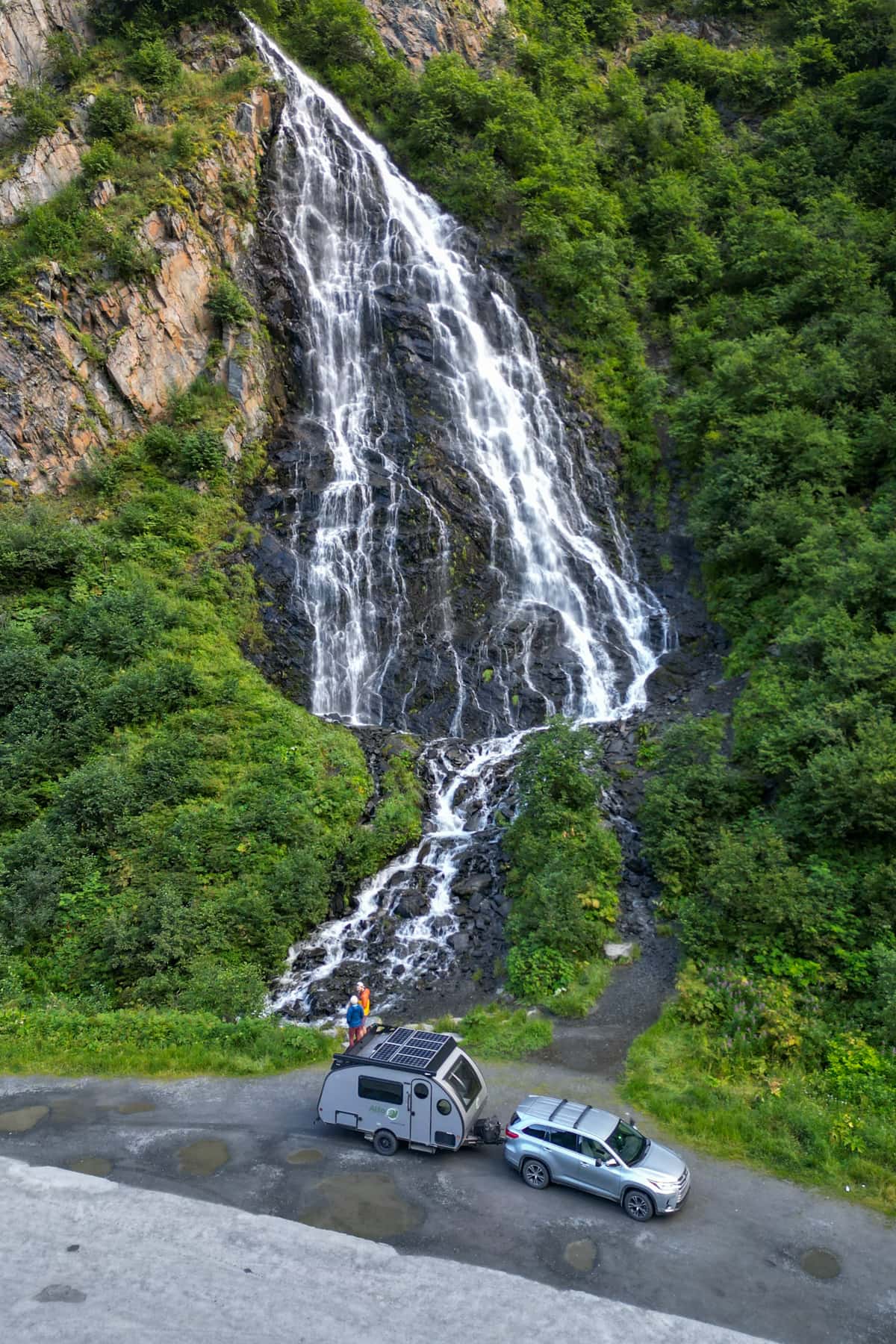
We always keep an tire inflator in our SUV (which doubles as a jump starter!), which we use at least once a month to keep our tires topped off.
Alaska packing list
As promised, if you just want a simple packing list without all of my commentary, here’s a list of what you should pack:
Clothes
- Puffer jacket
- Tank top or crop top (x2)
- T-shirt (x4)
- Long-sleeve tee (x4)
- Pull-over
- Pants (x4)
- Shorts
- Underwear (x7)
- Bra (x3)
- Socks (x7)
- Rainjacket
- Rainpants
- Swimsuit
- Knit hat
- Baseball hat
- Sunglasses
- Hiking boots
- Hiking sandals
- Walking shoes
- Fancier outfits (x2)
Outdoor gear
- Backpack
- Drybag
- Refillable water bottle
- Trekking poles
- Microspikes
- Camping gear
- Bear spray
- Inflatable kayak or SUP
- Headlamp
- Satellite communicator
Tech gear
- Cell phone
- Battery pack
- Charging cables
- Camera
- Lenses
- Tripod
- Insta360
- Capture Clip
- Drone
Toiletries
- Sunscreen
- Bugspray
- Deodorant
- Toothbrush
- Toothpast and floss
- Glasses, contacts, and contact solutions, if needed
- Medication
Miscallaneous
- Passport
- America the Beautiful Pass
- Sleep mask
- Binoculars
Road trip gear
- Full-size inflated spare
- Fix-a-flat
- Windshield repair kit
- Air compressor
There you have it—everything you should include on your Alaska packing list! Do you have any questions about what to bring on your adventure to the Last Frontier? Let us know in the comments below!
