

Denali National Park is usually at the top of visitors’ lists when they come to Alaska—it is, after all, home to the tallest mountain in all of North America! The national park offers the kind of raw wilderness that you dream of when you imagine Alaska—epic landscapes, rushing rivers, and so much incredible wildlife, from grazing moose to massive grizzly bears. If you want to explore this magical corner of our country for yourself, here’s 11 incredible things to do in Denali National Park.

This post may contain affiliate links. If you make a purchase through them, we may receive a small commission, for which we are extremely grateful, at no extra cost to you.
How to get to Denali National Park
Denali National Park is located in the interior of Alaska, near the small town of Healy. There’s a few different ways that you can get here.
Driving
It’s about a 4 hour and 15 minute drive from Anchorage or a two hour and 15 minute drive away from Fairbanks. No matter where you’re coming from on your Alaska road trip, the roads are paved and well-maintained—no problem for any kind of standard passenger car!

Taking a train
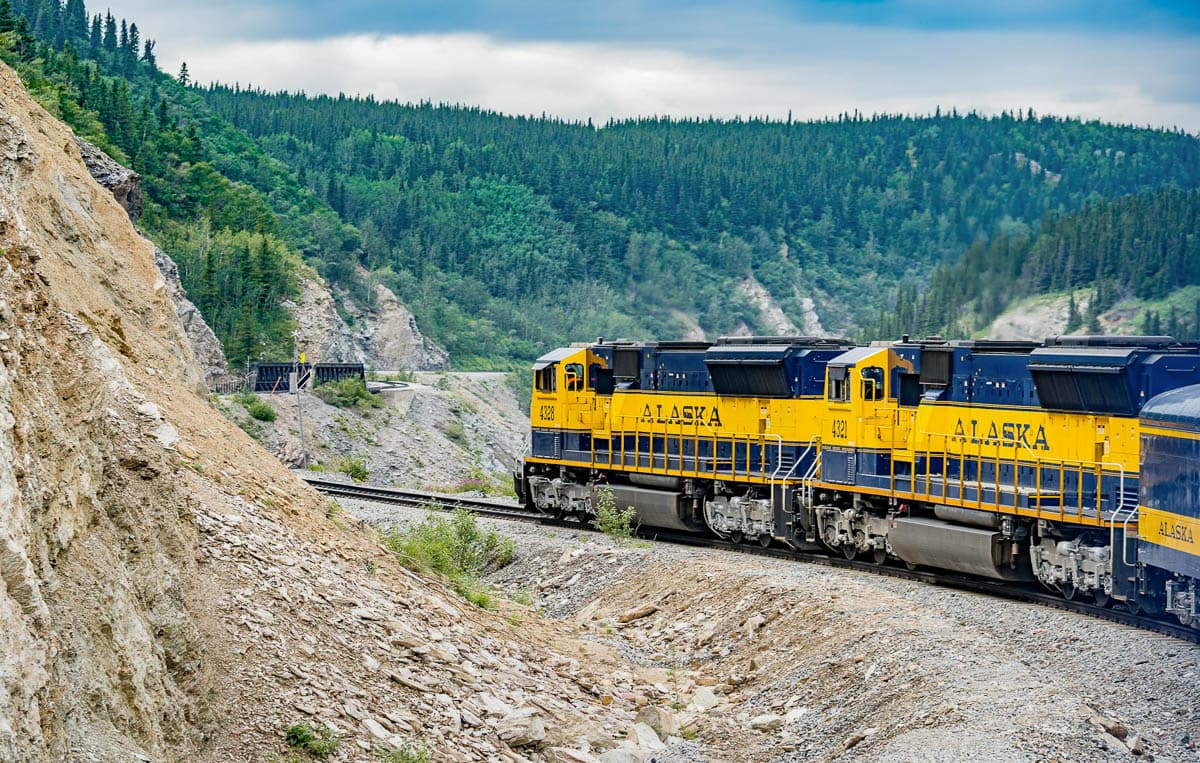
Alternatively, one of the most popular things to do in Anchorage is to take one of the scenic train routes with Alaska Railroad, one of which stops right inside of Denali. Specifically, the Denali Star departs from Anchorage every day from mid-May through mid-September at 8:20 AM, reaching Denali at 3:40 PM in the afternoon.
Theoretically, you could get by in the park by walking about a half mile from the train station to its visitor center and relying on its shuttle system (or your feet!) to get around. However, I generally would recommend having a rental car while visiting the Denali area, so you have a bit more flexibility to explore in and around the park.
Shuttles
Finally, there are private shuttles to get from the major cities of Alaska to the national park, like this option from Anchorage or this option from Fairbanks.
Entrance fee for visiting Denali National Park
To enter the park, each visitor needs to pay a $15 per person entrance fee, which is good for a week.
Alternatively, if you have a valid interagency pass, like the America the Beautiful pass, you can get up to four visitors into the park for FREE!
How to get around Denali National Park
The 92 mile long main road leading through the park is fittingly called the “Park Road”, which is typically broken down into mile markers.

Theoretically, getting around the park should be pretty straightforward, given the fact that the Park Road is basically the only one in the national park. However, it’s actually kind of complicated due to road closures at Mile 43 that are caused by the Pretty Rocks Landslide. There are some areas you’re allowed to drive to on your own, some areas that you can only take a bus to, and some areas that you can only drive to if you’re camping in a certain campground.
Sounds confusing? It is!
But I’ll explain how you can get around the park, based on the Mile Markers.
Up to Mile 2
Most visitors drive up to Mile 2, which is where the Visitor Center and the park’s biggest parking lot is located.

From here, you can park your car and catch free shuttles from the Denali Bus Depot to various destinations in the park (through Mile 15 along the Park Road), such as to the Denali Sled Dog Kennels to see the sled dog demonstration or to the Savage River, to hike the popular Savage Alpine Trail or Savage River Loop Trail.
You can check on the routes and schedules for the free shuttles here.
You can also catch narrated or transit buses, which drive up to Mile 43 in the park (more on that below!).
Up to Mile 15
Any passenger car is allowed to drive past the Visitor Center, up to the Savage River, at Mile 15.
However, parking is quite limited in many of the popular areas here, so if you’re hoping to score a parking spot past Mile 2, I’d strongly recommend getting to the park on the early side, especially if you’re visiting during busier periods, like weekends in the summertime.
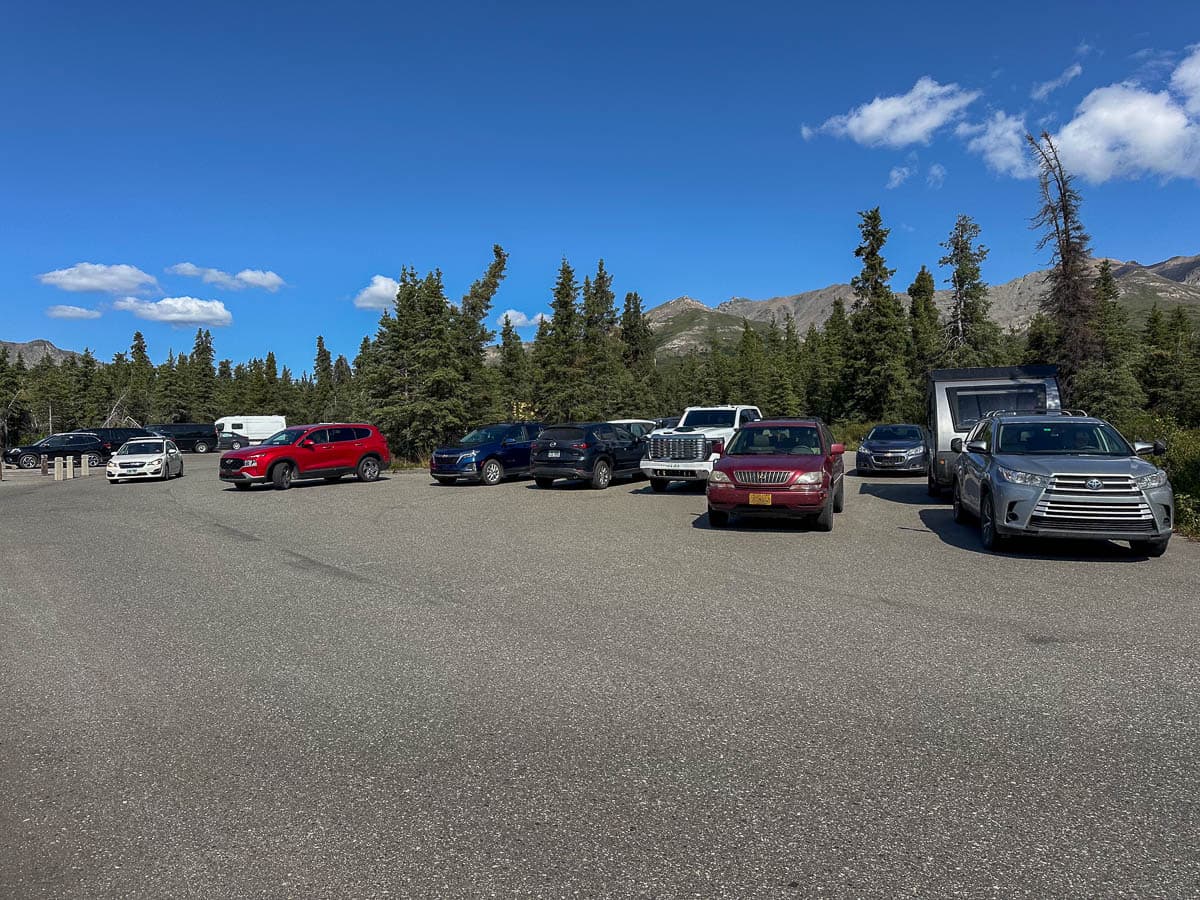
Alternatively, you can easily get around this area using the free hiker shuttles that depart from the Denali Bus Depot, as mentioned above.
From Mile 15 to Mile 43
Passenger cars are generally not allowed to drive past Mile 15.
There aren’t really any established hikes in this area of the park. Accordingly, visitors mostly come here to enjoy scenic bus rides or to try their hand at offtrail hiking, which is actually encouraged by the national park.
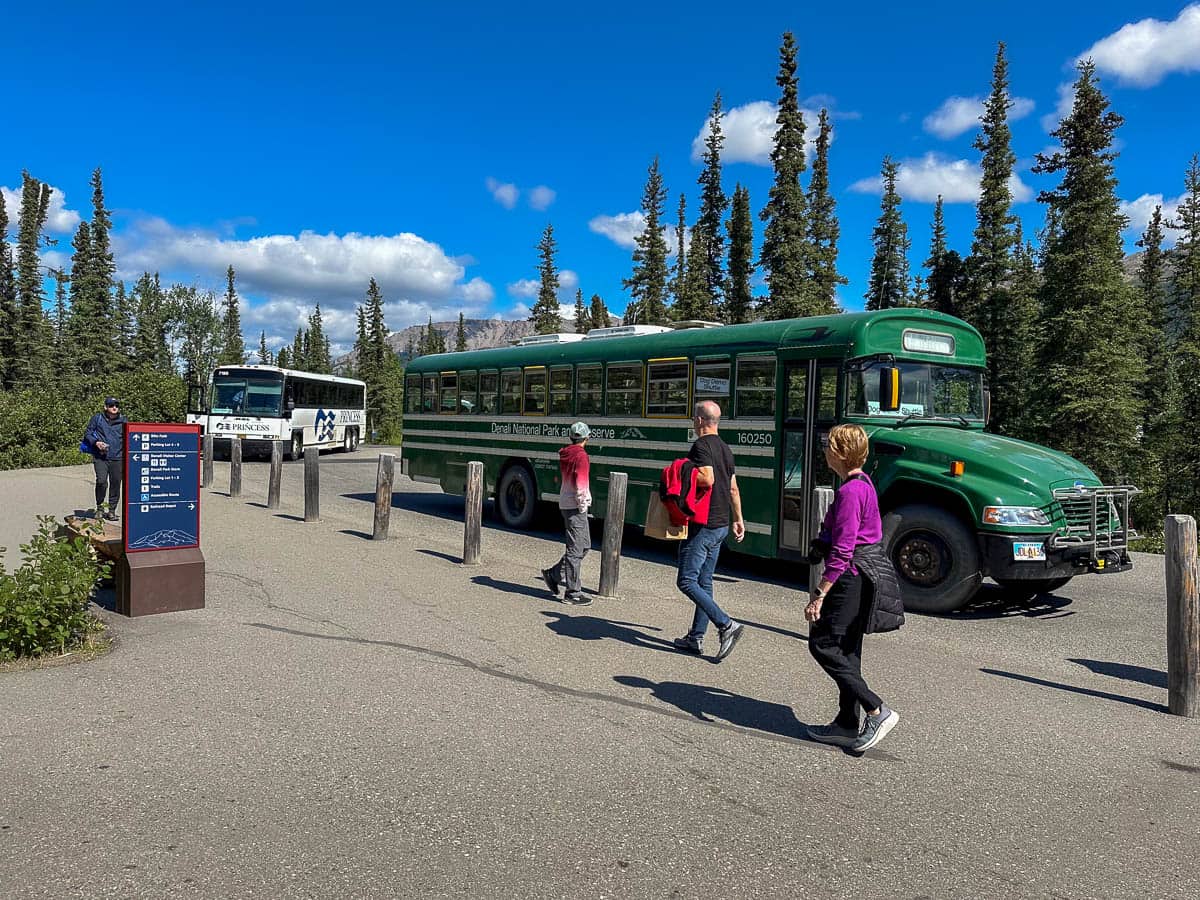
There are two kinds of paid buses that you can hop on, typically departing from the Denali Bus Depot, to get to this section of the park
- Narrated buses: These are tour buses, with a naturalist guide, that drive to various points in the national park (up to Mile 43) to spot wildlife and enjoy the views of the surrounding landscape. You’re not allowed to disembark the bus (other than the stops that are part of the tour), if you feel moved to go on a sporadic hike or have a picnic somewhere.
- Transit buses: These are non-narrated tours that are primarily for visitors that are looking to hop off the bus at some point and go for an offtrail hike in this section. If you disembark the bus, you simply catch a return ride by flagging down another transit bus heading in the direction you’re hoping to go.
The one exception to this rule is that campers staying at the Teklanika River Campground, which is located at Mile 29, for at least three nights are permitted to drive their RV or car back to the campground. However, you’re not supposed to stop along the way and you’re not allowed to move your car once it’s at the campground, so you’ll really only have the opportunity to drive the extra 14 miles from Savage River to the campground and back again one time.
Things to do in Denali National Park
Okay, let’s get to the fun part—all the best things to do in Denali National Park!
1. Hit the hiking trails
One of my favorite ways to explore any national park is with my own two feet on hiking trails.

Despite Denali being one of the largest national parks, it only has 35 miles of official trails. Thankfully, while the number of trails is definitely limited, there are some REALLY stunning options to choose from.
When my husband, Justin, and I visited, we managed to try out almost every single trail in the park. Here are our favorite hikes in Denali:
- Mount Healy Overlook Trail: If you’re short on time and don’t want to fart around with catching hiker shuttles to different areas of the park, this trail is just a short walk from the main visitor center and, after a steep climb uphill, it offers you one of the best viewpoints in the park to see Mount Denali on a clear day.
- Savage Alpine Trail: If you don’t mind catching a shuttle in the park, this is, by FAR, my favorite hike in Denali. The trail is definitely on the more challenging side, but it offers the best views of Denali in the park, plus, with a bit of luck, you might even see some wildlife here! If you don’t mind a bit more mileage, I’d recommend tacking on the Savage River Loop Trail, which winds through a beautiful canyon.
- Horseshoe Lake Trail: If you need an easier hike, this is an excellent option around a pretty alpine lake—it’s one of the best spots in the park to see moose!

Pssst… both black and grizzly bears call Denali home. Bears usually want nothing to do with humans, but can become aggressive if they’re startled or they think their young is threatened. Stay alert while you’re on the trail and be sure to hike with bear spray, which helps temporarily deter a bear if it acts aggressive towards you.
2. Meet the only sled dog team in the National Park Service
One of the most unique things to do in Denali National Park is to see its husky sled dog team—it’s actually the only sled dog team in the entire U.S. National Park Service!
The park originally got its sled dog team in 1922 to patrol the park’s borders to catch would-be poachers. Over 100 years later, the park still uses its team in the vast wilderness here to help conduct scientific research, patrol the backcountry, and maintain trails for winter recreationalists, amidst sub-zero conditions that make mechanical motors unreliable.

During your visit, you can actually meet the huskies yourself by heading to their kennels.
From mid-May to mid-September, the kennels are open from 9:30 am to 4:30 pm daily. There’s also three demonstrations per day (at 10 am, 2 pm, and 4 pm), where you can see the team pull a specialized cart around the kennel and ask the rangers any questions you might have about sled dogs.
There’s no parking available in the summertime, so you’ll have to catch one of the free shuttles from the Visitor Center here.

Outside of the summer season, the kennels are only open on Saturdays and Sundays, from 1 pm to 4 pm. There are no demonstrations during this time period, but, during fall and winter, you might get lucky and spot the team actually heading out for an actual run.
And good news—while parking is quite limited, you’re welcome to just park right at the kennel during this timeframe!
3. Go on a flightseeing tour over Denali
Seeing Mount Denali is on most visitors’ bucketlists—so why not see it up close and personal, from 10,000 feet in the air!
Despite its massive size, Denali is actually famously difficult to see. Only about 30% of visitors to the park ever see its snowy white peaks, due to the clouds that are seemingly constantly swirling around its summit.
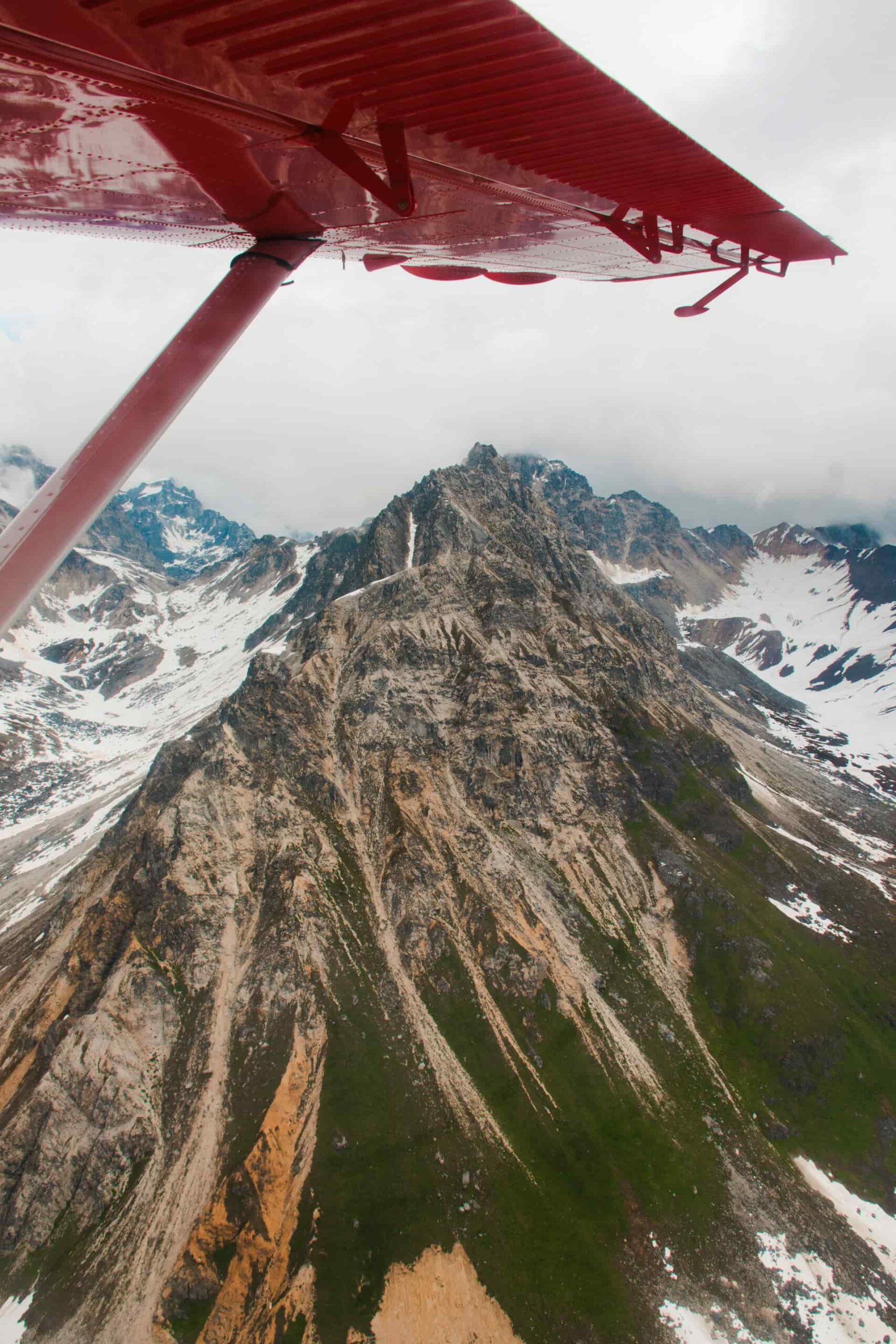
And, even if you luck out with a clear day and can see the mountain in the park, you’re still about 70 miles away—so it’s hard to get a REALLY good view.
Not so on a flightseeing tour, like this hour and a half long option or this option, which offers you the chance to land on one of Denali’s glaciers! With a group of just ten people maximum, you’ll soar to just six miles away from Denali’s summit, flying past massive glaciers and through rugged gorges. This is, BY FAR, the most spectacular way to see the tallest mountain in North America!
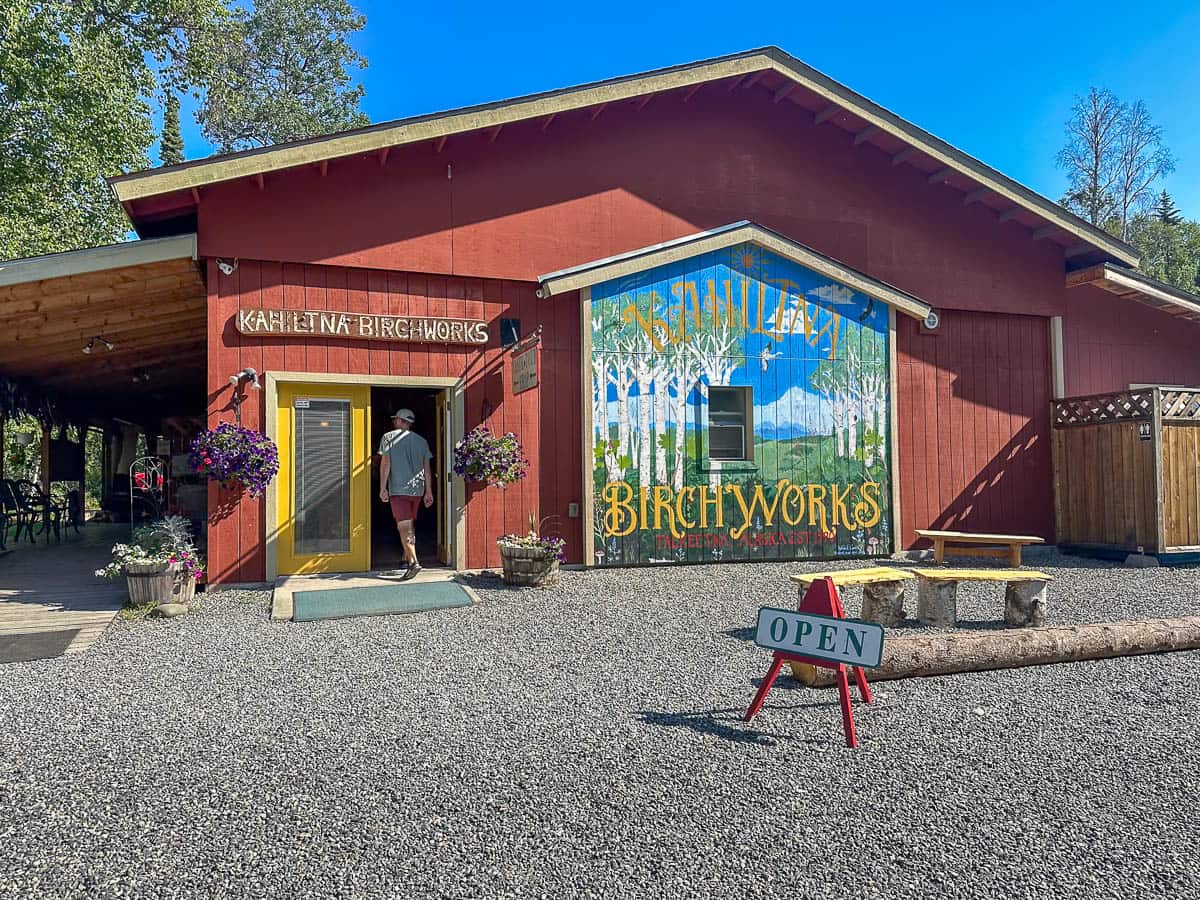
Tours typically depart from the quirky town of Talkeetna, about two and a half hours south of the national park. I’d suggest making a whole day out of visiting Talkeetna on your flightseeing tour, like meeting the town’s mayor (a cat!) at Nagley’s Store or going on a birch syrup tasting tour at Kahiltna Birchworks (don’t miss the ice cream here!).
4. Take a bus tour
If you want a more chill activity to enjoy in the park, you can hop on a narrated bus tour, led by a naturalist guide, to learn more about the history and biodiversity of Denali National Park.
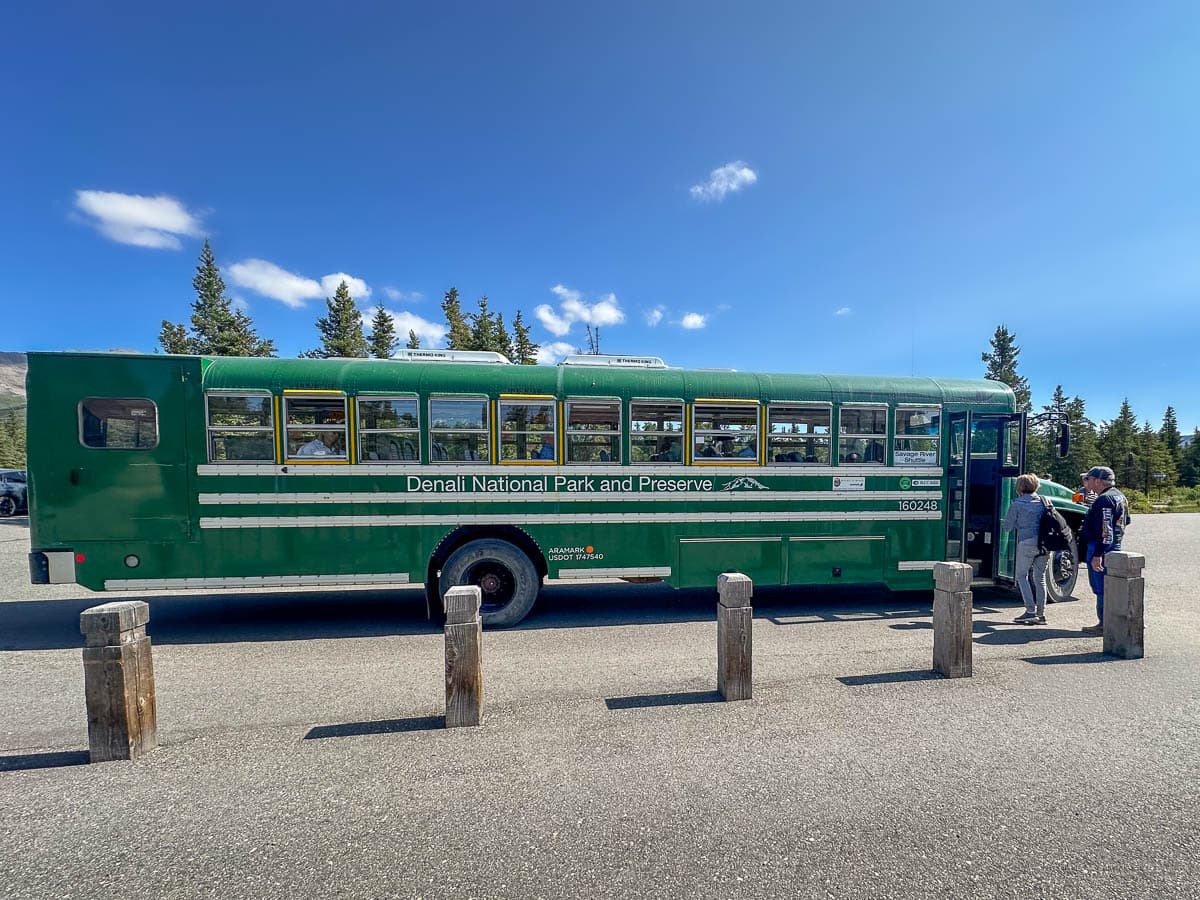
There are two types of tours currently being offered in the park:
- Natural History Tour: This four and a half to five hour tour focuses on the history of the Alaska Natives who have called this land home for over 10,000 years, as well as the landscape, history, and geology of the national park itself.
- Tundra Wilderness Tour: This five to five and a half hour tour goes as far back along the park road as you can possibly go, given the limitations of the landslide, and focuses on trying to spot different flora and fauna, as well as interesting geological features, in Denali.
You can find out more about the tours and make your reservations here.
5. Go on a ranger guided hike
As mentioned above, Denali sprawls over 9,600 square miles and yet, only has 35 miles of hiking trails. Accordingly, it’s quite popular—and actually, encouraged by the national park—to do off trail hiking, where you just find an area you like and head out into the wilderness to go explore!
As you might guess, this makes some people (including me!) rather nervous to just wander off into the tundra, without really knowing where you’re going or what to see—which is where ranger-guided hikes (also known as “discovery hikes”) comes into play!

Starting from mid-June through around early September, there’s one ranger-led hike that varies by location, distance, and difficulty every day, rain or shine. A ranger will pick a specific area to explore and, along the way, point out plants, animals, geology, and other interesting aspects of Denali’s landscape.
Hikes are either moderate or strenuous and include challenging aspects like river crossings and bushwacking through dense vegetation—i.e., a proper Alaskan adventure!
To join a ranger guided hike, you need to sign up either one or two days ahead of time at the Denali Visitor Center (signing up the day of is not allowed). You need every member of your party that plans to go on the hike present when you sign up or you won’t be allowed to sign up. Unfortunately, there are no waitlists, so your best bet is to show up to the visitor center two days before you want to go on your hike to be sure that you snag a spot!

Going on a discovery hike itself is totally free, but, since most of the hikes are past Mile 15 on the Park Road, you’ll usually be required to purchase a transit bus ticket for every hiker. The bus operator reserves enough seats for Discovery hikers, so you don’t need to worry about purchasing tickets before you’re signed up for a hike.
Whenever we tried to sign up for a ranger guided hike during our stay in Denali, they were unfortunately always full. However, one of our good friends went on a discovery hike and said it was one of the highlights of her two months exploring Alaska!
6. Explore Denali offtrail
If you’re an intrepid spirit, you can explore Denali’s wilderness off trail on your own.
The national park has a guide to offtail hiking here, but, in short, you take a transit bus past Mile 15, scout out a location that looks appealing to you, ask your bus driver to get out, and then head out to explore!

While this sounds SO scary to my brain that yearns to follow an AllTrails map at all times, it’s not quite as terrifying as it sounds. Most of the terrain past Mile 15 is above the treeline, so it’s pretty easy to keep an eye on the Park Road, regardless of where you hike.
Some spots that you might want to consider hiking around:
Primrose Ridge
This is a small mountain that gains about 1,500 feet of elevation gain from the Park Road. It’s a series of rolling hills that are covered with tundra and, in the early summer, it’s absolutely COVERED with beautiful wildflowers.
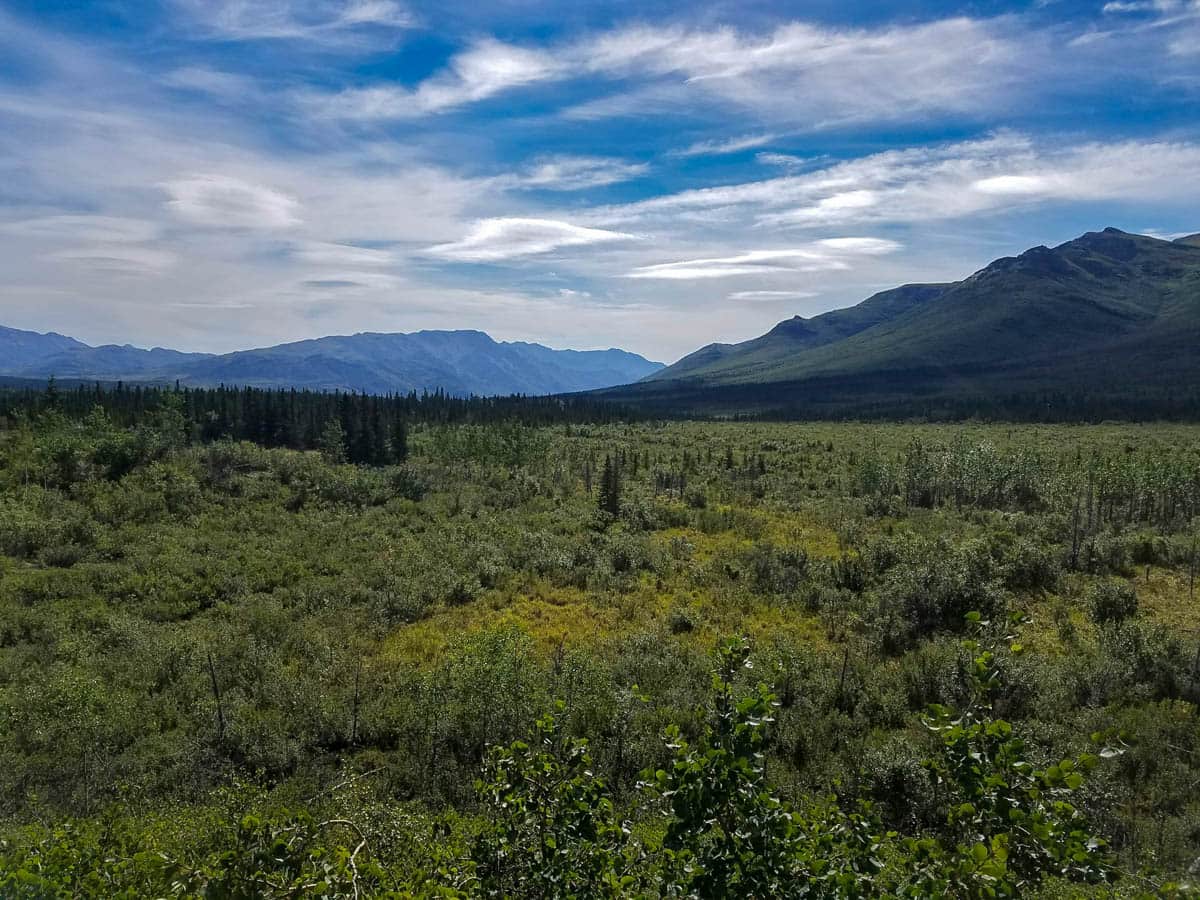
There are several ridges, from the Park Road, that lead up to Primrose Ridge, between Mile 17 and 20, so theoretically, you don’t even need to get a transit bus ticket here—you can drive or take a free hiker shuttle to Savage River and simply walk the four miles (roundtrip) along the park road to get here.
East Fork
East Fork is at Mile 43—the end of the road until the Pretty Rocks Landslide is cleaned up. Here, you can hike down to the gravel bars of the East Fork River, which is a great spot to see wildlife, including lynx, moose, and grizzly bears.
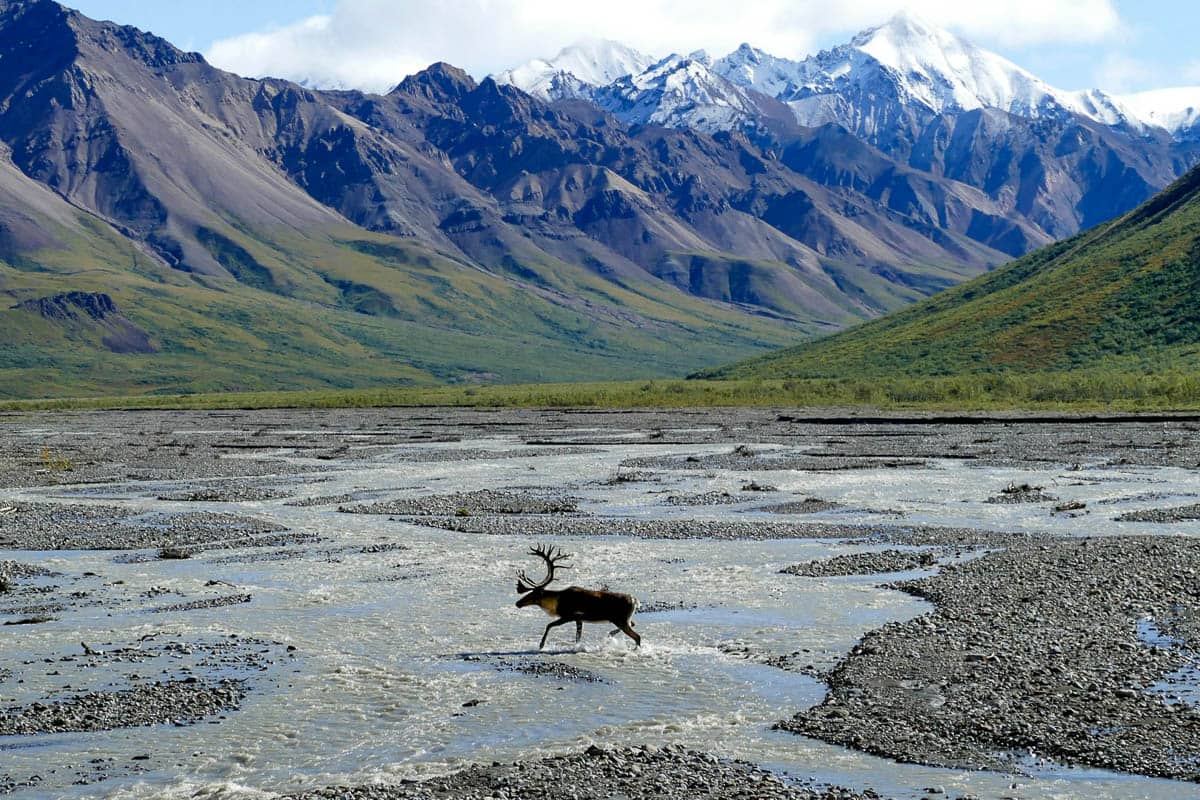
To be honest, riverbeds seem to be a great place to stop if you’re interested in spotting wildlife, so you might also want to consider getting off at the Teklanika River Bridge, located around Mile 31, or the Igloo River Bridge, located at Mile 34. From here, explore along the creekbeds—it’s much more likely that you’ll run into some kind of wildlife here as opposed to another human!
7. Ride an ATV
If you’re an adventure lover, there’s nothing more thrilling than zooming around Denali’s landscape on an ATV!
ATVs are not allowed inside of the national park itself, but there’s plenty of surrounding wilderness that you can explore on four wheels, along rugged trails, through dense forests, and across rocky riverbeds.
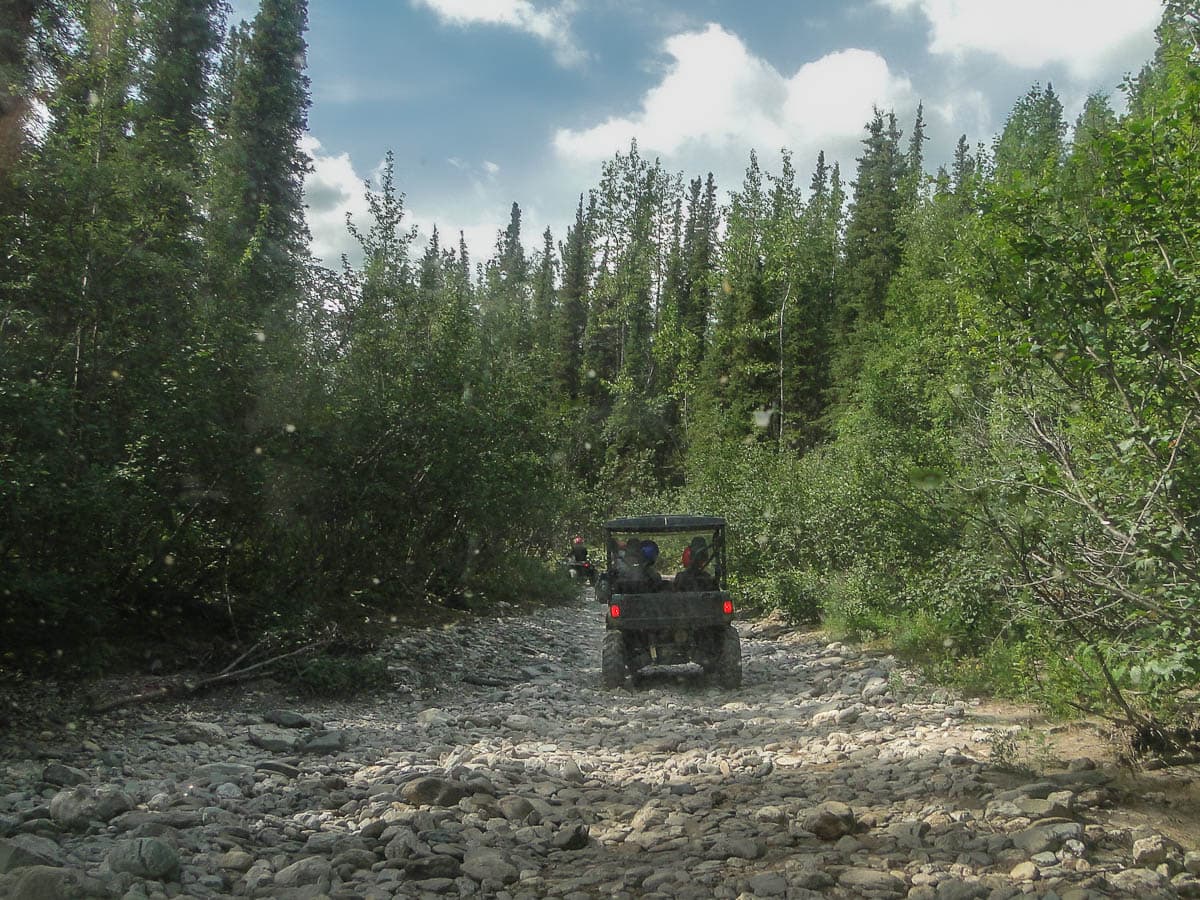
You can join a tour, like this option or this option, which bumps along ATVing trails and old coal mining roads up to scenic viewpoints overlooking the Alaska Mountain range. With any luck, you might spot wildlife along the way, including Roosevelt elk, moose, or caribou.
These tours happen, rain or shine, and if it’s rainy, you WILL be getting quite muddy on this adventure. So wear clothes that you don’t mind getting a little dirty and come prepared with an adventurous attitude!
8. Explore the town of Healy
Denali is quite remote, but, as the most popular national park in Alaska, there has been quite a bit of infrastructure, like shopping and restaurants, that have sprung up in the nearest town of Healy, Alaska.


Here are some of our favorite spots in Healy:
- 49th State Brewing: We went to a LOT of breweries during our three month tenure in Alaska, and 49th State Brewing was, hands down, our favorite, with a cozy atmosphere with firepits, creative beer selections, and REALLY good food. Their homemade veggie burger is hands-down the best one I’ve had at any restaurant—I still dream about it!
- Rose’s Cafe: An assuming local diner with solid breakfast offerings and a friendly staff. Don’t miss the cinnamon rolls!
- Karibu Gallery and Gifts: Curated gift shop with locally made arts, home decor, crafts, and more
9. Go whitewater rafting
One of the most popular things to do in Denali National Park is to go whitewater rafting down the glacially fed Nenana River, which borders the eastern edge of the national park. It offers gentle floating while taking in the surrounding landscape AND plenty of heart-pounding Class II-IV rapids, navigating around massive boulders, ledges, and other obstacles.
Most of these rafting trips take up about half a day, which is perfect if you’ve only got a short period of time in the park.
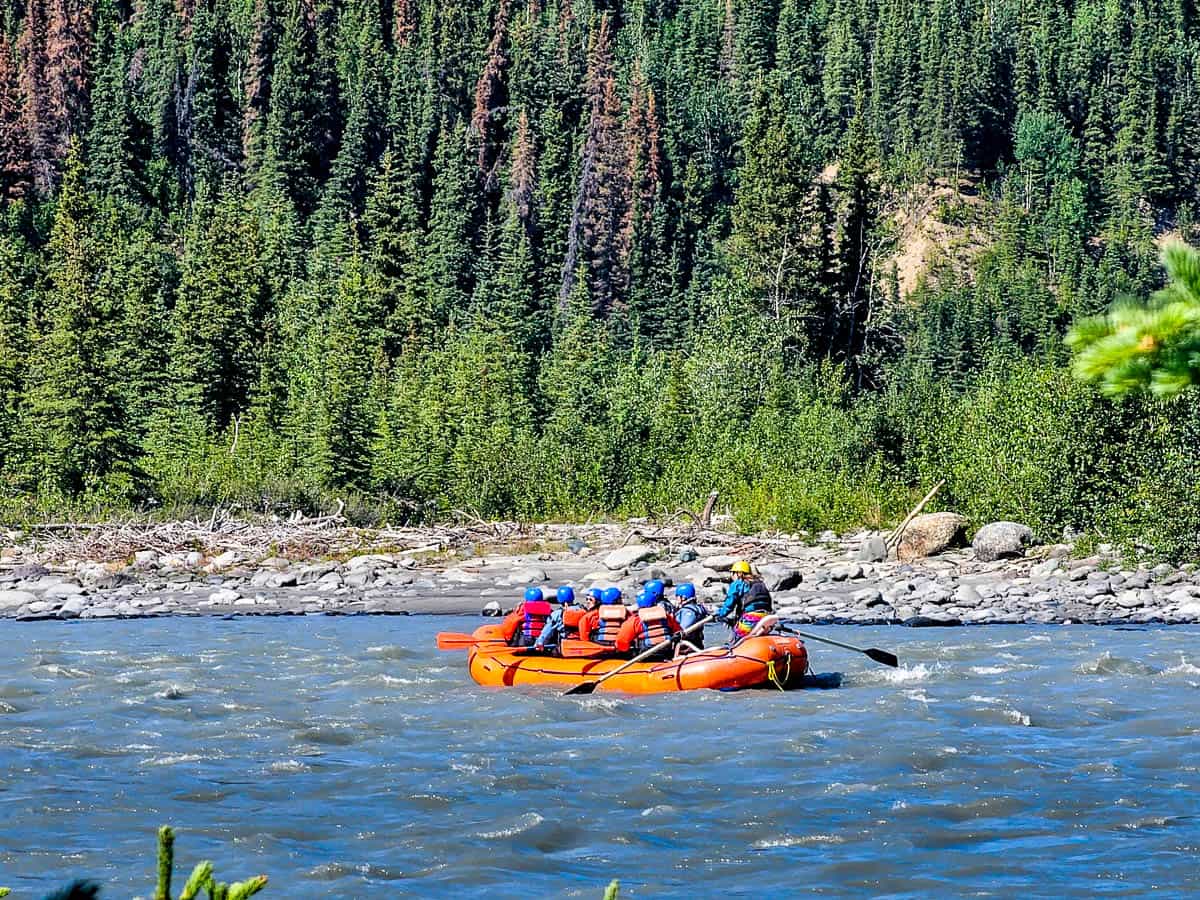
There are a variety of different tours that you can choose from, like this one that traverses Class II-III rapids and heads through the tundra and a boreal forest, or this one that traverses Class III-IV rapids and snakes through a rugged canyon.
Regardless of which adventure you choose, you’ll be provided with all of the gear and safety know-how you need, plus be accompanied by a knowledgeable guide. In addition to taking in the beautiful scenery along the way, you also have a good chance of spotting wildlife, like bald eagles, moose, and even black bears along the riverside.
10. Cross-country ski
Most visitors come to the park from June through August, when it’s mostly snow-free, but, given Denali’s northerly location, winter is definitely the predominant season here.
The Park Road is not maintained past Mile 3 during the wintertime, so it’s typically closed from October through April. Accordingly, you’ll generally need to stick to trails towards the front of the park.

Trail conditions change all the time, depending on snowfall, so your best bet is to pop into the Murie Science and Learning Center, which serves as the main visitor center during the winter season. Here, rangers can point you in the right direction of which trails to hit.
Alternatively, if you’re just eager to hit the trail, you’re welcome to cross-country ski past the closure of the Park Road at Mile 3.
Insider tip: You have to bring your own cross-country ski gear here, but the Murie Science and Learning Center actually rents out snowshoes to visitors for free!
11. View the Northern Lights
Denali is a great place to see the Northern Lights, due to its northern latitude and remote location, away from light pollution.
The best time to see the Northern Lights is from late August through mid-April (with the best viewing being from December through February), when the night skies are sufficiently long and dark. You’ll also need a clear night sky and a high KPI for seeing the Aurora—I use the Aurora app to check what the forecast looks like!

You’ll also need a pretty clear view of the sky, as the Northern Lights can really be anywhere. In the wintertime, I’d suggest either heading to the Park Road (past the Mile 3 closure) or the Horseshoe Lake Trail, at the front of the park.
Where to stay in Denali National Park
Despite its remoteness, there are plenty of places to stay when you’re visiting Denali National Park.
Hotels
There are no hotels or lodges located in the national park itself, but there are a handful of options in Healy.

To set expectations, most of the accommodations here are a bit on the rustic, outdated side—but just consider it all part of the adventure!
- Denali Tri-Valley Cabins: This is, by far, the nicest option, with cozy (and very clean!) log cabins that are conveniently located right outside of the park. Some of the cabins have kitchenettes or fully equipped kitchens, and there are communal barbecues to grill up your own dinner.
- Denali Park Hotel: If you look past the outdated building, you’ll find a hotel, located about ten minutes down the road from Denali, with a friendly staff and comfortable beds. The Denali Park Hotel is tucked a few miles away from Healy, so it’s a great place to spot wildlife, like moose or fox.
- Denali Rainbow Village Motel: If you prefer to be more in the heart of the action, this hotel (which, again, is a bit dated and basic) is located by several shops and restaurants, with a free shuttle across the street to the national park. Some of the rooms come with fully equipped kitchens or have mountain views and there are thoughtful onsite amenities, like laundry machines.
Campgrounds
The national park currently has five campgrounds that are open.
Here’s a list of the campgrounds:
- Riley Creek is located at Mile 0.25, accessible via car, and open to tent and RV campers.
- Savage River is located at Mile 14, accessible via car, and open to tent and RV campers.
- Sanctuary River is located at Mile 22, accessible only by bus, and open only to tent campers.
- Teklanika River is located at Mile 29, accessible by bus or car (only if you stay at least three nights), and open to tent and RV campers.
- Igloo Creek is located at Mile 35, accessible by bus only, and open only to tent campers.
Reservations here book up fast, especially for the campgrounds that are close to the front of the park that accept RVs, so I’d suggest booking as soon as possible.
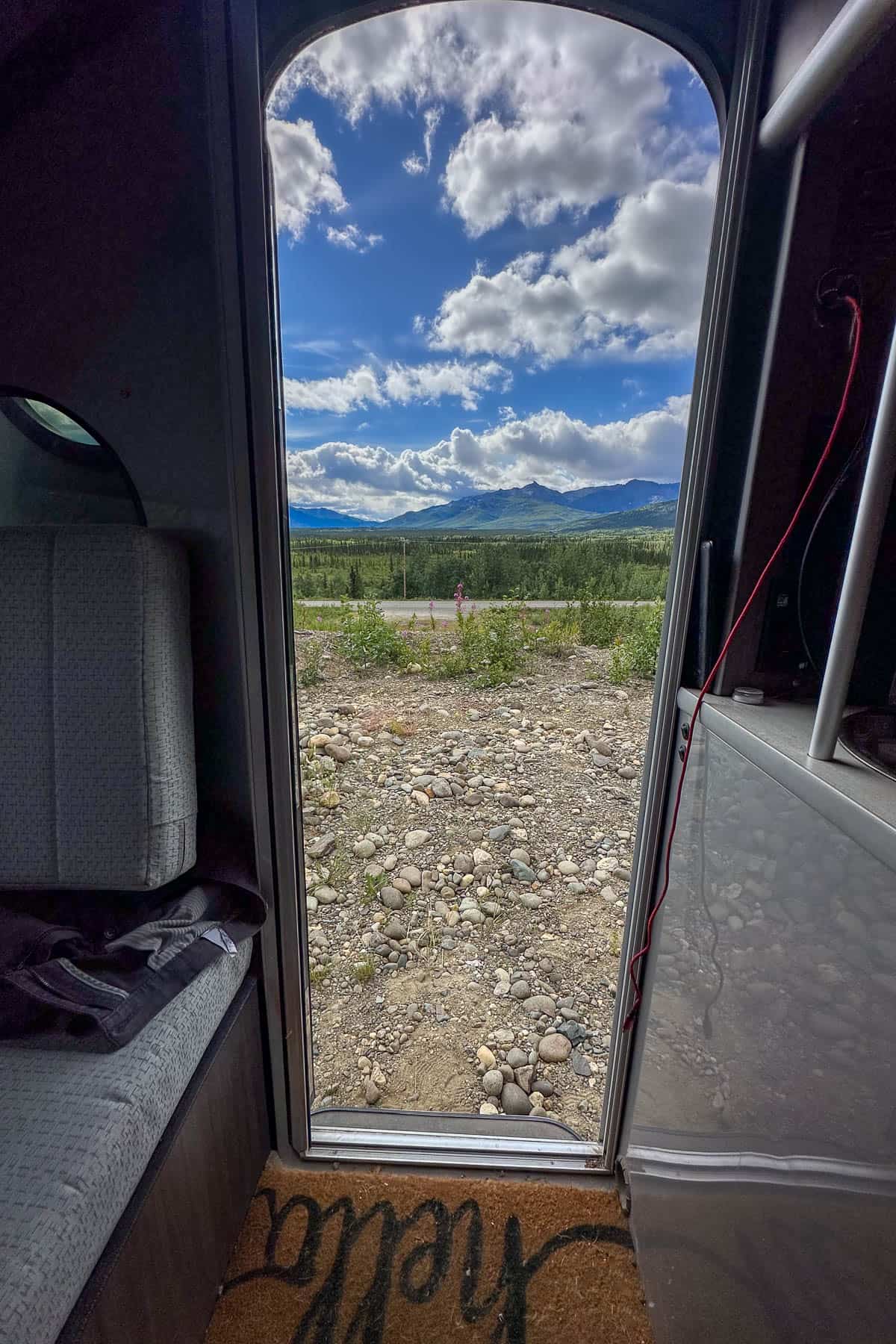
There’s also plenty of campgrounds outside of the national park, like the Denali RV Park and Motel and Denali Rainbow Village RV Park. However, these places have pretty poor reviews and are on the more expensive side, so I’d probably try to stay in the park, if you can snag a reservation.
When to visit Denali National Park
The best time to visit Denali National Park is from late May through early September, when the Park Road is open to Mile 43, the shuttles are running, and the trails are clear of ice and snow. We visited the park in late July—the weather was beautiful and, as compared to other national parks we’ve visited, the crowds were bearable.

As mentioned above, the Park Road is not maintained past Mile 3 from October 15 through mid-February and is not maintained past Mile 13 from mid-February through mid-April. You can absolutely visit the park during this timeframe, but many of the visitor services, like shuttles and the ranger-guided hikes, will be unavailable, and you’ll generally have to stick with exploring the front portion of the park via cross country skis or snowshoes.
I hope you enjoy exploring Denali National Park—it was one of our favorite areas to explore in Alaska! Do you have any questions about visiting the national park? Let us know in the comments below!
