

The tiny town of San Pedro de Atacama is the main gateway to the Atacama Desert, which is one of the most popular attractions in all of Chile. While this desert sprawls for over 40,000 square miles, one of the most popular destinations, Valle de la Luna, is found right outside of San Pedro de Atacama.
Valle de la Luna has a lot to offer, from otherworldly rock formations and towering sand dunes to abandoned salt mines and some of the best sunsets in South America. So if you want to include this incredible spot on your Atacama Desert itinerary, here’s everything you need to know about visiting Valle de la Luna, one of the most beautiful natural reserves in Chile.
This post may contain affiliate links. If you make a purchase through them, we may receive a small commission, for which we are extremely grateful, at no extra cost to you.
What is Valle de la Luna?
Valle de la Luna (or Valley of the Moon) is one of the most popular things to do in San Pedro de Atacama, Chile—and for good reason!
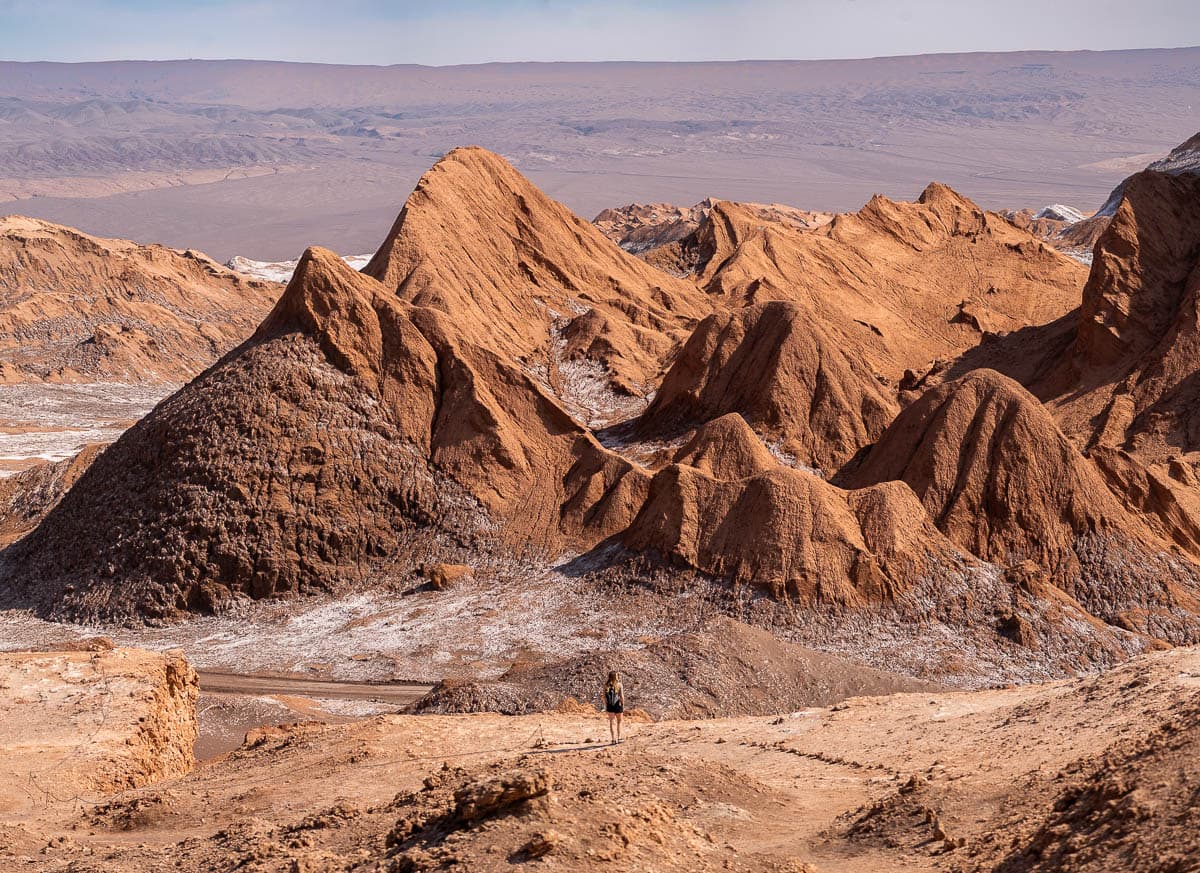
This natural reserve has a stunning diversity of rock and sand formations that are located in the heart of the Cordillera de la Sal, an ancient salt lake bed that was lifted by the shifting tectonic plates, and has been eroded by the wind and rain for millions and millions of years.

Now, there’s a unique landscape of weathered hills, rugged gorges, salt-dusted valleys, and enormous formations carved out of sandstone. The scenery is so otherworldly that NASA actually tested a prototype for the Mars rover here.
Some of the popular attractions in the Atacama Desert are pretty brief stops—a beautiful lagoon where you might spot some wildlife, for example. Not so with the Valle de la Luna—my favorite aspect of the reserve is the wide array of activities you can enjoy in its footprint, ranging from scenic drives and hiking trails to enjoying some of the most beautiful sunsets in Chile.
How to get to Valle de la Luna
The entrance to Valle de la Luna is located here, just 6 kilometers outside of San Pedro de Atacama, Chile (pssst… it’s worth noting that this is obviously a totally different site than the Valle de la Luna that’s located right outside of La Paz, Bolivia).

You have a few different options of getting to Valle de la Luna.
Getting to Valle de la Luna by yourself
Because it’s so close to San Pedro de Atacama, you can reach Valle de la Luna by:
- Driving your own rental car (a 5 minute drive from town). Unlike some of the roads around San Pedro de Atacama, the ones leading to and around the park are decently maintained.
- Biking (a 9 minute bike ride). There are several bike rental shops in San Pedro de Atacama, like Ciclo Aventura Atacama or Rutas Atacama
It’s worth mentioning that the times listed above are only to reach the entrance of Valle de la Luna. The park itself is pretty massive, with the road spanning 18 kilometers past the initial gate, so I wouldn’t recommend simply walking to Valle de la Luna from town. And, if you elect to bike here, be prepared to dedicate at least three hours for getting around the park (not including actually stopping and enjoying the hikes and overlooks here).
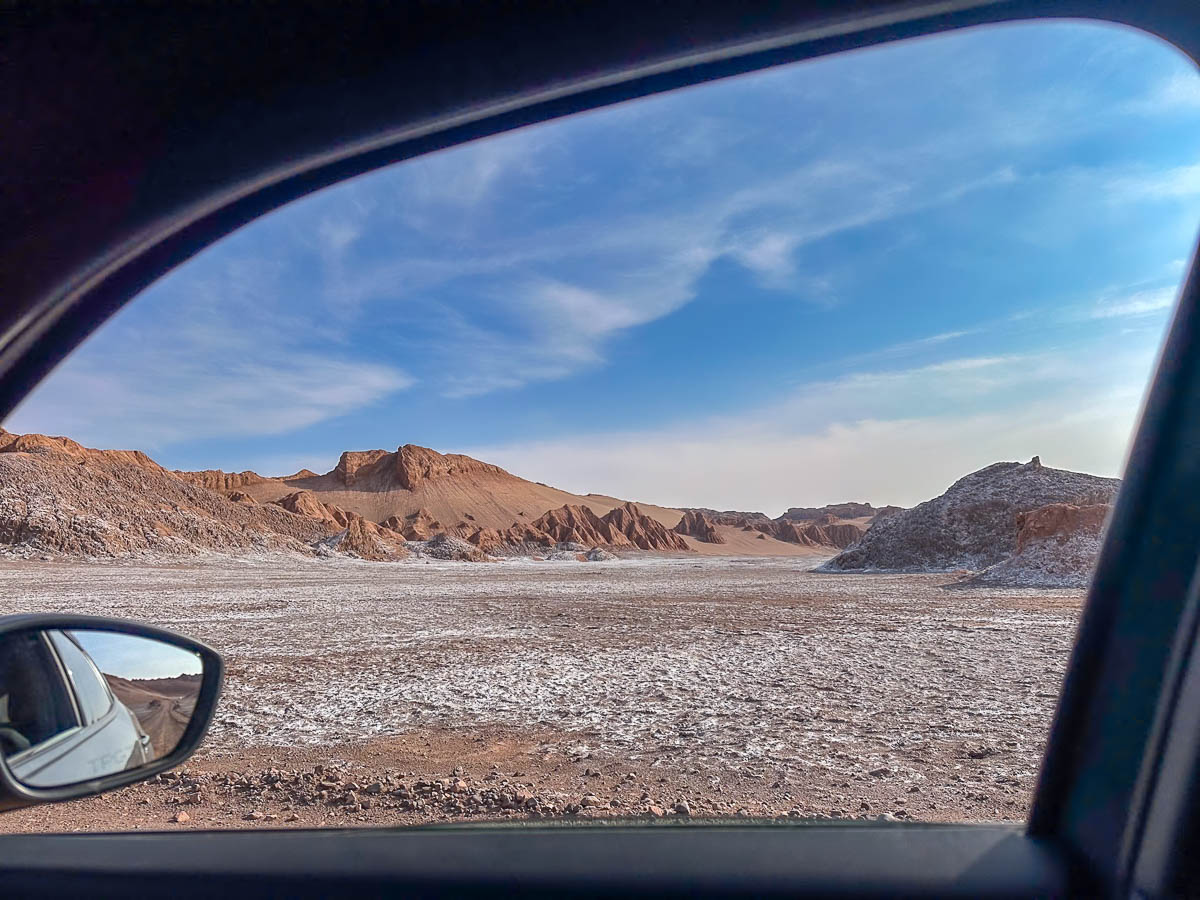
Additionally, the park sits around 8,500 feet above sea level, so I’d recommend acclimating for a day or two before attempting to bike here. On a similar note, the Atacama Desert is the driest non-polar desert on the planet, so be sure to bring along LOTS of water and some sun protection, including sunscreen.
Regardless of whether you drive or bike, you’ll need to either purchase a ticket online ahead of time or at the visitor center. General admission for adults is 10,800 CLP.
Even if you’ve already purchased your ticket online, I’d recommend stopping in the visitor center as the attendants can offer you a handy dandy map and give you any up-to-date information on any closures you might encounter in the park.
Visiting Valle de la Luna with a tour group
If you don’t have a rental car, I’d strongly recommend joining a group tour to Valle de la Luna, where the operator will handle transportation to and around the park (including taking you to the aforementioned incredible sunset spot, which is actually separated from the rest of the Valle de la Luna) and a knowledgeable guide that will share interesting information about this otherworldly landscape.

For example, this tour and this tour both include spending the afternoon exploring Valle de la Luna and finishing off the day by enjoying sunset (and a complimentary cocktail!) overlooking some of the wildest rock formations on the planet.
Things to do in Valle de la Luna
As mentioned above, my favorite thing about Valle de la Luna is that there are several different things to see and do in the park—you could easily spend half a day here!
All of the sites listed below are clearly marked on the map that you can get from the visitor center, in addition to being well-signed in the park itself.
1. Enjoy the scenic drive along Ruta Valle de la Luna
As mentioned above, the Ruta Valle de la Luna stretches 18 kilometers from the Visitor Center at the front of the park to Las Tres Marías, a dramatic rock formation at its rear. Along the way, you’ll pass rugged mountains, earth that’s sprinkled with salt crystals, and some of the most otherworldly rock formations on the planet.

Drive slowly and enjoy the views out of the window—Valle de la Luna is one of the most spectacularly beautiful places to include on your Atacama Desert itinerary!
2. Hike the Duna Mayor Trail
The Duna Mayor Trail (or the Great Dune Trail) climbs up a rugged hill with two overlooks that offer views of the largest sand dune in the park, which, over time. has accumulated against one of the surrounding sandstone formations.

This hike is about 1.6 km (1 mile) roundtrip. I would consider it easy to moderately challenging, depending on your fitness level and how you acclimate to the Atacama Desert’s high altitude.
3. Hike Sendero Mirador Achaches
This loop trail climbs up a series of hills, dunes, and ridges and provides jaw-dropping views of Valle de la Luna’s landscape, from jagged mountains of sandstone to pink-hued sand dunes. The highlight of the trail is definitely an overlook of the Antifeatro (or the Amphitheater), which is an enormous formation of striated detrital rocks and volcanic ash that has a dramatic curved shape—I’ve never seen anything like it!
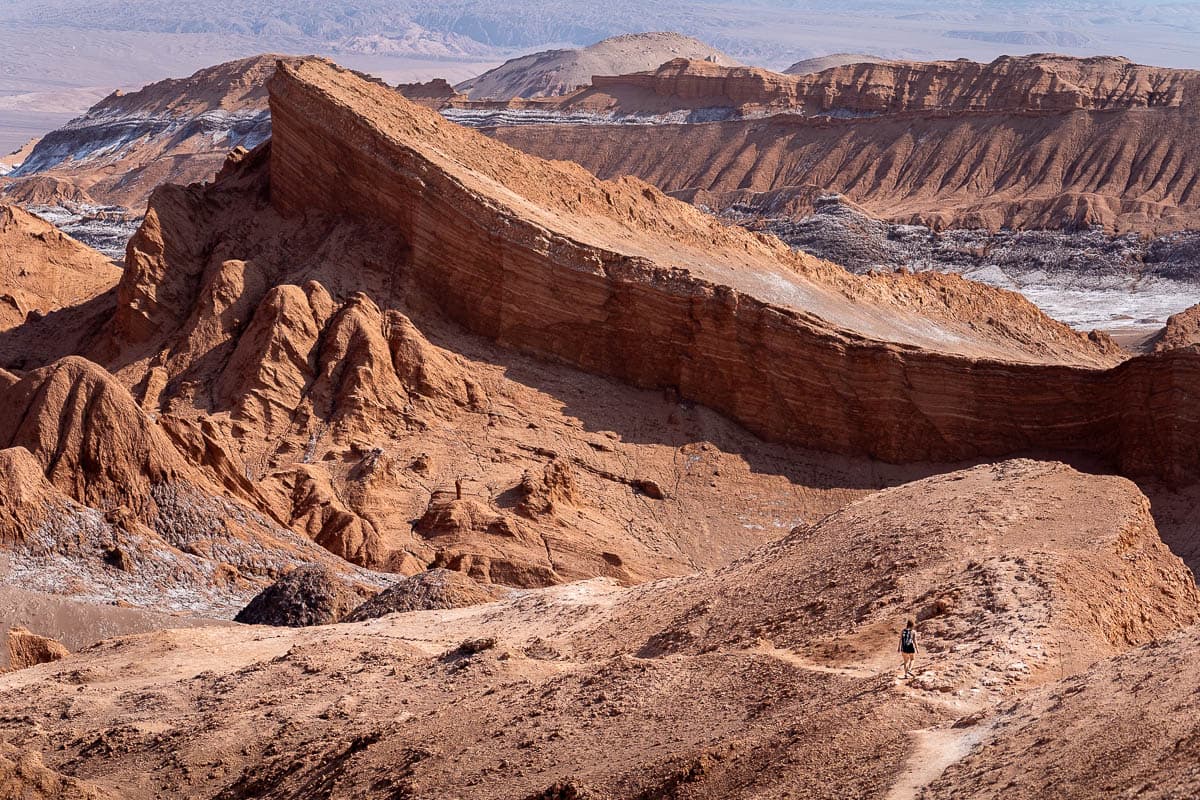
If I could recommend doing just one thing in Valle de la Luna, it would absolutely be to hike this trail. The views are seriously SO stunning!
Just be sure to bring some water with you—between the desert’s dryness and the altitude here, you’re going to need it.
4. Explore the Mina de Sal
The Valle de la Luna was originally named “Las Salinas”, due to the high concentration of salt you can find here. In fact, the land was initially used as part of a small mining operation.
As you drive further into the park, you’ll eventually reach an area where the road and surrounding mountains are covered in a dusting of salt. Here, you can pull over and explore the remnants of the now derelict Victoria salt mine.

There’s honestly not a ton to see of the mine itself—just some rusting old machinery and ruins of buildings where the salt was once processed—but there is a nice little walking path that offers different perspectives of this salt-covered section of the park.
5. See Las Tres Marías
At the back of the Valle de la Luna, you’ll find the Las Tres Marias, an otherworldly rock formation, sculpted of striated quartz and granite. While the formation is now revered for its unique shape, the ancient Atacameños (i.e., the Indigenous people of the Atacama Desert) once performed spiritual rituals here to show gratitude to Patta Hoiri (Mother Earth).

Nowadays, the formation is so named as the rugged spires are believed to look like the Virgin Mary in three different poses (not sure I totally see it, but perhaps you have more of an imagination than me!).
This is more just a quick photo stop than anything else, but still SO cool to see and learn about the history of this mysterious land.
6. See the sunset at Mirador de Kari
The Mirador de Kari, the aforementioned sunset spot, is actually located in a separate area from the rest of the Valle de la Luna, about 10 km down the road, but is well worth a visit. This viewpoint provides a sweeping view over the landscape, with its eroded mountain ridges and canyons forming seemingly endless layers in the Valle de la Luna below—and, at sunset, the pinkish red stone looks even more stunning with the last golden rays of the sun.

I’d actually recommend visiting the rest of Valle de la Luna as soon as they open at 8 AM to beat the tour groups (which usually head here later in the day), exploring some of the other awesome things to do in the area in the afternoon, and then heading to Mirador de Kari right before sunset.
Be sure to keep your ticket to Valle de la Luna from earlier in the day—they check it at the gate to access the Mirador de Kari.
Other things to do near Valle de la Luna
Once you’re done exploring Valle de la Luna, what else is there to do nearby?
Well, lots actually! Here are just a few of the attractions in the surrounding area.
1. Try your hand at sandboarding in Valle de Marte
This valley is literally right across the street from Valle de la Luna, but has a totally different landscape, with imposing canyon walls and towering sand dunes.

There’s a handful of short walking trails here, but the most popular thing to do at Valle de Marte is to try your hand at sandboarding down its massive dunes.
You can rent a sandboard in several outfitters shops in San Pedro de Atacama or, if you haven’t sandboarded before, you might want to head to the park with a knowledgeable guide, like this tour option or this one, who will provide you with the proper equipment and teach you how to ride the dunes like nobody’s business.
2. Float in Lagunas Escondidas de Baltinache
The Salar de Atacama, the largest salt flat in Chile, is located within the Atacama Desert. So it’s no surprise that you can find all things salt, including salt lagoons, in this area.
Lagunas Escondidas is a series of salt lagoons, some of which have electric blue crystal clear waters and salt-laden shorelines. And you can even effortlessly float in some of the pools to have that Dead Sea-esque kind of experience.

Floating in Lagunas Escondidas de Baltinache was one of our most memorable experiences in the Atacama Desert, but be forewarned—the road to get here is absolutely awful, with crazy potholes and stabby rocks. On our way back from the lagoons, we passed three separate vehicles that were tending to flat tires they got (including one lady who looked like she absolutely destroyed her wheel well) and passed a whopping 74 blown out tires that had been discarded along the roadside.
All that is to say, I personally wouldn’t recommend driving your rental car here and would, instead, recommend joining a tour, like this option. If you do elect to drive here, double check to make sure your rental car has a spare tire (there’s no cell service out here) and drive incredibly slowly and carefully.
3. Visit the Magic Bus
On the way to Lagunas Escondidas de Baltinache, there’s a short detour that will take you to an abandoned bus in the middle of a desert. This derelict rusted out shell, against the barren scenery of the Atacama Desert, makes for some very cool photos, with vague Mad Max vibes.

Again, I personally wouldn’t recommend driving your rental car on the gnarly road here and, instead, would suggest joining a group tour, like this option, that stops at the bus, as well several other sites in the Cordillera de la Sal (and includes a pisco sour to end the evening!).
4. Explore the town of San Pedro de Atacama
This one is kind of obvious, but, since Valle de la Luna is just 6 kilometers outside of the town, be sure to take some time to actually explore it! Like any good touristy town, there’s lots of tour agencies and currency exchanges lining its streets, but there’s also some seriously good bars and restaurants to try out, like Emporio Andino, with the best empanadas in the Atacama Desert, and Rincon de Sal, which has surprisingly delicious veggie burgers.

I hope you enjoy Valle de la Luna—it was one of our favorite spots we explored in the Atacama Desert! Do you have any questions about visiting this beautiful corner of our planet? Let us know in the comments below!
