

Machu Picchu, found in the Andes Mountains of Peru, is one of the Seven Wonders of the World and draws more than 1.5 million visitors per year. This impressive site is one of the most well-preserved Inca cities, with temples, agricultural terraces, and over 150 buildings, and is now recognized as a UNESCO World Heritage Site.
But Machu Picchu isn’t someplace that you can just drive up to—you definitely have to do some planning to get to and explore this remote and mysterious place. Here’s 16 tips for visiting Machu Picchu to help you make the most of your visit, from what kind of tickets you need to buy to what you should wear to Peru’s Wonder of the World.

This post may contain affiliate links. If you make a purchase through them, we may receive a small commission, for which we are extremely grateful, at no extra cost to you.
What is Machu Picchu?
Machu Picchu was an ancient Inca city and royal estate, built around 1450 AD by the emperor, Pachacuti.
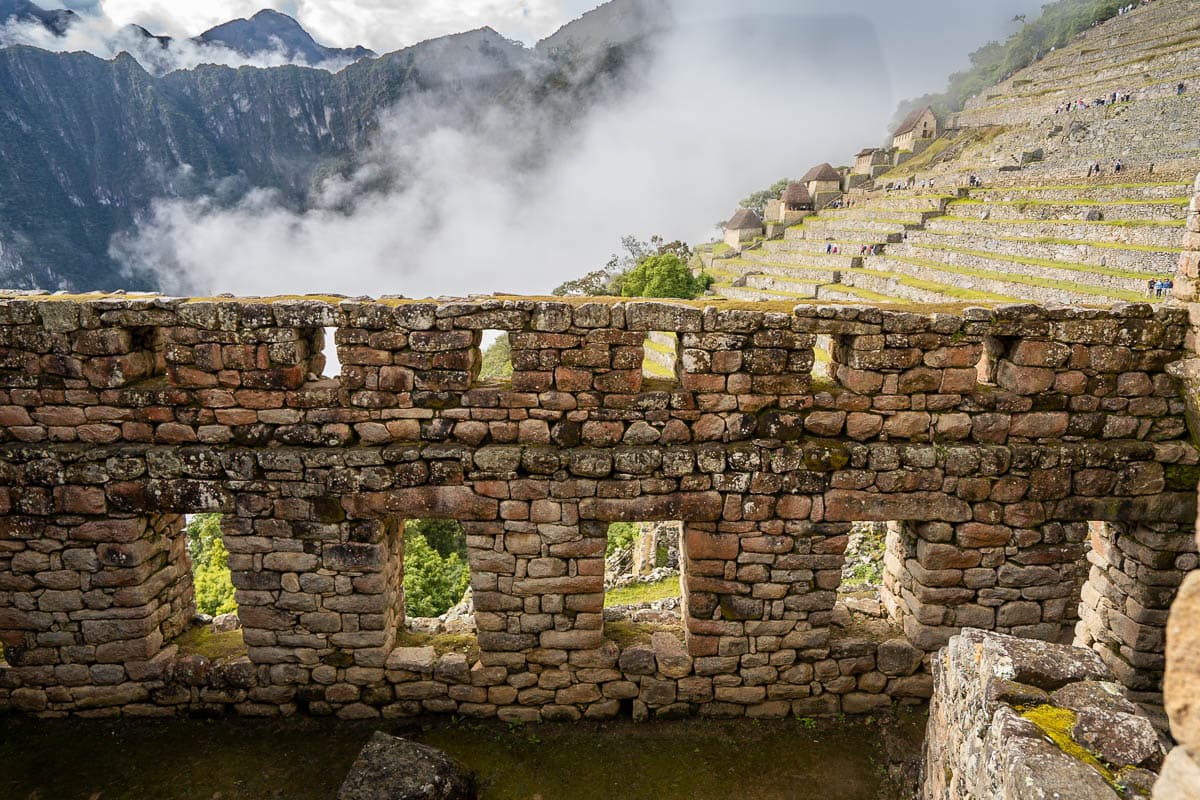
The city was constructed using impressive engineering techniques, including precise stonework that did not rely on mortar, and sophisticated agricultural design, including advanced irrigation systems and terraces. It’s also renowned for its dramatic location, on the ridge of a mountain, surrounded by the Andes and overlooking the Urubamba River.

Machu Picchu was abandoned around 1540, after the Incas were conquered by the Spanish, who never discovered the city’s remote location. It remained mostly forgotten about and hidden in the Peruvian jungle until 1911, when local farmers guided an explorer from the United States, Hiram Bingham, to the site. National Geographic publicized Bingham’s “discovery”, which put Machu Picchu on the radar of every wanderlusty person on the planet.
Since then, Machu Picchu has grown to not only be the most visited attraction in Peru, but of all of South America.
Tips for visiting Machu Picchu
Between the complicated logistics of getting there and lots of restrictions while you’re in the park itself, visiting Machu Picchu isn’t as straightforward as you might think. So we’re dividing these tips into things you should know while planning and things to keep in mind while you’re in the park.
Tips for planning your visit to Machu Picchu
1. Know how to get to Machu Picchu
While it’s easy to assume that visiting Machu Picchu is straightforward, it’s actually surprisingly complicated. You can’t simply just drive up to the site and rather, almost all visitors are required to fly and then take a car, train, and bus to the ancient city.
You’ll first need to get to the beautiful colonial city of Cusco, which is widely considered to be the gateway to Machu Picchu. Cusco is one of the most popular tourist destinations in the country and, accordingly, has its own airport, Alejandro Velasco Astete International Airport, with up to 40 flights per day from Lima, the capital city of Peru.

Alternatively, if you’re like us and zipping around South America for a few months, there are several cities from which you can bus to Cusco, like:
- Arequipa, Peru to Cusco (a 10 hour ride)
- Copacabana, Bolivia to Cusco (a 12 hours)
- La Paz, Bolivia to Cusco (16 hours)
- Ica, Peru (near the famed oasis town of Huachachina) to Cusco (18 hours)
- Lima, Peru to Cusco (24 hours)
We wrote an article about how to get to Machu Picchu from Cusco, with all the nitty gritty details you need to know, but, in short, you essentially have three options:
On your own
To get to Machu Picchu, you must first reach the town of Aguas Calientes, which sits at the base of the mountain the ancient city is perched on top of.
This is the only town that’s connected to Machu Picchu with a road. However, there are no roads that lead to Aguas Calientes, so you’ll need to take a train there.

If you’re visiting Machu Picchu as a day trip from Cusco, you can catch a train, via Peru Rail, from the train station in the neighboring town of Poroy, about half an hour.
Alternatively, most travelers first catch a bus, taxi, or colectivo from Cusco to the town of Ollantaytambo, about two hours northwest of Cusco. Ollantaytambo has some really cool Inca ruins of its own and serves as an excellent springboard for exploring other sites in the Sacred Valley, like Moray or Chinchero. From here, you can catch a train at Ollantaytambo’s station, via Peru Rail or Inca Rail, to Aguas Calientes.
From Aguas Calientes, you grab a bus up to the entrance gates of Machu Picchu, which takes approximately half an hour. You can either buy tickets for the bus online ahead of time or at the bus station. If you choose the latter option, just be ready to wait in a REALLY long queue!

In total, it takes about five hours one-way to get from Cusco to Machu Picchu, using these various modes of transportation.
With a tour
If you don’t want to fart around with all of the complicated logistics of visiting the citadffel fon your own or you just want to actually learn about the ancient city, I’d highly recommend taking one of the Machu Picchu tours from Cusco.

This option and this option both include all of your transportation to and from Cusco, your tickets into Machu Picchu, and a private tour with a knowledgeable guide that will provide the fascinating history and context behind all of the ancient ruins here.
Trekking
Alternatively, there are several multi-day trekking options that you can take to reach Machu Picchu.
We’ll go into more details about the trekking options below, but, in short, the most iconic trek—and the one that my husband, Justin, and I opted for—was the Inca Trail, a four day hike through the Andes Mountains that follows an actual ancient pathway that once led from Cusco to Machu Picchu. The trail ends at the Sungate, a viewpoint that overlooks the ruins and where ancient Incas actually once entered the city.

There are a few other multi-day hikes, namely the Salkantay Trek and the Lares Trek, that wind through the Andes Mountains and end in the town of Aguas Calientes, where you can catch a bus up to Machu Picchu.
2. Know when to visit Machu Picchu
The best time to visit Machu Picchu is during Peru’s dry season, from May through September.
During this timeframe, you’ll have the best chance of having clear skies and actually getting to see the ancient city. It’s not unheard of, in the rainier season, for Machu Picchu and the surrounding mountains to be totally obscured by low hanging clouds, which would definitely be a bummer after flying all the way to Peru!

From October through March, Peru is quite rainy, so you may encounter landslide-related road closures, mud, pesky clouds, and, of course, lots of rain during your visit. I personally wouldn’t recommend visiting Machu Picchu during these months, but, if it’s the only time you can visit, I’d just recommend bringing along a good rain jacket and a positive attitude!
3. Plan visiting Machu Picchu with a guide
Unlike some attractions, you are not required to visit Machu Picchu with a guide.
However, I’d strongly recommend it, as there’s no informational signs at the site itself—meaning, unless you have a guide, you’ll have basically no context as to what the rocks you’re looking at actually mean as you wander around the site.
Additionally, it can be pretty complicated to coordinate transfers to the train station and tickets for the train and bus (the former of which you need to purchase ahead of time, as they can sell out), all while accounting for appropriate buffer times in the event you run into a delay in transit, which is VERY common around these parts. If you go with a tour agency, though, they’ll handle all of those logistics for you!

You can opt to go with a tour company that takes care of everything for you, including transportation, purchasing tickets to Machu Picchu, and providing a private guide around the site, like this option and this option.
Alternatively, if you want to visit a specific circuit at Machu Picchu (more on this below) or at a particular time (like in the early morning), you can also arrange your own transportation and admission tickets and simply meet your private guide at the entrance gate, like this option or this option.
We were SO happy that we explored Machu Picchu with a guide, who showed us all kinds of cool things around the ancient city, like how certain structures aligned with celestial events or how royal Incas went to the bathroom. You can certainly enjoy the site’s and the surrounding valleys’ beauty sans guide, but you should absolutely take advantage of this once in a lifetime opportunity and actually learn about the Incas.

It’s worth mentioning that most trekking tour packages, including the Inca Trail option that we chose, include guides throughout your hike and in Machu Picchu. So, if you opt to do one of the guided treks to Machu Picchu, this isn’t a line item you have to worry about.
4. Do your research and buy your tickets for Machu Picchu ahead of time
If you opt to go without a tour operator that purchases a Machu Picchu entrance ticket on your behalf, you’ll need to purchase one for yourself.
Pre-COVID, you used to be able to just show up at Machu Picchu and buy tickets on the spot. Now, however, there have been a few different restrictions put in place to mitigate crowds here and, accordingly, it’s a bit more complicated to visit.
For one, the amount of visitors is capped at 5,600 visitors per day during the high season, from June through November, and 4,500 visitors per day during the low season, from December through May. While this sounds like a lot, the park is actually near capacity almost every day.
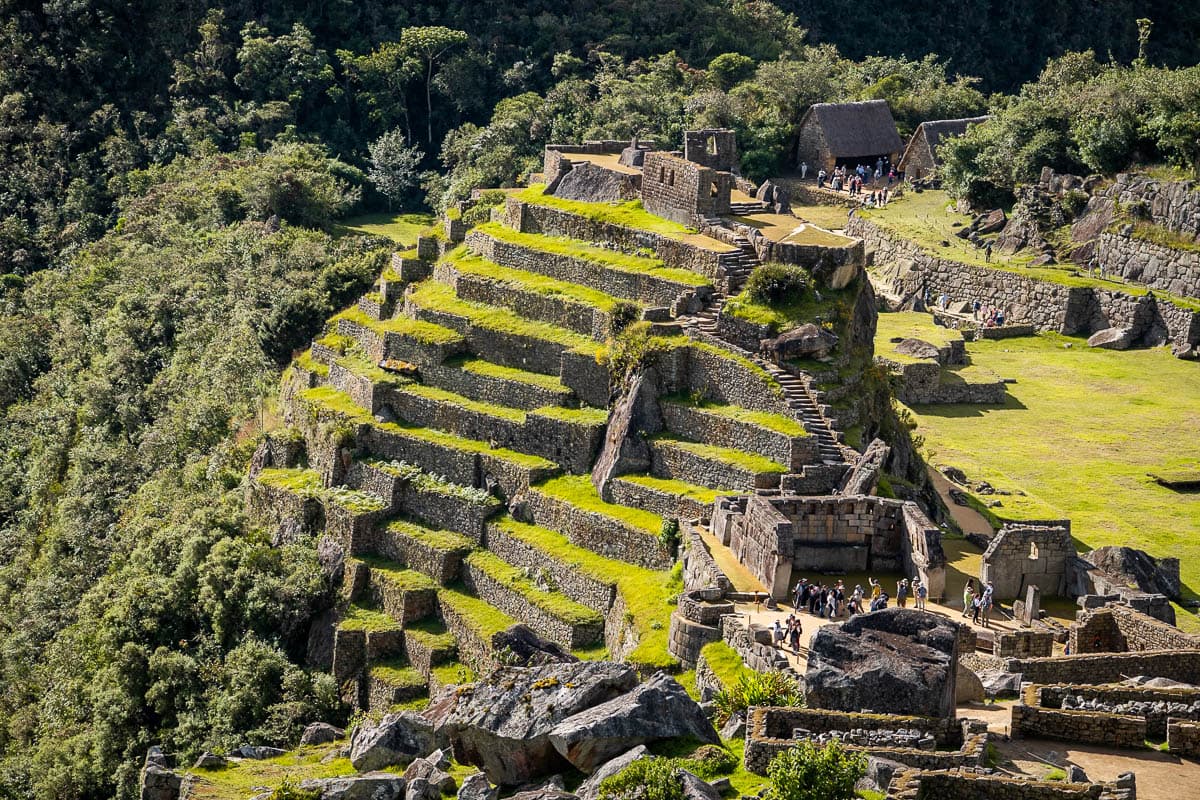
And, for another, you must now buy tickets for a specific circuit, which is essentially a designated route through the site. We wrote an article outlining everything you need to know about the circuits in Machu Picchu, but, in short, you should research which circuit you want to explore and buy your tickets online as far in advance as possible, as certain circuits often sell out months in advance.
None of the circuits through Machu Picchu allow you to see everything at the site. Here’s what each of the route options offer:
- Circuit 1: Pretty much only includes the famous postcard-worthy lookout of Machu Picchu, with the option to add on some day hikes if you want. This circuit does not include touring any of the main ruin areas.
- Circuit 2: Includes the famous viewpoint and touring both the upper and lower sections of the ruins. This is definitely the most comprehensive AND most popular option.
- Circuit 3: Does not include the famous viewpoint, but does include the lower sections of the ruins, plus the option to add on hikes around the site, like Huayna Picchu.
If you arrive at Machu Picchu via the Inca Trail (like we did!), this is likely the circuit option that will be included with your tour package. People who enter Machu Picchu via the Inca Trail do get to stop at the famous viewpoint (even though it is not included in Circuit 3) after they hike into the Sungate, as you’ll need to exit the park and then re-enter to complete Circuit 3.

For most visitors, I’d strongly recommend purchasing tickets for Circuit 2, which allows you to see more of Machu Picchu than any of the other options. These tickets are the most coveted and sell out well in advance, so I’d definitely recommend buying your tickets as soon as you know you’ll be visiting Machu Picchu.
5. Research whether you want to do any of the hikes in Machu Picchu
There are several hiking trails that start in Machu Picchu, the most popular of which are Huayna Picchu and Machu Picchu Mountain. If you hike these trails on a clear day, you’ll be rewarded with stunning views of the ancient city and the surrounding Andes Mountains.

However, you aren’t allowed to just hike these trails and, in true Machu Picchu form, are required to purchase a specific kind of ticket to access them. For example:
- For the Huayna Picchu trail, you’ll need to purchase a ticket for Route 3A (i.e., “Ruta Montana Waynapicchu”)
- For Machu Picchu Mountain trail, you’ll need to purchase a ticket for Route 1A (i.e., “Ruta Montaña Machupicchu”)
Each of these ticket options are super limited, with only a few hundred permits issued for these hikes each day. Accordingly, if you’re interested in doing any of the trails within Machu Picchu, I’d suggest doing your research and purchasing your tickets as far ahead of time as you can.
Just keep in mind, if you purchase these tickets, you’ll only be able to access whatever section of Machu Picchu is included in that particular circuit (e.g., if you purchase tickets to Route 1A to hike Machu Picchu Mountain, you will be limited to Circuit 1, which does not actually go through the ruins of Machu Picchu).

You can, however, purchase tickets for a different circuit on the same day, if you want, to see more of the site.
6. Try to snag the early morning tickets
The best time to visit Machu Picchu is the early morning, before the massive crowds swell and while the misty clouds and glowy first rays of the sun make the ancient city look even more magical.
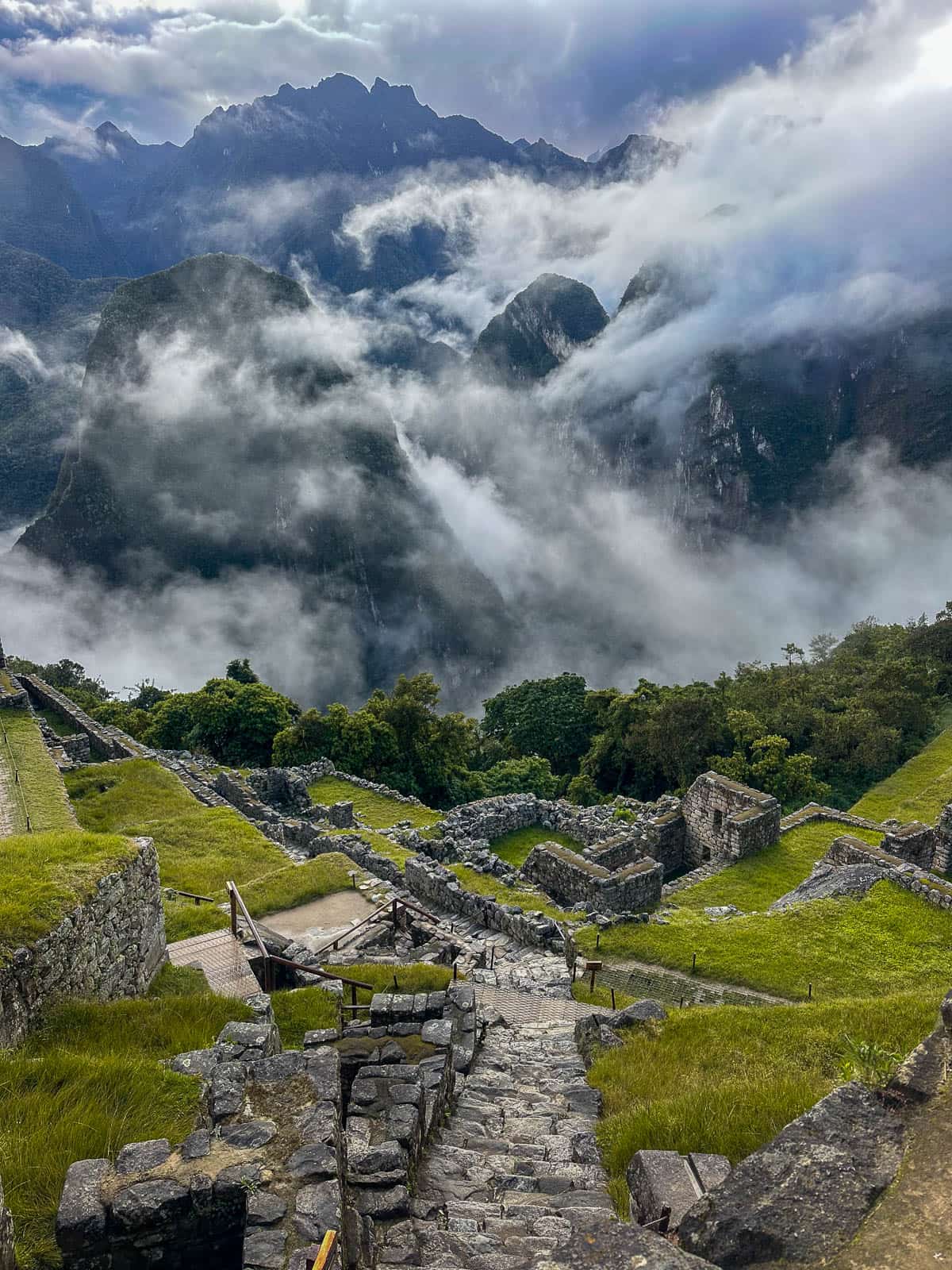
Tickets to Machu Picchu are on a timed entry system, so the earlier that you can snag tickets, the better. The earliest entry time (i.e., 6 AM) does often sell out, so, again, I’d recommend purchasing your tickets as far in advance as you can.
7. Stay overnight in Aguas Calientes the night before
This tip goes hand-in-hand with the one above, but, if you want to visit Machu Picchu first thing in the morning, you’ll need to already be in Aguas Calientes the night before, as it takes around five hours to get from Cusco to Machu Picchu (i.e., even if you left Cusco at 4 AM, the earliest you’d get to Machu Picchu is around 9:30 AM or so, when the site will already be super busy).

And, honestly, there are definitely worse places to spend a night here. There are some really fun things to do in Aguas Calientes, including natural hot springs, waterfalls, and tons of cute restaurants and bars along the Urubamba River, like Chullos Peruvian Kitchen and INKA TAMBO.
Vilas Insight Hotel and Amakonkay Machupicchu are both awesome hotels in Aguas Calientes that strike a good balance of offering a cute decor and modern amenities (like heaters, which is not always a given in Peru!), while being on the more budget friendly end of the spectrum.
Alternatively, if you’re willing to splash out a bit, you can actually stay RIGHT outside of the gates of Machu Picchu at the only hotel here, Sanctuary Lodge, an ultra luxury property that offers an incredible complimentary breakfast and champagne service. Beyond just being super bougie, it also has the benefit of being right outside of Machu Picchu, meaning you can be the very first one at the entry gates first thing in the morning.
8. Give yourself a day or two to acclimate in Cusco ahead of time
The Sacred Valley and the surrounding area is at a pretty high altitude. For example, Cusco sits at a whopping 11,000 feet above sea level.
Machu Picchu is significantly lower than Cusco—just shy of 8,000 feet above sea level—but is still at a high enough altitude that you may find it more challenging to climb stairs or even just walk around if you’re coming here from a lower elevation.

Accordingly, I’d recommend planning to hang out in Cusco for a day or two before you head to Machu Picchu to ensure that you’re acclimated to the higher altitudes and can feel nice and well-prepared to do lots of walking around the ancient city. And, luckily, there are lots of cool things to do in Cusco to keep you busy during your acclimatization days!
9. Consider reaching Machu Picchu through a multi-day trek
If you have enough time in the Cusco area and are physically able to, I’d strongly recommend doing one of the multi-day treks to reach Machu Picchu.

Justin and I spent close to two months in Peru and hiking the Inca Trail was, hands down, the highlight of our trip. We spent four magical days climbing through the jaw dropping Andes Mountains and exploring ancient Inca ruins along the way that most visitors don’t get to see. And ending our four day hike by walking into the Sungate of Machu Picchu, which is seriously one of the most beautiful places we’ve ever been? Such an epic finale!
As mentioned above, there are a few different trekking options that you can take to reach Machu Picchu. Here are some of the most popular options.
Inca Trail
- Distance: 22.4 miles
- Elevation gain: 9,468 feet
- Typical duration: 4 days/3 nights
- Good for: People who are looking to take a deeper dive into Inca history
If you’re interested in history, buckle up, because, on this trek, you’ll literally walk in the steps of the ancient Incas, as they walked from Cusco to Machu Picchu. Along the way, you’ll pass the ruins of ancient citadels, temples, and cities and, of course, get stellar views of the Andes Mountains along the way.

I also think this is the most epic way to enter Machu Picchu—it’s the only trek where you’ll enter through its Sungate, which was historically used as a control point for people entering the city. As you enter, just as the Incas did, you’ll get be treated to the most incredible view of Machu Picchu, sprawling across the slopes of the Andes Mountains below.
If you are interested in hiking the Inca Trail, be sure to plan WAY ahead in advance (like, a year ahead of time). You are required to snag one of the 200 permits issued for hikers daily to complete the trail, which, as you might expect, sells out way in advance. We booked our tour about 14 months in advance and our operators still weren’t able to get permits for the exact date that we were interested in.

You are also required to have a guide to complete the Inca Trail. After doing a TON of research, we selected this operator, which, as far as I can tell, is one of only two 100% locally owned trekking companies here AND, per our guide, pays its porters better than most other operators. TreXperience is another locally owned company that has incredible reviews.
If you’re short on time or just don’t want to hike 20+ miles, there’s also a much shorter two day Inca Trail option, with a hiking portion that’s just 12 km long, but still lets you enter the site via the Sungate.
Salkantay Trek
- Distance: 43.2 miles
- Elevation gain: 12,001 feet
- Typical duration: 5 days/4 nights
- Good for: Experienced hikers and people who are more interested in the views of the Andes Mountains or cool accommodations, as opposed to Inca history
The Salkantay Trek is an incredible alternative to the Inca Trail, which offers even MORE spectacular views of the Andes Mountains than the Inca Trail and REALLY cool glamping accommodations along the way (think glass igloos and geodesic domes). It’s also usually a bit cheaper than the Inca Trail, given that no permits are required.
The only drawbacks that I’d flag of the Salkantay Trek is that there’s not really any Inca ruins along the route and you’ll enter Machu Picchu like pretty much any other tourist—through the entrance gates after bussing in from Aguas Calientes.

If you opt to do this trail, Salkantay Trekking is actually the operator we used on the Inca Trail and, as you might imagine, is THE go-to company for this hike. They seriously have the coolest glamping options along the Salkantay Trek AND, if your experience is anything like ours on the Inca Trail, you’ll have the BEST food along the way!
Lares Trek
- Distance: 18.7 miles
- Elevation gain: 5,593 feet
- Typical duration: 4 days/3 nights
- Good for: People who are looking for the most beginner-friendly trekking option and who are interested in experiencing remote villages of Quechua people (i.e., the Indigenous people of the Andes Mountains that are the descendants of the Incas)
The Lares Trek is a more under-the-radar option that’s been growing in popularity in recent years, which primarily focuses on traveling through small Quechua villages that are only accessible on foot. My favorite aspect of this tour is that you get to soak in some cozy hot springs near the trail’s end.
Like the Salkantay Trek, you’ll end this hike in the town of Aguas Calientes and bus up to the entrance gates of Machu Picchu.

If this hike sounds up your alley, here’s a Lares Trek tour that’s offered by TreXperience.
10. Book a stay in a cliffside glass capsule after your visit to Machu Picchu
Visiting Machu Picchu is a once-in-a-lifetime experience—so why not make it even more epic?
Pretty much all tourists, regardless of whether you trek into Machu Picchu, go with a tour, or go on your own, will end up transiting through the town of Ollantaytambo after your visit to Peru’s Wonder of the World on your way back to Cusco.

Ollantaytambo is awesome for a myriad of reasons, but one of its coolest aspects is that it’s home to the only hotels on the planet, namely Sky Lodge, Star Lodge, and Vertical Sky Suites, that consist of glass capsules, bolted to a cliffside, thousands of feet in the air. As you might expect, these capsules provide epic views of the surrounding Andes Mountains and the Sacred Valley below and, at night, some of the best stargazing opportunities on the planet.
Plus, to reach these capsules, you actually have to use a via ferrata (a hybrid of rock climbing and hiking where you clip into fixed cables) along the aforementioned cliffside. Like I said, it’s guaranteed to make your time in the Sacred Valley WAY more epic!

We capped off our time trekking the Inca Trail and exploring Machu Picchu by staying at Vertical Sky Luxury Suites, which has glass capsules (with private jacuzzis in each suite!!) that overlook the Veronica Glacier and the surrounding jaw-dropping scenery. It was SUCH a unique experience and easily one of our favorite memories in all of Peru. If you love quirky adventures, I would highly recommend including a stay at one of these hotels after your visit to Machu Picchu.
There’s only a handful of capsules at each property, so they can book up during the high season (i.e., May through September). Accordingly, if this is something you’re interested in, I’d suggest making a reservation well in advance.
Tips for during your visit to Machu Picchu
11. Dress appropriately
Be sure to wear comfortable shoes, as you’ll almost certainly do a fair amount of walking and climbing stairs, between all the various forms of transportation you’ll take to get here and around the site itself. This definitely isn’t the place to bust out your high heels—and, in fact, heels or any kind of hard-sole shoes are prohibited at the site to protect the stone pathways and stairs.
Additionally, the weather high up in the Andes Mountains can be unpredictable and kind of all over the place. We visited Machu Picchu on two consecutive days and, during those visits, wore everything from a parka and a rainjacket to shorts and a crop top.

So I’d recommend wearing layers, like breezier clothing under some warmer outerwear that you can strip off if you get too hot. Additionally, I’d recommend bringing along a rainjacket (here’s an option for men and here’s an option for women).
12. Know what you need to bring and what to leave at home
There are certain things that you’ll absolutely need with you in Machu Picchu—and things you should leave at home.
Here are some items that you should bring with you:
- Your passport, which will be checked against your entry ticket. You will not be allowed in if you don’t have your physical passport, as paper or digital copies are not accepted.
- A screenshot of your digital ticket, if you purchased your entry ticket online
- Peruvian soles, which you’ll need to use the bathroom and store things in the storage facility outside of the entry gate
- Sun protection, like sunscreen and sunglasses
- A reusable water bottle to stay hydrated at the high altitude
- A backpack that is no larger than 40x35x20 cm (16x14x8 inches)
- Camera
- Cellphone
It’s important to note that, once you leave Machu Picchu, you won’t be allowed back in, including if you have to go to the bathroom. So, if there’s anything that you need for the few hours that you’ll be inside, like medication, be sure to bring it along with you.
Here are some items that you are not allowed to bring into the site:
- Food
- Drones
- Tripods
- Selfie sticks
- Umbrellas
- Trekking poles
- Canes
- Backpacks that are larger than 40x35x20 cm (16x14x8 inches)
- Knives or other weapons
- Speakers
There’s actually a LOT of various items that are prohibited in Machu Picchu—you can see the full list here. If you have any of these items, you can store them for a nominal fee right outside of the entry gate. We stored our trekking poles here after hiking the Inca Trail and it worked just fine!

13. Go to the bathroom before entering Machu Picchu
There are bathrooms right outside of the entry gates that you can use for two Peruvian soles per person per use.
Once you’ve entered, though, there are no bathrooms inside the gates, so you’ll have to exit (and not be able to reenter) if nature calls. So consider skipping your morning coffee and make sure to do your business before entering!
14. Be sure to wait in the right entrance line to get into Machu Picchu
If you’re taking the bus from Aguas Calientes to Machu Picchu, you’ll be dropped off at the main entrance gate.
There’s actually two different gates to get into the site, depending on which circuit you have tickets for.
- If you have tickets for Circuit 1 or 2, you’ll need to head up the stairs to the left to the Upper Entrance Gate. Once you climb the stairs, there will a guard that will point you in the right direction for your circuit.
- If you have tickets for Circuit 3, you’ll head to the right of the bathrooms and luggage storage desk to the Lower Entrance gate.
You won’t be allowed into the site if you head the wrong gate for your circuit. The lines here can be really long, so be sure to head to the right spot the first time around!
15. Be willing to hang out a while if there are clouds
It’s not uncommon, especially in the mornings, for Machu Picchu to totally be obscured by dense clouds. However, even if you show up and can’t see anything due to cloud coverage, I’d recommend trying to wait it out for an hour or two, as things can dramatically change in that period of time.

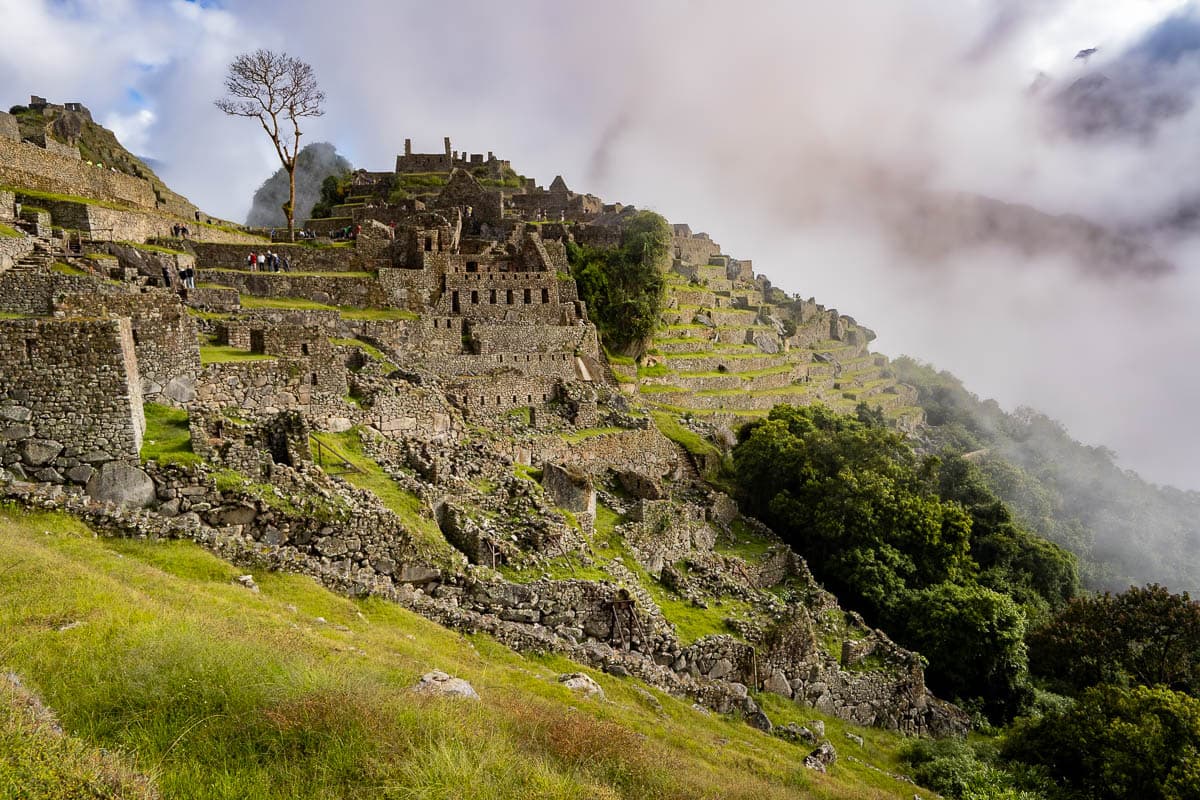
We arrived at Machu Picchu at sunrise on the last day of our trek and could hardly see 100 feet in front of our faces, due to the heavy fog that was draped across the surrounding mountains. But, as the sun rose higher into the sky, the clouds mostly burned off, allowing us to see the ruins of the ancient city with the remnants of wispy clouds. It honestly made the city even more beautiful!
So don’t worry too much if you can’t see anything at first—you might be in for a dramatic reveal in a few minutes!
16. Cell service is spotty
There are certain areas of Machu Picchu and even Aguas Calientes where cell service can range from spotty to non-existent.
So I’d recommend taking screenshots of any important information you might need while visiting Machu Picchu, like confirmation emails for tours, hotels, or entry tickets, in the event you don’t have internet access while you’re out exploring.
I hope these tips help you plan your visit to Machu Picchu—it’s such an incredible place to explore! Do you have any questions about visiting this amazing Wonder of the World? Let us know in the comments below.
