

The ancient Inca city of Machu Picchu is not only the most visited attraction in all of Peru, but also in all of South America. To visit the ancient citadel, travelers are required to first reach the tiny town of Aguas Calientes, located at the base of Machu Picchu mountain. Accordingly, many visitors spend a day or two in Aguas Calientes before they head to Machu Picchu.
If you have some time to explore this cute town, here are 8 awesome things to do in Aguas Calientes, Peru.
This post may contain affiliate links. If you make a purchase through them, we may receive a small commission, for which we are extremely grateful, at no extra cost to you.
Things to do in Aguas Calientes, Peru
1. Visit Machu Picchu
Obviously, one of the most popular things to do in Aguas Calientes is to visit Machu Picchu!

To get from the town up to Machu Picchu, most visitors opt to take the half hour Consettur bus ride up to the entrance gates of the ancient city.
Alternatively, you can hike along a path from Aguas Calientes up to Machu Picchu, but be prepared! You’ll need to ascend seemingly endless flights of stairs, climbing over 2,300 feet in less than 1.9 miles (701 meters in 3 km). We actually reached Machu Picchu this way immediately after hiking the Inca Trail, and it sufficiently kicked our butts!

We’ve traveled all over the world and Machu Picchu is easily one of the most stunning places we’ve ever gotten to see with our own eyes. That being said, visiting Machu Picchu is ridiculously confusing, requiring three modes of transportation just to get there and with 10 different ticket options you can choose from (seriously!).
Accordingly, we’ve put together a bunch of different guides to help you plan your trip there, including how to get from Cusco to Machu Picchu and what you need to know about the different circuits in Machu Picchu.

Alternatively, if you don’t want to worry about figuring all of that stuff out, you can alternatively opt to take a private tour from Aguas Calientes, like this private option or this option, where your guide will take care of all of the logistics for you and share fascinating information with you about Inca culture and history as you explore Machu Picchu together.
2. Explore Aguas Calientes
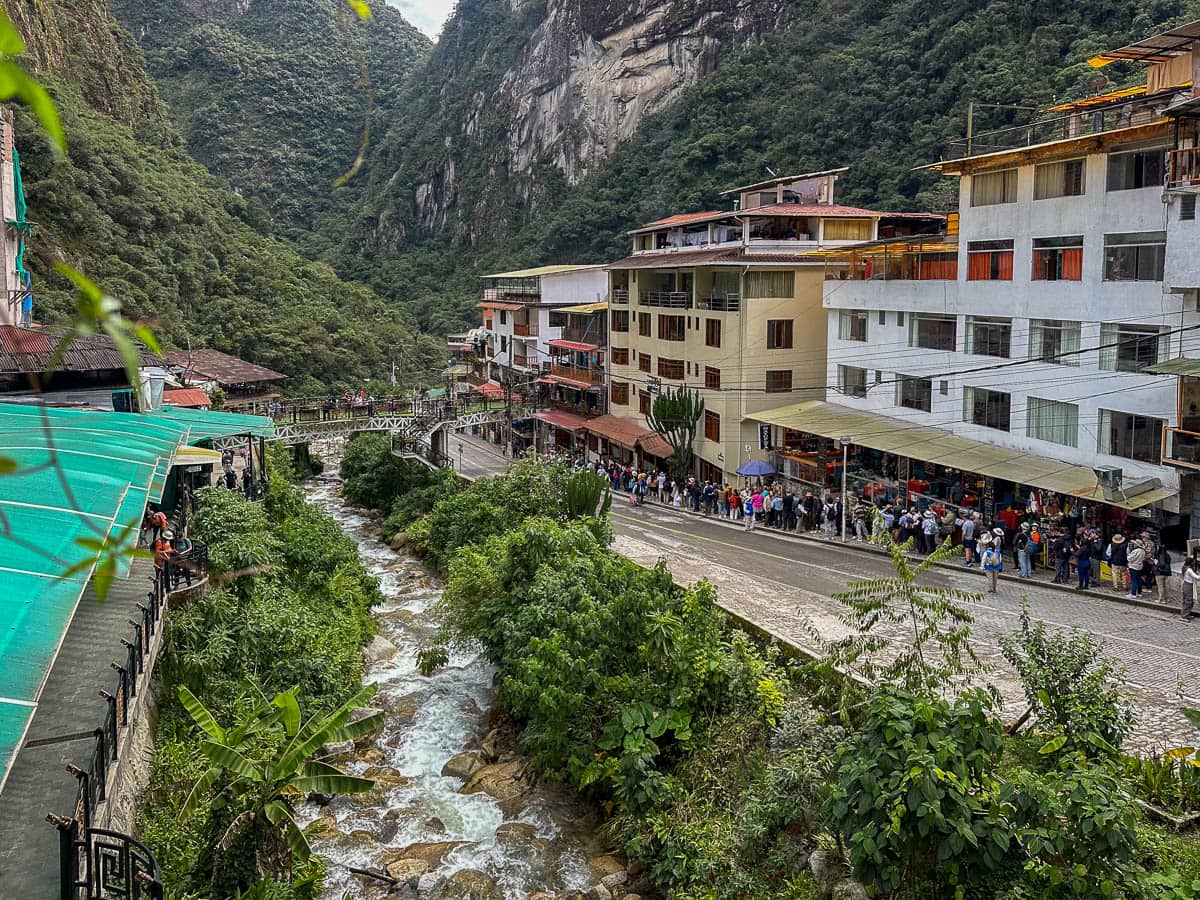
As you might imagine, the town of Aguas Calientes is definitely on the touristy side, but it’s also quite cute, with lots of coffee shops, restaurants, and shops to peruse.
Unfortunately, restaurants here are generally more expensive than you’d expect elsewhere in Peru, but the good news is that there’s some REALLY delicious food here. We loved eating on the balcony of Green House, a Peruvian restaurant that relies on all organic ingredients, and INKA TAMBO, which has stunning views over the Urubamba River.

There are also tons of restaurants with “happy hour” specials (which usually last all day), like Full House Machu Picchu Restaurant and El Portal del Inka, so grab a two-for-one pisco sour and cheers to exploring one of the most stunning Wonders of the World!
3. Head to Plaza Manco Capac
As you wander around Aguas Calientes, be sure to pop by Plaza Manco Capac, which is considered the main town square.

The main centerpiece of the plaza is a statue of Pachacuti, who is the prolific Inca emperor that built Machu Picchu, the Inca Trail, and many other famous structures in the Sacred Valley. There’s also some other unique photo opps here, with statues of a carved wooden Andean condor and a man and woman dressed in traditional Inca clothing.
4. Soak in Machu Picchu Hot Springs
As its name suggests, Aguas Calientes is home to several natural hot springs.
The most popular hot spring is, unsurprisingly, called Machu Picchu Hot Springs, which has several small pools of warm water with gorgeous views of the surrounding lush green Andes Mountains.

To be honest, you’ll definitely find nicer hot springs elsewhere in Peru. These hot springs feel more akin to a heated pool, as compared to a hot tub, plus they tend to be rather crowded and a bit murky.
Still, if you’ve finished up a long trek to Machu Picchu or are just looking to relax for a bit, they’re well worth a stop. Plus, if you walk five minutes past the pools, there’s a pretty little series of waterfalls along the Urubamba River.
For the best experience, I’d suggest showing up early in the morning, when the pools are at their least crowded and cleanest.

Entrance to Machu Picchu Hot Springs is 20 Peruvian soles per person.
5. Pick up a souvenir at Mercado Artesanal
Like any good touristy Peruvian town, Aguas Calientes is home to a Mercado Artesanal, with woven textiles, ponchos, and other handmade goods.
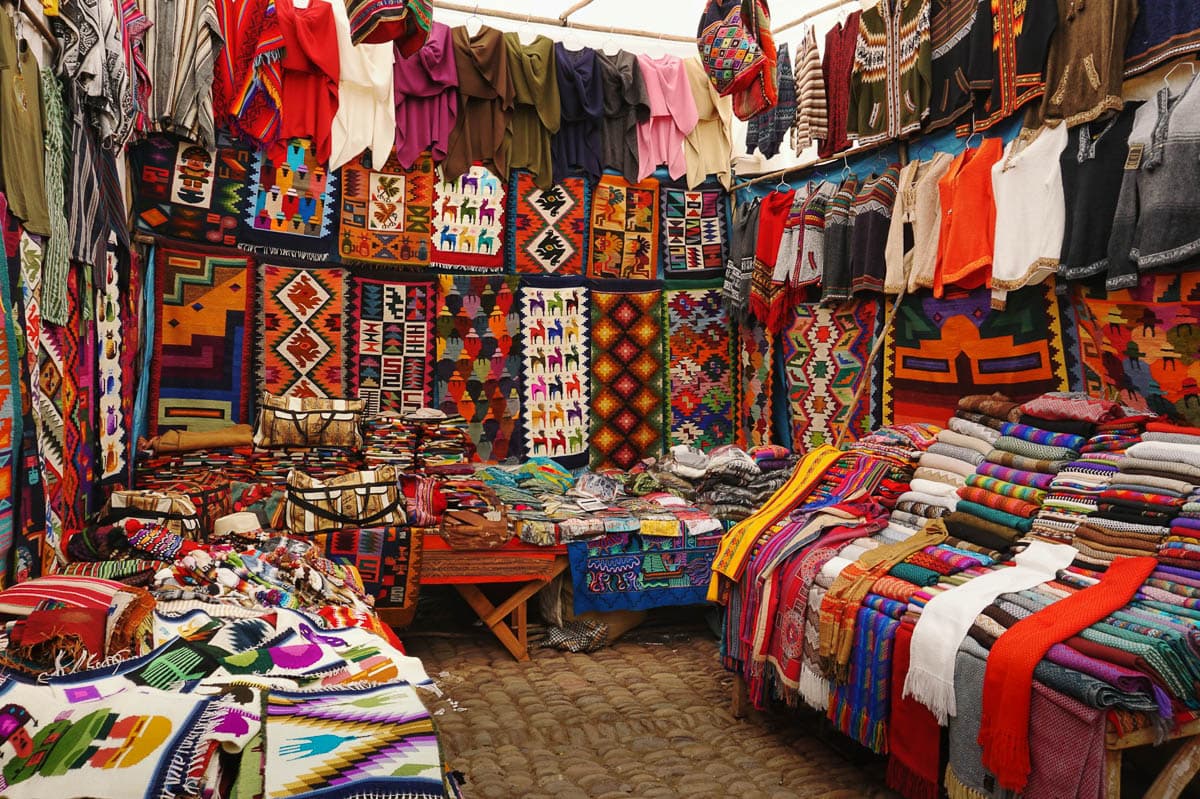
Vendors aren’t allowed in Machu Picchu itself, so if you’re looking for a memento of your time in Peru’s Wonder of the World, this will be your best bet. Plus, you basically have to walk through this market in order to get to Aguas Calientes’ train station, so you might as well pop in and see if anything piques your interest!
Prices here tend to be on the higher side, but you can always haggle!
6. Hike to the Alcamayo Waterfalls
If you want to stretch your legs a little, there’s a small trail, located on the southeastern side of town that ends with a waterfall, cascading down a rocky cliffside, tucked into the jungle.

To reach the waterfall, you can start at the trailhead and walk approximately 20 minutes through the jungle, as you gradually climb uphill alongside the Alcamayo River.
Shortly before you reach the waterfall, you’ll pass through an entrance gate, where you’ll need to pay 20 Peruvian soles (cash only!). The couple that owns this property clearly take a lot of pride in it, with colorful statues and quirky fountains decorating the entrance. Of course, there’s snacks, drinks, and souvenirs for sale here as well.
As you continue past the entrance, you’ll pass a medium-sized waterfall and, eventually, a larger one. Depending on how much it’s rained recently, you can sometimes even swim beneath the waterfalls, which is perfect for cooling off in the sticky jungle.
Just remember to bring bug spray here—the mosquitoes can be FIERCE.
7. Admire butterflies at the Mariposario of Machu Picchu
One of the most underrated things to do in Aguas Calientes is to stop by the Mariposario, a small garden that features many of the butterfly species that are native to Peru.

They offer tours of the facility in both Spanish and English, where you’ll learn—and get to actually see—the different lifecycles of butterflies, as well as provide education about why the conservation of insects is so important. Plus, you can enjoy time in an enclosed butterfly garden and an open air area with specific plants that attract butterflies and birds. They even have a little cafe that looks out into the garden so you can enjoy fresh squeezed juices while hummingbirds flit by.
Admission is 20 Peruvian soles per person.
8. Relax in the Cocalmayo Hot Springs
Want even more hot springs?
Cocalmayo, otherwise known as the Santa Teresa Thermal Baths, offers three manmade pools, with much steamier, cleaner, and clearer water than you’ll find at the Machu Picchu Hot Springs. The pools have been perfectly integrated into a natural valley, with beautiful views of the surrounding dramatic cliffside and the Andes Mountains.
They’re also quite affordable, costing just 10 Peruvian soles ($2.96 USD).
The only downside to the Cocalmayo Hot Springs is that they’re not actually located in Aguas Calientes and are a bit tricky to get to.

You’ll first need to get to the town of Hidroeléctrica, which you can either do via a train that departs from Aguas Calientes or by walking for approximately an hour and a half alongside the train tracks. From here, you can catch a taxi or walk another three hours the rest of the way to the hot spring (like I said, just a bit tricky!).
How to get to Aguas Calientes, Peru
As mentioned above, nothing about getting to Machu Picchu is easy, including getting to Aguas Calientes. There are no roads leading here, so the only way to get to Aguas Calientes is by train.

Most travelers that are visiting Machu Picchu base themselves in the colonial city of Cusco. We wrote a whole article about getting from Cusco to Machu Picchu, but, in short, there are a few ways to get here, which typically takes about four to four and a half hours.
From Poroy
You can take an Uber or taxi to the train station in the nearby town of Poroy, about half an hour away and then catch a Peru Rail train to Aguas Calientes.
From Ollantaytambo
The most popular way that most travelers get to Aguas Calientes is by transiting from Cusco to Ollantaytambo, a beautiful town with some of the most important Inca ruins in the Sacred Valley.

To get from Cusco to Ollantaytambo, you can:
- Get a taxi or Uber
- Catch a colectivo from this station
- Book a transfer, like this option or this private option
From Ollantaytambo, you can then catch a Peru Rail or Inca Rail train to Aguas Calientes. If you can swing it, I’d recommend spending a few hours in Ollantaytambo before catching the train to explore the colorful market and Inca ruins here.
Where to stay in Aguas Calientes, Peru
For most travelers, I’d recommend getting to Aguas Calientes the night before you plan to visit Machu Picchu, especially if you’re visiting without a guide or tour group.

Machu Picchu gets busier and busier as the day wears on, so the earlier that you can visit, the better. Since it takes about five hours to get to the ancient city from Cusco, it’s not possible to arrive at Machu Picchu at 6 AM, when the entrance gates open, if you leave the morning of.
Accordingly, getting to Aguas Calientes the night before allows you to explore the town itself and get to the entrance gates of the citadel bright and early.

Luckily, there are tons of hotels that you can stay at here:
- Amakonkay Machupicchu: If you’re looking for a budget stay, this family-owned hotel is a great value, with complimentary breakfast (they’re happy to box it up for you if you’re leaving early!) and clean, spacious rooms.
- Vilas Insight Hotel: This simple hotel offers a variety of different accommodation options, ranging from a regular suite with a king bed to a family room, with three twins. There’s also lots of nice perks of staying here, including a solid complimentary breakfast, an onsite restaurant, and beautiful views of the surrounding mountains.
- Sumaq Machu Picchu Hotel: For something on the bougier side, this hotel is built along a cliffside overlooking the Urubamba River, offering jaw-dropping views of the rushing water below. Breakfast AND dinner, served at the onsite upscale Peruvian restaurant, are included in your stay and the rooms offer everything you could possibly need, from balconies to in-room coffee makers.
When is the best time to visit Aguas Calientes?
As you might have noticed, most of the things to do in Aguas Calientes are outside, so weather is kind of the most important consideration when planning your visit.
The Sacred Valley, including Aguas Calientes, basically has two seasons—rainy, which lasts from November to March, and the dry season, which is from April through October.

Accordingly, I’d strongly recommend visiting during the dry season. While you will definitely experience more crowds and higher prices on things like train tickets and hotels during this timeframe, it’s MUCH more pleasant to explore the Sacred Valley with clear skies (how much of a bummer would it be to get to Machu Picchu and not be able to see it because of the fog and rain?).
Additionally, the rainy season can have other negative impacts on your time visiting Aguas Calientes, like flooding or the frequent landslides that can affect the train or roadways in the Sacred Valley.
Visiting during the rainy season isn’t all bad. As referenced above, Machu Picchu will be WAY less crowded and prices on lodging and transportation will be lower. I’d just really suggest avoiding the heart of the rainy season, which runs January through February.
I hope you enjoy exploring Aguas Calientes—we think it’s such a fun little town! Do you have any questions about visiting Aguas Calientes? Let us know in the comments below!
