

Argentina is one of the most beautiful countries in the world, with beautiful cities, massive waterfalls, and some of the most stunning mountainscapes on the planet. It’s also a MASSIVE country, sprawling over one million square miles, so if you have just a short time here, it can be hard to know where to spend your time.
My husband, Justin, and I spent two months exploring Argentina (and are headed back in short order!) and have gotten the opportunity to see some of the most incredible places this country has to offer. We’ve put together the perfect 10 day Argentina itinerary for you to pack in as many adventures as possible in this epic corner of the planet.

This post may contain affiliate links. If you make a purchase through them, we may receive a small commission, for which we are extremely grateful, at no extra cost to you.
About our 10 day Argentina itinerary
Before we dive into this Argentina itinerary, it’s worth mentioning that you’re not going to be able to see and do everything here in a little over a week. Even after spending two months here, Justin and I feel like we barely scratched the surface!
We packed this itinerary with our favorite highlights in Argentina, like Patagonia and Iguazu Falls, but there’s SO much more of the country to see beyond that, from the arid deserts of Salta to the wineries of Mendoza and Switzerland vibes of Bariloche. Accordingly, if you want to REALLY dive deep into all that Argentina has to offer, you’re going to have to plan on coming back for Round 2 (…and probably Round 3, 4, and 5)—Argentina is SO cool, y’all!

Additionally, it’s important to note that this itinerary is intended for travelers visiting Argentina in the spring, summer, and fall (October through April in the Southern Hemisphere). I suggest spending half of your time in Argentinian Patagonia, which would not be the most practical to visit in the wintertime, due to cold and wet weather; inaccessible hiking trails; and seasonal closures.
If you are visiting during South America’s winter, I’d suggest spending the latter half of the trip in either Mendoza and Salta, if you’re a wine lover, or the Esteros del Ibera wetlands, if you’re interested in spotting unique wildlife.
With that context in mind, let’s get into the fun stuff!
10 day Argentina itinerary
Day 1: Buenos Aires
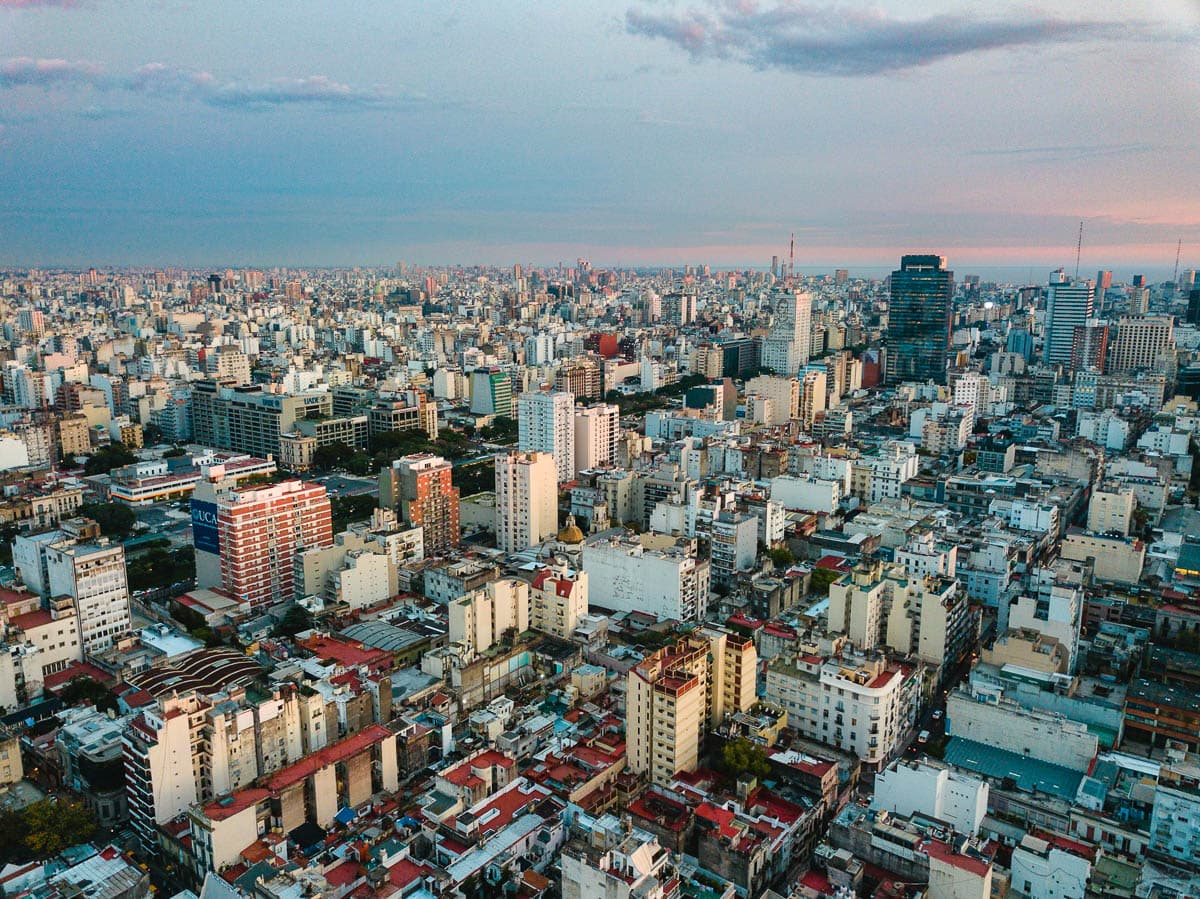
Buenos Aires is Argentina’s largest city and, in my opinion, one of the coolest cities in all of South America.
First off, it is simply visually stunning, with Neoclassical and Beaux-Arts architecture that’s earned the city the nickname of the “Paris of South America” and colorful neighborhoods, like the quirky La Boca.
It also has a rich cultural heritage, with tango performances, world class art museums, and one of the best food and drink scenes on the planet.
Accordingly, I’d definitely recommend kicking off your Argentina itinerary here!
Arrive at the airport
Buenos Aires has two international airports—Ezeiza International Airport, which is approximately an hour south of the city, and Aeroparque Internacional Jorge Newbery, which is about two hours north of the city.
To get into Buenos Aires, you can catch an Uber or book a transport option, like this private transfer from Ezeiza or this option from Jorge Newberry.
Obviously, what you can see and do in your first day in Argentina will depend on when your flight lands and how gnarly your jetlag is, but, for the purposes of this itinerary, I’m going to assume you’re landing in the morning and have ALL the energy in the world.
If that doesn’t quite match your vibe, no worries—just pick and choose the activities that sound best to you!
Go on a walking tour
In my opinion, a free walking tour is one of the best ways to get to know a city. Essentially, these tours have no specific charge, but you are expected to tip your guide at the end of the experience.

Buenos Aires has several free walking tour companies, like Free Walks Buenos Aires, which offers a variety of tours that explore different areas or aspects of the city. I’d personally suggest starting with a City Center tour, which provides a fascinating background on the politics, history, and culture of Buenos Aires.
Insider tip: To get around the city, I’d generally recommend using Uber, which is safe and affordable. Uber isn't available any of the other places you're going to in this Argentina itinerary, so you might as well take advantage of it now!

Buenos Aires also has a robust public transportation system, so if you’re a more budget conscious traveler, you can definitely evaluate whether it makes sense to use that to get from place to place. However, BA is HUGE and it can take quite a while to just drive from one part of the city to another, let alone rely on public transit. Since you only have a limited amount of time in the city, it wouldn’t personally be my first choice of getting around.
Get some empanadas
Empanadas, which are small hand pies stuffed with protein, cheeses, and veggies, are an iconic staple food in Argentina.
La Cocina is renowned as one of the best places to get empanadas in Buenos Aires, with a location just a short walk from the city center. Don’t let its location in a shopping mall basement fool you—this is absolutely a hidden gem and a favorite amongst the locals.
The locro (cheese and spices) and Pikachu (spicy cheese and onion) empanadas and the crema de dulce de leche are not to be missed!
Tour La Recoleta Cemetery
This might sound weird but one of the most popular things to do in Buenos Aires is to visit a cemetery, La Recoleta.

The cemetery, which is the oldest in the city, is known as a resting place for some of the most beloved Argentinians, including Eva Perón (a.k.a., Evita of the “Don’t cry for me Argeeeeeentina!!!!” fame) and former presidents, like Domingo Faustino Sarmiento and Raúl Alfonsín. It’s also known for the intricate designs and architecture that are found within its footprint, which offers a vaguely spooky glimpse into the lives of the people who rest within.
I’d suggest going on a walking tour, like this option, where you can learn more about the famous and controversial figures that are buried here, as well as information about the artistry of some of the tombs and graves.
Pssst…if you’re visiting on a Saturday or Sunday, the square in front of the cemetery hosts one of the best artisan markets in the city, with live music in the afternoon.
Get drinks at a rooftop bar
We’re always a sucker for a rooftop bar at sunset and, luckily, Buenos Aires is chock full of them.
My favorite is Salon 1923, which is located on the 16th floor of the Palacio Barolo building with panoramic views of some of the most opulent buildings in the city, including Congress. Try to snag a reservation at sunset—I promise the views are worth it!
Head to dinner
As mentioned above, Buenos Aires is a hub of culinary talent and is considered one of the best cities for foodies in South America.

To dive into the local cuisine, the Argentine Experience is an interactive dining event with a 16 course tasting menu that’s served family style. Between the unlimited wine pairings and cooking class elements of the experience, like learning how to properly seal an empanada or prepare the iconic yerba mate drink, this is an incredible way to end your first night in Argentina.
Grab a nightcap
If you’ve still got a bit of energy and room in your stomach, Buenos Aires has some of the best cocktails bars in the world, including a handful on the World’s Best 50 Bars list.

We LOVE a good speakeasy and thought Florería Atlántico was quite cool, where you (spoiler alert!) access the bar through a refrigerator door in a flower shop, stuffed with colorful blooms. In the basement bar, you’ll find a vibe-y atmosphere and dozens of creative cocktails. If they have a cocktail made with cachaca (a Brazilian spirit made from distilled sugarcane juice), get it!
I’d highly recommend making a reservation here, as it is quite popular with tourists and locals alike.
Where to stay in Buenos Aires
Justin and I spent a month living in Buenos Aires and after doing a LOT of research, we settled on getting an apartment in the trendy Palermo neighborhood, which is safe and centrally located, with tons of stores, restaurants, and bars to explore.

Accordingly, I’d suggest you do the same during your time in BA. Here’s a few of my favorite hotels in Palermo:
- Rendez Vous Hotel: This boutique hotel is housed in a mansion from 1904, with a homemade complimentary breakfast and friendly staff.
- Mine Hotel: This stylish hotel is the perfect home away from home while you’re in Buenos Aires, with a private courtyard with a sweet little pool and plenty of chairs to lounge around. Beyond that, the hotel is impeccably decorated, with the perfect meld of modern decor with retro vibes, and offers thoughtful perks, like complimentary breakfast.
- The Glu Boutique Hotel: If you prioritize spacious rooms, consider a stay at this hotel, where each suite comes with some sort of lounge area, kitchenette, and balcony or terrace. Given that there’s only three suites on site, the staff treat every guest like royalty, from preparing the complimentary breakfast to helping you with any questions you might have about your time in BA.
Day 2: Buenos Aires
Grab breakfast
If your hotel doesn’t offer complimentary breakfast, check out one of the many coffee shops in Palermo.
Moshu is a standout, with a fun treehouse vibe, complete with fairy lights and swinging seats, and sinfully decadent cakes (their red velvet is SO good). If you’re looking for something a bit less fussy, Cuervo Cafe is a popular stop for locals, with incredible coffee and freshly baked pastries, like the croissants and alfajores (a traditional South American cookie sandwich, stuffed with dulce de leche).
Explore La Boca
La Boca is a colorful neighborhood that’s become one of the most popular stops for visitors.

It’s also one of the oldest neighborhoods in the city, located near its main port and served as a safe haven for many of the poor Italian immigrants who arrived in Argentina in the early 20th century. The residents here had such little money, they constructed many of the buildings here with scrap metal and leftover paint they found in nearby shipyards, which is where La Boca got its famously colorful palate that it’s known for today.
La Boca is definitely on the touristy side, but if you can look past its kitschy veneer, you’ll discover one of the most unique neighborhoods in the city.
While you’re here, you can stroll around The Caminito, the most famous area of the neighborhood with rainbow-colored historic homes that now house touristy shops and restaurants. Many of these restaurants hire tango dancers to perform in front of their establishments to lure diners in, so be sure to have some Argentine pesos on hand to leave for tips!

Beyond the colorful buildings, La Boca is known for its vibrant murals and quirky statues, especially around Usina del Arte, an old power plant that’s recently been turned into a gallery. It’s worth popping in to see the most recent exhibit, as well as stopping into the number of other art museums in the neighborhood, like Benito Quinquela Martín Museum, which houses the works of an artist that highlight La Boca, or Fundación Proa, a modern art museum with stunning views over the Rio Darsena Sur.
Insider tip: La Boca has a bit of a seedy reputation. It’s generally fine to walk around during the day, but I’d definitely recommend keeping your wits about you (don’t down too many fernet and cokes before lunch!) and being mindful about flashing expensive electronics, like cell phones or nice cameras.
Grab pizza for lunch
As mentioned above, Buenos Aires had a huge influx of Italian immigrants in the 19th and 20th century, which has had a huge influence on the food and architecture of the city. One of these lasting influences is the prevalence of pizza, which is seemingly peddled out of every single restaurant lining the city’s streets.
Head to the downtown location of Banchero, which serves up Argentine style pizza (i.e., a thick focaccia-like crust, with little sauce and a LOT of cheese). Banchero actually invented the fugazzetta, a beloved Argentinian style of pizza that features a crust that’s stuffed with mozzarella and provolone cheese and then topped with a hearty amount of onions (plus even more cheese). It’s a must try here!
Pop into El Ateneo Grand Splendid
Walk 20 minutes south to the most beautiful bookstore I’ve ever seen. Buenos Aires has more bookstores per capita than any other city on the planet, and El Ateneo Grand Splendid, housed in an opulent theater from 1919, is the most gorgeous one in the city. And, actually, National Geographic has named it as one of the most beautiful in the world!

There’s three stories of the shop to wander around (be sure to head to the third floor for the best views of the store!) and a cafe on the stage if you need a caffiene little pick me up.
Stretch your legs in Palermo
We’re going to spend the entire afternoon eating, so I’d suggest trying to ramp up that metabolism by spending an hour or two exploring one of the plentiful green spaces that the Palermo neighborhood has to offer.

Start off in the Jardín Botánico Carlos Thays, a quiet (and free!) botanical garden that features native Argentinian plants, and continue on to the Paseo el Rosedal Gardens, a garden with thousands of roses and statues of some of Argentina’s most famous poets.
Stop in the Evita Museum
If you’ve still got time to kill, the Evita Museum is a 20 minute walk away from the rose garden, which is housed in a historic home with an impressive collection of Eva Peron’s journals, letters, and clothing. In case you need to brush up on your Argentine history, Peron was the First Lady of the country in the 1940s, who was an advocate for worker’s rights and social services and was instrumental in enacting a law giving women the right to vote.
The museum is pretty affordable (9000 ARS per person or a little under $7 USD), so even if you’re not a huge Evita fan, it’s still worth a stop to learn more about one of the most important figures in Argentine history.
Go on a food tour
In my opinion, a food tour is an even better way to explore a city, as compared to a regular ol’ walking tour. You’ll get to stroll around the city with a local, trying authentic food at some of the best restaurants and seeing the city and its culture through their eyes. What could be better than that?

This small group food tour explores Palermo with a local guide, trying seven different Argentine dishes and drinks along the way. I really love that they can modify the tour for vegetarian or gluten-free guests (with prior notice, of course).
Watch a tango show
Buenos Aires is the birthplace of tango, so where else better in the world to see a performance?
Tango originated in the late 19th century in the city’s working class immigrant neighborhoods, as a fusion between European and African dances. Due to its humble beginnings, tango was once looked down on and associated with untoward behavior, until it gained popularity in France in the early 1900s. By the 1940s, tango had become socially acceptable in Argentina, with dance halls popping up throughout the country.

While you can see dancers in La Boca, we really enjoyed going to a more formal show. We had a lovely date night at El Querandi Tango Show, which tells the history of tango through dance, costume, and song. The cheapest ticket option comes with unlimited wine and beer and a dessert, so it’s definitely a fun way to cap off the night and learn a bit more about this beloved style of dance.
Day 3: Day trip to Colonia del Sacremento, Uruguay
Take a day trip to Colonia del Sacramento
One of the coolest things about this Argentina itinerary? You’ll not only get to explore Argentina, but (spoiler alert!) actually TWO other South American countries!
Buenos Aires is located right across the Rio de la Plata from Colonia del Sacramento, a UNESCO World Heritage Site and one of the oldest towns in Uruguay, dating all the way back to 1680. It’s well worth spending the day exploring its cobblestone streets, historic buildings, and quirky art galleries.

We wrote an article with everything you need to know about visiting Colonia del Sacramento from Buenos Aires, including how to get there and things to do in this historic town. In a nutshell, though, you’ll need to catch a ferry, operated by either Colonia Express and Buquebus, from one of the ports in Buenos Aires, across the Rio de la Plata.
Colonia is pretty teeny and very walkable, so, once you disembark, you can stroll to its beating heart, the Old Town. Once you’re here, you can take a walking tour, like this one and a half hour option or this three hour option; try some Uruguayan food; and soak up the sun at a riverside beach, Playa Fernando.

After a leisurely day of exploring, grab the ferry back to BA.
Grab dinner
There’s endless incredible options for dinner, but here’s a few of my favorites:
- Cucina Paradiso, which serves handmade pasta that’s prepared right in front of you. This restaurant was actually featured on Netflix’s Somebody Feed Phil, so you know it’s gotta be good!
- Chori, a fast casual restaurant with trendy decor that serves up elevated choripan, an iconic Argentinian street food that consists of a grilled sausage and crusty bread (they have vegetarian versions, too!)
- Aramburu is waaaaaay on the other end of the spectrum, if you’re looking to live it up big for your final night in BA. This two Michelin star restaurant offers an 18 course tasting menu that relies on local ingredients and molecular gastronomy (i.e., expect a lot of foams, the use of liquid nitrogen, and other unconventional cooking methods).

Day 4: Fly to Puerto Iguazu and visit Foz do Iguaçu, Brazil
Grab an early morning flight to Puerto Iguazu
Argentina is home to Iguazu Falls, which is considered one of the Natural Wonders of the World. It also happens to be the largest waterfall system and one the largest waterfalls by volume in the world, given that, during heavy rainfall, close to 4 MILLION gallons of water can flow down the falls per second. How wild is that?!
Iguazu Falls, as you might guess, is part of the Iguazu River, which demarcates the border between southern Brazil and northern Argentina. The Argentinian side of the falls are located near the small town of Puerto Iguazu, which has everything visitors could ask for, including a conveniently located airport.

So grab an early morning two hour flight (the earlier, the better!) from Buenos Aires to Puerto Iguazu.
Unlike most of Argentina, Uber is not a thing in Puerto Iguazu or anywhere around Iguazu Falls, so, once you land at the airport, you can book a shuttle in the arrivals hall or prebook a transfer into town, like this shared option or this private option.
Visit the Brazilian side of Iguazu Falls
Once you’ve dropped off your bags at your hotel, head on over to the Brazilian side of Iguazu Falls, which is located near the town of Foz do Iguaçu. I’d suggest heading here on your first day in Puerto Iguazu, given that you generally need less time to explore the Brazilian side of the falls, as compared to the Argentine side.

There’s a handful of things to do in Igaçu National Park, including walking along the 3.2 km Waterfalls Path, which offers a variety of different views over the falls, including the infamous Devil’s Throat. This platform hovers directly over the tallest part of the falls, where you can stare down into the rushing water as it crashes 269 feet down into a rocky gorge below.
There’s also another viewing platform over a section of the waterfall that’s known as Floriano Falls.

You don’t need terribly long in the national park—between two to three hours should be more than enough. But I think it’s well worth a visit, given the fact that, in my opinion, the views of the waterfall are a LOT more stunning on the Brazilian side than on the Argentinian side. Plus, how can you turn down an opportunity to get to visit Brazil?!
Getting from Puerto Iguazu to Igaçu National Park
There’s a couple of ways that you can get from Puerto Iguazu over to Foz do Iguaçu on the Brazilian side. Regardless of which kind of transit you take, since you’re crossing the border, you’ll need your passport and whatever visa is required for your nationality to visit Brazil (psssst…. my fellow Americans will need a visa!). You can check your country’s requirements here.
By bus
In Puerto Iguazu, you can catch a Rio Uruguay bus to Foz de Iguaçu, Brazil (6000 ARS; cash-only), which will drop you off at the international bus station in downtown Foz. From here, you’ll need to walk to the nearby local bus terminal to grab a #120 bus to Igaçu National Park (about 6 BRL or around $1 USD; cash only). Both of these buses run approximately every 30 minutes.

This is by far the cheapest way to get to the Brazilian side of the falls, but also the most time-consuming and logistically challenging (like, you’ll need to figure out where to get Brazilian Reals).
I’d budget at least four hours to get from Puerto Iguazu to the national park, if you go this route. Since the national park stops letting visitors in after 4:30 PM, I would not recommend relying on public transit if you’re leaving Puerto Iguazu any time after 12 PM.
By taxi
There are taxi stands in downtown Puerto Iguazu or you can ask your hotel to arrange for a driver to take you to and from the Brazilian side of Iguazu Falls, which takes anywhere from half an hour to three hours, depending on how busy the border is.

When we visited, we were quoted 60,000 ARS (approximately $40 USD) for roundtrip transportation for the two of us to Igaçu National Park. Just note that the value of the Argentinian peso fluctuates widely, so if you’re quoted a different rate while you’re visiting, let us know in the comments below!
Grab an early dinner in Foz do Iguaçu
Since you went through the trouble of crossing the border, you might as well get dinner in Brazil tonight!

Get a taxi from outside of the national park and take it to one of the restaurants in downtown Foz do Iguaçu, like Restaurante Barracão or Bendito (don’t miss the tropical Caipirinha or croquettes!).
After dinner, grab a taxi or bus back to Puerto Iguazu. If you’re relying on the bus, just be sure to check the schedule—the last bus back from Foz do Iguaçu to Argentina typically runs around 8 PM, but the schedule changes all the time!
Where to stay in Puerto Iguazu
- Hotel Saint George: For a more budget-friendly option in Puerto Iguazu, consider a stay at this hotel, which has a sprawling pool complex, complimentary breakfast, and a convenient location within walking distance of lots of restaurants and shops in town.
- Panoramic Grand Hotel: This hotel has an excellent location right along the riverside, offering spectacular sunset views over the Rio Iguazu and, beyond, Brazil. There’s also lots of thoughtful perks, like an airport shuttle, complimentary breakfast, a large pool, and an onsite spa.
- Iguazú Grand Hotel: If you’re looking to splash out, this resort has it all, from live performances and spacious rooms with balconies to a complimentary poolside breakfast buffet and an airport shuttle.
Day 5: Argentinian side of Iguazu Falls
Visit the Argentinian side of Iguazu Falls
After grabbing breakfast at your hotel, head to back to the Argentinian side of Iguazu Falls.

We wrote an entire article about visiting Iguazu Falls on the Argentina side, but, in short, you could easily spend the better part of a day here. There are five hiking trails that offer different perspectives of the falls, as well as the surrounding jungle, plus you can take a boat ride up to and under part of the world’s largest waterfall system, like this option or this option (how cool is that?!).
Insider tip: Iguazu Falls is an EXTREMELY hot and humid place and you’ll likely be walking around for hours and hours here, with very few spots that have air conditioning where you can escape the oppressive heat. I consider myself a thermophile sun baby and I felt like I was absolutely MELTING during our visit here.

Accordingly, bring a large bottle of water (they charge an absurd amount for water in the park), sunscreen, and even a parasol to block the harsh sun while you’re exploring the park.
Getting from Puerto Iguazu to Iguazu National Park
By bus
You can catch a Rio Uruguay bus in downtown Puerto Iguazu that will drop you off directly at the entrance gates. These buses depart every half hour.
When we visited, it cost 6000 Argentine pesos ($4.10 USD) per person one way—cash only!
By taxi
As mentioned above, there are plenty of taxi stands in downtown Puerto Iguazu or you can book one through your hotel. Taxis charge between 40,000-45,000 Argentine pesos roundtrip (cash only), so this might be an economical option if you’re traveling with a larger group.
With a tour group
If you prefer to travel with a guide, you can book a tour to Iguazu Falls that will include transportation to and from your hotel, like this option that includes a safari boat tour.

In full transparency, I definitely don’t think you need a guide to get around Iguazu Falls, given that the national park is well-signed and pretty self explanatory. However, if you’d prefer to learn more about the waterfall and the surrounding wildlife, it’s a great way to more fully immerse yourself in the park and your transportation logistics will be taken care of.
Walk to the Three Borders Monument
After your trip to Iguazu Falls, head back to your hotel.
If you’re up for more adventures, one of the most popular things to do in Puerto Iguazu is to stop by the Three Borders Monument, which marks where the Rio Iguazu separates three countries—Argentina, Paraguay, and Brazil. The monument is about a 25 minute walk from downtown Puerto Uguazu.
To be honest, there’s not much to do at the monument, other than to snap a few photos and peruse the handful of vendors that hang around this area, but how often can you see three countries at once?!
Grab dinner in Puerto Iguazu
Like any good touristy town, there are plenty of restaurants to choose from in Puerto Iguazu, like:
- Aqva, which serves up Argentinian food created with local ingredients
- Restaurante La Rueda 1975, a Puerto Iguazú mainstay that feels stuck in 1975 (in kind of a vibe-y, charming way) that uses high quality ingredients and offers an impressive selection of Argentinian wines
- La Mamma Pastas and Salsas for delicious Italian food, including handmade pasta

If you feel like having a nightcap, head to Patagonia Brewery, our favorite brewery in Puerto Iguazu.
Day 6: Travel day to El Calafate
Fly to El Calafate
It’s time for the latter portion of your trip—Patagonia, with all of the spectacularly jagged mountains, colorful alpine lakes, and hulking glaciers you could dream of.
To get from Puerto Iguazu to El Calafate, in the southern portion of the country, you’ll need to connect through Buenos Aires, so the route will generally take anywhere from eight to twelve hours. Accordingly, most of your day will be spent transiting.

There is no Uber in El Calafate. Accordingly, to get from Aeropuerto Internacional Comandante Armando Tola de El Calafate, which is about twenty minutes from the downtown area, you can either hire a taxi for around 35,000 ARS (cash only) or book a transfer, like this shared option (which is super cheap!) or this private option.
Dinner in El Calafate
Depending on your departure and arrival times, you may have enough time to grab a decent dinner in downtown El Calafate. El Gaita Pizza Bar has some absolutely KILLER pizza or, for something more upscale, La Candelaria offers more traditional Argentinian fare.
Where to stay in El Calafate
- Kau Kaleshen: If you’re on a budget, this quiet, little hotel has an excellent location right off the main drag, with a cozy onsite restaurant and friendly staff.
- Hotel Sierra Nevada: For a mid-range option, this hotel has spacious rooms, complimentary breakfast, and an excellent location that’s within walking distance of restaurants, bars, and Lago Argentina, a beautiful glacier lake.
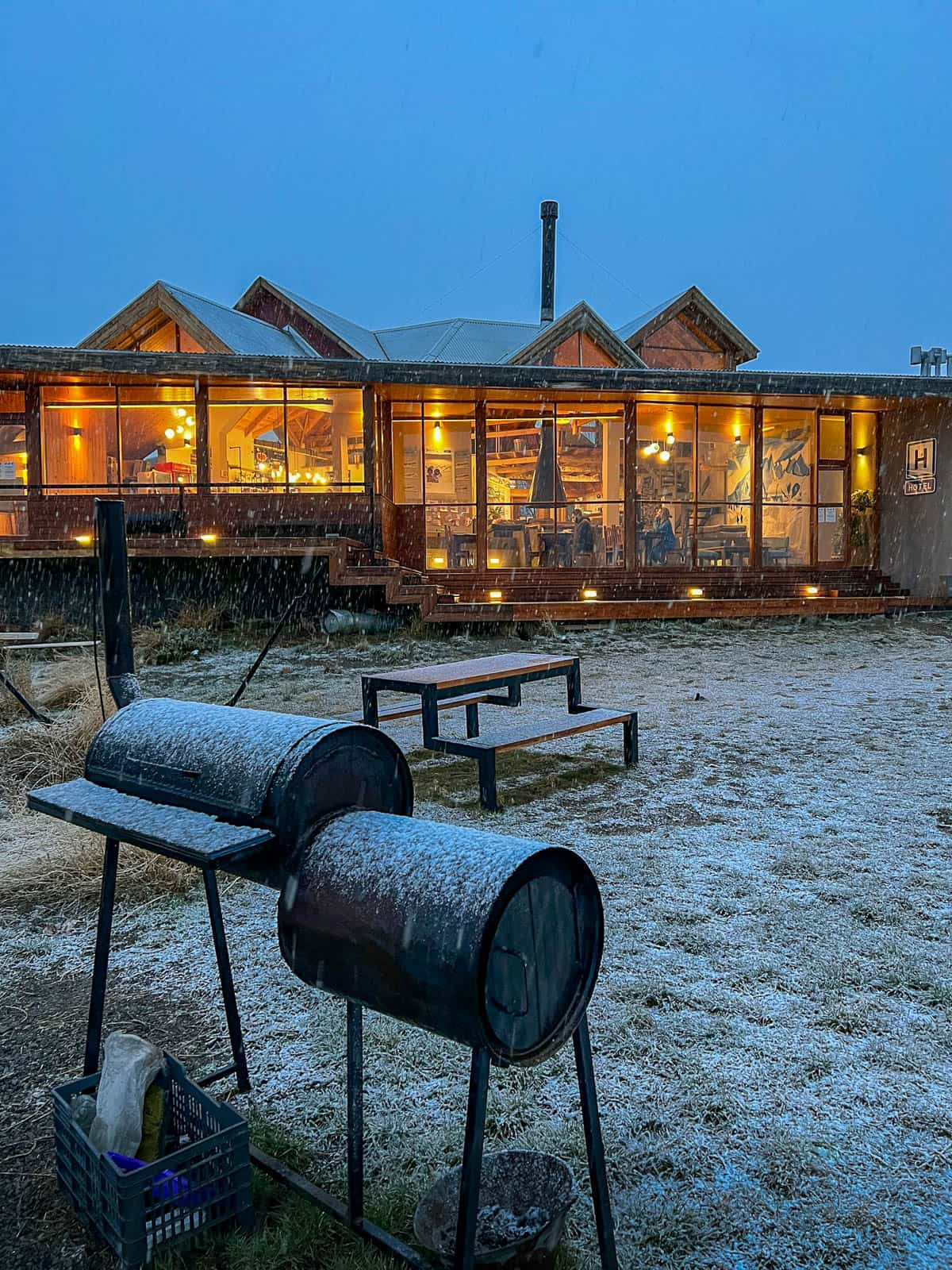
- Calafate Parque Hotel: This is one of the best hotels in El Calafate, perfectly mixing the rustic charm of Patagonia with modern amenities, including a cozy hot tub and sauna. There’s an excellent complimentary breakfast at the onsite restaurant, which serves traditional Argentinian cuisine and wine later in the day.
Day 7: Perito Moreno Glacier and transfer to El Chalten
Visit the Perito Moreno Glacier
El Calafate is located near one of the largest glaciers in Argentina and one of the only glaciers in the world that’s actually advancing, Perito Moreno, which sprawls for a whopping 97 square miles.

This glacier holds all kinds of impressive titles, including being the third largest reserve of freshwater on the planet, after Antarctica and Greenland, and is one of about 50 glaciers on the planet that’s been named a UNESCO World Heritage Site. Because of all its superlatives, Perito Moreno has become a must-do on every traveler’s Patagonia itinerary, drawing almost 700,000 visitors per year.
Depending on your fitness level and budget, there’s tons of different things to do here, including:
- Hiking the Perito Moreno Glacier’s six walking paths, which provide different viewpoints of its icy spires and the brilliant blue water of its glacial lagoon
- Kayaking around the base of the glacier, like with this tour option, where you can paddle your way through crackling icebergs as you stare up at the face of the 74 meter sheet of ice towering above you
- Climbing on the glacier itself, where you can see the ice spires, archways, and caverns up close and personal, like on this tour, which includes up to an hour and a half of glacier trekking, or this tour, which includes three hours of glacier trekking

Getting from El Calafate to Perito Moreno
The Perito Moreno glacier is about an hour and 20 minutes west of El Calafate.
If you just plan on hiking around Perito Moreno, you can catch a bus from the El Calafate bus station, operated by Cal Tur, Chaltén Travel and Marga Taqsa. I had trouble purchasing bus tickets online from these operators, so I’d suggest just purchasing them in person at the bus station.

Alternatively, you can go on a guided tour of the boardwalks, which includes roundtrip transportation from El Calafate and is usually not terribly more expensive than the bus tickets themselves. For example, this option takes you on a guided tour of the glacier’s hiking trails and offers you the option to add on a cruise in the glacial lake surrounding Perito Moreno, or this tour includes both the hiking trails and a glacial lagoon boat tour.
If you want to kayak or glacier trek, you will need to be on a guided tour, as recommended above, which will include your roundtrip transportation to and from El Calafate.

Perito Moreno is in Los Glaciares National Park, which requires a daily entrance pass.
You can purchase a single day pass online for 45,000 ARS per person per day. However, since you’re going to explore other areas of the park in the mountain town of El Chaltén over the next two days, I’d suggest buying a three day Flexipass for 90,000 ARS (i.e., you save a third off purchasing your daily entrance passes).
Catch a bus to El Chaltén
After you’ve returned from the glacier to El Calafate, grab your bags from your hotel and head to the station to grab a bus to El Chaltén, about two and a half hours away.
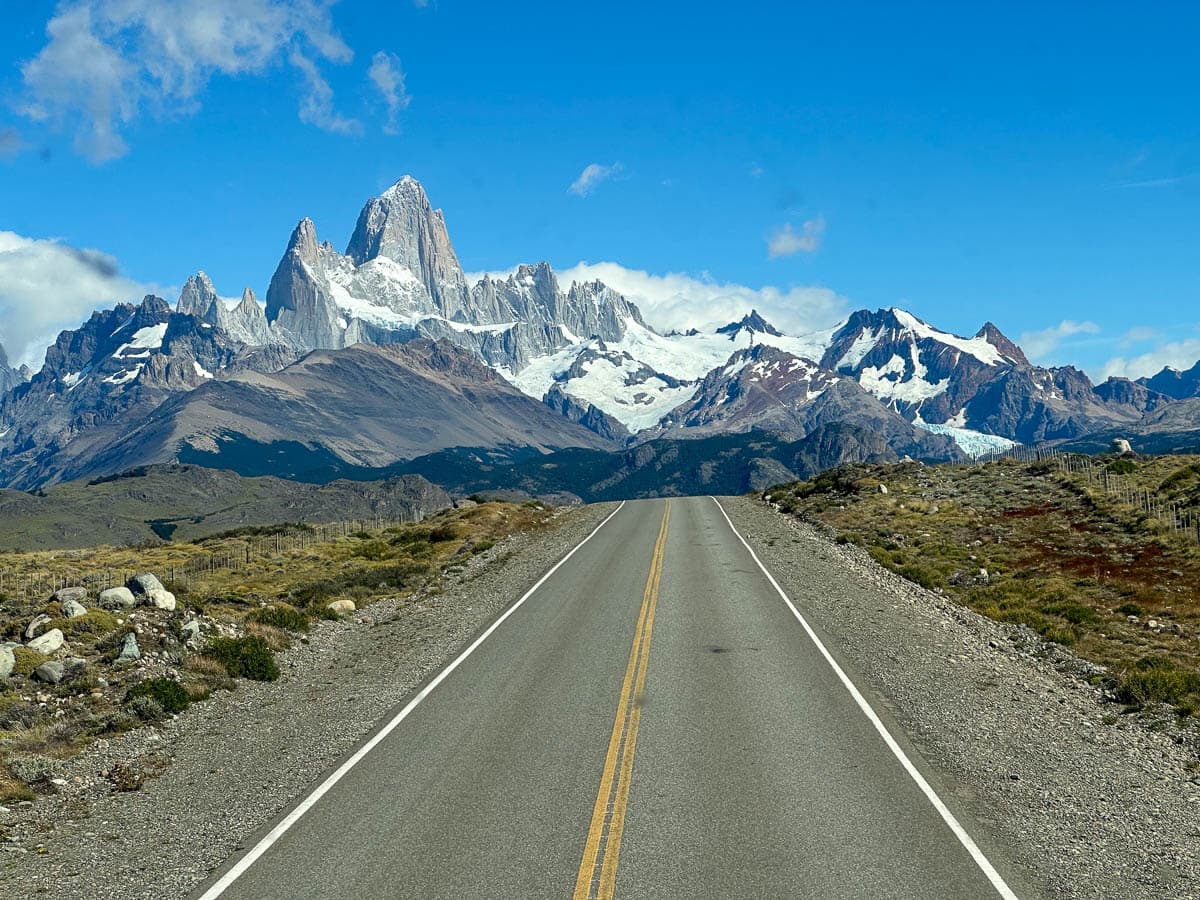
El Chaltén is largely considered to be the mecca for all things alpine adventures in Patagonia and is home to Mount Fitzroy, arguably the most famous mountain in all of South America (it’s the logo for the beloved Patagonia outdoor gear brand, after all!).
Dinner in El Chaltén
You’ll likely get to the tiny town around dinnertime and, luckily, there’s lots of restaurants to choose from.
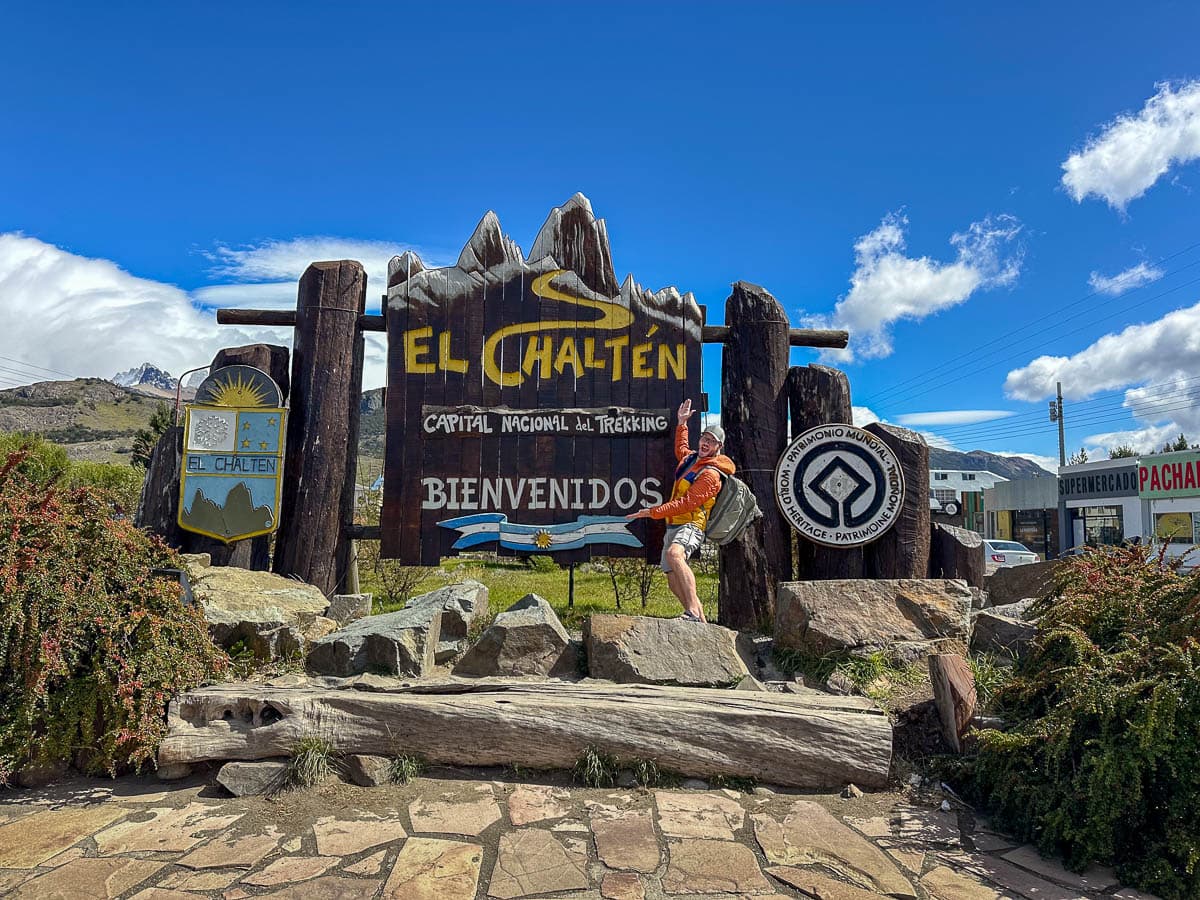
After a long day of exploring and traveling, if you’re just in the mood for a burger and fries, La Lomiteria El Chalten has some of the best comfort food at affordable prices in town or Laborum Pizzeria is known for its friendly service and deliciously cheesy pies.
Where to stay in El Chaltén
- Pudu Lodge: Nothing in El Chaltén is really very budget friendly, but this hotel is on the more affordable side of the spectrum. The rooms are clean and spacious and there’s complimentary breakfast served every morning in the cozy dining room.
- Los Cerros del Chaltén Boutique Hotel: If you’re looking for a bougier way to cap off your time in Argentina, this boutique hotel provides jaw dropping views of the Andes and has everything you’d need for the perfect mountain getaway, from a hot tub and sauna to a cozy communal fireplace and stellar onsite restaurant.
Day 8: Los Glaciares National Park in El Chaltén
Hike the Laguna de los Tres Trail
After grabbing breakfast at your hotel, walk to the starting point for Laguna de los Tres Trail, sometimes referred to as the Fitzroy Trail. This is one of the best hikes in Patagonia and THE absolute best one to get up close and personal with the dramatically jagged peaks of Mount Fitzroy and several of its brilliantly colored alpine lakes.

Here are some quick stats on this hike:
- Length: 13.7 miles (22 km)
- Elevation gain: 3,454 feet (1,052 meters)
- Difficulty: Challenging
- Trail map
As noted above, this trail is located in Los Glaciares National Park, so you’ll need to purchase an entrance pass for the park (e.g., a 3 day Flexipass), which a ranger will check at the trailhead.
While there’s nothing technically challenging about this trail, it is very physically demanding, with an extremely steep and slippery climb up to the final viewpoint. It’s also famous for the unpredictable weather here—when we hiked to Laguna de los Tres, it somehow managed to be sunny, rainy, snowy, and sleet-y, all in the nine or so hours that we were on the trail!
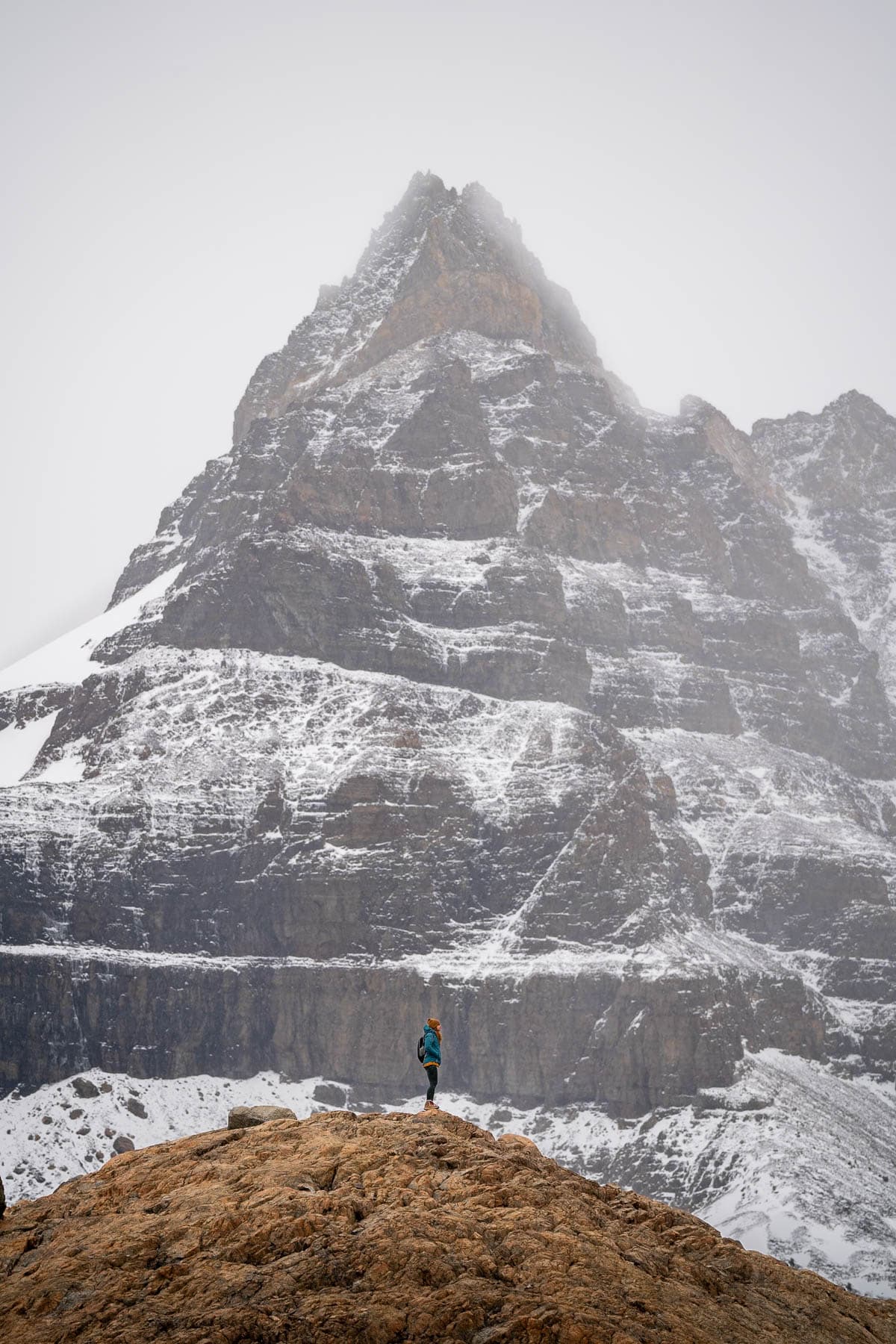
Accordingly, be sure to come prepared with adequate gear, including proper waterproof hiking boots (I use this pair and Justin uses this pair), a solid rainjacket, warm outerlayers, and trekking poles.
Insider tip: Before hitting the trail, I’d suggest picking up some empanadas from Los Saltenos, a small panaderia near the trailhead, to take on the hike with you. The empanadas are SO good and they make for the perfect little lunch to enjoy at the viewpoint!
If 22 km long hikes aren’t your jam, I’ve recommended some other activities on Day 10 that you could consider doing instead!
Dinner in El Chaltén
Hiking to Laguna de los Tres typically takes between 8-10 hours, so by the time you get back to El Chaltén, you’ll have some time to freshen up at your hotel and then head out to dinner.

Lito Restoran offers a cozy, intimate environment with hearty comfort food with Italian influences (the pumpkin soup and eggplant ravioli is not to be missed!) and La Asadores is an El Chalten institution, offering a five course meal (for both meat lovers and vegans!) of creative takes on Argentinian cuisine—reservations required!
Day 9: Los Glaciares National Park in El Chaltén
Hike the Laguna Torre Trail
Round 2 of hiking in Los Glaciares—the Laguna Torre trail, which leads to a viewpoint that provides jaw dropping views of the impossibly blue Glacier Grande and the rugged spires of Cerro Torre, one of the most iconic mountains in the area.
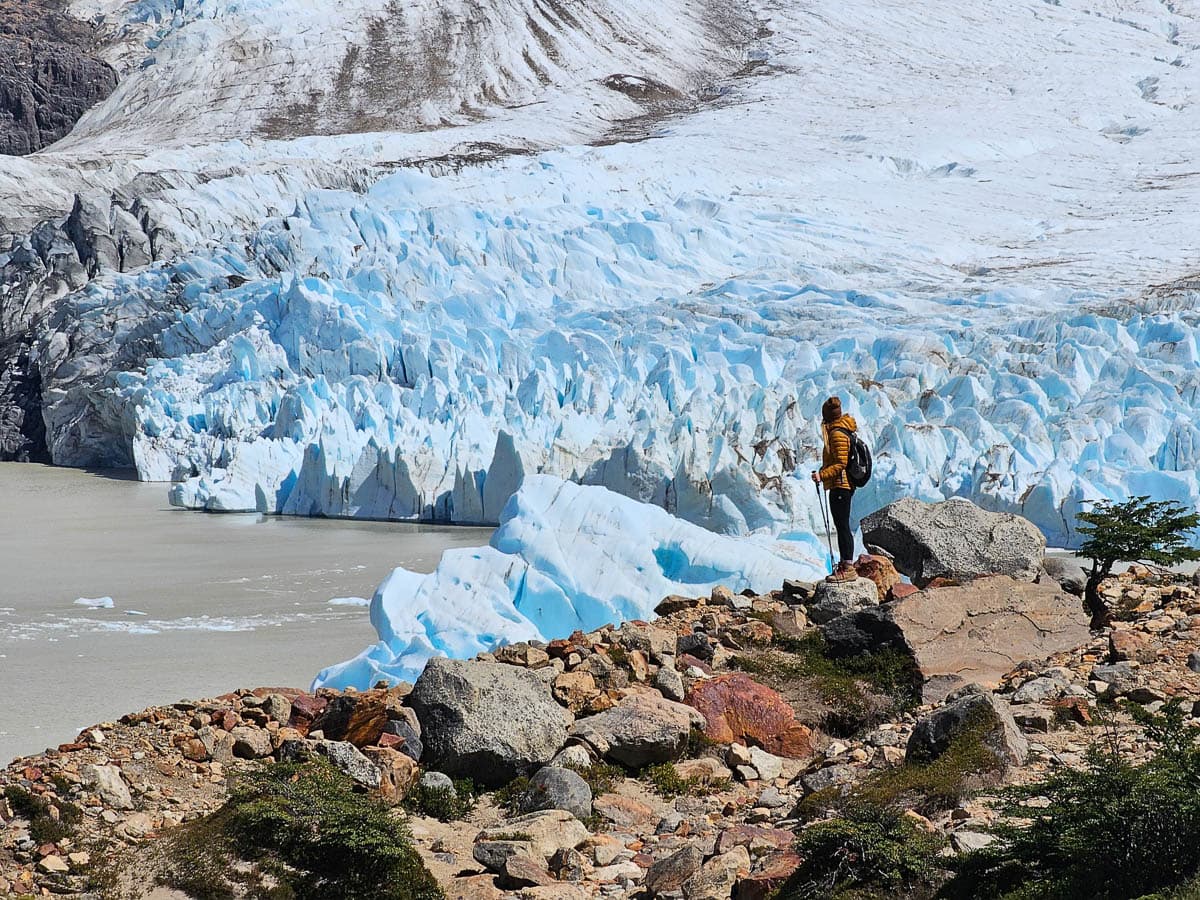
Laguna de los Tres really is the best hike to see Fitzroy in El Chaltén, but Laguna Torre remains my favorite hike here, given how much less crowded it is and the views you’ll get at its endpoint.
Here are some quick stats on Laguna Torre:
- Length: 11.1 miles (17.9 km)
- Elevation gain: 1,873 feet (571 meters)
- Difficulty: Challenging
- Trail map
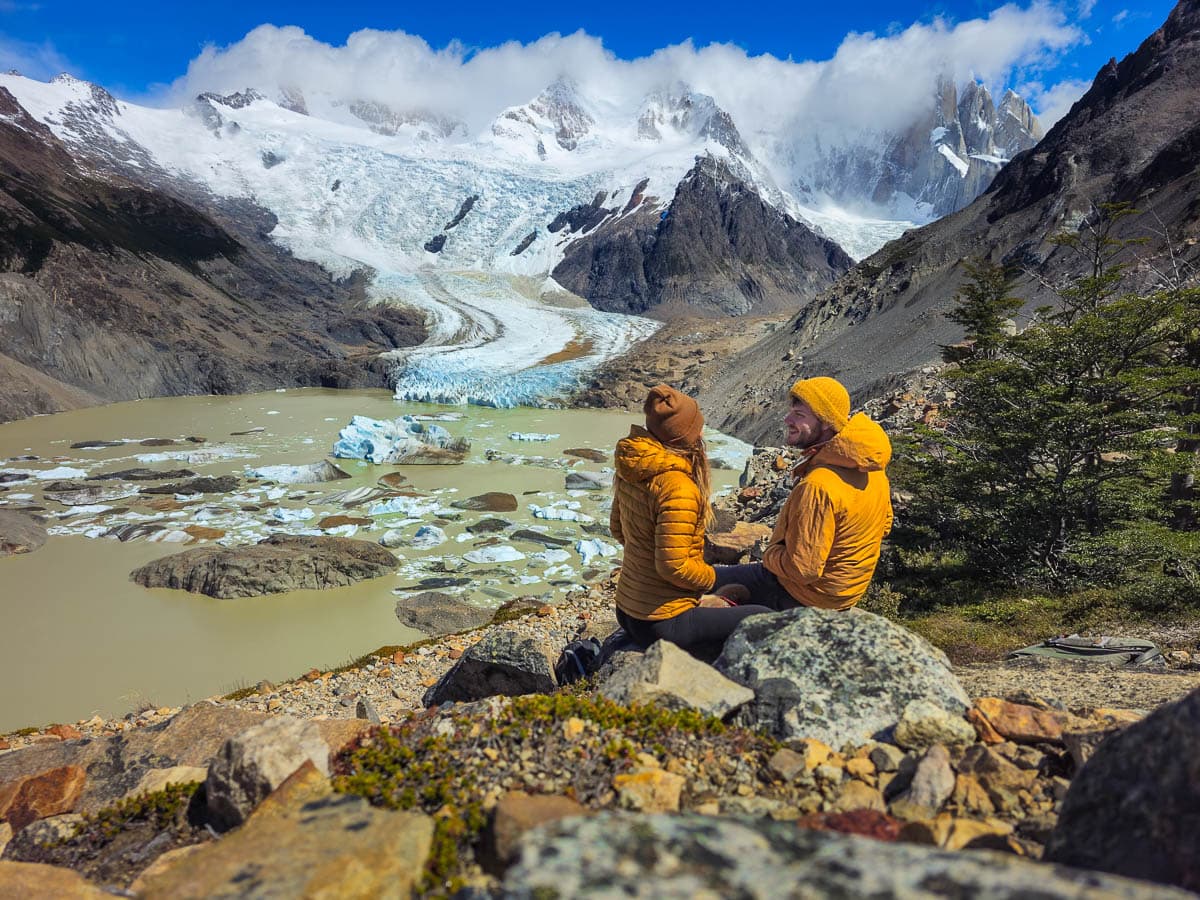
While I definitely wouldn’t say that Laguna Torre is easy, I think the only really challenging aspect of this trail is its length. So if Laguna de los Tres kicked your butt yesterday, not to worry—this trail is quite a bit easier (at least, in my opinion!).
Get dinner in El Chaltén
Despite Laguna Torre being not as physically demanding, it still will take you pretty much all day to hike (between 8-10 hours). So once you’re back in El Chaltén, head out to dinner at one of the restaurants recommended above that you haven’t gotten to hit yet.
Day 10: Head back to El Calafate and fly home
Spend the morning in El Chaltén (if you have time!)
Depending on when your flight is out of El Calafate, you could spend your morning exploring more of El Chaltén, like:
- Going kayaking on the Rio de las Vueltas, like on this tour, which provides you a different perspective of Mount Fitz Roy and Cerro Eléctrico
- Hitting one of the shorter hikes in El Chaltén, like Mirador Cascada Margarita or Mirador Los Cóndores, both of which are under three miles in length
- Joining a rafting tour, like this option or this option, down the Rio de las Vueltas, where there’s a mix of calm water up to Class III rapids
- Trying your hand at via ferrata, which is kind of like if hiking and rock climbing had a baby, where you clip into steel cables along rock walls and suspension bridges, like with this option that ends with a fun zipline!

Catch a bus to El Calafate
Hop on a bus back to the El Calafate airport to catch your flight home and start planning your next trip back to Argentina!
I hope this Argentina itinerary helps you plan your trip to this dynamic and beautiful country. Do you have any questions about visiting this special corner of the planet? Let us know in the comments below!
