

Cusco is a bustling city, nestled high in the Andes Mountains of Peru, that’s a unique mix of Spanish colonial architecture and rich Inca history. While Cusco is worth exploring in and of itself, most visitors spend a lot of their time outside of the city, experiencing all that the surrounding Sacred Valley and the Andes Mountains have to offer. If you want to dive into this colorful region for yourself, here’s 12 incredible day trips from Cusco to consider adding to your Peru itinerary.

This post may contain affiliate links. If you make a purchase through them, we may receive a small commission, for which we are extremely grateful, at no extra cost to you.
Day trips from Cusco
While there’s tons of cool things to do in Cusco, most people visit this area of Peru to experience the area around the city. Most of the popular day trips from Cusco fall into one of two camps—either Inca (or other ancient civilizations) ruins throughout the Sacred Valley (i.e., the 60 kilometer stretch of land between Cusco and Machu Picchu that once was the heart of the Inca empire) or day hikes through the Andes Mountains.
With that context in mind, et’s get into it!
A quick note about transportation to day trips from Cusco
In each of the suggestions below, I’m going to explain how you can get to each of these destinations from Cusco. Here’s a few things to keep in mind:
Taking a taxi, Uber, or private driver is always an option
You can get to pretty much all of these sites (but for Machu Picchu) by taxi, Uber, or a private driver, so I’m not going to keep repeating that option over and over again below.
If you decide to go that route, it’s worth flagging that I personally always felt safer using ride share apps, as compared to taxis, in South America. Ride share is an especially good option for highly populated and busy areas with cell service, like Ollantaytambo or Pisac.
If you opt to use a taxi or private driver, I’d suggest booking one through your hotel to ensure it’s a legitimate service.
How to get back to Cusco if you opt to take colectivos
If you get to any of the sites in this article via colectivo (i.e., shared public shuttle that’s primarily used by locals) or buses, you can usually return to Cusco by heading back to wherever you were dropped off and trying to find a colectivo or bus heading back to the city.

However, it’s usually WAY harder to find colectivos (or taxis, for that matter) heading back to Cusco in these places, as compared to those that are departing the city. For example, it took us about an hour to find a colectivo that was headed back to Cusco from Ollantaytambo, which is probably the easiest place in this article for you to get a return ride back to the city.
Additionally, it’s not unusual to have limited or no cell service at these sites, so I would not recommend relying on ride share apps to provide your return trip. Even if you have cell service, there’s a good chance there won’t be any ride share drivers in most remote areas of Peru.

Accordingly, if you’re a nervous traveler, don’t speak fluent Spanish, or don’t have time to spend hours and hours wandering around and looking for a colectivo or taxi, it is a better idea to either go with a tour or hire a private driver, who will drive you to these sites and wait for you in the parking lot as you’re off exploring, as compared to relying on a colectivo or stumbling upon a taxi in a remote area of Peru. This is especially true with respect to any of the more remote locations, like any of the trailheads or more off-the-beaten path locations, like Tipon.
Inca ruins and sites
1. Machu Picchu
Most people come to Cusco for one thing—to visit Machu Picchu!
Machu Picchu is the most popular tourist attraction in not only Peru, but in all of South America. Beyond that, it has some super impressive titles, including being a UNESCO World Heritage Site and one of the Seven Wonders of the World. And, I’m happy to report, it totally lives up to the hype!

Machu Picchu is one of the best preserved Inca ruin sites, with over 150 buildings in its sprawling footprint. Plus, with its location perched on the ridge of Machu Picchu Mountain and overlooking the Urubamba River, it has to be one of the most dramatically beautiful historical sites of all time.
Machu Picchu is one of the most popular tourist destinations on the planet, but visiting the site is honestly a bit confusing.
You can either purchase a ticket online (be sure to do so well in advance, as they do sell out!) or join one of the Machu Picchu tours from Cusco.
There are literally no informational signs in the park, so I’d strongly recommend going with a knowledgeable guide that can explain the history and culture of the Inca people as you explore this spectacular site. For example, this option includes all of your transportation from Cusco and other logistics or this option includes a private guide that will meet you directly at the site, if you’d prefer to handle the logistics of getting to and into Machu Picchu yourself.
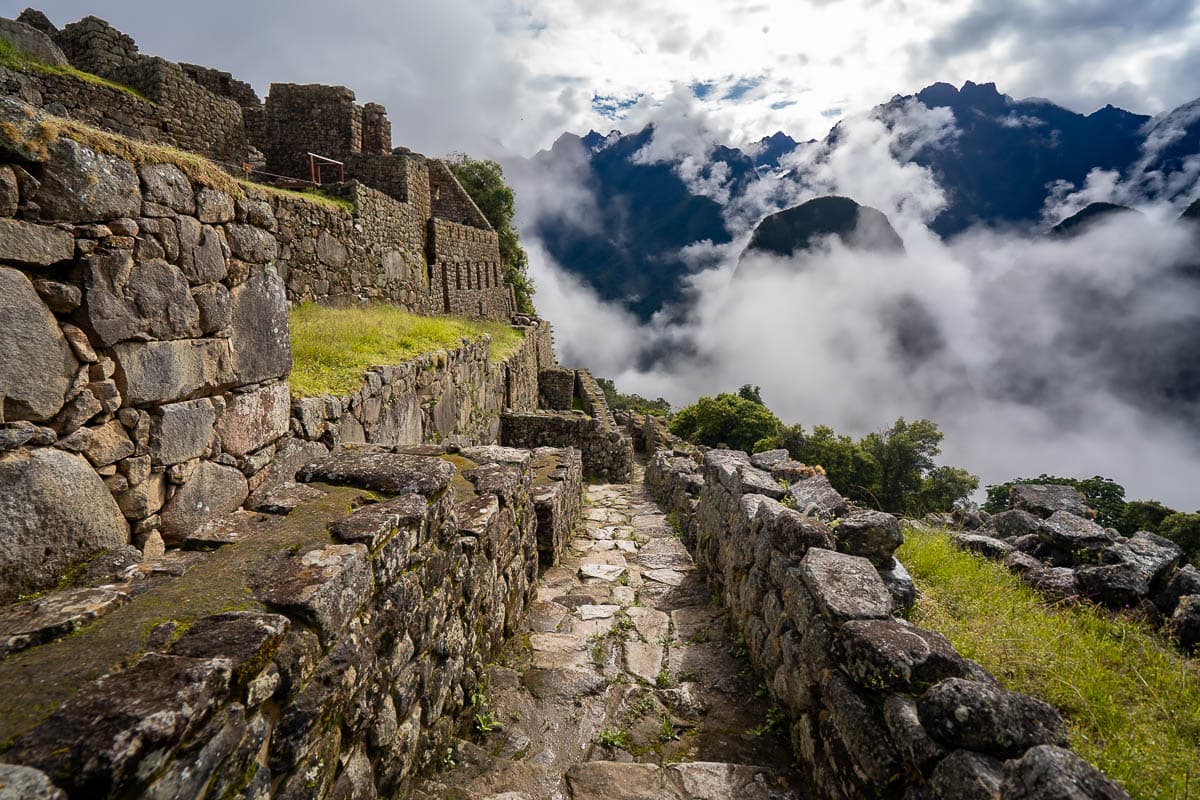
Additionally, you can’t just freely mosey around the ancient city. Your entry ticket, whether purchased by you or a tour operator, will be for one of ten circuits in Machu Picchu, which are basically routes through specific areas of the park. Certain circuits only have access to the iconic viewpoint, with the postcard-worthy view of Machu Picchu, while other circuits allow you to add on hikes that only a limited number of people get to do every day.
If you want all the nitty gritty details to plan your trip here, we wrote a whole guide about visiting Machu Picchu.
How to get to Machu Picchu from Cusco
You’d think, as the most popular tourist destination in South America, it would be straightforward to get to Machu Picchu, but it’s really not.

There are no roads that lead to Aguas Calientes, the only town through which Machu Picchu is accessible. Accordingly, your only options are either to hike in or take at least three modes of transportation to reach it.
We wrote a guide on how to get to Machu Picchu from Cusco, but, in short, your options are:
With a tour
As mentioned above, many travelers join a guided tour to Machu Picchu, like this small group option or this private option, where the operator organizes all of your transportation from Cusco for you.
On your own
From Cusco, you’ll need to grab a taxi, Uber, or colectivo to one of two train stations: either in the town of Poroy, which is about half an hour away, or Ollantaytambo, about one and a half hours away.
At the station, catch a train, operated by either Peru Rail or Inca Rail, to the tiny town of Aguas Calientes, which sits at the base of Machu Picchu Mountain. Train tickets often sell out days, if not weeks, in advance, so I’d strongly recommend buying them online in advance.

From the Aguas Calientes train station, your last leg of your journey is a bus up to the entrance gates of the ruins. You can either purchase tickets online ahead of time or expect to wait in a VERY long queue.
In total, it usually takes about five hours to get from Cusco to Machu Picchu, although it can, at times, take significantly longer, due to train delays.
Trekking
You can actually hike into Machu Picchu via the Inca Trail. This typically is hiked as a four day backpacking trek, during which time you’ll get to follow the pathways the Incas actually took from Cusco to Machu Picchu and explore several ruins that few visitors get to see. This is how my husband, Justin, and I reached Machu Picchu and it was easily one of our favorite experiences of our two month stay in Peru.
There are also several popular multi-day treks that end in Aguas Calientes, including the Salkantay Trek, which is a great option for hikers that are interested in cool glamping accommodations and beautiful mountain views, and the Lares Trek, which focuses on hiking through small Quechua villages. After completing these treks, you’ll bus up to the entrance gate of Machu Picchu, like most other visitors.
Obviously, these treks aren’t exactly day trips from Cusco, but thought it was worth mentioning, in case that sounded up your alley!
2. Ollantaytambo
Ollantaytambo is not only the town from which most travelers reach Machu Picchu, but it’s also one of the most important Inca ruin sites.

The site is renowned for its impressive display of Inca engineering, including precise stonework without the use of mortar and complex irrigation systems. Additionally, it’s also one of the only sites where the Inca successfully defeated Spanish conquistadors, when a leader, Manco Inca, flooded the surrounding valley.
Beyond just the ruins, there’s several cool things to do in Ollantaytambo, like hiking to Pinkuylluna, granaries that were built by the Incas high in the surrounding cliffsides; and browsing the market at Plaza Araccama for locally made souvenirs.
Or, if you’re down for more than just a day trip, this is the only place in the world where you can stay overnight in a glass capsule that’s bolted high into the cliffside, thousands of feet above the canyon floor below—namely, at Sky Lodge, Star Lodge, and Vertical Sky Suites. Justin and I stayed at one of these (you can check out our review of Vertical Sky Suites) and it was easily THE coolest place we stayed during our seven month stay in South America!
How to get to Ollantaytambo from Cusco
Transfer
You can book a private transfer ahead of time, like this option or this option.
Tour
If you want to check out multiple Inca ruin sites, your best option will generally be with a tour that will provide transportation from Cusco around the Sacred Valley, as well as a knowledgeable guide to give you context as to the ruins you’re exploring. For example, this small group tour or this private option stops at Ollantaytambo, as well as other popular sites, like Moray, Maras, and Chinchero (which we’ll get into below).

Colectivo
If you’re on a tighter budget, you can get in a colectivo to Ollantaytambo at this station in Cusco. The ride should take about an hour and a half and will usually cost between 10 to 20 Peruvian soles.
Insider tip: Whether you’re headed to any of these ruins by yourself or with a tour group, you’ll need to purchase a tourist ticket at either this office or any of the participating archeological sites. There are a variety of different tourist tickets, depending on which sites you’re interested in stopping at (which are grouped into different circuits) and the length of time you plan on exploring the area around Cusco.

For example, you can purchase a “Boleto Turístico del Cusco Partial III” (i.e., a “partial” ticket to Circuit III), which includes entry into Ollantaytambo, Pisac, Chinchero, and Moray over the course of two days for 70 Peruvian soles.

Alternatively, you can purchase a full tourist ticket for 130 Peruvian soles, which includes entry into the following 16 different tourist sites in and around Cusco over the course of 10 days: Ollantaytambo, Pisac, Chinchero, Moray, Sacsayhuamán, Qenqo, Puka Pukara, Tambomachay, Qoricancha, Regional Historical Museum of Cusco, Museum of Contemporary Art, Popular Art Museum, Pachacuteq Monument, Qosqo Center for Native Art, and Tipón.

I’d suggest evaluating which of these sites you’re interested in stopping in during your time in Cusco, so you’re not forced to purchase unnecessary ticket packages. Additionally, be sure to bring plenty of Peruvian soles when you visit these sites—these tickets can only be purchased with cash!
3. Chinchero
Chinchero is one of the most underrated Inca ruin sites in the Sacred Valley. The site was built in the late 1400s, with impressive agricultural terraces and some of the largest examples of wak’a, which are shrines that were carved into rocky outcroppings.

The ruins here are beautiful, but the town of Chinchero is also worth a visit. It’s known for its textile traditions, specifically in the weaving and dying of alpaca wool, using ancient and natural methods. Additionally, it has a spectacular market on Tuesdays, Thursdays, and Sundays (with the Sunday market being the largest), with lots of handmade textiles and other artisan goods.
How to get to Chinchero from Cusco
Tour
Many of the Sacred Valley tours from Cusco stop in Chinchero, although many of them focus on the town’s weaving demonstrations, without much time to actually explore the ruins themselves.
If you’re interested in seeing both the ruins and the town itself, I’d suggest joining this all-day tour, where you’ll have two hours in Chinchero, as well as time in Moray, Maras, Ollantaytambo, and Pisac, or this private tour, which focuses on Chincero, Moray, and Maras.

Colectivo
You can grab a colectivo from this station—just be sure to double check with the driver that they’re stopping in Chinchero, as a lot of the drivers here are going to Ollantaytambo. It should take about an hour and cost between 10 to 20 soles.
4. Maras Salt Mines
Maras is one of the most unique structures left behind by the Incas.
The site consists of over 6,000 terraced ponds that were carved into the side of Qori Puijo Mountain by the Inca. It’s actually believed that some of the oldest terraces were built by the Huari people, who predate the Incas by almost 500 years!

Water from a natural underground saltwater spring is channeled into these ponds by ancient canals, where, as the water evaporates, mineral-rich salt is left behind. Over 500 years later, each pond has been passed down from generation to generation and is tended to by a different local family that harvests the salt.
How to get to Maras from Cusco
Tour
Most of the Sacred Valley tours from Cusco stop at Maras and its neighbor, Moray. For example, on this half-day tour, you’ll have about an hour at the salt mines, as well as time to explore the ruins of Moray. Alternatively, on this private all-day option, you’ll stop at the most popular stops in the Sacred Valley, including Maras, Moray, Ollantaytambo, and Pisac.
Colectivo
There are no colectivos that will take you directly to Maras. Instead, you’d need to find a colectivo here that’s headed towards Urubamba and ask the driver to get off at the turn-off for the town of Maras. The drive should take about an hour and twenty minutes and cost between 10 to 20 soles.

From here, you’d have to walk to the town center and hire a taxi to take you the rest of the way to the salt ponds.
Insider tip: Maras is one of the only popular day trips from Cusco that is not included in the tourist ticket packages, given that the property is privately owned. Thankfully, ticket prices are quite reasonable—just 20 Peruvian soles (cash only!).
5. Moray
Moray is one of the most photographed of the Inca ruins, with concentric circular agricultural terraces. It’s believed that the Incas used these terraces to create microclimates to grow different crops —the deepest terrace is almost 100 feet deep and can vary in temperature from the highest terrace as much as 25 degrees Fahrenheit!

There’s two short trails here that provide different viewpoints of the ruins, but you generally don’t need over an hour or so at this site. Accordingly, it’s pretty common to combine a trip to Moray with the neighboring ruins of Maras salt mines.
How to get to Moray from Cusco
Tour
As previously mentioned, most Sacred Valley tours from Cusco hit both Moray and Maras, like the half-day tour and private all-day tour recommended above.
Colectivo
Like Maras, there are no colectivos that go directly to Moray. Instead, you would need to catch a colectivo here in Cusco that’s headed to Urubamba and ask to get off at the turnoff for the town of Maras. In the main town square, find a driver that can drive you to Moray and Maras.

Pssst… if you have time to spare, you can actually hike between Maras and Moray, following this trail.
6. Pisac
Pisac is one of the most popular day trips from Cusco and considered one of the most important Inca ruin sites after Machu Picchu and Ollantaytambo. It has an impressive variety of different types of ruins, including a large temple complex, with ceremonial baths and residential buildings; agricultural terraces; and the largest pre-Columbian graveyard in the Western Hemisphere. As an added bonus, when we visited, there were even cute alpacas running around!

Beyond the archaeological site, the cobblestone streets of the colonial town of Pisac, which sits at the base of the mountain the ruins are perched on top of, are absolutely worth exploring. For example, there’s a bustling market in the main town square, Plaza Constitución, every Sunday, where local Quechua people gather to sell wool, textiles, Andean cheese and more. You can also catch a traditional weaving demonstration at Awana Kancha, a small hillside farm that raises llamas, alpacas, and vicunas for their wool.
How to get from Cusco to Pisac
Tour
To be honest, if you’re interested in actually exploring all that these ruins have to offer, most of the tours around the Sacred Valley do not provide enough time at Pisac to do that. Accordingly, I’d suggest going on a tour that solely focuses on Pisac, like this private option, that gives you time at both the archeological site and the town.

Alternatively, if you’d rather squeeze in seeing LOTS of Inca ruin sites in a short amount of time, this all-day tour manages to pack Pisac, Maras, Moray, Chinchero, AND Ollantaytambo all into one action-packed adventure!
Colectivo
You can grab a colectivo from this station in Cusco to the town of Pisac. This should take about an hour and cost between five to 15 Peruvian soles.
From here, you can either grab a taxi up to the archeological site or make the strenuous hike uphill for about an hour to the bottom portion of the ruins (where, if you intend to explore the ruins, another hour or so of hiking uphill awaits you!).
7. Tipón
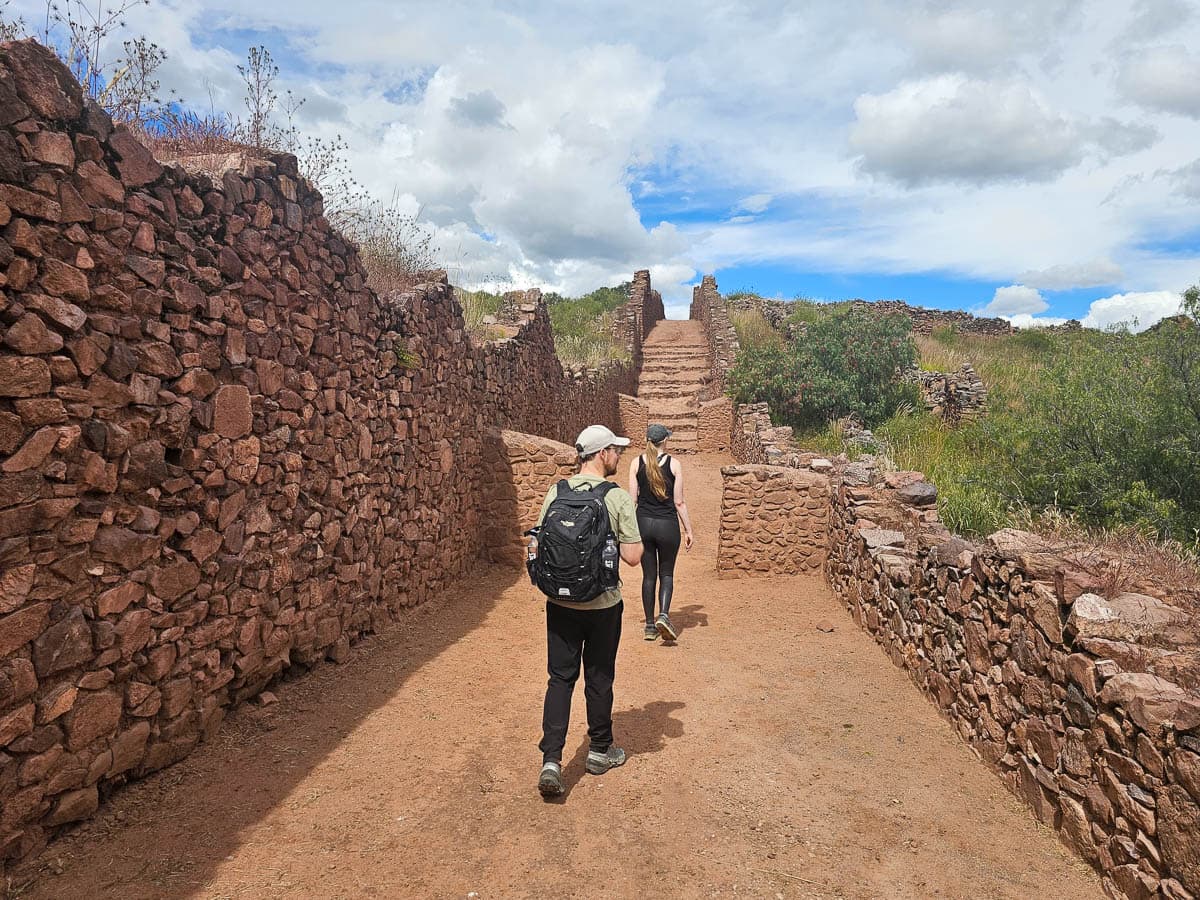
Tipón is one of the most underrated archeological sites near Cusco. When we visited, there was just a handful of local families here, kicking around a soccer ball and having a picnic on its perfectly maintained terraces.
It is believed to have been the main temple where the Inca worshipped water, due to its intricately designed water channels and fountains. These water features were expertly constructed to feed the surrounding agricultural terraces.

I thought Tipón was absolutely gorgeous and would highly recommend adding this site to your Cusco itinerary!
While you’re here, I’d also suggest also stopping at the ruins of Pikillaqta, just 20 minutes away. These are some of the oldest ruins near Cusco, dating back to the Wari people that inhabited this area around 550 AD. It’s cool to contrast the construction techniques here, which rely on large rectangular stones and a clay mortar, as compared to the intricate Inca stonework. Plus, the scale of Pikillata is MASSIVE, spanning 50 hectares!

How to get from Cusco to Tipón
Tour
Unlike most of the other sites mentioned above, Tipón is not included as a stop in most Sacred Valley tours. However, there are a handful of tours that specifically focus on exploring Tipón and a couple of other off-the-beaten path sites in the southern Sacred Valley, like this tour or this small group option.

Public transit
There is a company, Los Leones, that operates buses from Plaza San Francisco in Cusco to the town of Urcos. Be sure to double check that “Tipón” or “Saylla” is on the side or windshield of the bus, and confirm with the driver whether the bus stops in Tipón.
After about a 45 minute drive, the bus will drop you off in Choquepata, the small town that sits at the base of the mountain that ruins sits on top of. From here, you can either find a private driver or make the steep climb uphill to the archeological site.
Day hikes through the Andes Mountains
8. Rainbow Mountain
Rainbow Mountain (also called the “Mountain of Seven Colors” or “Vinicunca” in the native Quechua language) is arguably the most famous hike around Cusco. On this trail, you’ll hike up to a viewpoint, overlooking a mountain that’s striated with red, orange, green, and pink hues. You’ll also get absolutely stellar views of the Ausangate glacier and the surrounding Andes Mountains.

The Rainbow Mountain hike is short, but steep and at extremely high altitude (at over 16,300 feet above sea level, which isn’t significantly different from Everest Base Camp!). Accordingly, I’d highly recommend baking a few days into your Peru itinerary to acclimate in Cusco before you attempt to hike this trail. If you’re not up for the climb, you can have a local drive you in a motorbike most of the way to the viewpoint for an extra 90 soles.
The views you get along this hike are absolutely UNREAL, but so are the crowds. During our visit, there were seemingly THOUSANDS of people, vendors, and llamas wearing sunglasses (seriously!) at the summit, pushing each other, cutting in line, and just generally being chaotic. Accordingly, if you want to enjoy Rainbow Mountain in general peace and solitude, I’d strongly recommend trying to time your visit either before 10 AM or after 3 PM, when the masses from the cheap tours descend.

Or, you can skip going to Rainbow Mountain and head to one of the two more under-the-radar alternatives we’re recommending below!
How to get to Rainbow Mountain from Cusco
Private transfer
You can book a private shuttle service, so that you can opt to visit Rainbow Mountain during a less busy timeframe.
Tour
The most popular and easiest way to get to Rainbow Mountain is on one of the many organized tours here.

If you’re budget conscious, you can just sign up for a cheap tour, like this option (just be prepared for the crowds!), or, if you’d prefer to have more control over what time you visit, you can sign up for a private tour, like this option.
Public transport
If you REALLY don’t want to go on a tour or with a private driver, you can get to Rainbow Mountain with public transit, but it requires several different modes of transportation and will take considerably longer and usually cost more than going on a cheap tour would cost. Additionally, you’ll have to hike a longer trail to the summit.
There are actually two places you can start your hike if you go the public transit route.
One option is to start your hike in the town of Phulawasipata. In order to get here, head to Avenue Huayruropata and grab an interprovincial bus to the town of Cusipata. From here, you can either take a taxi or a colectivo to the trailhead in Phulawasipata. You are required to register your group online before hiking this route.
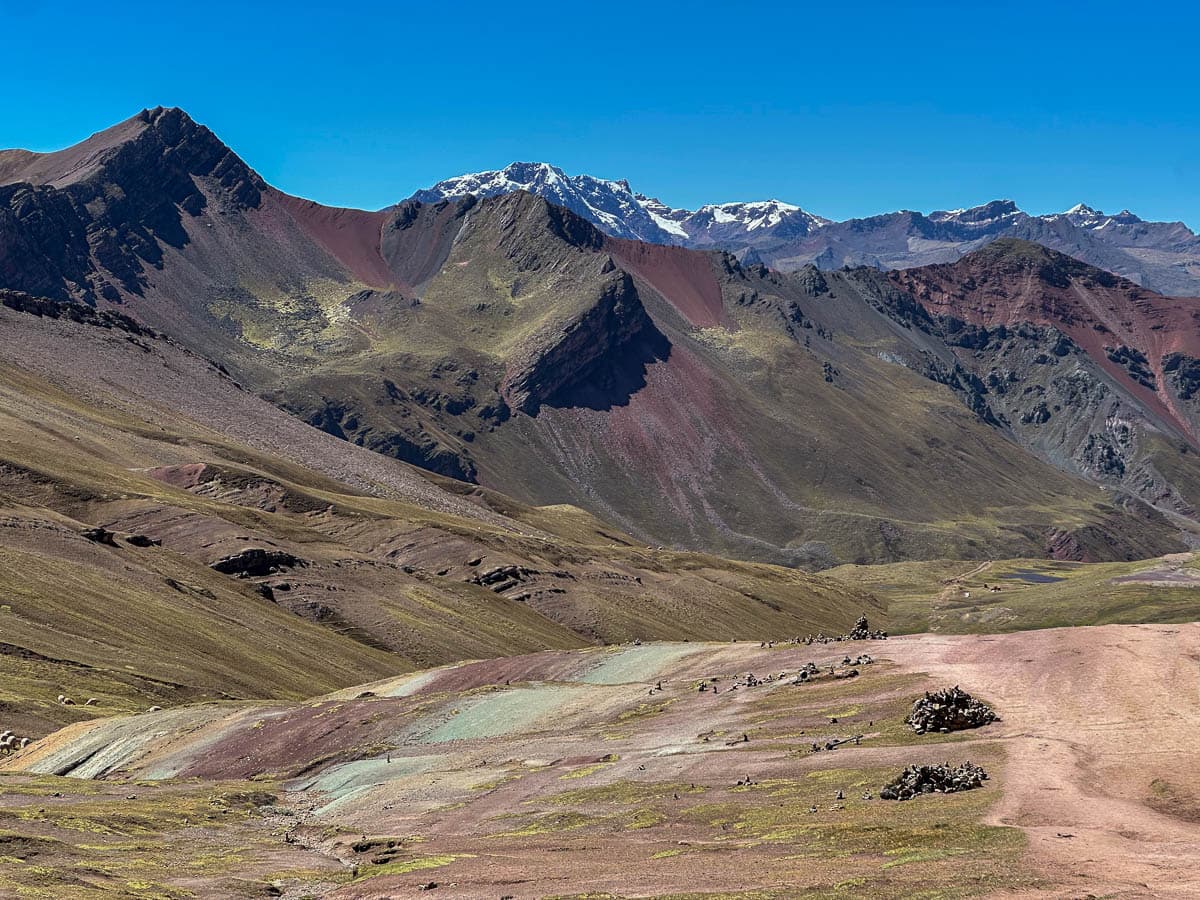
Another option is to head to the trailhead in Kayrawiri. To reach this trailhead, you’ll head to Avenue Huayruropata and then grab one of the interprovincial buses to the town of Checacupe. From here, you can take a bus or a taxi to the small town of Pitumarca, where you’ll need to get your final taxi to the even smaller town of Kayrawiri.
In case it isn’t obvious, taking public transit to Rainbow Mountain isn’t exactly the most straightforward, so I wouldn’t recommend this route unless you speak fluent Spanish and don’t mind going on travel *adventures*. I’d budget at least five hours to get to the trailhead and about 120 Peruvian soles for the roundtrip journey.
Trekking
It’s worth mentioning that you can visit Rainbow Mountain as part of the longer Ausungate Trek. This trek is typically hiked over the course of five or six days and passes through some of the most stunning mountainscapes on the planet. You’ll usually camp near Rainbow Mountain on the third or fourth day of your trek and climb to the overlook at sunrise.

Given the hike’s duration, it definitely isn’t a day trip from Cusco, but, if you have extra time in the area, it’s definitely worth adding to your bucket list!
9. Palcoyo
Palcoyo is a more off-the-beaten track alternative to Rainbow Mountain. Along this trail, you’ll actually pass not one, but THREE different mountains with colorful striations. There’s also usually happy alpacas and llamas munching alongside the trail and, if you get lucky with clear skies, views of the Ausangate glacier.
There are some significant benefits of visiting Palcoyo over the classic Rainbow Mountain—it’s a much shorter trail, with significantly less elevation gain, about 2,000 feet lower in altitude, and WAY less crowds.

Other than having less name recognition, I can’t really think of any downsides to opting to go to Palcoyo over Rainbow Mountain. I honestly regret not making this choice!
How to get to Palcoyo from Cusco
Tour
The easiest way to get from Cusco to Palcoyo is with a tour, like this small group option or this private option.
Public transport
As the crow flies, Palcoyo is located fairly close to Rainbow Mountain (although they’re actually over a four hour drive from one another, given the twisty mountain roads!) and you can reach Palcoyo following similar steps described above.

As mentioned above, given the logistical complexity, time, and expense of taking public transit to Palcoyo, I personally wouldn’t recommend relying on it to get here. But, if you decide to go this route, you’ll head to Avenue Huayruropata in Cusco and then grab one of the interprovincial buses to the town of Checacupe. From here, take a taxi to the Palcoyo trailhead.
10. Pallay Punchu
If you’re looking for an even more off-the-beaten path day trip from Cusco, Pallay Punchu is yet another Rainbow Mountain alternative, where you’ll walk to two different viewpoints that overlook huge rocky peaks, striated with colorful hues. Its name roughly translates to “decorated poncho” in the local Quechua language, thanks to its resemblance to a colorfully woven poncho.

The trail is a bit shorter than Rainbow Mountain, at just 3 kilometers, and is at a lower elevation (15,420 feet above sea level), so Pallay Punchu is an excellent choice for travelers looking for a more moderate hike. Plus, you’ll find WAY fewer crowds than you would at Rainbow Mountain or even Palcoyo!
How to get to Pallay Punchu from Cusco
Tour
There are several tour options from Cusco, like this private option or this option.
Public transit
From Cusco, grab a bus that’s headed to the town of Sicuani from Avenue Huayruropata. Once you’re in Sicuani, hire a taxi to take you to the teeny village of Layo, where you can either walk or take a minibus to the trailhead.

I’d budget at least six hours to get to the trailhead and about 120 Peruvian soles roundtrip.
11. Humantay Lake
Okay, enough of the rainbow colored mountain trails! On this hike, you’ll walk through a beautiful valley, with the Andes Mountains surrounding you. You’ll eventually climb up a steep and rocky hillside to reach the turquoise waters of Humantay Lake, with a massive glaciated mountain towering above it.

Like a lot of the hikes around Cusco, Humantay is at high elevations, sitting at around 13,700 feet above sea level. Additionally, the hike up to the lake is definitely on the steeper side, so be ready for a bit of a challenge!
How to get to Humantay Lake from Cusco
Tour
There’s plenty of tours that head to the Humantay Lake trailhead from Cusco, like this affordable option or this private option.
Public transit
You can take a colectivo from this terminal in Cusco to the town of Mollepata. The colectivos usually start running around 5 AM and will cost 20 soles.
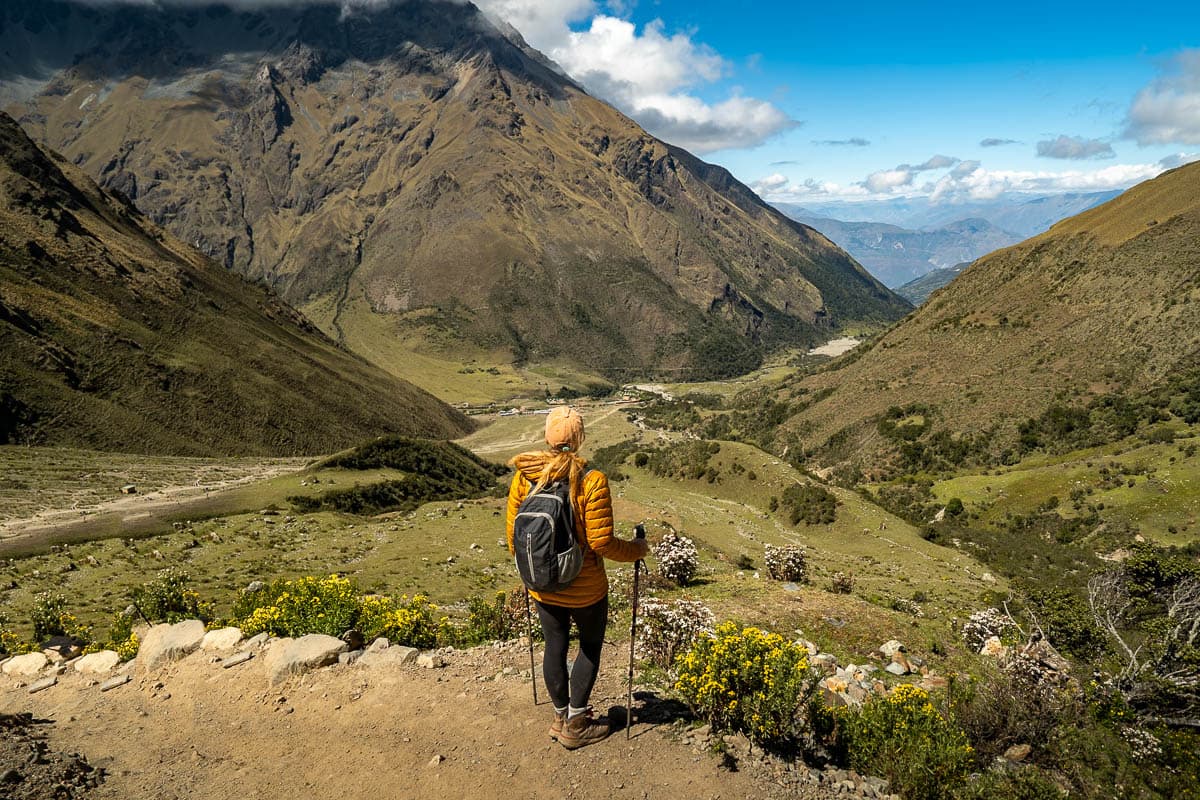
From the main square of Mollepata, you can grab a taxi or colectivo the rest of the way to the trailhead, for usually around 10 soles. This should take around four hours or so.
Trekking
Many travelers visit Humantay Lake as the first day of the Salkantay Trek, a five day backpacking trek that’s popular for its quirky glamping accommodations (think glass igloos and geodesic domes) and stellar views of the Andes Mountains and that culminates at Machu Picchu.

Again, this definitely does not qualify as a day trip from Cusco, but, if you’re up for a longer adventure, this is definitely worth adding to your Peru bucket list!
12. Seven Lakes of Ausangate Trail
This trail offers a lot of bang for your buck, passing (you guessed it!) seven beautifully colored alpine lakes, as well as LOTS of cute alpacas and stunning views of the Andes Mountains. One of my favorite aspects of this hike is that you can cap off your day at Aguas Termales Pacchanta, beautiful hot springs that are surrounded by snow-capped mountains.

How to get to the Seven Lakes of Ausangate Trail from Cusco
Tour
Most Seven Lakes of Ausungate tours are a full day trip from Cusco, with meals, transportation to the trailhead, and a stop at the hot springs included, like this small group option or this private option.
Public Transit
In Cusco, head to the Terminal Paradero Ocongate or the Urcos terminal. From here, find a colectivo that’s heading towards either Ocongate or Tinki. After about three and a half hours, get off in Tinki, where you’ll need to hire a driver to take you to the trailhead in Pacchanta.
I’d budget at least five hours to get to the trailhead and about 150 Peruvian soles for roundtrip transportation.
Trekking
This trail is part of the Ausangate Trek, mentioned above in the Rainbow Mountain section. This trek is typically hiked as a five day backpacking trip that circumnavigates the titular mountain, the fourth highest mountain in Peru.

It looks ABSOLUTELY beautiful and is definitely on our list for the next time we come back to Peru!
I hope you have an incredible time taking some of these day trips from Cusco—this is SUCH an incredible corner of the planet. Do you have any questions about visiting any of these places? Let us know in the comments below!
