

If you’re headed to Peru, it’s likely that you’re going to hit one city—Cusco. This city once served as the capital of the Inca empire and now acts as the gateway to Machu Picchu, the iconic Inca ruins that have been named one of the Seven Wonders of the World.
While most travelers base themselves in Cusco to visit Machu Picchu and the surrounding Sacred Valley, there’s tons to see and explore in this beautiful colonial city itself. So if you’re looking to dive in and experience this incredible city, here are 20 awesome things to do in Cusco.

This post may contain affiliate links. If you make a purchase through them, we may receive a small commission, for which we are extremely grateful, at no extra cost to you.
How to get to Cusco
Cusco is located high in the Andes Mountains (11,200 feet above sea level) in southeastern Peru. Beyond being a hub of tourism, Cusco is also a bustling metropolis that’s home to almost half a million people. Accordingly, there’s quite a few ways to get here.
Flying
Many tourists that are coming to Peru for a short period of time will likely fly into Cusco’s Alejandro Velasco Astete International Airport.

There’s a handful of cities with direct flights to Cusco, like Arequipa, Peru or La Paz, Bolivia, but if you’re flying from North America or Europe, you’ll likely first fly into the capital city of Lima and then have an hour and a half connecting flight to Cusco.
There’s multiple flights from Lima to Cusco each day, usually costing under $50 USD.
Bus
If you’re like us and traveling around Peru for several weeks, it’s usually more economical to take a bus from one of the nearby cities to Cusco.
Peru is a HUGE country and any of these bus rides are quite long and scheduled for overnight—which is good news if you’re on a budget as you typically get to save one night of accommodations. After riding buses all around Peru, I can also confirm that some of the bus lines are actually quite nice (we’re definitely Team Cruz del Sur!)!

Here are some of the most popular cities to connect to Cusco via bus.
- Arequipa, Peru to Cusco (10 hours)
- Copacabana, Bolivia to Cusco (12 hours)
- La Paz, Bolivia to Cusco (16 hours)
- Ica, Peru (near Huacachina, the famed oasis town known for its sand dunes) to Cusco (18 hours)
- Lima, Peru to Cusco (24 hours—yikes!)
It’s worth mentioning that there’s also a line of hop-on, hop-off buses that caters to tourists called Peru Hop, where you pay one lump sum to take a bus from city to city along a predetermined route in Peru. Peru Hop has several routes that stop in Cusco after a variety of other cities, including Puno, Arequipa, or Nazca.
We considered using Peru Hop, but it would’ve been quite a bit more expensive than us purchasing bus tickets as needed and we’d heard mixed reviews about the service (specifically about the buses being rather old and uncomfortable—so we ultimately decided against using it. However, it may be a great option if you’re a solo traveler trying to meet other tourists following the same itinerary around Peru as you.
Train
If you prefer the more luxurious side of travel, you can also consider taking the Peru Rail train to Cusco.
Peru Rail has a variety of different train offerings from Cusco, such as this super luxurious train to the base of Machu Picchu, but there’s also a handful of trains that you can take from nearby cities to Cusco itself.

For example, you can take this ten-hour all-inclusive luxury train from Puno, on the banks of Lake Titicaca, up to Cusco, or a two-night luxury train from Arequipa, each that come with a pisco sour demonstration, live music and dancing, and three course meals.
These can be quite pricey, starting around $450 USD and climbing up to around $4,000 USD(!!!), but, if you’ve got flexibility in your budget, this is the perfect way to mix a bit of bougieness in with seeing some of the most spectacular landscapes on the planet.
Things to do in Cusco
Cusco is a fairly large city, sprawling 385 square kilometers and is packed with over 600 years of history. The city, which actually is a UNESCO World Heritage Site, offers seemingly ENDLESS options for things to do and see around the city.
My husband, Justin, and I spent three weeks exploring this incredible corner of the country and have tried to narrow down the very best things to do in Cusco.
1. Visit the Plaza de Armes
To kick off your trip in Cusco, it makes sense to head to its beating heart, the Plaza de Armes, located in its historic center.
This town square has served as the city’s main meeting space since the Spanish conquered the Inca empire in the 1500s and is even rumored to have been considered the “exact center” of the Inca empire. Today, a fountain with a golden statue of Pachacuti, the most significant of the Inca emperors, stands in the center of the plaza.

Two of the city’s most popular monuments flank the sides of the Plaza—the Cathedral of Cusco, which dates back to 1560, and Iglesia de la Compañía de Jesús, which had its groundbreaking in 1651.
Both of these stunning cathedrals are open to visitors. You can either purchase tickets for them a la carte or, alternatively, you can buy a pass for a “religious circuit” that each of the cathedrals are included in with other historical religious buildings in Cusco (unfortunately, they’re not offered on the same circuit pass).

Beyond the historic cathedrals, there’s also a variety of souvenir shops, restaurants, clothing boutiques, and tour agencies sprinkled around the Plaza, plus street vendors, musicians, and other performers. It’s definitely a fun place to stroll around and people watch for an hour or two.
2. Go on a walking tour
One of the best ways to get acquainted with the city is to go on a walking tour, like this affordable option.
On these tours, you’ll generally start in the Plaza de Armes and then walk your way through the Historic Center of Cusco, learning about the Inca history and culture and the Spanish’s influence after their conquest from a local guide.

One of our favorite parts of the tour was learning about the Inca stonework and construction—which famously does not use mortar—that still serves as the foundation to many of the buildings in the city—it’s SUPER impressive and so cool to think of the people that chiseled those stones over five hundred years ago. There is even an iconic stone that was chiseled to have 12 sides to fit into the surrounding stones!
You’ll also explore the bohemian neighborhood of San Blas, which is home to tons of cute galleries and coffee shops that offer some of the best views over the city.
3. Hike to Cristo Blanco
If you’re planning on hiking the Inca Trail and want to get some good training in or just are looking to stretch your legs after the long plane ride, consider walking to the base of Cristo Blanco (“White Jesus”), an aptly named 26 foot tall Jesus statue that overlooks the city.
From the Plaza de Armes, you’ll gain 544 feet walking up to the statue, so expect to climb a LOT of stairs (and for there to be a lot of huffing and puffing).

The statue itself is pretty neat to see, but the main draw for us here were the incredible views over Cusco and the surrounding mountains. If you can swing it, try to time your visit with sunset—I promise you won’t be disappointed!
You can either just plug Cristo Blanco into Google Maps and follow the walking directions there or, alternatively, here’s a map from the Plaza de Armes.
4. Explore Saqsaywaman
Not too far of a walk from Cristo Blanco is Saqsaywaman, an Inca fortress that was constructed in the 15th century and built high into the hilltops, overlooking the city . It’s believed that Cusco was intentionally built in the shape of a puma by the Inca and that Saqsaywaman served as the head of the puma.

It’s not totally clear what the purpose of Saqsaywaman was, although historians believe it was mainly used for defensive purposes, thanks to its high walls and towers. The fortress is perhaps most famous for a bloody battle in 1536, where the Incas unsuccessfully tried to protect its capital city from the invading Spaniards. It’s also believed that it was used for ceremonial purposes, as well, with a large plaza surrounded by terraces.
Like many of the buildings in Cusco, Saqsaywaman is renowned for its impressive stonework and engineering, with some of the stones used to build its walls measuring over 27 feet long and weighing up to a whopping 200 tons!
You’ll need a ticket to visit Saqsaywaman.
You can purchase a one day Cusco ticket, which includes entrance to the fortress, as well as other Inca sites around the city, including Q’enko, Tambomachay and Puca Pucara. It costs 70 Peruvian soles.

Alternatively, you can purchase a 10 day pass that covers a ton of the different Inca ruins in Cusco and the Sacred Valley, including Saqsaywaman, Pisac, Tipón, and Moray. This option costs 130 Peruvian soles.
These can be purchased at any of the sites that are included in the pass or at the COSITUC offices, located here, or if you’d prefer to just pick it up directly at your hotel, you can purchase it here. If you opt to purchase the ticket in person, it’s cash only, so bring lots of Peruvian soles!
5. Shop at Mercado Central de San Pedro
If you’re looking to experience some more authentic culture and food in Cusco, head to the Mercado Central de San Pedro, the largest market in the city.
The indoor portion of the market is incredibly well-organized, with tons of vendors selling sweaters made of alpaca wool; traditional Peruvian clothing, like pollera (the colorful layered skirts worn by Peruvian women) or montera (the hats worn by Andean women, which can signify their marital status and which village they’re from); and LOTS of Peruvian food.

This is seriously one of the best places to get an authentic Peruvian breakfast or lunch at an incredible price—it’s not unusual for a lot of the vendors to offer a menu del dia for lunch, which typically consists of a soup, main dish, dessert, and drink, for around $2.50 USD (or less!).
Make sure to also try some of the incredible juices and smoothies that Peru is known for—I’m OBSESSED with lucuma smoothies, a fruit grown in South America that has a distinctive carmel-y taste.
It’s also worth stopping at the Mercado de San Blas, which is WAY smaller, but still has a good variety of food stalls and vendors to choose from. Our Airbnb was just a few blocks away from this market, so we stopped here frequently to buy fruits, veggies, and other snacks.
6. Admire the city from a viewpoint
One of the most popular things to do in Cusco is to walk to one of the many viewpoints overlooking the city.
Other than the aforementioned sites of Saqsaywaman and Cristo Blanco, there’s a variety of other miradors with spectacular views of Cusco, like the Mirador de San Cristobal or the Mirador de San Blas.

All of these require walking up hundreds of feet of stairs or steep streets, which can be tough at Cusco’s high elevation. So you might want to consider saving this for a day or two after you first arrive in Cusco to give yourself a bit of time to acclimate and bring along plenty of water for your climb.
7. Go on a food tour
Justin and I spent seven months traveling all over South America and can say, without a doubt, our favorite South American cuisine was Peruvian food. So, while you’re visiting this colorful corner of the country, be sure to try some of the incredible food here, from unique fruits, like goldenberries, which are sweet tomato-like fruits that only grow in the Andes, to traditional dishes, like causa, a layered dish that’s made with potato, avocado, and protein, or pan chuta, a sweet bread made with anise.

One of the best ways to try a bunch of local foods is to go on a food tour, like this option or this private option. You’ll be taken around a mixture of street vendors and authentic restaurants by a local guide and not only get to try a bunch of different types of Peruvian food, but also learn about their unique history and importance here.
It’s an awesome way to dive deeper into the culture of Peru and, of course, is DELICOUS—just be sure to come hungry!
8. Visit Qoricancha
Qoricancha (also known as Coricancha, Koricancha, or the Temple of the Sun) was once the most important temple of the Inca civilization. Dedicated to Inti (the Sun God), the High Priest of the Incas once lived here and offered sacrifices, which is believed to have ranged from animals to children.
Built around 1200 AD, this temple was once incredibly opulent, with statues and most of its walls made of pure gold and precious gemstones.

Unfortunately, the Incas needed to use most of these materials to pay the Spanish for the ransom for Emperor Atahualpa, who was captured by the invaders in 1533. The Spanish later went on to destroy most of the temple and replaced it with the Church and Convent of Santo Domingo.
Today, you can explore what’s been restored of Qoricancha, including the Temple of the Sun, the Temple of the Moon, the Sacrificial Temple, as well as a museum to learn more about this sacred place.
9. Explore the San Blas neighborhood
Located just north of the historical center of Cusco is the San Blas neighborhood, a bohemian neighborhood packed with narrow cobblestone streets; colonial buildings with red clay roofs; and jawdropping views of the surrounding city.

San Blas has a ton of cute boutiques, art galleries, and coffee shops to mosey around. Several of the coffee shops have terraces that offer incredible views of the city, including L’atelier Café and Solara Coffee & Sandwich Bar.
Even if you’re not in the mood for shopping or coffee, the neighborhood is still worth visiting, given how fricking CUTE it is. For example, there’s a pretty Instagram-famous spot, Calle 7 Borreguitos, which is a narrow street lined with colonial buildings and colorful flowerpots. It’s one of the most popular photo spots in Cusco, so if you come here, I’d definitely recommend showing up early to beat the queue!
10. Visit the Inka Museum
If you want to learn more about the Inca civilization, head to the Inka Museum, housed in an old 17th century building that was once the home of an old Spanish admiral.
The museum houses an impressive array of artifacts that date from the pre-Inca people to the Spanish invasion. The artifacts on display range from pottery and jewelry to skulls that demonstrate medical practices of that time and real mummies of sacrificed Incas. There’s plentiful educational signage that are usually provided in both Spanish and English to learn more about these artifacts and how they relate to the history and culture of these fascinating people.

Because of the Spanish conquest, a lot of Inca historical artifacts were lost over time—I was honestly pretty surprised by how few artifacts we saw on display in various places around Cusco, the Sacred Valley, and Machu Picchu. So if you’d like to take a deeper look into the daily life of Inca, the Inka Museum is one of the best opportunities to see objects used in their everyday life.
11. Try something sweet at the ChocoMuseo
Fun fact—Peru is actually the ninth largest producer of cacao and actually the largest producer of organic cacao on the planet. Chocolate actually has a long history in Peru, with the pre-Inca and Inca people using cacao for both medicinal and ceremonial purposes.
This small museum tells the history and importance of chocolate in Peru, as well as displaying chocolate works of art (i.e., think of a nativity scene made of chocolate) and having locally made confections for sale. But the real attraction here is that you can actually make—and, of course, taste—your own chocolate here!

You can sign up for one of their chocolate making workshops, like this option, to get hands-on experience of making chocolate, while learning about the history and cultural significance of this magical plant. The staff are really warm and friendly here and make an already informative and fun experience a fantastic way to spend a few hours in Cusco.
12. Try some local restaurants
Cusco has a really vibrant food and drink scene, with everything from authentic Peruvian restaurants to microbreweries and even some surprisingly good Irish pubs.
Another huge benefit of trying bars and restaurants is that you’re able to get INCREDIBLE food at a fraction of the cost you’d expect in the United States and Canada. We had a three course meal and drinks at a fairly upscale restaurant and wound up paying around $45 USD, including tip!

Some of our favorite spots are Green Point, Museo del Pisco, El Pisonay, and Morena Peruvian Kitchen (just be sure to make reservations!).
13. Check out coffee shops
Between Cusco’s status as a tourist hub and Peru’s significance in the coffee industry (it ranks in the top 20 coffee producers in the world!), it should be no surprise that Cusco has some killer coffee shops, if you need to get a bit of work done or just want to get caffeinated.

There’s a few must visit coffee shops to add to your list:
- Florencia y Fortunata Specialty Coffee: This is one of the most popular coffee shops in Cusco, with delicious coffee and a seriously cool mission. The shop is women-owned AND primarily purchases beans that are produced by women in the Cusco area, in an effort to close the gender gap in the overwhelmingly male coffee industry.
- Black Llama Coffee: Located in the Black Llama Hostel, this coffee shop uses some really cool slow bar brewing methods, including mupeco, which utilizes a Peruvian clay pot, and origami, which is known for producing a coffee with a strong aroma—plus, they’re REALLY good at latte art! The space itself is also really cool, mixing a raw, organic decor with colorful artwork.
- Cercanía Pan y Café: This small cafe brews up a mean cup of coffee, with fruity-acidic notes, but the main draw for me here are the freshly baked pastries. I still dream of their cruffin!
14. Try pisco
Pisco, a spirit made from fermented grape juice, is the national drink of Peru. You’ll find the most popular cocktail that uses this liquor, pisco sours, all over menus in Cusco—it’s so beloved here that Peru actually celebrates a National Pisco Sour day!

If you want to try a mean pisco sour, our favorite spot is Museo del Pisco, a buzzy bar that specializes in pisco cocktails and often has live music. If you want to dive in deeper to this spirit, here’s an awesome class where you’ll get to taste and make your own cocktails, beyond just the pisco sour, with a local that’s passionate about Peru’s food and drink scene.
15. Visit the Cusco Planetarium
If you’re interested in astronomy, visiting this family-run planetarium is a must.
The planetarium is located on the outskirts of Cusco—your ticket, which you can purchase online here, conveniently includes roundtrip transportation to and from the historical center of the city. Once you’re at the property, you’ll learn about how the Incas viewed and used the stars, as well as see a projection of the southern sky onto the planetarium’s dome to learn more about constellations. There’s even telescopes to do some stargazing, when conditions cooperate.

Just have appropriate expectations for stargazing here—Cusco is a fairly large city and, accordingly, due to its light pollution, it’s unlikely you’ll be able to see the Milky Way or the like here. Our favorite part of the experience, by far, was learning about the Inca’s use of celestial objects in their construction of their cities and everyday life, plus the staff’s obvious enthusiasm for the stars.
16. Visit Machu Picchu
The main reason most people stay in Cusco is to visit the nearby site of Machu Picchu, which is believed to be one of the most sacred cities in the Inca civilization and one of the best preserved Inca cities. So, of course, you’ll want to plan a trip from Cusco to see one of the Seven Wonders of the World for yourself.
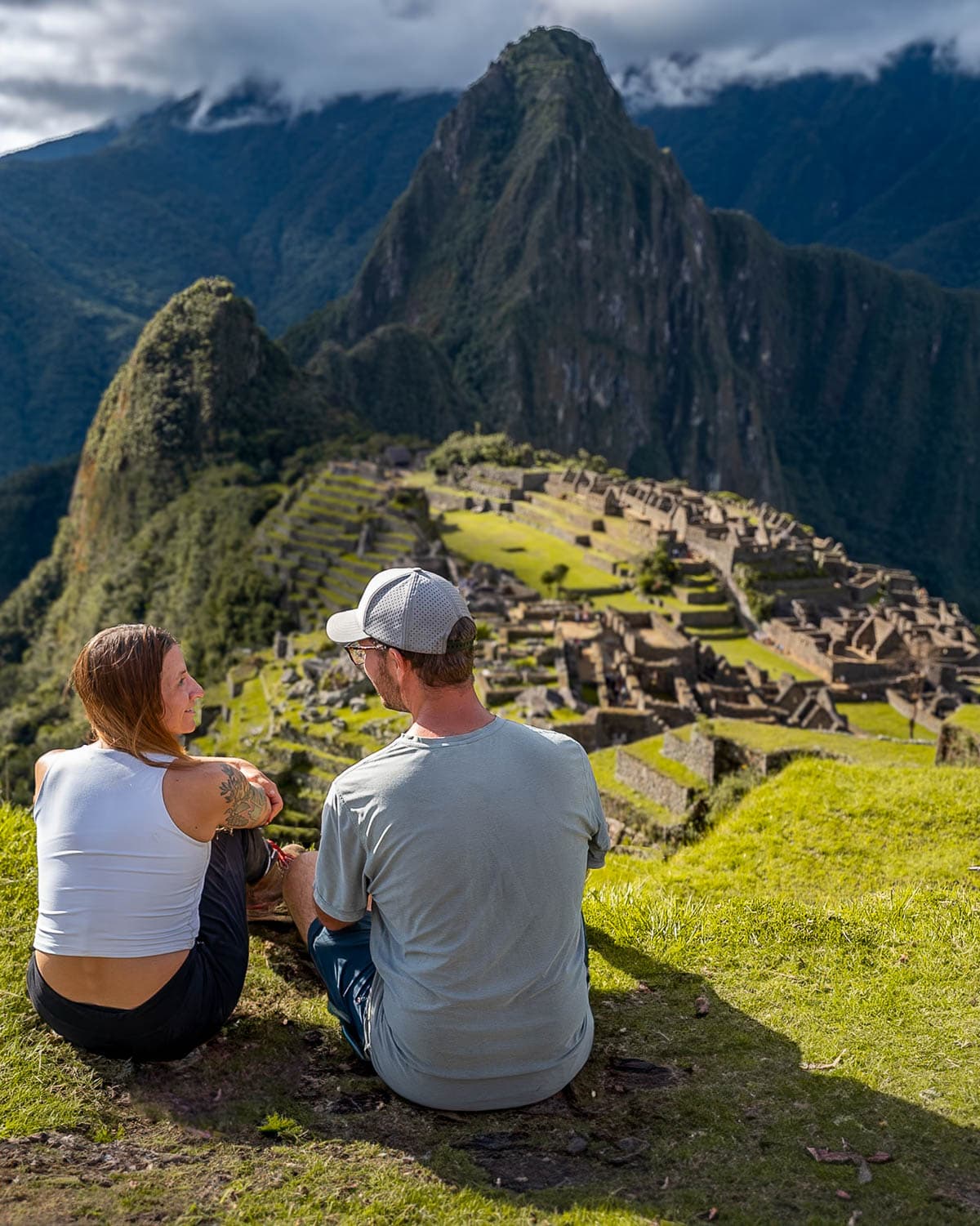
We wrote a whole article about how to get from Cusco to Machu Picchu, but, in a nutshell, the ancient city is located high in the Andes Mountains and is inaccessible by most vehicles. Instead, you have a few options of getting there.
On your own
To get to Machu Picchu on your own from Cusco, you’ll first need to take a taxi or colectivo to the train station in the neighboring town of Poroy (about a half hour drive from Cusco) or the city of Ollantaytambo (about an hour and 45 minutes away).
From here, you’ll need to board a train to Aguas Calientes, a small town at the base of the mountains where Machu Picchu is located. From Poroy, it’s a three hour and 15 minute ride to Aguas Calientes, and, from Ollantaytambo, it’s a two hour ride.
There’s two different operators to choose from—Inca Rail or, alternatively, Peru Rail, which is more popular with visitors, thanks to their more frequent departures and the fact that they’re the only company to offer service from Poroy.

Each train operator offers a variety of ticket classes, ranging from more budget-friendly to a luxury experience, with a multiple course gourmet meal, live music and dancing, and pisco tastings. Train tickets range from around $60 USD one-way up to $5,500 for your very own private car.
I’d suggest booking tickets online ahead of time as the early morning tickets, especially for the more affordable classes, tend to sell out way in advance!
Once you’re in Aguas Calientes, the last step is to walk about five minutes from the train station to the bus station to grab a bus, operated by Consettur Bus, from the town itself up to Machu Picchu. You can either purchase tickets online ahead of time or, alternatively, buy them in person—just be prepared for insanely long queues!

Finally, the bus will drop you off at the entrance gates of Machu Picchu. You can either purchase tickets online or in person.
You used to be able to just wander around the site, but, due to COVID and an increase in tourism, you now must purchase tickets from one of ten pre-determined routes throughout the ancient city, called circuits. Only 4,500 people are permitted to enter the site every day and tickets for the most popular options, like Circuit 2, frequently sell out ahead of time.
Accordingly, I’d strongly recommend researching the various circuits in Machu Picchu and purchasing tickets online ahead of time.
On a tour
If you want to learn more about the history of the ancient citadel fand the culture of the Incas or you just want to not worry about all of the logistics outlined above, you can join one of the Machu Picchu tours from Cusco.
If you go with this option, your transportation to and from the ancient city is taken care of, plus you’ll be shown around the site by a local guide that can share fascinating information and anecdotes about the people that once lived here.

You can either join a small group tour or, for just a bit more, a private tour.
On a trek
If you’re looking for a more adventurous option for visiting Machu Picchu, you can always do one of the treks that reach Machu Picchu.
If you want to hike into Machu Picchu itself, the only option is the Inca Trail, where you’ll follow along a stone pathway—and a collection of ancient ruins—that were built by the beloved emperor, Pachacuti, to the city’s Sun Gate, which overlooks its terraces and buildings.

This is actually how we reached Machu Picchu, hiking the classic Inca Trail over four days with this tour operator. It was SUCH a fantastic experience—arriving at Machu Picchu after hiking 21 miles, after learning about the Inca culture along the way, was such an epic way to cap off our adventure.
If four days is too much for you, there’s also shorter two-day option, like this tour offered by the popular locally-owned operator, TreXperience, where you’ll hike into the Sungate on your first day of your tour and then go on a more comprehensive tour of Machu Picchu on day two.

There’s also a number of other multi-day treks through spectacular parts of the Andes Mountains, like the Salkantay Trek, like this option with the incredible operator that we hiked the Inca Trail with, or the Lares Trek, like this tour with TreXperience, that both end in Aguas Calientes, with you bussing up to Machu Picchu on the last day of your adventure.
17. Go on a day hike
One of the best things to do in Cusco is to actually get out of the city and explore the incredible Andes Mountains and the other stunning surrounding landscape.

There are unlimited dayhiking options around Cusco, but here are just a few of the most popular options.
Humantay Lake
- Length: 5.9 miles
- Elevation gain: 1,789 feet
- Difficulty: Challenging
The Humantay Lake hike winds through a beautiful valley and up a steep, crumbly mountainside to the base of a STUNNING turquoise lake, sitting in the shadow of a massive mountain and the Humantay Glacier. Out of the day hikes we did in Cusco, this was our favorite experience—the endpoint is absolutely gorgeous!

Like all of the dayhikes in Cusco, the easiest way to get to the trailhead is with a tour. You’ll get the best prices by stopping in one of the tour agencies that dot Cusco’s streets or, alternatively, if you’d prefer to book ahead of time online, this option isn’t much more expensive than what you’ll pay at a tour agency in Cusco or here’s a private option, if you’d prefer to skip hiking in a big group.
Rainbow Mountain
- Length: 2.77 miles
- Elevation gain: 860 feet
- Difficulty: Challenging
The Rainbow Mountain hike, also called the Mountain of Seven Colors or Vinicunca, takes you up a steep hillside to an overlook of an otherworldly mountain slope, striated with vibrant colors.
It’s REALLY cool to see, but because of how Instagram-famous this spot has gotten, it was also the most packed and chaotic trail we’ve ever hiked on. In fact, it was so crowded that we didn’t really enjoy our experience there, despite how beautiful the landscape is.

Accordingly, if you can, I’d highly recommend trying to go on a private tour, like this option, where you can avoid visiting during the timeframe when all of the other tour groups are there.
Alternatively, if you’re on a tight budget, there are plenty of affordable tours that you can purchase at any of the tour agencies in Cusco or this group option that you can book online that’s around how much you’d pay in person at an agency.
It’s worth mentioning that there are several trails with colorfully striated mountains that have recently emerged as less crowded alternatives to Rainbow Mountain, like Palcoyo or Pallay Punchu, that are worth considering.
Seven Lakes Hike
- Length: 7.2 miles
- Elevation gain: 1,125 feet
- Difficulty: Challenging
This dayhike is a portion of the popular multi-day Ausungate Trek, which crosses some of the most spectacular landscapes of the Andes, with impossibly green mountain slopes dotted with llamas, turquoise lakes, and rugged mountain peaks. As the name might imply, you’ll get to hike past seven stunning alpine lakes, as well as get jaw-dropping views of the Ausungate Mountain, which, at almost 21,000 feet tall, is one of the highest peaks in southern Peru.

Again, you can get the best rates for a tour at one of the agencies around Cusco, but here’s an affordable group tour option or here’s a private option if you prefer to book online ahead of time.
18. Visit the Sacred Valley
While Machu Picchu is what most people think about when they imagine Inca ruins, the Cusco area has so much more than that.

The Sacred Valley, which sprawls north of Cusco and south of Machu Picchu for about 60 kilometers, is considered to be the heart of the Inca empire and is actually home to about 200 Inca sites.
You could spend months taking day trips from Cusco to explore all of these incredible places, but here are our favorites. All of these are included in the 10 day tourist ticket, which can be purchased, in cash, at any of the archeological sites.
Here are some of my favorite places to explore in the Sacred Valley.
Pisac
Dating back to the 15th century, Pisac is one of the most beautiful Inca ruin sites, with a temple structure built high into a hilltop, surrounded by towering mountains, and enormous agricultural terraces that overlook the nearby colonial town, at the base of the mountain below.

Tipon
Tipon is less touristed than most of the other Sacred Valley sites, which is a HUGE miss, in my opinion.
This site is believed to have served as a water temple and, with its impressive fountains, waterfalls, and water channels, it’s truly an astounding example of the Inca’s impressive hydraulic engineering and agricultural capabilities.

Ollantaytambo
Ollantaytambo is special for a few reasons.
For one, it’s where most tourists board the train to visit Machu Picchu, so it makes an excellent addition to your visit to Peru’s Wonder of the World. And, from a historical perspective, it’s the only major site where the Incas defeated the Spanish during their invasion in the 16th century.
The site is considered one of the most impressive displays of Inca architecture, with agricultural terraces, water fountains, temples, a fortress, and even a Sun Gate, a la Machu Picchu.
One really cool aspect of Ollantaytambo is Pinkuylluna, granaries that were built by the Inca high into the mountain slopes across from the main site to help better preserve the stores. If you have a couple of spare hours in the town, you can hike up to visit the granaries (for free!) along this trail.

Getting around the Sacred Valley
To visit the sites around the Sacred Valley, you have a few options.
Going on a tour
There are a TON of tour operators that offer roundtrip transportation from Cusco to many of the famed ruin sites, with a knowledgeable guide to help interpret and explain some of the fascinating history and culture of the Inca people.
The only drawback of these tours is that you won’t necessarily have a ton of control over which specific sites you visit—for example, most tour groups totally skip Tipon!

Still, there are a ton of great options that pack in seeing a LOT in just a single day trip from Cusco, like this tour, which hits Pisac and Ollantaytambo, as well as other popular sites, like the salt mines of Maras and the circular terraces of Moray. Alternatively, this small group option includes stops at several of the popular Inca sites, as well as the town of Chinchero, where you’ll get to see a traditional weaving demonstration and feed their alpacas and guinea pigs.
Hiring a private driver
If you’re traveling with a bigger group of people, it might actually be more economical to hire a private driver for the day, who will drive you to and wait as you explore whatever Inca ruin sites you ask for.
We were traveling with two friends and hired a private driver for the day to take us to Pisac, Tipon, and Pikillacta, a site built by the Wari civilization almost a thousand years before the height of the Inca empire. This wound up costing about $110 USD in total (cash only), which is pretty affordable when split amongst four people. The cost will vary, though, depending on how many stops you want to make, what kind of vehicle you opt for, and how far from Cusco you’ll need to drive.

We really enjoyed having our own driver, as we could explore each site as long as we wanted, at our own pace. However, the downside is that there wasn’t anyone with us to provide us with information about the sites we were visiting (although it’s worth noting you can find people who serve as both a driver and an English-speaking guide).
If you want to go this route, I’d suggest asking your hotel or Airbnb host for a recommendation for a driver—we found ours by simply chatting to someone in our Cusco walking tour group!
Public transit
If you’re on a budget, you can use colectivos or buses to get to most of the Inca ruin sites.
For example, you can catch a colectivo to the main square of Ollantaytambo here for between 10 to 20 soles per person, which is just a short walk from the town’s ruins. Alternatively, you can grab a colectivo here to the charming colonial town of Pisac for around 5 soles and either hike or take a taxi the rest of the way up to the ruins.

This is definitely the cheapest option to explore the Sacred Valley, but not the most convenient. You’ll need to get to and from the colectivo pick-up and drop-off points, which typically are a bit outside of Cusco’s historical center, and there’s really no set pick-up or drop-off times—colectivos come and go when they’ve filled with passengers. Accordingly, I’d only choose this option if you’re on a shoestring budget or you’re really not on a time crunch while you’re visiting Cusco.
19. Go on a multi-day trek
With the stunning Andes Mountains, remote Quechua villages (an indigenous group of Peruvians that speak the same language as the Inca), and remote Inca ruins, the area around Cusco offers the perfect footprint for some epic multi-day treks.

Here are just a few of the most popular ones near Cusco.
Inca Trail
- Length: 22.4 miles
- Elevation gain: 9,468 feet
- Difficulty: Challenging
This trail is hiked over the course of four days, following along a trail that once led from Cusco to the sacred city of Machu Picchu.
Over the course of your hike, you’ll stop at a number of remote Inca ruin sites, while learning about Inca culture and history, and end your hike at the spectacular Sun Gate, which overlooks Machu Picchu.

As mentioned above, we hiked the Inca Trail and generally really enjoyed our experience. The views were absolutely breathtaking and I can’t imagine a more iconic way to experience Machu Picchu than entering into it exactly as the Incas did!
One unique aspect about this trek is that, unlike pretty much all of the other multi-day options, you are required to go with a guide to protect the fragile archaeological sites and as a way to boost the local economy. We went with Salkantay Trekking and couldn’t recommend them enough.
Another unique aspect of the hike? Only 200 visitors per day are allowed to start the trek, meaning that permits can sell out over a year in advance, especially during Peru’s dry season from May through September. Accordingly, be sure to book your trek well in advance, especially if you can only travel on certain dates!
Salkantay Trek
- Length: 43.2 miles
- Elevation gain: 12,001 feet
- Difficulty: Challenging
The Salkantay Trek is another multi-day trek that culminates in visiting Machu Picchu, but offers more spectacular landscapes, including lush jungles, massive glaciers, and jaw-droppingly high mountain peaks, as compared to Inca ruins and history.
Another key difference with the Salkantay Trek is that, instead of sleeping in a tent as you would on the Inca Trail, you usually stay in unique glamping accommodations, like glass igloos or geodesic domes.

Accordingly, if you’re a bit less interested in the historical aspect of the Sacred Valley and are looking for a more Instagrammable hike, the Salkantay Trek may be your best option.
The operator we went with on the Inca Trail, Salkantay Trekking, is THE granddaddy of operators for this trek and has the best accommodations along the trail—here’s their classic five day itinerary or if you’re working with a tight timeframe, a four day option.
Choquequirao Trek
- Length: 39.6 miles
- Elevation gain: 13,213 feet
- Difficulty: Challenging
If you’re someone who likes off-the-beaten track travel, consider doing this trek, which hikes to the ancient city of Choquequirao.
This site is often touted as being just as impressive as Machu Picchu (it’s actually bigger than Machu Picchu by area!), but, because the only way to get there is by a difficult four to five day hike, you’ll basically have the entire site to yourself!

If you want to do this trek with a guide, here’s a tour offered by a popular operator that’s one of the only ones (other than Salkantay Trekking) that’s 100% locally owned.
Ausungate Trek
- Length: 40 miles
- Elevation gain: 7,455 feet
- Difficulty: Challenging
Out of all of these treks, I most want to go back and do Ausungate, which circumnavigates one of the tallest mountains in southern Peru and offers some of the most stunning views that Peru has to offer—think turquoise lakes, snow-capped mountains, and seemingly endless alpacas.
This is one of the highest altitude hikes near Cusco, with some spots topping 17,000 feet above sea level, so if you’re sensitive to altitude, you may want to consider whether this is the right trek for you.

While you’re not required to go with a guide for this one, I’d highly recommend going with one, given how remote, challenging, and lacking in signage this trail is. Here’s a small group tour option, with a maximum of just 10 hikers, that is highly reviewed.
20. Sleep in a glass capsule on a cliffside
As far as I know, the Sacred Valley is the only place on the entire planet where there’s hotels that allow you to sleep in a private glass capsule that’s bolted high to the side of a cliffside, thousands of feet from the valley floor below.

Just getting to and from the capsules is QUITE the adventure—you need to use via ferrata, a system where you climb along steep and narrow rock ledges, bridges, or ladders that you can clip into with a carabiner that’s attached to your body.
There’s three hotels in Ollantaytambo that I’m aware of that offer this experience.
Justin and I opted to stay at the Vertical Sky Suites, as it was the most affordable option in the area AND had a private jacuzzi in each capsule.

We wrote a whole review about Vertical Sky Suites, but in short, we had an absolutely incredible time. It was so much fun to soak in our jacuzzi, taking in the views of the surrounding Andes Mountains, and watching the stars from our bed at night. It was DEFINITELY the most unique place we stayed throughout our seven months in South America!
The one potential downside with Vertical Sky Suites, depending on how you look at it, is that it has the easiest via ferrata to get to and from your capsule. We stayed in the capsule with the most challenging via ferrata on the property, which included a cable ladder that stretched from the top of a cliffside about forty feet down to a wooden platform on top of our capsule below.
For us, that offered PLENTY of adventure, but if you’re keen on doing something even more death-defying, we hear that Star Lodge and its sister property, Sky Lodge, have more intense via ferrata climbing experiences to and from their glass capsules. Additionally, these properties actually offer pickup directly in Cusco to their hotels, whereas, with Vertical Sky Suites, you’ll need to figure out your own way to Ollantaytambo.
How to get around Cusco
Although Cusco is a fairly large city, most of the attractions are located in or near its historic center, so you can almost always walk to wherever it is that you’re trying to go.

If wherever you’re trying to get to is too far to walk, Uber is readily available and super affordable in Cusco (typically less than $5 USD to get around pretty much anywhere in the city). Even if you’re trying to go farther away, Uber is usually a great option—for example, when we were trying to get to Ollantaytambo (about two hours away from Cusco), it would cost around $40 USD!
While Cusco is generally a very safe place, I’d be a bit cautious about getting into unmarked taxis. In more dangerous areas of Peru, it’s not unheard of for tourists to get kidnapped by unmarked taxis. While I’ve never heard of this happening in Cusco, just to be on the safe side, I’d recommend only getting in taxis that are called by your accommodation (or just using Uber!).
When to visit Cusco
The best time to visit Cusco is during Peru’s dry season, from May through September. We visited in May and LOVED it—the mountains were still lush and green from the recent rain, but none of our plans were ever impacted by inclement weather.

Peru also has a rainy season from October through mid-April.
Visiting during the wet period has some bright sides—the mountains are at their most vibrant and green and crowds and prices will be at their lowest.
On the other hand, weather can definitely put a damper on your trip—while it rarely rains all day, it’s not unusual for there to be frequent showers in one day and the rain clouds can obscure the beautiful mountains and ruins that you’ve traveled so far to see. Additionally, you might experience more closures, due to landslides and flooding. For example, the Inca Trail is closed in February (the peak of the rainy season), due, in part, to the challenging and potentially dangerous weather conditions.
Where to stay in Cusco
Given that Cusco is a tourist hot spot, there are TONS of hotels, hostels, and other accommodations to choose from.
We’d suggest choosing an accommodation in either the historic center of Cusco or the nearby bohemian neighborhood of San Blas, given their proximity to the most popular attractions in the city, as well as bars, restaurants, and parks.

Here are a few accommodations that we’d recommend.
Casa Cavassa Centro Histórico Cusco
This is a warm and cozy hotel, located in the center of the city, with homey decor, rooms that offer balconies (which is a rarity in Cusco!), and complimentary breakfast. The staff are warm and friendly, but our favorite staff members are the two resident kitties that roam around the public areas.
Casa Encuentro San Blas
Located in the artsy San Blas neighborhood, this hotel has clean and spacious rooms, with modern touches (like a heater, which is surprisingly hard to find in Peru!). The family who owns the property clearly take great pride in their property, from quickly fixing any issues that might arise to lovingly cooking the complimentary breakfast each morning.
Plus, the hotel offers absolutely stunning views of Cusco!

Palacio del Inka
If you’re looking for something more upscale, this hotel, housed in a 500 year old mansion, is an incredible option, right by the Koricancha in the historic center of Cusco. Everything about this luxury hotel is meticulously thought-out to immerse you in the incredible culture and history of Cusco, from live music from Indigenous musicians to pisco tasting experiences and even the opportunity to cuddle with a baby llama.
Tips for visiting Cusco
Plan for a day or two to acclimate
As mentioned above, Cusco is located at a high altitude, at 11,200 feet above sea level and some of the ruins and treks in the surrounding area can be even higher, sometimes over 17,000 feet!
Accordingly, it’s important to plan for a relaxed day or two in Cusco at the beginning of your Peru itinerary to acclimate before trying to tackle more strenuous activities, like longer hikes.

To help acclimate more quickly, be sure to drink plenty of water or coca tea, which the Quechua people believe helps with altitude sickness, and stay away from the booze!
Be mindful of pickpockets
We felt very safe in Cusco, especially as compared to some of the other cities in Peru, like Lima or Puno.
That being said, any touristy area is going to be a beacon for petty crimes, like pickpocketing, so be mindful of your belongings in any super busy place, like the Plaza de Armes or the Mercado Central.
Pack appropriately
The weather can be a bit all over the place in Cusco, so be sure to bring along a mix of warm and cooler layers and a rainjacket.

The sun can also be a bit more intense here, given the altitude, so sunglasses and sunscreen are a must!
There’s so many awesome things to do in Cusco and the surrounding area—I can’t wait to come back and explore this area even more! Do you have any questions about visiting this special place? Let me know in the comments below!
