

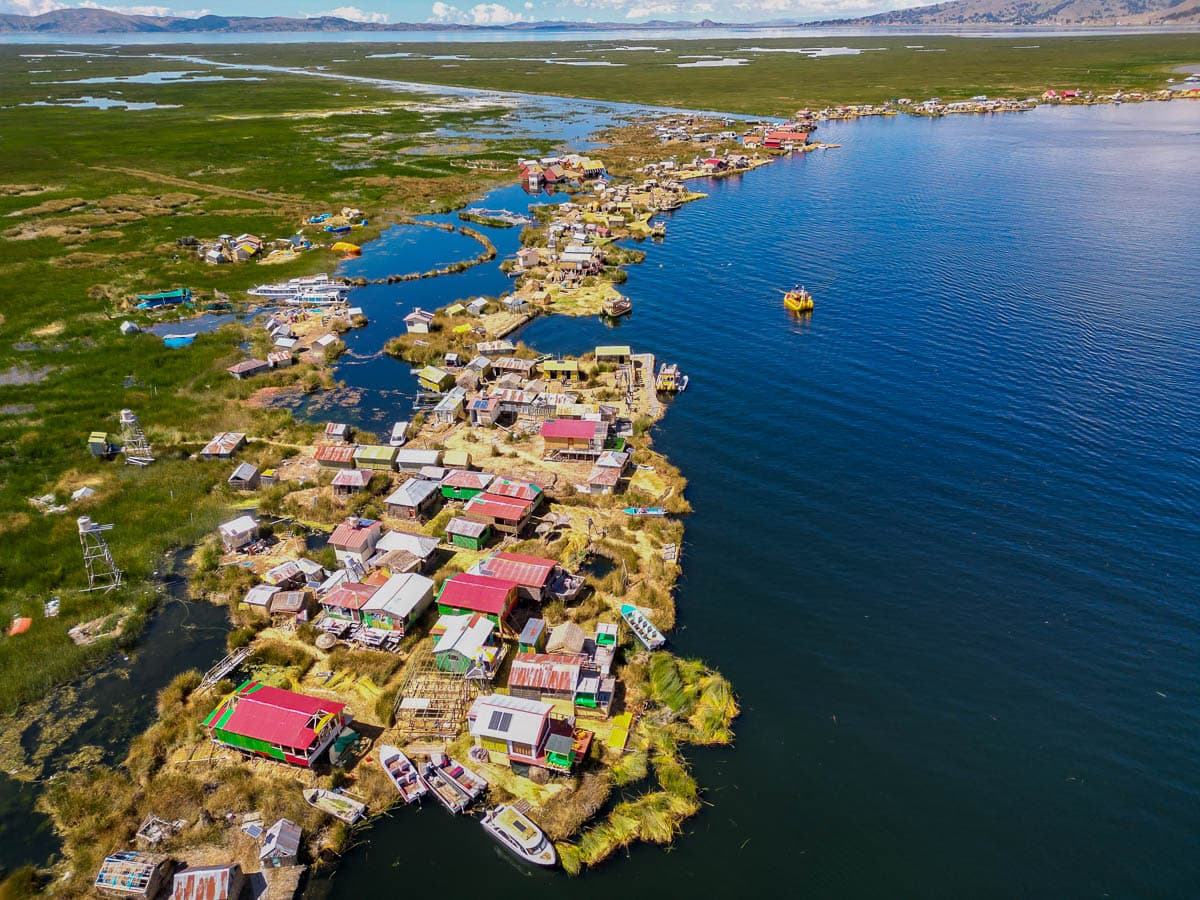
The Uros islands are quite interesting, with their location near Puno, Peru in the waters of Lake Titicaca, the largest navigable lake in South America. But the islands’ uniqueness goes far beyond its location in this iconic lake—they’re actually manmade and constructed from Totora reeds, a vegetation found throughout this part of South America.
You can actually visit these islands—and the hundreds of residents who still inhabit them—while visiting the city of Puno. But what do these visits consist of—and is it worth it? My husband, Justin, and I recently visited the Uros islands in Peru and can tell you exactly what you’ll experience on the tour, as well as whether they’re worth a spot on your Peru itinerary.
This post may contain affiliate links. If you make a purchase through them, we may receive a small commission, for which we are extremely grateful, at no extra cost to you.
What are the Uros islands?
The Uros islands are constructed by the Uros people, an indigenous group found in southern Peru and northern Bolivia. They consider themselves to be the guardians of Lake Titicaca and believe that they have black blood, as they have a high tolerance for cold weather.
Historically, the Uros people lived on the shores of Lake Titicaca, but, when the Inca expanded into their territory in the 15th century, they moved onto reed boats and, eventually, started building these floating islands in the lake itself. The islands, many of which still contain watchtowers, were considered defensive against the Inca, as they can be moved from place to place as needed.
There’s still about 120 islands that are located about five kilometers off the shoreline of Puno. As mentioned above, they’re constructed of Totora reeds, which is also used to regularly maintain and replace rotting portions of the island. Even though the islands are constantly being maintained by the residents, they will still only last for about 20-30 years, when the rotting plant material will become too heavy and eventually sink to the bottom of the lake.

Over the last century, most of the Uros people have moved to the mainland, but there’s still hundreds of people that have maintained their traditional way of living on these floating islands.
They generally make money through tourism, with travelers, like you and me, visiting to experience their unique way of living, although there’s also other economic opportunities on the islands, like traditional fishing or Totora reed cultivation.
Getting to the Uros Islands
Although the Uros people have historically been found throughout southern Peru and northern Bolivia, you’ll need to head to the city of Puno, Peru to get out and visit these floating islands.
How to get to Puno
There’s a few different ways that you can reach Puno.
Flying
The city of Puno does not have an airport, but the Inca Manco Cápac International Airport, located in the city of Juliaca, is about forty minutes away. Despite being classified as an international airport, the only city with a direct flight to Juliaca is Peru’s capital city of Lima, so you’ll need to fly there first and catch a connecting flight.
After spending close to two months in Peru, our go-to method of traveling short distances in the country is typically Uber. However, Uber does not operate in this area of Peru.
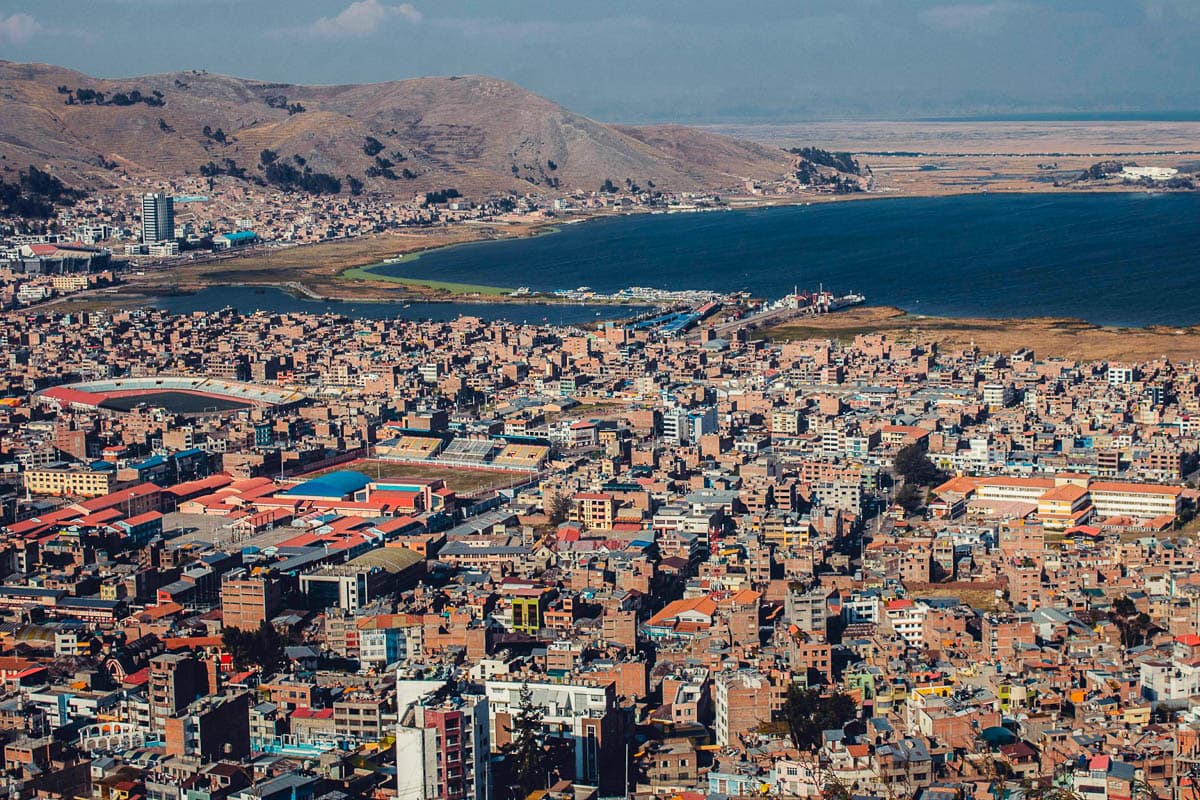
Accordingly, you can get a shared airport transfer, like this private option or this private option for groups, or, alternatively, you can try the InDrive app, which is kind of similar to Uber, to reach Puno.
I would be extremely cautious about getting into random taxis in Juliaca or Puno, which felt like one of the sketchier areas of Peru we visited. At best, there’s a good chance you’ll be ripped off and, at worst, there are extremely rare instances of tourists getting kidnapped by taxis. So, if you don’t want to use a transfer service or taxi app, I’d suggest trying to arrange transportation through your accommodations.
Bus
If you’re like us and traveling around South America for a while, it may make sense to grab a bus here, which are typically pretty affordable. Here are some of the popular cities from which you can bus to Puno.
- Copacabana, Bolivia to Puno (4.5 hours away)
- Arequipa, Peru to Puno (6 hours away)
- Cusco, Peru to Puno (7 hours away)
- La Paz, Bolivia to Puno (9.5 hours away)
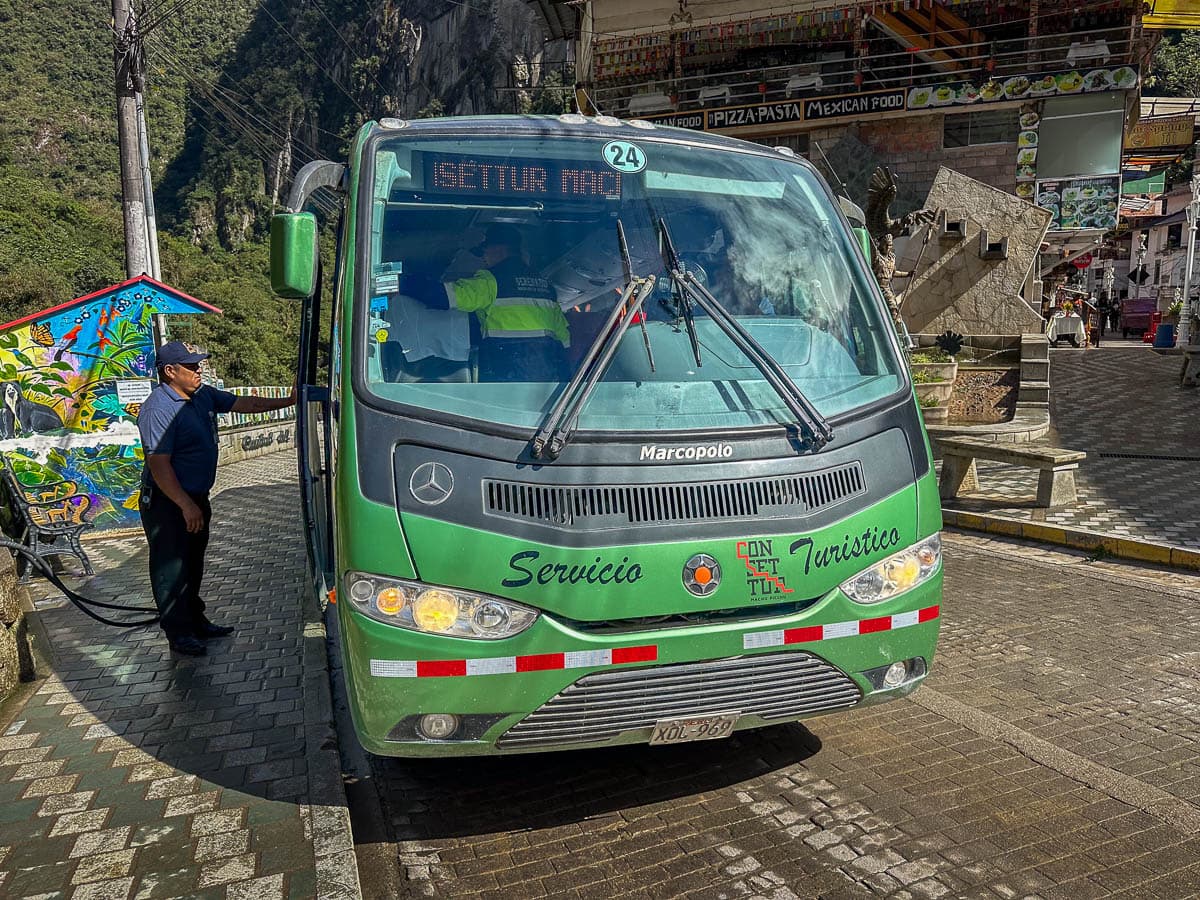
We stopped in Puno after our time in Cusco and before we went on to Copacabana, Bolivia and used buses to get between all of these destinations (and, really, all over South America!). In our experience, buses are a cheap, safe, and comfortable way to quickly zip around this part of the world.
After using LOTS of different operators in Peru, we’d definitely recommend going with Cruz del Sur, if it’s available!
Car
I typically wouldn’t recommend driving around Peru—it’s a HUGE country and driving can be dangerous for a number of reasons, from the absolute maniac drivers to opportunistic crime. Plus, getting around most places with Ubers, taxis, or transfers is easy and affordable.
Still, if you want to drive, there are certainly rental cars and accommodations with secure parking that are available in Puno.
How to get to the Uros Islands from Puno
Once you’re in Puno, the only way to really get to the Uros islands is by a tour, given that you’ll need a boat to get there.

You’ll usually find the cheapest prices for tours by walking around tourist agencies in Puno, which are concentrated in the blocks around Plaza Mayor de Puno. Alternatively, if you’re short on time in Puno or don’t feel like aimlessly wandering around, you can also book a tour online ahead of time.
There are a variety of different experiences to choose from.
Half day tours
These tours, like this option (which costs about the same as it would if you purchased a tour in person in Puno), typically last for three to four hours and include a boat ride from Puno to a Uros island. Each island is inhabited by a few families, who will show you how the islands are built, as well as what their modest homes look like.
Afterwards, you’ll take a traditional Uros balsa boat to a nearby “tourist” island, which has a small stall with food and drinks and some props to take photos with, before being boated back to Puno.
We were a bit short on time when we visited Puno, so this is the option we chose.

Full day tours
These tours, like this option or this option, lasts for about nine to 11 hours.
They will stop at at least one of the Uros islands to learn more about these unique structures and the people’s way of life, in addition to one of the nearby natural islands in Lake Titicaca.

These islands, like Amantaní or Taquile, are mostly inhabited by indigenous Quechua people, who are renowned for their impressive weaving techniques and rich agricultural history. You’ll enjoy lunch here, typically of the trout that Lake Titicaca is famous for, and explore some of the island’s archeological ruins before heading back to Puno.
Homestays
For a more immersive experience, there are a handful of programs, like this one, that offer overnight homestays with the Uros people.
With these offerings, you’ll be transported from Puno to one of the islands and get to spend a whole day with the family that lives there. For example, you’ll have the opportunity to help them cut reeds to maintain the island, create handicrafts, or fish; eat traditional foods; and stay the night in one of the modest homes.

Lodge
Alternatively, there are several local families that have opened eco-lodges on the reed islands.
These lodges will offer a transfer boat ride to their island, which is usually included in the nightly rate but may cost a nominal incremental fee. During your stay, you’ll be cooked traditional food for dinner and breakfast and get to stay overnight in a reasonably comfortable accommodation (usually, much more bougie than what you’d experience during a homestay, with electricity, hot water, and wifi).
Additionally, these lodges typically offer an optional tour (for an additional fee) to some of the surrounding islands to learn more about the Uros people’s way of life, like where the children go to school and how their clothes are produced.
Our friends stayed at the Uros Lake Titicaca Lodge a few weeks after we visited Puno and we were kicking ourselves that we didn’t include a stay here in our Peru itinerary. Our friends loved hanging out on the terrace of their room, watching the sunset over Lake Titicaca, and were able to get a private tour of the islands with the family that owns the lodge.
It kind of seems like a great middle ground if you don’t quite feel like participating in some of the activities of a homestay, like fishing or reed cultivation, but still want a unique experience that lets you see what living on these islands is like.

Our experience visiting the Uros islands
If you’re reading this article, you may have heard mixed reviews about visiting the Uros islands and whether the experience is overly touristy.
Before visiting Puno, we had even met another traveler who suspected that the Uros islands are totally manufactured—that the residents don’t actually live on the islands anymore and, instead, just commute there every day solely for the tourists (to be clear, I can’t find anything online to validate that his suspicion).
Despite hearing some of these concerns, we decided to head on a tour of the Uros islands to experience them for ourselves.
We originally planned on doing a homestay, but, due to time constraints, we went on a half day tour that just concentrated on the Uros islands.

We took a boat from Puno’s harbor and rode the five kilometers to the floating islands, admiring the stunning views of the surrounding mountains along the way.
The first Uros island that we stopped at was inhabited by a family of about 10 people. The dad, who identified himself as the head of the family, showed us how the island was built, including even digging a hole in the reeds to show us the lake water below. He then explained some basic things about their way of life here, like the solar panels that provided them with electricity and how they cooked.
Afterwards, we broke into groups and a member of the family took each guest into one of the modest one room homes on the island, which mainly consisted of a sleeping mat and blankets on the floor and some basic shelving. We were then brought outside and shown handicrafts for purchase, like keychains or pillowcases, made by the residents.

After having a bit of time to peruse the souvenirs, we were asked to pay an additional fee to take a short ride on one of the balsa boats to the nearby “tourist island.” We had about half an hour or so on this island, which basically had a small cafe that served local trout, coca tea, and other drinks, as well as some wooden wings and other features that were meant to serve as photo opportunities for tourists.
Parts of the tour were REALLY cool. Cruising on Lake Titicaca and seeing the gorgeous surrounding landscape was wonderful in and of itself, plus it was really interesting to learn from one of the leaders of the island how this unique structure was created and maintained.
However, I would have loved to see this aspect of the tour expanded upon—learning more about how they bathe, go to the bathroom, cook, clean, raise their children, and more about their everyday life.

Instead, it felt like most of the tour was dedicated to encouraging us to buy the handicrafts, food, or drink on both of the islands we visited.
I also didn’t love that we were charged an additional fee (almost as much as the tour itself or about $8 USD per person) for a 10 minute ride on a traditional boat from one island to another. When we originally purchased the tour, we were told this boat ride was optional, but it definitely didn’t feel that way—all of the guests were sort of corralled onto it, without mention of another alternative to getting to the next location.
All in all, the entire tour felt much more transactional than I would’ve preferred. I totally get that the residents here largely depend on tourism for their livelihood, but I would’ve much preferred to just pay more upfront for a tour and dedicate more time to actually learning about this unique way of living, instead of feeling guilted into buying a llama keychain.

Even so, I think this is the only place on the planet where people live on manmade islands, as they have for hundreds of years. Which brings us to the question…
Is visiting the Uros islands in Peru worth it?
Yes, given how unique and special the Uros people’s way of life is, I think these islands are absolutely worth visiting.
However, I definitely would recommend either doing a homestay, like this option, or staying at one of the lodges (like the Uros Lake Titicaca Lodge, which is owned and operated by a Uros family) on the islands, instead of doing a day tour here. You’ll have a much more immersive experience where you’ll feel less nickel and dimed, and, instead, get to actually understand what it’s like to live and work on these islands a bit more.
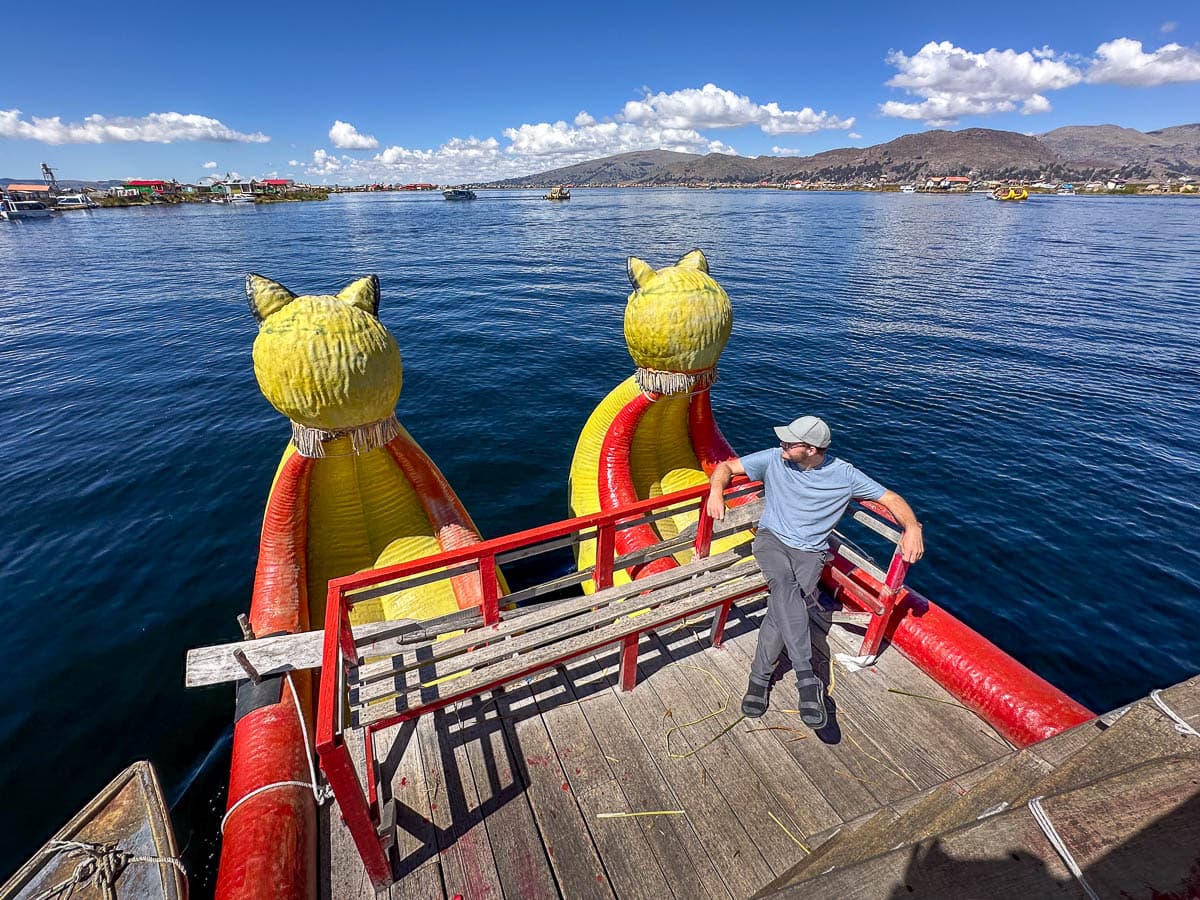
If you only have time for a day tour here (I totally get it!), I still think they’re worth visiting if you head into the experience with appropriate (i.e., low) expectations. I do wish our time on the Uros islands felt less touristy and, for lack of a better word, money grabby, but I’m still glad we got a small glimpse into such a unique way of living.
I hope you feel better equipped to decide whether the Uros islands are worth including in your Peru itinerary. Do you have any questions about visiting this unique corner of our planet? Let us know in the comments below!
