

The Atacama Desert is one of the most popular destinations in Chile, offering steamy hot springs, technicolor salt lagoons, and otherworldly scenery. There are tons of things to do in this unreal corner of the planet—so much so that it can actually be challenging to figure out what to do and see here if you have a short period of time. My husband, Justin, and I spent a week exploring this area of Chile and have put together the perfect 3 day Atacama Desert itinerary, with ideas if you have more or less time here.
This post may contain affiliate links. If you make a purchase through them, we may receive a small commission, for which we are extremely grateful, at no extra cost to you.
How to get to the Atacama Desert
The Atacama Desert is huge, sprawling almost 50,000 square miles, in northern Chile, along the Bolivian border.
The best place to base yourself to explore this area is the touristy yet charming town of San Pedro de Atacama, which is centrally located to the most popular attractions in the Atacama Desert.
To get here, you’ll first need to fly into El Loa Airport in Calama, Chile, which is about an hour northwest of San Pedro. You can either pick up a rental car at the airport or take a shuttle to San Pedro, like this shared transfer or this transfer, which has shared or private options.
Alternatively, if you’re already traveling around South America, it’s pretty common for many travelers to transit between the Salar de Uyuni in southern Bolivia and the Atacama Desert. There are so many incredible things to do in Uyuni, from exploring the largest salt flats in the world to soaking in steaming hot springs and watching flamingoes feast in colorful salt lagoons.
If you want to get to the Atacama Desert this way, there are several Uyuni Salt Flats tours that start in either La Paz or Uyuni, Bolivia and end in San Pedro, like this four day tour option or this option.
Should you get a rental car in the Atacama Desert?
As mentioned above, the Atacama Desert is HUGE, with the most popular attractions spread out in a 150 kilometer radius around San Pedro. So, yes, it will generally be a LOT easier to explore the Atacama Desert if you have a rental car.
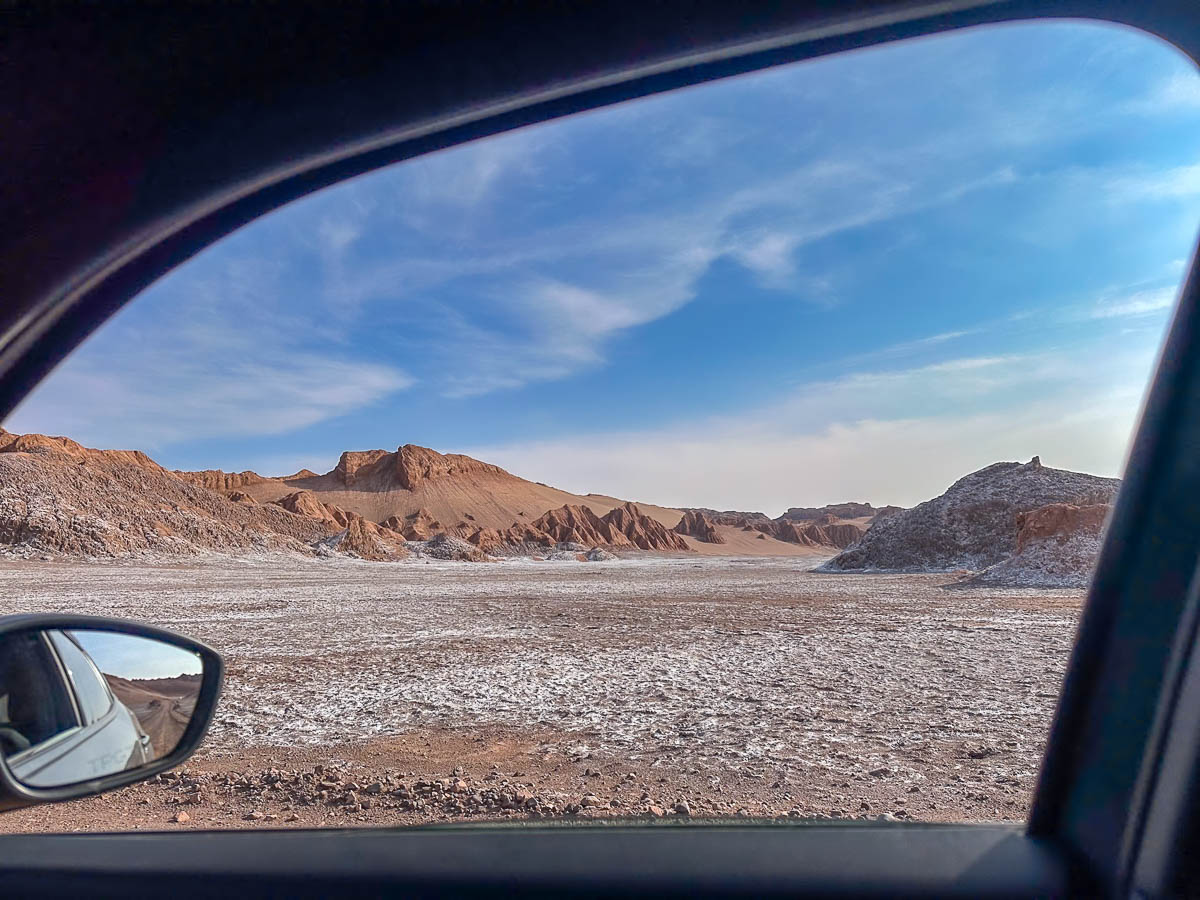
That being said, this definitely isn’t the easiest place to drive. Many of the roads in the Atacama Desert are horrendous, with huge potholes, washboarding, and stabby rocks. For example, on our way to the salt lagoons of Lagunas Escondidas de Baltinache, we passed three people who were actively fixing a flat tire and 74 shredded tires that were discarded along the roadway.
There are other things that make driving in the Atacama Desert a bit sketchy—the only place to get gas is in San Pedro; there’s absolutely no cell service outside of town; and the weather can be extremely dynamic, with scorching heat during the day and freezing temperatures at night.

Accordingly, I’d only recommend getting a rental car if you have experience driving on unpaved roads and know how to change a flat tire in a pinch. I’d also recommend packing some warm layers and extra water and snacks when you’re driving around, just in case you run into any kind of automotive issues.
If driving on crappy roads and farting around with shredded tires in the middle of the desert sounds decidedly unfun to you, you can definitely get by with joining tours to all of the different destinations, with someone else quite literally taking the wheel for you. Below, I’ll suggest tours for each of the activities, in the event you don’t want to get a rental car. Luckily, San Pedro is super walkable, so you should have no problem getting to shops, restaurants, and bars in town, even without a car.
3 Day Atacama Desert Itinerary
Day 1: Drive to San Pedro de Atacama and visit Valle de la Luna and Valle de Martes
Fly into El Loa Airport
As noted above, from the airport, you can either pick up a rental car or get a transfer into San Pedro de Atacama, a little over an hour away.
Lunch in San Pedro de Atacama
Obviously, what you can do and see during your first day of your Atacama Desert itinerary will largely depend on when your flight into Calama is, but, assuming that you’re arriving mid-morning, I’d suggest grabbing lunch in San Pedro before your afternoon’s adventures.

My favorite place for a quick lunch in San Pedro is Emporio Andino, a bakery with seriously tasty empanadas (we loved the green ones!) and freshly baked pastries.
Valle de la Luna
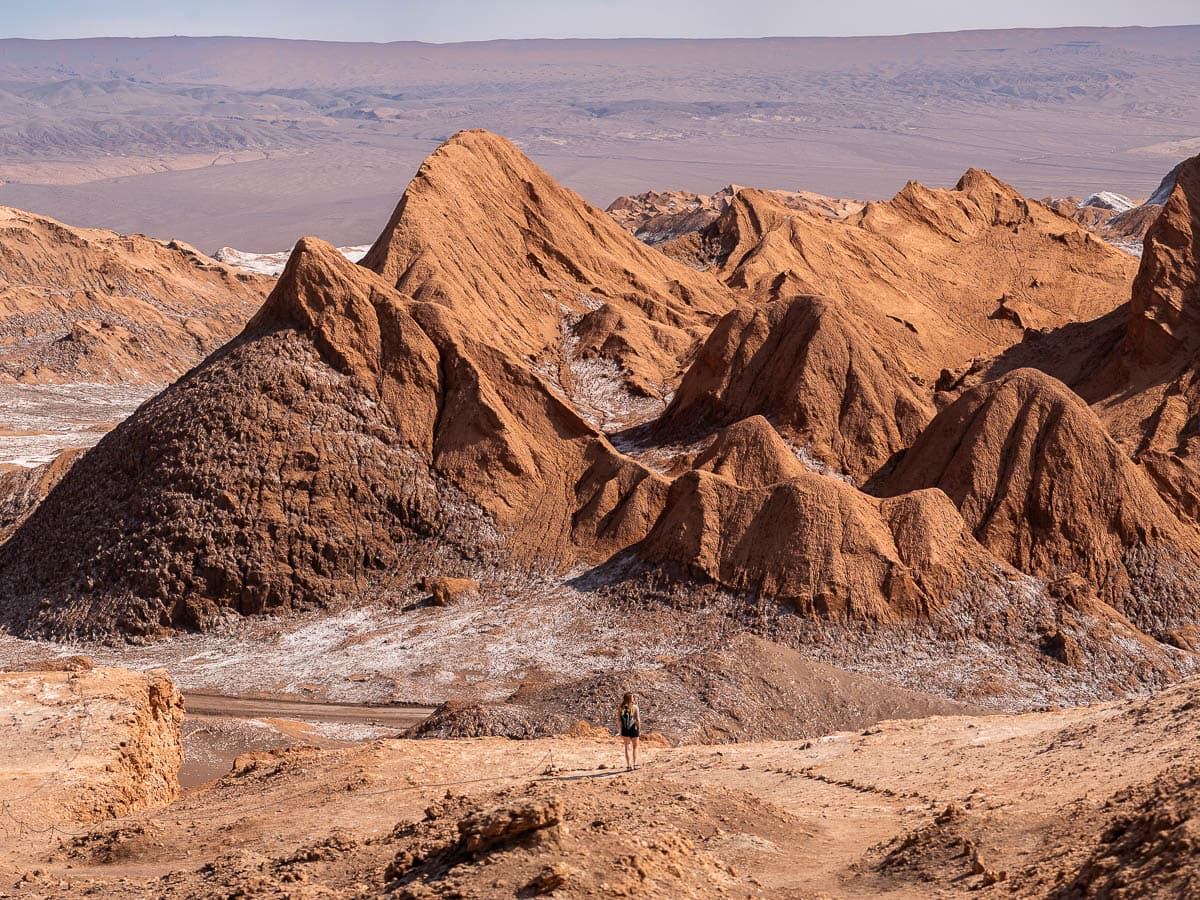
One of the best things to do in San Pedro de Atacama is to explore Valle de la Luna, a park right outside of town that offers some of the most dramatic views of Cordillera de la Sal. This unique mountain range in northern Chile was formed by the uplifting of an ancient lake bed, which has been shaped by erosion over the course of millions of years.

Today, Valle de la Luna offers several ways to immerse yourself in the spectacular landscape here, including exploring an abandoned salt mine, hiking on a handful of short trails, and stopping at viewpoints to take in the surrounding otherworldly scenery.
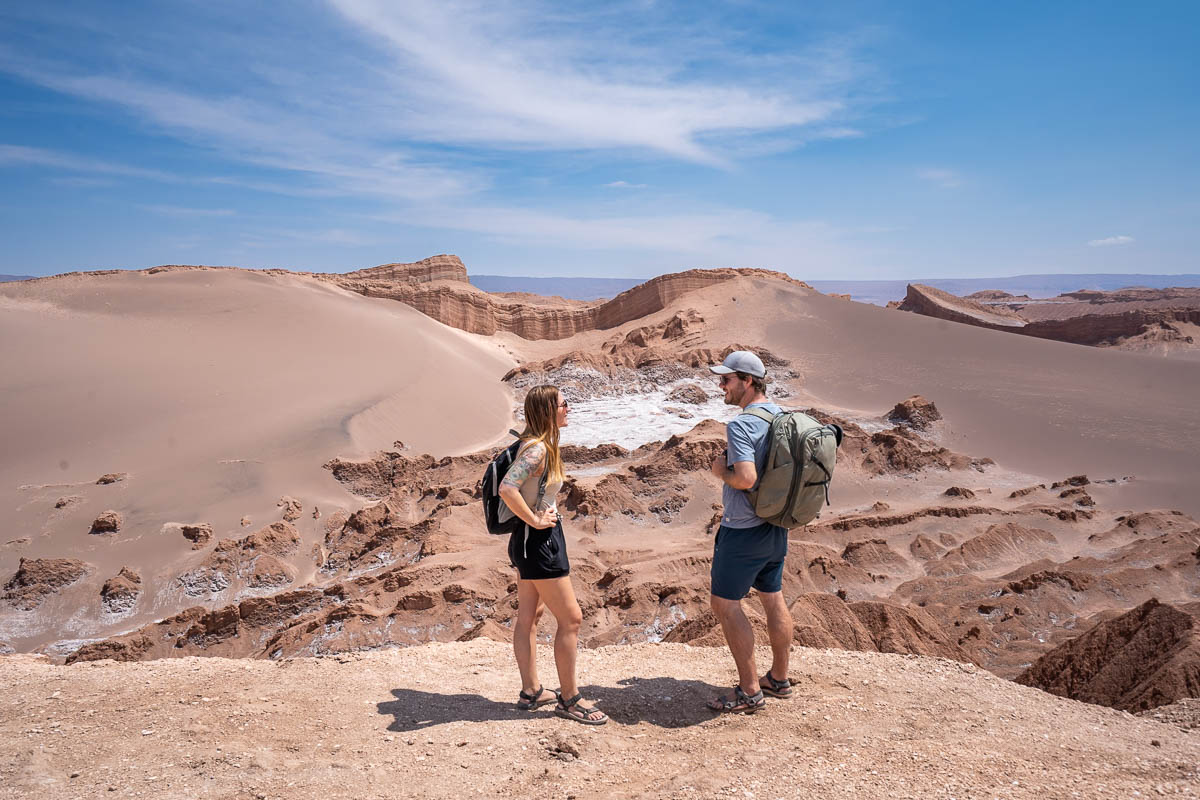
My favorite hike in the entire Atacama Desert is located in Valle de la Luna, the Sendero Mirador Achaches. This trail climbs up a series of hills and sand dunes, providing jaw-dropping views of the Antifeatro, a massive rock formation that’s eroded into a dramatic curved shape. In my opinion, this short hiking trail is worth a stop in Valle de la Luna alone!
You can buy tickets for Valle de la Luna online or at the visitor center for $14 USD per adult.
If you don’t have a rental car
There are conveniently quite a few tours that head from San Pedro to Valle de la Luna in the afternoon, like this small group option or this option, which ends with pisco sours whilst watching the sunset over the Atacama Desert.
Valle de Marte
Valle de Marte is conveniently located right across the street from Valle de la Luna.

Despite their proximity, Valle de Marte (sometimes referred to as Valle de Muerte) feels completely different, with rolling sand dunes and rugged canyon walls that sit in the shadow of the enormous Licancabur Volcano.
There are a few activities to enjoy in Valle de Marte, including a scenic drive and a few short hiking paths, but the most popular thing to do here is to actually go sandboarding!
You can rent a sandboard from one of the outfitters in town. Alternatively, if you’d prefer to learn from a pro, consider joining a guided tour from San Pedro that will provide all of the necessary gear and teach you how to hang ten on the sand, like this operator (I also think it’s SO cool that they donate 20% of his profits to the surrounding communities!).
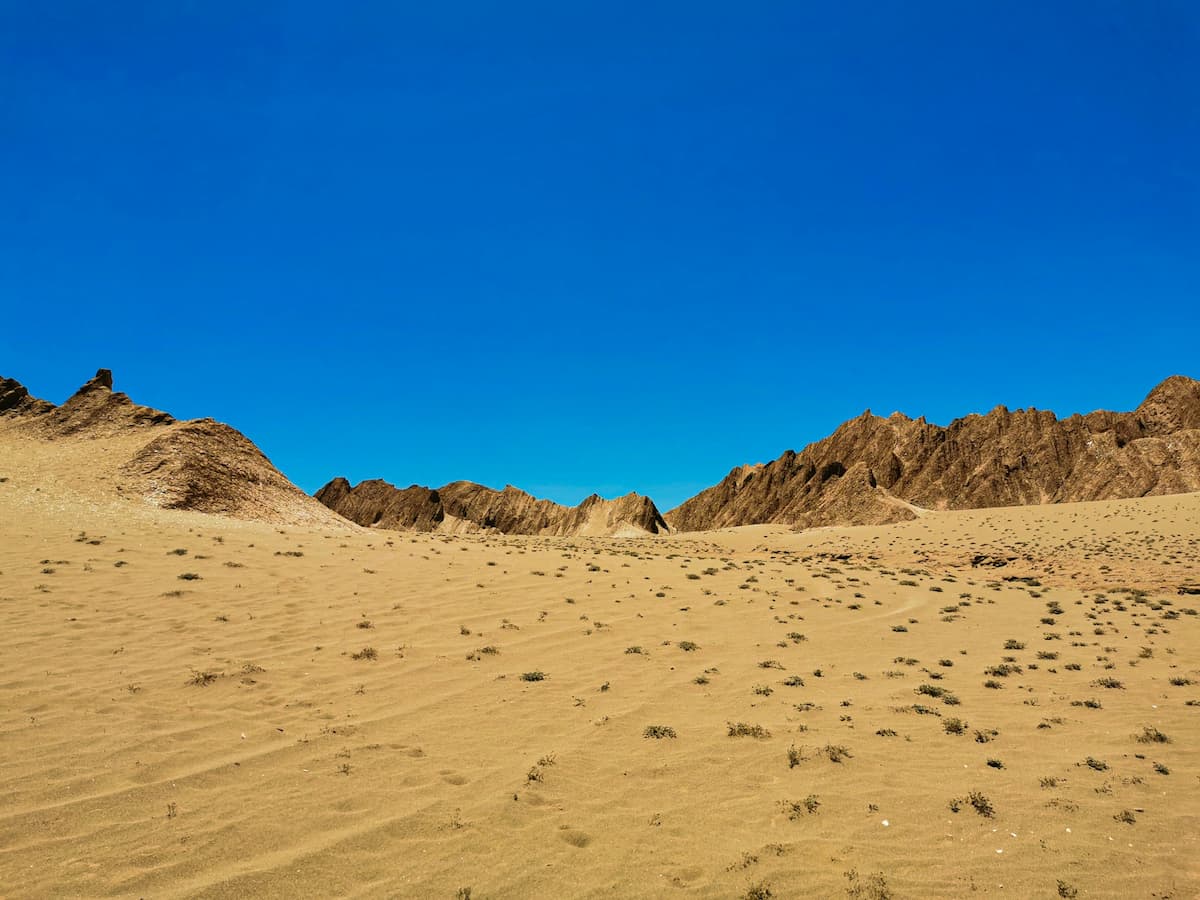
Tickets are 6,000 CLP at the front gate. I’ve read that you can pay the entrance fee with credit cards, but, when we visited, we were told it was cash only. Accordingly, I’d recommend bringing extra pesos, just in case!
If you don’t have a rental car
As mentioned above, there are a few tours that head from San Pedro to Valle de Marte that usually focus on sandboarding in the park, like this option. However, it’s going to be tough to find tours that are appropriately timed to allow you to visit both Valle de la Luna and Valle de Martes on the same day. So I’d probably recommend just picking the one that you’re most interested in and spending your first afternoon there.
Sunset at Mirador de Kari
Mirador de Kari is actually part of Valle de la Luna, but is separated from the rest of the park and located on a cliffside that overlooks the valley (so be sure to hang on to your ticket stub from earlier!).

The sunsets here are absolutely spectacular, with the golden rays of the sun lighting up the pink and orange sandstone formations that snake across the valley. After spending over half a year in South America, this was one of the very best sunsets we enjoyed on the entire continent!
If you don’t have a rental car
If you book one of the afternoon tours to Valle de la Luna above, they all end with sunset here!
Dinner in San Pedro de Atacama
End the day moseying around San Pedro, whose dusty streets are lined with tons of restaurants to choose from. Here are some of our favorites:
- Pizzería El Charrúa, a cozy spot with incredible thin-crust pizzas (the Margherita pizza here is SO good)
- Las Delicias de Carmen for massive portions of traditional Chilean dishes
- Rincon de Sal, a casual spot with friendly service and REALLY tasty burgers and fries

After dinner, it’s worth moseying around the downtown area—-there are tons of bar that offer two-for-one cocktails, so grab a pisco sour and cheers to your first day in the Atacama Desert!
Where to stay in San Pedro de Atacama
As the main touristy hub of the Atacama Desert, San Pedro has an impressive array of hotels, so, regardless of what kind of traveler you are, you should be able to find the perfect accommodations.
- Hostal Mama Tierra: On the budget side of things, this hostel offers a mix of shared and private rooms, housed in a sprawling rustic home that kind of feels like it’s owned by your bohemian Chilean aunt. The complimentary breakfast is SO good, with a massive array of foods to choose from, and they’ll even pack you a breakfast to go if you’re heading out early.
- Hotel Jardin Atacama: For something more midrange, this hotel is located in a colonial style building, with a lovely outdoor space, complete with a pool and garden. There’s an onsite restaurant that offers complimentary breakfast (plus lunch and dinner for a reasonable price) and spacious rooms.
- Hotel Desertica: If you’re looking for something slightly more luxurious, this hotel offers little suites that are housed in your own private hut, with a massive shower and super comfortable beds. There’s a pool area, with a lounge outfitted with local colorful textiles, and a complimentary breakfast, with stellar options.

Day 2: Piedras Rojas, Lagunas Altiplánicas, Laguna Chaxa, and stargazing
Piedras Rojas and Lagunas Altiplánicas
Grab breakfast at your hotel and hit the road towards Piedras Rojas, a salt lagoon with emerald-hued water, surrounded by amorphous rust-colored boulders and the Andes Mountains.

Piedras Rojas and the neighboring Lagunas Miscanti and Miñiques, salt lagoons that are home to flamingoes and vicunas, are an easy two hour drive from San Pedro de Atacama. However, it’s a tiny bit logistically confusing to visit.
At least a day before your visit, you’ll need to purchase a timed entry ticket for Piedras Rojas and the Lagunas Altiplánicas from this website, which is operated by the itty bitty town of Socaire. Assuming you want to visit both Piedras Rojas and the lagoons, you should purchase a combination ticket, which specifies which of the sites you’ll stop at first (I’d recommend selecting the ticket option “First the southern hot water salt flats ‘Piedras Rojas’ + Second, the Miscanti and Miniques Lagoons” on the website).

On the day of your visit, you need to stop at this office in Socaire, which is located about an hour away from San Pedro, to pick up your ticket. You need to be at the office an hour before your scheduled timed entry (e.g., if your ticket is for 8:30 AM, you should be at the ticket office by 7:30 AM).
Once you pick up your ticket, head to Piedras Rojas first, where an attendant will check your ticket and direct you to a parking spot. From here, there’s a short loop path you follow alongside the salt lagoon, providing beautiful views of the funky red boulders and the surrounding volcanoes. If you visit on a calm day, you can see a perfect reflection of the Andes Mountains in the lake’s milky waters.

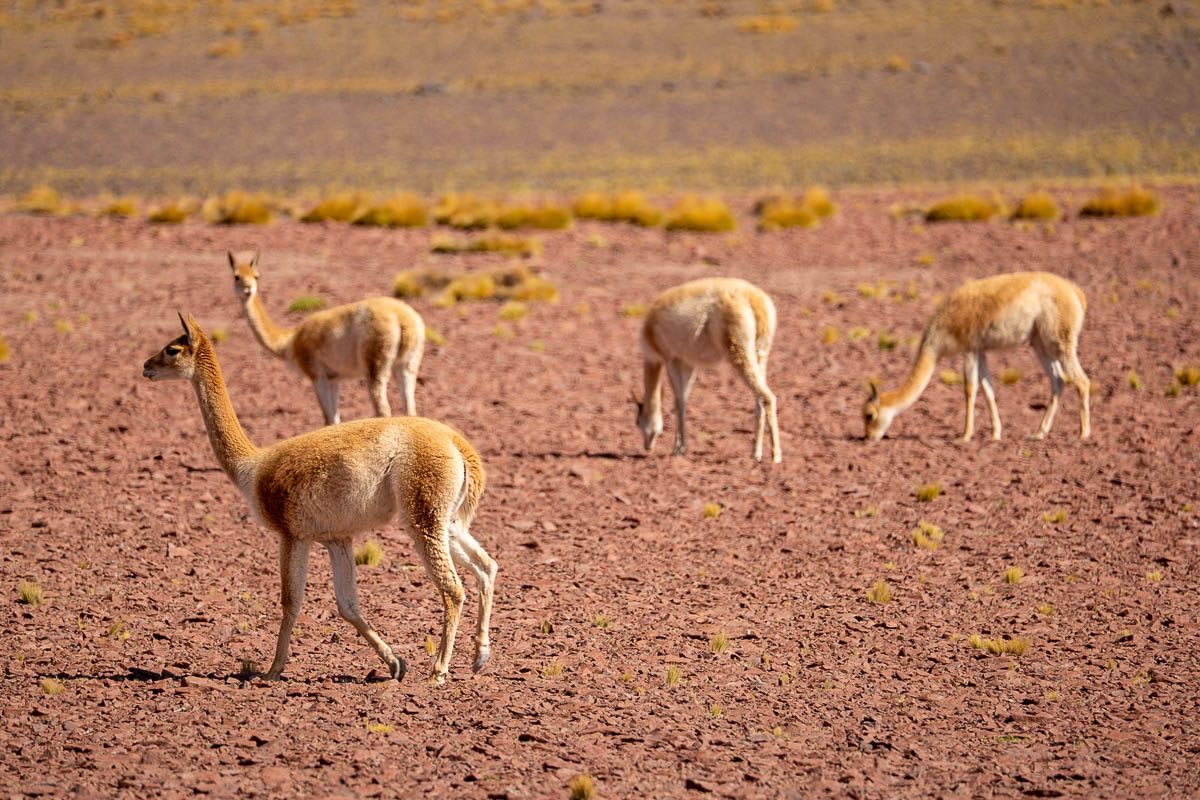
After Piedras Rojas, drive about 45 minutes to Lagunas Miscanti and Miñiques, two beautiful lagoons with dark blue water. While the scenery here is spectacular in and of itself, the real draw here is the wildlife, with flamingoes and vicunas feasting along its brackish shores.
If you don’t have a rental car
There are a few tours that leave from San Pedro that stop at all of the sites suggested for this morning and afternoon, including this tour or this small group option.
Lunch in Socaire
To be honest, I would not describe Socaire as a gastronomical hub, but there’s limited food options outside of San Pedro. There’s a handful of restaurants here, like Cocineria San Santiago or Cocineria Comunidad De Socaire, that serve simple, but tasty Chilean food.
Snap a photo with Tropico de Capricornio
As you drive back towards San Pedro, you’ll pass a massive sign along the highway, demarcating the Tropico de Capricornio or Tropic of Capricorn.

If you need a refresh on your old time-y navigational terms, the Tropic of Capricorn is one of five major latitudinal lines on Earth, which signifies the southernmost point on the planet where the sun is directly overhead at local noon.
It’s just a quick stop, but definitely makes for a unique photo opp!
Laguna Chaxa
Stop at Laguna Chaxa, which is located in the Salar de Atacama, the largest salt flat in the country. The lagoon is beautiful, with stunning reflections of the surrounding purple-y mountains on calm days, and serves as the home to three different species of flamingoes.

There’s a walking path around the lagoon, which provides different places to view the flamingoes as they feed, and a small visitor center, where you can learn more about these pink feathered friends and the unique surrounding environment.
Tickets are 13,714 CLP, which can be purchased ahead of time online or in person.
Dinner in San Pedro de Atacama
Grab dinner at one of the restaurants suggested above that you haven’t hit yet. For something a bit bougier, Adobe is on the fancier side and serves creative takes on Chilean cuisine, like mushroom ceviche.
Stargazing
The Atacama Desert is recognized as having some of the best stargazing on the planet, thanks to its clear skies, limited light pollution, and high elevation.
Once it’s gotten dark out, I’d just suggest driving a bit outside of town, like to Mirador San Pedro de Atacama, to watch the Milky Way stretch across the inky sky above.

Alternatively, if you don’t have a rental car or just want to learn more about the stars, you can join a tour with a knowledgeable guide, like on this option, where you’ll get to observe the stars above with two 14 inch telescopes, all whilst sipping a glass of Chilean wine.
Day 3: El Tatio Geysers, Puritama Hot Springs, Lagunas Escondidas
El Tatio Geysers at sunrise
The El Tatio Geysers, located about an hour and 45 minutes north of San Pedro, hold a bunch of impressive titles, including being the largest geyser field in the Southern Hemisphere and, at a whopping 4,320 meters above sea level, the highest altitude geyser field on Earth.
The best time to see the geysers is in the early morning, when it’s still a bit chilly out and the light is soft and glowy. Accordingly, El Tatio has become the most popular place to watch the sunrise in the Atacama Desert.

Given the site’s high altitude, it’s straight up frosty here in the early morning, so be sure to bring along plenty of warm layers!
This is one of the only places in the Atacama Desert that I’d seriously caution against driving on your own, even if you have a rental car. Justin and I tried driving here in broad daylight, but turned around when we encountered a particularly harrowing part of the road that appeared to be washed out (and, for context, we live in an RV and drive on gnarly roads all the time!). You could REALLY mess up your rental car—or worse—by trying to drive on this road in the dark.
Instead, consider joining a tour, like this one—and, as a bonus, you’ll get to grab an extra hour or so of sleep as you’re driven to the geysers.

If you do decide to drive on your own, just drive SUPER carefully and slowly and be sure to double check that you have a spare tire with you—you might need it!
Entry is 15,000 CLP on site—credit card only!
Puritama Hot Springs
If you braved the potholes leading to El Tatio in your own rental car, Puritama Hot Springs is just a short detour along the way back to San Pedro.

These springs are BEAUTIFUL, with a series of crystal clear pools that cascade into one another and are surrounded by rugged canyon walls and surprisingly lush desert flora. There are usually tons of dragonflies zipping through the pools’ steam, which just add to their dreamy vibes.
Tickets are 35,000 CLP per person and must be purchased online ahead of time. You can choose from two different slots—either 9:30 AM to 1:30 PM or 2:30 PM to 6 PM every day.

It usually takes about two to three hours to see everything at El Tatio, so, if you’re driving yourself around this morning, you should be able to get to the hot springs around 11 AM or so. If you think two-ish hours of soaking time is enough for you, then go ahead and book the morning session, but, if you REALLY want to get your money’s worth, take your time getting here and grab an afternoon slot instead!
If you don’t have a rental car
You can book a transfer, like this option or this option, to the hot springs in the afternoon (just be sure to double check that you’ll be back in time from your morning trip to El Tatio).
Lagunas Escondidas de Baltinache
If you were able to squeeze the hot springs into the morning of your Atacama Desert itinerary, make the hour and a half drive to Lagunas Escondidas de Baltinache, a series of lagoons with brilliantly colored water, surrounded by salt-encrusted shores.

Unlike any of the other lagoons we’ve seen so far, you can actually swim in one of these pools, with the water’s high salt concentration providing a Dead Sea-esque experience where you can effortlessly float. When Justin and I visited, it kind of made me feel like Superman!
The road getting to and from the lagoons also has tons of potholes and is paved with stabby rocks, so be sure to drive slowly and carefully. This is where we passed three people actively fixing a flat tire, so, again, be sure to double check that you have a spare with you!
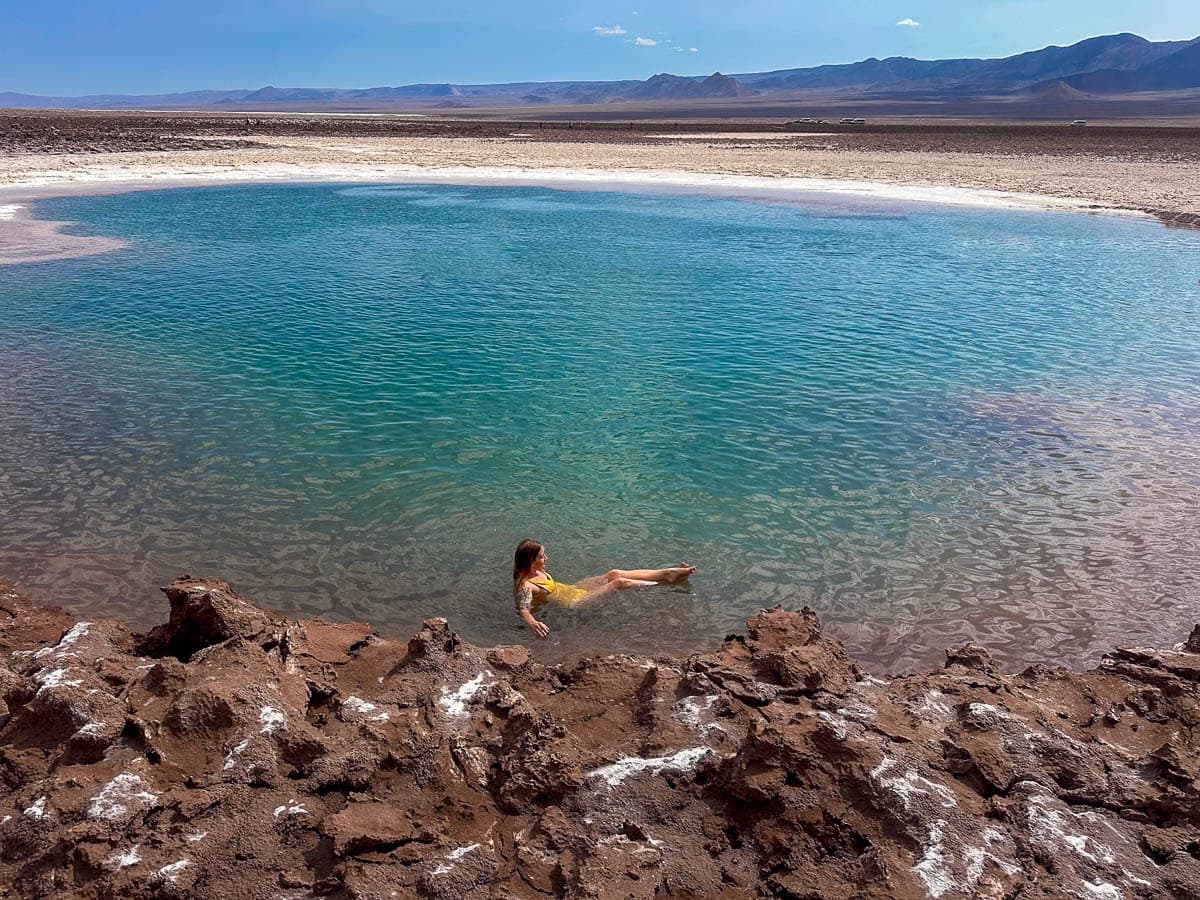
Entrance is 12,000 CLP. I’ve read online reports that credit cards are accepted, but, when we visited, we were told it was cash only. So be sure to bring sufficient Chilean pesos, just in case!
Pssst…. occasionally, the owners close the lagoon you’re allowed to swim in to allow for its fragile environment to normalize, so if you’re super set on getting in the water, I’d suggest checking recent Google reviews to see whether any closures are reported.
If you don’t have a rental car
You likely won’t have time to make it to Lagunas Escondidas today, if you’ve relied on tours to get to El Tatio and Puritama Hot Springs. However, if you’d rather visit Lagunas Escondidas than one of the other sites, this half-day tour heads to the pools in the morning and returns to San Pedro by the early afternoon.
Sunset at the Magic Bus
On your way back from Lagunas Escondidas, you’ll pass the Magic Bus Atacama, a rusted out shell of a bus that’s abandoned in the desert. The twisted metal of the derelict bus makes for a very cool photo opp, especially against the dramatic landscape of the Atacama Desert and the glowing light of sunset.

Dinner
Grab dinner at one of the restaurants suggested above that you haven’t tried yet and go to bed early—you’re sadly gotta make the trip back to the airport in Calama airport and fly to your next destination!
When to visit the Atacama Desert
The best time to visit the Atacama Desert is in the summer in South America, from December through February, when the daytime temperatures are warm and the skies are clear, so that you can see the dramatic volcanoes and mountains that surround San Pedro and have a better chance of seeing the Milky Way at night.
This also tends to be the busiest time to visit, so you can also expect that hotels and rental cars may be a bit more price-y. For what it’s worth, we visited the Atacama Desert in February and didn’t find crowds to be an issue anywhere we visited.

The springtime (from September to November) and the fall (from March to May) are also great options, with fewer crowds and lower prices. Just be prepared for slightly cooler weather and cloudier skies.
You can certainly visit the Atacama Desert in the wintertime (from June through August), but it certainly wouldn’t be my first choice. Given the high elevation here, San Pedro and the surrounding area can feel downright chilly and some of the attractions may have limited hours or even be closed for the season.
I hope this Atacama Desert itinerary helps you plan your time exploring this unique part of the planet—it was one of our favorite areas of South America to explore! Do you have any questions about planning your time here? Let us know in the comments below!
