

La Paz, Bolivia is a unique city where old meets new, with a quirky mix of shiny skyscrapers, witches markets, and colorful murals. And, as the biggest city in the country, there are tons of incredible places, restaurants, parks, and more to explore. Here are 14 incredible things to do in La Paz, Bolivia, one of the most dynamic cities in South America.
This post may contain affiliate links. If you make a purchase through them, we may receive a small commission, for which we are extremely grateful, at no extra cost to you.
Things to do in La Paz, Bolivia
1. Explore El Alto
El Alto is a city that’s directly west of La Paz, built high onto a hilltop that overlooks the skyscrapers and frenetic streets below.
El Alto used to be pretty unstable and dangerous, but has recently gained a reputation as a cultural hub in its own right. We LOVED exploring El Alto, with its art deco and Transformers-esque buildings; authentic witches stalls; and open air market, Mercado 16 de julio, which is the biggest in Bolivia.

A great way to see El Alto is just by taking Línea Azul (Blue Line) of the Mi Teleférico, La Paz’s aerial tramway, which goes through the heart of the city and provides up close and personal views of some of the funkiest architecture in South America.
For a more hands on perspective, take a walking tour here. For example, this tour focuses on learning more about the unique Andean architecture in El Alto, including actually getting to explore inside one of these unique mansions, or this tour, which explores both La Paz and El Alto, including its witches market.
Insider tip: It’s generally pretty safe to walk around the main drag of El Alto, like Avenue Juan Pablo II or at the market, during the day, but the city can be a bit sketchier at night. I wouldn’t suggest moseying around El Alto in the evening or walking around in areas that you’re unfamiliar with.
2. Shop at the witches market
One of the most iconic things to do in La Paz is to visit the Mercado de las Brujas or the Witches Market.

Although there are aspects of La Paz that are very modern, Bolivia, as a whole, has a lot of traditional aspects, from the colorful clothing worn by most Indigenous women to some of its spiritual practices. Many of these practices have Indigenous roots in the Aymara or Quechua cultures, which involve making cha’llas to Pachamama (offerings to Mother Earth).
At the La Paz’s witches market, you can find brujas (witches), Kallawaya (medicine men) and curanderos (local shamans), who specialize in these offerings. You can get your fortune told and prescribed a custom offering, depending on what you’re hoping for in the future. The market sells all kinds of oddities for these prescriptions, from sugar tablets, dried starfish, and coca leaves to the infamous llama fetuses and lacquered frogs.

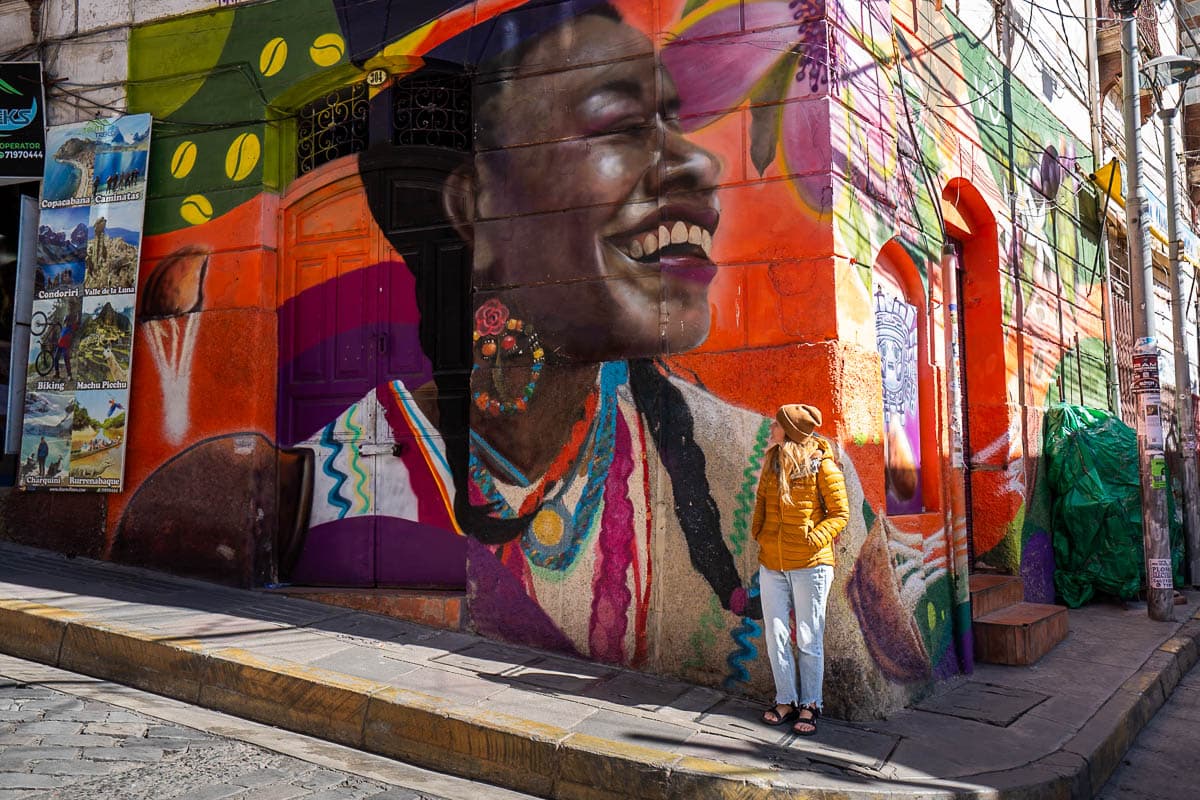
If that’s not your jam, the Witches Market is still fun to mosey around, with colorful murals, souvenir shops that are hawking alpaca and llama textiles, and relaxed cafes.
3. Take the Mi Teleférico
True story—after spending about a week in La Paz, my favorite thing that we did was ride its public transit system. La Paz has an aerial tramway, called Mi Teleférico, which provides fantastic views over the city’s unique architecture, mountainous landscape, and dramatic cliff sides, all surrounded by the snow-capped Andes Mountains.
The system was originally designed for La Paz’s unique challenges, including incredibly dense populations and dramatic landscape. The resulting tramway holds some seriously impressive titles, including the longest AND highest aerial tramway system in the world!

It’s a super affordable way to get an overview of the city. It costs around 3 BOB (.50 USD) per ride on one particular line, so if you wanted to make a giant loop around the city, it costs around $7 USD to ride all of the lines in the city.
4. Cheer on a Cholita Wrestling show
One of the most unique things to do in La Paz also is a somewhat subversive take on a traditional sport—Cholita Wrestling!
If you’re not familiar with the term, “cholita” basically refers to an Indigenous Aymara or Quechua woman who wears traditional Bolivian clothing. This usually includes polleras, which are voluminous skirts that are worn over many layers of petticoats, and bombins, which are bowler hats that were initially brought over by the British railroad workers in the early 20th century and adopted by Bolivian women as a symbol of cultural pride. Cholita was once considered a derogatory term, but, like bombins, has since been reclaimed by Bolivian women as a sign of cultural pride.
So cholita wrestling is probably exactly what you imagine it is—women, decked out in traditional Bolivian garb, body slamming each other in a wrestling ring.

This unique performance dates back to the early 2000s, when Bolivian women started practicing wrestling as a way to build friendships and fight against domestic violence, which unfortunately is a pretty significant problem in the country. Since then, Cholita Wrestling shows have become one of the top attractions in the city, as visitors cheer the women on as they pull each other’s braids, leap from the ropes, and slam beer cans into one another’s heads.
The campy show is hosted on Thursdays and Sundays in a sketchier neighborhood of El Alto. I’d suggest joining a tour here, like this option or this option, where they’ll handle your roundtrip transportation from La Paz, admission tickets, and even the popcorn that you enjoy at the show! That’s exactly how we got to and enjoyed a Cholita Wrestling show and would absolutely recommend doing the same.
5. Try Bolivian food
For whatever reason, Bolivia isn’t really known for its gastronomy, which I think is a huge oversight—there’s tons of good Bolivian food!
Much of Bolivia, including La Paz, is at high elevations and, given its chilly climate, a lot of the cuisine has a hearty comfort food kind of feel.
For example, salteña is a type of baked empanada, with a savory, soup-like filling and a charred crust. We had these almost every day for breakfast when we were in La Paz—Paceña La Salteña was right across from our apartment building and offered really yummy ones!

Other Bolivian favorites include pique macho, which is essentially like Bolivian poutine, with lots of meats, eggs, and veggies on top of fries, and sopa de mani, a creamy soup made of potatoes and peanuts (fun fact: did you know scientists believe that peanuts originated in Bolivia?).
6. Peruse Mercado Lanza
If you want to try a LOT of Bolivian food in one sitting, head to Mercado Lanza, which is just a short walk from the Witches Market. Here, you’ll find a market, plopped into what feels like a parking garage, with a dizzying array of tiny food stalls across its four floors.
The stalls each have a tiny table or countertop, typically crammed with locals, and a cholita cooking up any kind of Bolivian dish or drink that you could dream of. It’s definitely a much more local and authentic vibe than you’ll find as compared to some of the restaurants in the more touristy areas of town.

Besides food, you can find other wares here, including flowers, clothing, housewares, and more.
Be sure to wear your best stretchy pants!
7. Ride down Death Road
Death Road is the VERY intense nickname that has been bestowed upon North Yungas Road, which snakes 50 miles through jungles and past dramatic cliffsides from the Yungas region of the country to La Paz. The road was once quite dangerous, due to its narrow, unpaved, and curvy nature, resulting in upwards of 300 deaths per year, until a more modern and safer alternative was built.
Now, the original road is primarily used for adventure-seeking tourists, who bike down its windy path. While it’s definitely not as dangerous now, with up to 25,000 visitors braving the road each year, there have still been a number of bikers and even guides who have accidentally fallen off a cliff to their deaths here—so this is definitely one to do at your own risk!

With that in mind, this isn’t an activity that I’d recommend going with the cheapest tour operator possible, who might not do the best job of purchasing high quality gear or performing routine maintenance on it.
This tour and this tour are both recognized for being hyper-focused on safety, while allowing you to have a fun time on Death Road.
8. Wander through Valle de la Luna
I always imagined that the more remote parts of Bolivia would have really cool landscapes, but I really didn’t realize that La Paz itself would, as well. The city is built into the bottom of a bowl, surrounded by enormous mountains—and, on top of that, the ground around La Paz has a high concentration of soft clay, which quickly erodes and leaves behind dramatic cliff sides and other formations.
One of the best places to see these unique formations in all their glory is the Valle de la Luna, a park that highlights this region’s unique rock formations that is found just 10 km outside of La Paz’s downtown. Local legend holds that the Valle de la Luna (or Moon Valley) was actually named by Neil Armstrong himself, because of its resemblance to an otherworldly landscape, with colorful spires and cathedral-like rock formations.

There are two hiking trails that snake through the heart of the formations that each lead to a viewpoint, overlooking the craggy spires.
To get to Valle de la Luna, you can take a tour here, like this option or this option. Alternatively, you can visit independently, either by grabbing a taxi, rideshare, or public transit. For example, you can take the Green Line of the Mi Telerifico to the Irpavi station and then take a taxi the rest of the way to the park.
9. Explore Valle de las Animas
Valle de la Animas is pretty similar to Valle de la Luna, a jaw-dropping valley of craggy brown spires. The spires at Valle de la Animas are taller and more needle-like, plus it’s much less frequently visited, than Valle de la Luna—so it’s kind of a no brainer to head here, if you ask me!
Valle de la Animas translates to “Valley of the Souls”, as local legend holds that each spire is actually a petrified soul, trapped in the rock. From the less horrifying, geological standpoint, the formations are actually made from a clay-rock substance and slowly eroded away when a massive glacier melted near it millions of years ago.

Like Valle de la Luna, there are also two walking paths here, an out-and-back trail that’s about 4 km and a loop trail that’s about 9 km.
You can either take a tour here, like this private option or this group option. Alternatively, you can get here independently, via taxi, rideshare, or public transit. To get here via public transit, you can either catch a bus that’s heading to Ovejuyo (e.g., the local #42 that leaves from the Centro district) or take the Green Line of the Mi Telerifico to the Irpavi station and then take a taxi the rest of the way.
10. Get a beer at Moe’s Bar LPZ
Yet another thing I was not expecting about La Paz—they LOVE cartoons from the U.S. here, from murals with Fred Flintstone to restaurants with the Teenage Ninja Turtles incorporated into its logo.
One prime example of this is Moe’s Bar LPZ, which is modeled to look like the iconic bar in the beloved show, The Simpsons. There’s SO much Simpsons’ nostalgia here—for example, Ralph’s “I Choo-Choo-Choose You” Valentine and menu items that reference the show, like a Krusty Burger and a Duff beer.
I grew up on The Simpsons and wanted to visit this bar SO badly, but we sadly ran out of time—so please go in my stead!
11. Hike to Laguna Esmeralda
If you’re looking for an accessible day hike to immerse yourself in the stunning Andes Mountains, climb the Laguna Esmeralda trail to the top of the snow-capped Nevado Charquini.
It looks similar to the turquoise alpine lakes in Peru, like Humantay Lake and Laguna 69, with vibrant waters sitting in the shadow of a massive glacier. Plus, you’ll also get views of the surrounding mountain peaks, including Huayna Potosí and Chacaltaya, the two tallest in the area.

While the hike will take you close to 5,300 meters over sea level, it’s not overly physically challenging, and is a good acclimatization trail if you’re looking to do something more intense, like climbing Huayna Potosi, later in your trip.
The trailhead is about an hour outside of the city, so the best way to get there is by tour, like this option or this option.
12. Summit Huayna Potosi
If you’re a real adventurer, consider climbing Huayna Potosi, the aforementioned tallest mountain in the area, standing at 6,088 meters.
Huayna Potosi has been referred to by some climbing experts as the “easiest 6,000er in the world”, but that doesn’t mean it’s easy by any means. Besides just being at an extremely high elevation, the slopes can get very frosty—up to -20°C—and have incredibly intense winds. Huayna Potosi is typically hiked over the course of three to five days, so you also should be prepared to sleep in a tent in potentially freezing conditions for multiple days in a row.

But, if you brave all of that, you’ll be rewarded with epic views from the top, from the icy spires of the glacier at its summit to the seemingly endless layers of the surrounding Andes Mountains. Plus, you get to use an ice axe while doing this hike, which totally makes you an official badass.
You’re not legally required to have a guide, but, unless you’re a high alpine mountaineering expert, I’d definitely recommend going with one, given that you need special gear, like ice axes, crampons, and special boots, and the fact that you’ll be climbing in potentially dangerous conditions. Here’s a 2 day trekking option or a 3 day option.
13. See the largest salt flats in the world in Uyuni
The most popular destination in all of Bolivia is the Uyuni Salt Flats, which have a bunch of impressive titles, including the highest and the largest salt flats on the planet. You can even see them from space!

Uyuni is about an eight and a half hour drive south of La Paz, but, if you’re in Bolivia, you HAVE to go there. There are so many things to do in Uyuni, from soaking in hot springs and walking through geyser fields to watching flamingoes feed in a hot pink salt lagoon. It’s one of the most otherworldly places we’ve ever visited and is well worth a couple of days on your Bolivia itinerary.
To get here from La Paz, you can join one of the Uyuni Salt Flats tours, which range in length from simple day trips to several days at a time. We joined a tour that took us from La Paz to Uyuni for three full days and we absolutely LOVED it!
You can also get from La Paz to Uyuni independently, via an overnight bus or, if you have a bigger budget, a plane. Alternatively, you can take a bus to the city of Oruro and take a scenic seven hour train ride from there, which departs Tuesdays and Fridays at 2:30 PM.
Once you’re in Uyuni, the points of interest are pretty spread out, some as far as almost 400 kilometers away on unpaved and unmarked roads in the middle of nowhere, so I’d strongly recommend joining a tour.
Here are some tours to consider:
From La Paz
- Uyuni Tour: This is the exact tour we did, with three days in the Uyuni Salt Flats and the surrounding desert, with an overnight bus ride to and from La Paz tacked on to the end. All of our transportation, meals, and exploring around Uyuni was totally taken care of and we squeezed seeing SO much into a short period of time.
- Visit Uyuni from La Paz: If you can only be away from La Paz for a short period of time and have one full day to spend in Uyuni, this is a great option, where you’ll take an overnight bus to Uyuni, spend all day out exploring the salt flats and the surrounding area, and then take another overnight bus back to the city. It’s definitely the best way to experience Uyuni if you’re short on time!
From Uyuni:
- 3 Day Uyuni Tour: This tour of the salt flats and the surrounding desert includes pick up in Uyuni and guides who are committed to showing their guests the natural beauty of Bolivia.
- One Day Uyuni Tour: If you only have one day in Uyuni, this is a great tour that showcases the highlights right around the salt flats, like a train graveyard or historic salt factories.

14. Visit Copacabana
If you want to experience Lake Titicaca while you’re in Bolivia, you can also take a short trip from La Paz up north to Copacabana, which sits right along its banks.
We spent a week in Copacabana, which feels a bit like stepping back in time, with elderly cholitas, selling fish wrapped in newspaper, and vendors cooking over small charcoal grills on every street corner. While it certainly has its touristy aspects, it’s a great spot to see more traditional Bolivian culture. Plus, it’s hard to pass up getting to see the highest navigable lake in South America!

The biggest attraction here is Isla de Sol, which is believed to be where the Inca sun god, Inti, was born and, thus, is considered the birthplace of the entire Inca civilization. As you might expect, some of the oldest Inca ruins on the planet are found on the island. Of course, Lake Titicaca itself is quite the draw, with lots of outfitters renting out kayaks, stand-up paddleboards, and paddle boats.
Like most other things in La Paz, you can visit as part of an organized tour if you don’t want to worry about handling the logistics yourself, like this daytrip option or this two day trip.
Alternatively, you can visit independently by hopping on a four and a half hour bus north to Copacabana. The town itself is small and walkable, so you generally don’t need a guide here.

If you want to visit Isla de Sol, though, I would recommend visiting Copacabana for at least two days, as the public boats there run on an extremely limited schedule, making it virtually impossible to take a bus from La Paz to Copacabana and be able to get back and forth to Isla del Sol.
Plus, then you can book a night at Hostal las Olas, an incredibly unique accommodation that was created by a sculptor that kind of transports you to a whimsical fairyland. We wrote a whole review of Hostal las Olas, but, spoiler alert, it was actually the main reason we visited Copacabana in the first place and one of our favorite hotels we stayed at during our seven month stay in South America!
Pssst… if you have even more time and are super interested in the history and culture of Lake Titicaca, you might want to consider crossing the border to Puno, Peru, Here, you can check out the Uros Islands, which are a chain of manmade reed islands that are created and inhabited by hundreds of the Uros people.
How to get to La Paz, Bolivia
As the largest city in Bolivia, you have a few options of getting to La Paz.
Air
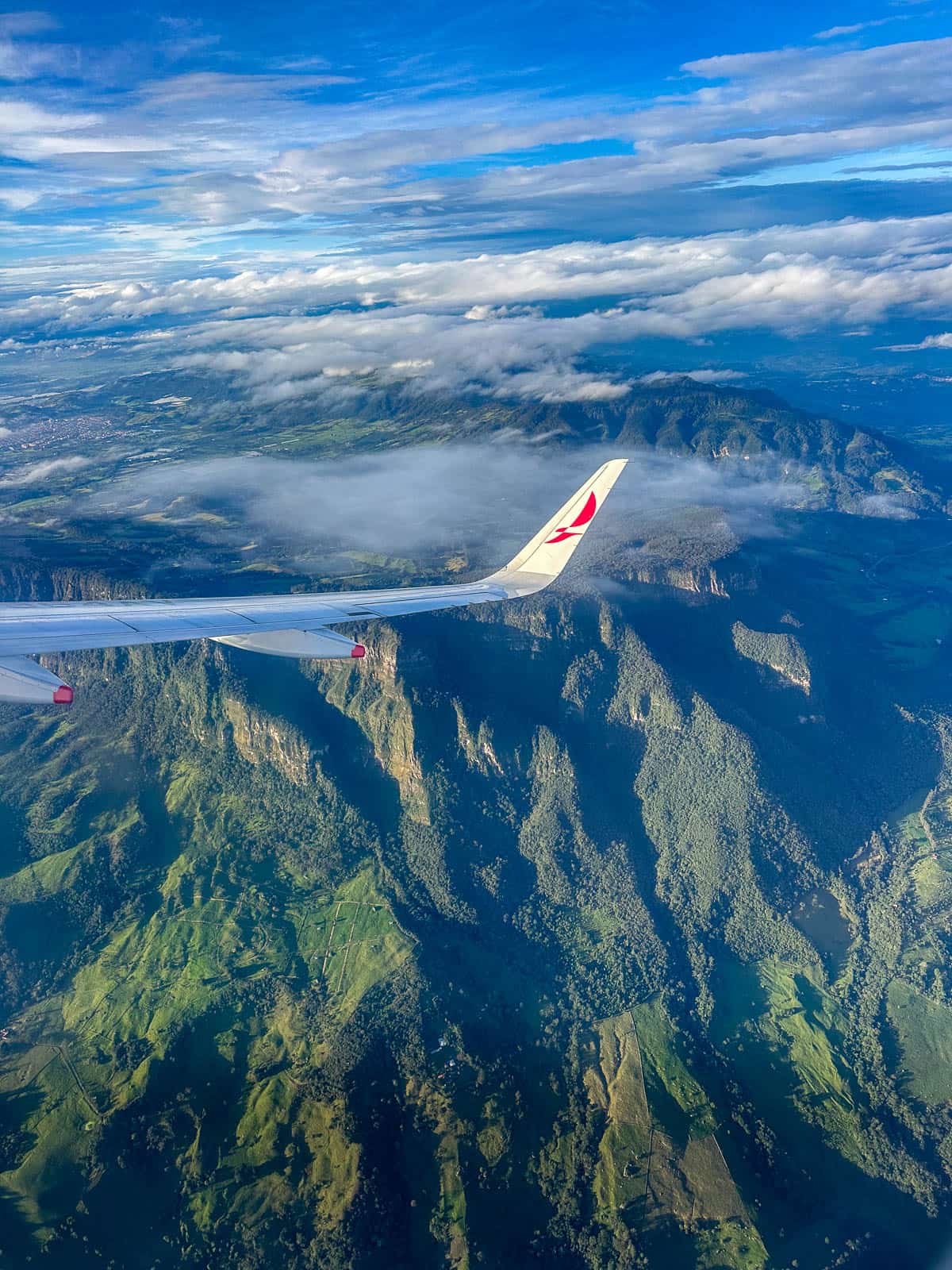
You can fly into El Alto International Airport, which has direct flight to about a dozen cities in South America.
To get from the airport into La Paz itself, you can either grab a taxi, rideshare, bus (e.g., the #212 goes to La Paz’s downtown sector), or a transfer, like this private option or this option.
Bus
Buses are a cheap, safe, and easy way to get around South America, including to La Paz. Justin and I road from the north of Peru, all the way down to Uyuni, solely using buses, and had an almost flawless experience!
Here are some of the cities that you can get to La Paz from:
- Copacabana, Bolivia (four and a half hours away)
- Puno, Peru (6 hours away)
- Cochabamba (6 hours away)
- Sucre, Bolivia (11 hours away)
- Cusco, Peru (14 hours away)
Where to stay in La Paz, Bolivia
La Paz is generally a pretty safe city, if you exercise common sense and street smarts, but I’d definitely recommend trying to be thoughtful of where you book your accommodations. I’d suggest booking in the Zona Centro, which is close to lots of markets and restaurants, or Sopocachi, which is a safe neighborhood with lots of bars and restaurants, but a slightly more residential feel.

Here are some accommodations to consider:
- Illampu Art Boutique Hotel: If you want to be in the center of the action, this boutique hotel is located in Zona Centro and very walkable to the heart of the city. This is also a very modern hotel, with colorful touches of Bolivian textiles and artwork, and spectacular panoramic views of the surrounding skyscrapers.
- Anami Boutique Hotel: Located in Sopacachi (where we stayed during our week in La Paz), this beautiful hotel has an eclectic arty vibe, like you’re staying with your cool Bolivian aunt. The staff here are incredibly friendly, the rooms are spacious and well-maintained, and you get a yummy complimentary breakfast every morning.
- El Museo Boutique Hotel: Also located in Sopacachi, this hotel has lots of thoughtful touches, like complimentary coffee and tea throughout the day, a nice outdoor terrace, and complimentary breakfast, with a wide selection.
We absolutely LOVED this city (honestly, it was probably our favorite city in all of South America)—there are so many cool things to do in La Paz! Do you have any questions about visiting this quirky place? Let us know in the comments below!
