

After traveling all over South America over the course of seven months, I can confidently say that Bolivia was my absolute favorite country on this incredible continent, with a unique culture, warm people, and totally out-of-this-world landscapes. While Bolivia isn’t the most massive country, there’s a TON of cool stuff to do here—you could easily spend months exploring this dynamic and beautiful place. But, if you only have a week to explore the country, we’ve crafted the perfect Bolivia itinerary to squeeze in seeing the best this corner of South America has to offer.

This post may contain affiliate links. If you make a purchase through them, we may receive a small commission, for which we are extremely grateful, at no extra cost to you.
7 Day Bolivia itinerary
Pssst… for the purposes of this Bolivia itinerary, I’m going to assume that you’re flying into La Paz and exploring the country from there. That being said, I know a lot of people (like us!) are traveling around South America for a long period of time and may be coming from some other corner of South America, like from Puno, Peru or the Atacama Desert of Chile.

If that’s the case for you, I’d recommend swapping around some of the destinations. For example, if you’re heading to Bolivia after visiting the Uros Islands in Puno, Peru, I’d suggest catching a bus to Copacabana, then to La Paz, and then to Uyuni. On the other hand, if you’re coming from the Atacama Desert, I’d suggest stopping first to Uyuni, then to La Paz, and finally to Copacabana.

With that in mind, let’s get into it!
Day 1: Explore La Paz, Bolivia
Land at the El Alto International Airport
La Paz, which is the biggest city in Bolivia, is serviced by the El Alto International Airport, located in the neighboring city of El Alto.

To get to downtown La Paz from the airport, you can:
- Grab a taxi or ride share, using inDrive (which is cash only!) or Uber
- Take a bus (e.g., the #212 goes from the airport to La Paz’s downtown sector)
- Take a transfer, like this private option or this option.
Before heading out and exploring La Paz, stop by your hotel to drop off your bags.
Take a walking tour
La Paz is probably the most unique city we’ve ever visited, with an almost unbelievable juxtaposition of shiny new skyscrapers and modern aerial tramways with witch doctors and women wearing traditional cholita outfits.
The best way to immerse yourself in this quirky city is by going on a walking tour, where a knowledgeable local will tell you about the history, politics, and culture of La Paz.
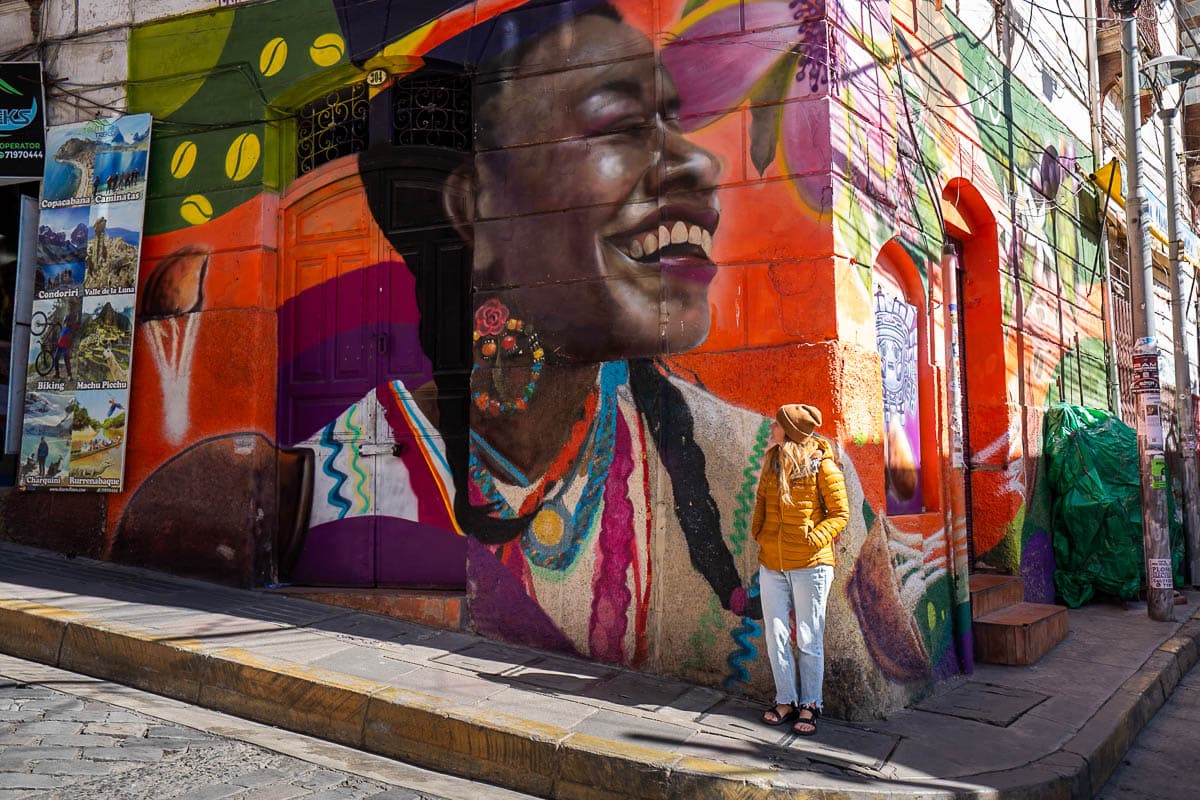
I’d recommend this walking tour, which highlights some of the main destinations in downtown La Paz, including unique sites, like the infamous San Pedro Prison and the Witches Market. You’ll also use the city’s aerial tram system, Mi Teleférico, to head up to El Alto, the neighboring city, which is known for its more traditional Witches Market and the biggest market in all of Bolivia!
Insider tip: La Paz and El Alto are the highest large cities in the world, at up to 13,615 feet above sea level. If you’re coming from another high altitude area, like Bolivia’s neighbor of Peru, the altitude may not bother you, but if this city is your first stop in South America, you might experience the effects of altitude sickness, including headache, fatigue, and difficulty breathing. Be sure to drink plenty of water, lay off the booze, and take it easy the first few days you’re in Bolivia!

Additionally, many parts of Bolivia, including all of the stops on this itinerary, are colder than you might expect, due to its altitude, so be sure to bring plenty of warm layers, including a jacket and hat. It gets downright frosty, especially at night!
Grab food from Mercado Lanza
If you grabbed a late morning tour, you’re probably famished by the time it wraps up. Thankfully, there’s no better place to grab lunch than Mercado Lanza, which is usually a short walk from where most walking tours in the city finish. This market is effectively a four story parking garage, with seemingly endless stalls lining its edges.

While there are books, flowers, and produce sold here, the vast majority of the stalls are dedicated to food, with tiny old ladies stirring enormous pots of soups and several locals crammed along a countertop.
Wander around the market and try some Bolivian cuisine that piques your interest. I really love a big hearty bowl of sopa de mani (peanut soup)—did you know that scientists believe that peanuts actually originated in Bolivia?
Peruse the Witches Market
Most walking tours do a quick drive-by of the Witches Market, so I’d suggest walking a few blocks from Mercado Lanza to be able to poke around at your leisure.
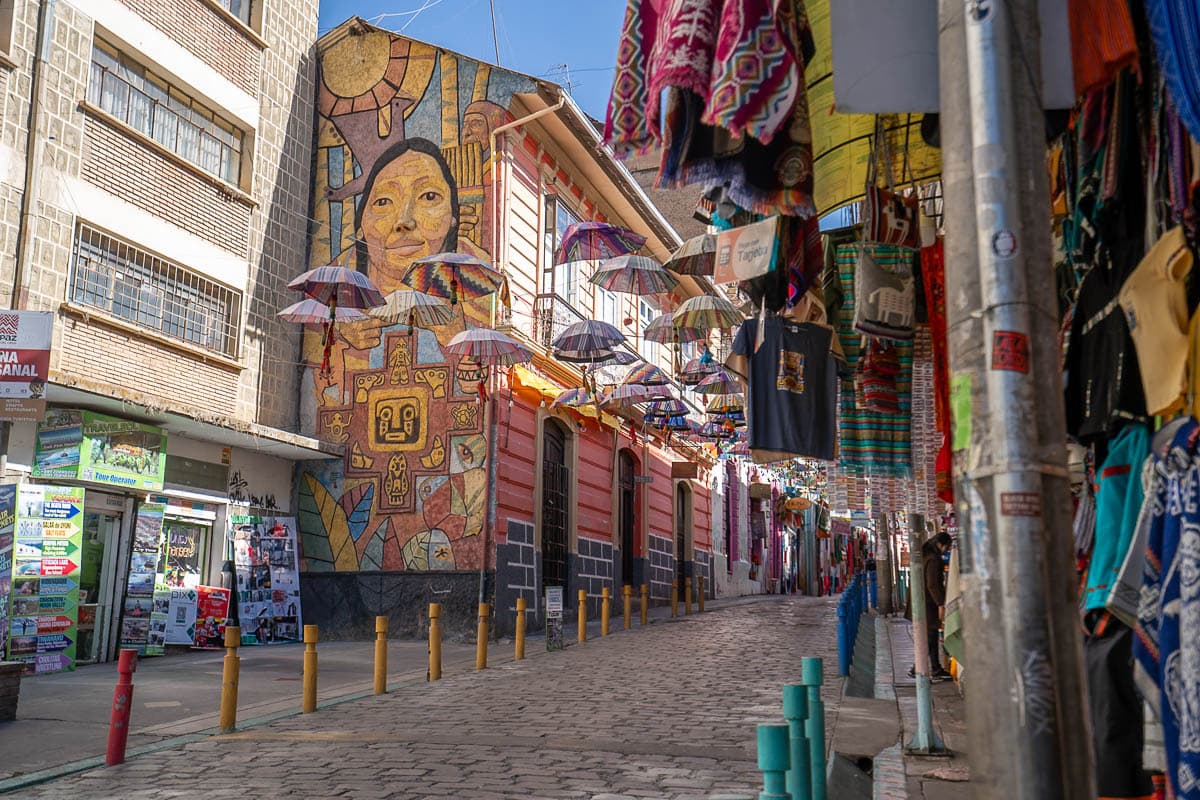
While La Paz is a very modern city, in some respects, Bolivia has some REALLY traditional aspects, from the colorful outfits that cholitas wear to some of the spirituality practices that have been passed down through the Indigenous culture. Many of these practices come from the Aymara or Quechua cultures and involve making cha’llas to Pachamama (offerings to Mother Earth).
This market is where you can get your fortune told by witches and have a “prescription” written for you, regarding what kind of offering you should make to Pachamama. The market, of course, sells such offerings, which can range from pretty standard items, like coca leaves and cigarettes, to more bizarre items, like lacquered frogs and the infamous llama fetuses.

Even if that doesn’t sound like your jam, it’s definitely an interesting neighborhood to wander around to peruse the oddities on display, as well as the colorful murals and souvenir shops, selling every imaginable kind of alpaca and llama textiles.
Ride the Mi Teleférico
La Paz is home to the longest and highest aerial tram system in the world, called Mi Teleférico, and it’s one of the best ways to get around—and see—the city. On each of the tram’s lines, you zip past skyscrapers, over markets, and under the massive mountains that loom around the city.
My husband, Justin, and I spent a whole afternoon riding every line on the Mi Telerifico, and we got to see so many unique things in the city I would have never noticed otherwise. For example, we took the tram over Cementerio General, which is a massive (1.5 miles long!) cemetery, with a maze-like series of mausoleums that are stacked up to three stories tall—I’ve never seen anything like it!

Each ride on a single line costs 3 BOB (around .50 USD), so you can ride around every single line in the city for well under $10 USD!
Grab dinner
La Paz is a great place to try high quality food at an affordable price. Here’s some spots to consider:
- Bolivian Popular Food: Despite its slightly silly name, this upscale restaurant is a must-stop in La Paz, with creative takes on traditional Bolivian food, all beautifully presented.
- Manq’a: Another restaurant that dishes up unique Bolivian dishes, in a bright and cheerful atmosphere—don’t miss the paleta amazónica.
- Phayawi Restaurante: This restaurant is a bit more casual than our other two recommendations, with colorful murals and more traditional renditions of Bolivian dishes.

Where to stay in La Paz
La Paz is generally a safe city, but I’d recommend using your every day common sense and being aware of your surroundings, including choosing a hotel in a neighborhood that’s known for its safety. I’d recommend either staying in the Centro Zona, which is close to tons of restaurants, bars, and restaurants, or Sopocachi, a neighborhood that has a slightly more local, residential vibe, but still has tons of stores, trendy coffee shops, and everything a traveler could ever need. We stayed in Sopocachi and loved it—we felt safe and had tons of restaurants and shops within walking distance.

Here are some places I’d recommend staying:
- Illampu Art Boutique Hotel: This is my favorite hotel in La Paz, located in the heart of the Zona Centro, with endless options of places to eat and drink surrounding it. This boutique hotel had done an excellent job balancing having a modern interior, while still feeling cozy, with Bolivian artwork, plus an incredible view of the surrounding skyline to boot.
- Anami Boutique Hotel: This boutique hotel is located in Sopacachi and has a fun vintage, artsy vibe, while still having updated and modern amenities. The staff here will go above and beyond to make sure you enjoy your stay in the city, plus there’s a tasty complimentary breakfast waiting for you every morning.
- El Museo Boutique Hotel: This hotel is tucked away in a quiet area of Sopacachi, with a nice outdoor terrace to soak up the sun in; spacious rooms; and a fantastic complimentary breakfast.
Day 2: Valle de la Luna, Valle de las Animas, and Cholita Wrestling
Valle de la Luna
Grab breakfast at your hotel and head to the Valle de la Luna, a unique valley that’s located just 10 km outside of La Paz. Here, the clay-like earth has eroded away into jagged spires that jut dramatically out of the earth. The park’s name translates to Moon Valley—local lore actually holds that Neil Armstrong himself visited this park and was responsible for naming its lunar landscape.

There are two easy hiking trails here that weave through these cathedral-like rock formations and rugged spires, both of which lead to viewpoints overlooking the valley below.
To get to Valle de la Luna, I’d suggest taking a taxi/rideshare or, alternatively, consider booking a tour, like this option, which will also take you to Valle de las Animas (the next stop on our Bolivia itinerary!) and Mirador de Killi Killi, which offers epic views over the skyscrapers of La Paz.
Lunch
If you’re hungry, there’s a handful of modest restaurants around Valle de la Luna to grab some authentic Bolivian food for lunch, like Doña Julita Restaurante, Restaurant el Jardín del Tata Santiago, or ENAY PUEJ Restaurant.
Valle de la Animas
This valley offers a similar landscape to Valle de la Luna, but, in my opinion, is even MORE dramatic, with taller and more needle-like spires. Plus, it’s a bit more off-the-beaten path than the Moon Valley, so you have a good chance of having it mostly to yourself!
Valle de la Animas translates to “Valley of the Souls”, given that the Indigenous people here once believed that humans’ souls were petrified in each of the spires. While I certainly hope there are no souls eternally trapped here, the landscape here does have an otherworldly, ethereal quality to it, thanks to its deep gorges, craggy formations, and the epic views of Illimani, the tallest mountain in all of Bolivia.
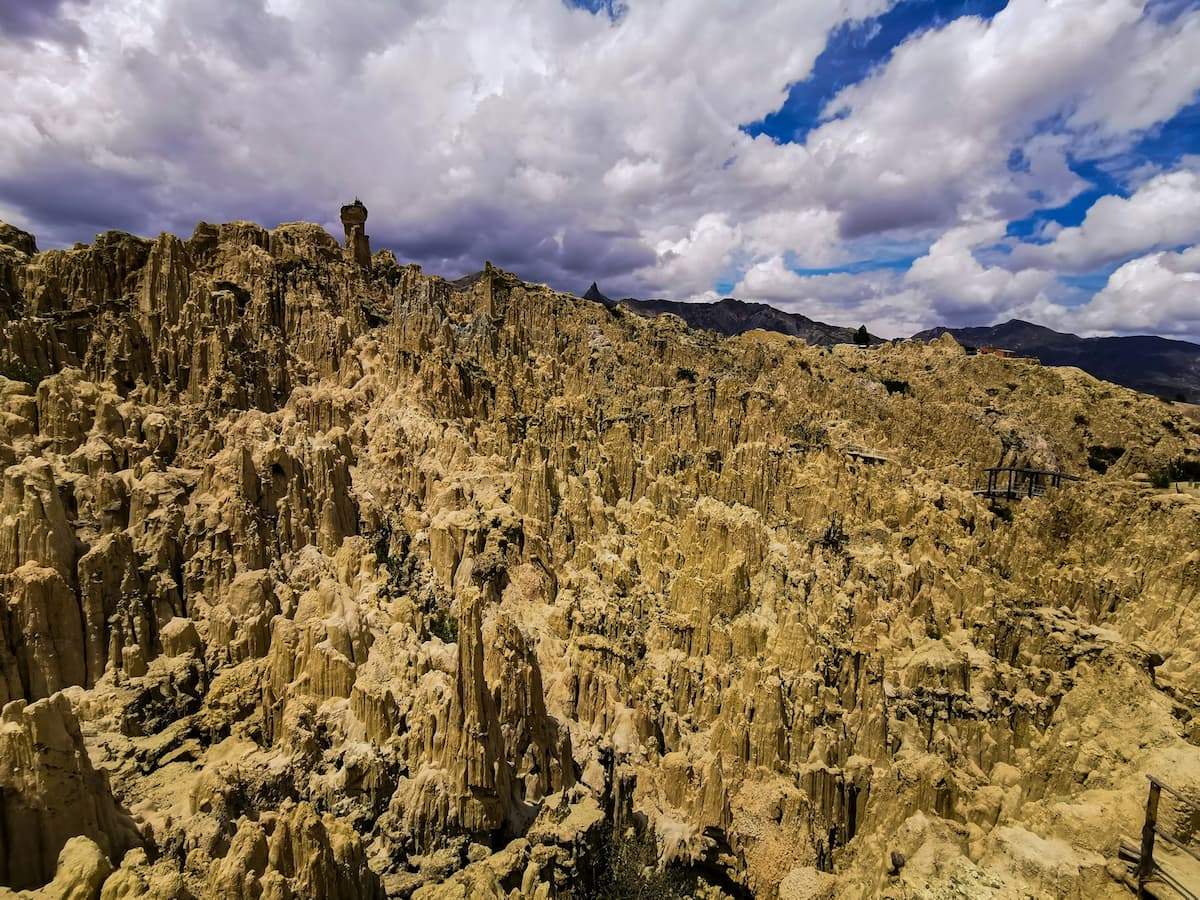
There are also two walking paths here that offer jaw-dropping perspectives of the surrounding rock formations and that lead to overlooks of the park’s craggy spires.
Again, Valle de la Animas is located pretty close to La Paz, about a 45 minute drive from its downtown area. Accordingly, you can either get there via taxi/rideshare or the tour recommended above.
Cholita Wrestling
Alright, it’s time to experience one of the quirkiest things to do in La Paz—cholita wrestling!
The term “cholitas” refers to Indigenous Bolivian women, typically of Aymara or Quechua descent, that dress in traditional garb. This clothing typically includes polleras, which are voluminous skirts that are worn over several layers of petticoats and bombins, the iconic bowler hats that were originally brought to the country by British railroad workers in the early 20th century but adopted by Bolivian women as a symbol of cultural pride. The word “cholita” was once actually used as a derogatory term, but was reclaimed by Bolivian women as a symbol of their cultural pride.

So cholita wrestling is exactly what you probably imagine it is—two cholitas facing off in the wrestling ring, complete with all of the overdramatic antics that you’d expect from a WWE match, like body slamming, pulling each other’s hair, and spitting beer in one another’s faces. It’s as ridiculously awesome and awesomely ridiculous as it sounds!
These shows, which typically last for about two hours, are held every Thursday and Sunday in a sketchier area of El Alto. I’d suggest taking a tour here, like this option or this option,, which includes your roundtrip transport to the show, tickets, and even popcorn to enjoy during the show. I honestly think booking a tour winds up being considerably cheaper than getting there independently, considering the price of the tickets and a taxi or Uber to and from the theater.
Dinner
You likely won’t get back to La Paz until 9 PM or so, so I’d suggest just grabbing a quick dinner near your hotel.
Day 3: Death Road
Biking down Death Road
One of the most popular activities in La Paz also has a pretty somber history.
North Yungas Road, which snakes 50 miles through dense jungles and along sheer cliffsides from the Yungas region of Bolivia to La Paz, earned the intense nickname “Death Road” and the title “The Most Dangerous Road in the World”, thanks to the shocking number of fatalities it caused annually. Due to the road’s narrow and windy nature and its steep drop-offs, up to 300 people perished each year while driving on it.

Thankfully, a more modern and safer alternative was built in recent years, with the original road now mostly used by adventurous visitors, looking to bike down its curves. Along the way, you’ll get stunning views of the Andes Mountains, the country’s impossibly lush jungles, and even bike your way under waterfalls.
With up to 25,000 tourists biking the road every year, it’s worth mentioning that it’s no longer anywhere near as dangerous as it once was, so long as you bike at a reasonable speed and avoid biking in wet conditions.
Still, you’ll need to go with an operator, who can provide gear and knowledgeable guides who can point out sections to be especially careful around. With that in mind, this isn’t an activity that I’d recommend going with the cheapest possible tour operator, as they may not do the best job of purchasing quality gear or regularly maintaining their equipment.

This tour and this tour, both of which are all-day, do a good job of balancing providing a safe environment and great gear, while still offering a fun and thrilling experience.
Day 4: Day trip to Copacabana and head to Uyuni
Day trip to Copacabana
Bolivia borders Lake Titicaca, a massive body of water that sprawls an eye-popping 3,200 square miles and has a host of impressive titles, including the highest navigable lake in South America. And, perhaps more importantly, it’s actually believed to be the birthplace of the entire Inca civilization.

If you want to see Lake Titicaca for yourself, you can easily visit the tiny town of Copacabana, which sits on its shores, as a day trip from La Paz.
Copacabana’s biggest draw is Isla del Sol, a nearby island that’s believed to be where the most important Inca god, Inti, was born, and thus, is largely considered to be THE birthplace of the Inca civilization. The island is home to some of the oldest Inca ruins on the planet, as well as a number of remote fishing villages.
In addition to Isla del Sol, there are other things to keep you busy in Copacabana for a day, including an authentic local market and enjoying the waters of the lake, like kayaking or stand-up paddleboarding.
Public boat departures from Copacabana to Isla del Sol are quite limited and don’t line up with the bus schedule from La Paz. Accordingly, if you’re hoping to explore the island during your day trip from La Paz, you’ll need to go on an organized tour, like this daytrip option, which will take care of your roundtrip transportation to the island.

Alternatively, if you just want to wander around Copacabana for a bit, you can take a four and a half hour bus there yourself and explore the small town for the day. We wrote a whole article about visiting Copacabana with everything you need to know, including things to get up to in this tiny town and where to eat.
Take an overnight bus to Uyuni
While La Paz is an incredible city, it’s actually not the most popular destination in Bolivia—that title goes to the Uyuni Salt Flats (otherwise known as the biggest salt flats in the world!).
The salt flats are SUPER cool and are actually so large that they can be seen from space, but, beyond them, the area surrounding Uyuni is home to some of the planet’s most otherworldly scenery, from steamy hot springs and boiling geysers to technicolor lagoons and alien rock formations. In my opinion, it’s a MUST visit while you’re in Bolivia!

The city of Uyuni is an eight and a half hour drive south of La Paz and is typically reached with an overnight bus.
You can do this by joining a tour from La Paz, which will take care of your transportation to, from, and around Uyuni and typically ranges in length from a simple day trip to several days at a time (just make sure you’ll be back in time from Copacabana to catch your bus to Uyuni!).
I’d recommend booking a three day tour (i.e., with an overnight bus from La Paz, with three full days to explore Uyuni and then another overnight bus back to the city). This is exactly what Justin and I did (this is the tour that we did) and we got to see SO many amazing things within that three day timeframe–it was hands-down one of the biggest highlights of our seven months in South America!
Alternatively, it’s simple to book your own transportation down to Uyuni on an overnight bus from the city.
Once you’re in Uyuni, if you want to see the main attractions in the surrounding salt flats and desert, you’ll need to join a tour, given that the sites are incredibly spread out and oftentimes located in the middle of nowhere, with literally no roads, gas stations, or other infrastructure around for hundreds of miles. Here’s a great choice of a three day tour of the salt flats and surrounding desert from Uyuni, if you’d prefer to get down to the city independently.
Days 5-7: Take a three day tour around the Uyuni Salt Flats
Three day tour around the Uyuni Salt Flats
The rest of your time in Bolivia will be spent exploring the Uyuni Salt Flats and the surrounding desert.
While tours obviously vary a bit and may change depending on weather or other conditions, most of the three day options in this area offer a pretty similar itinerary, covering the most popular things to do in Uyuni.
Here are the basics of what you can expect:
- Day 1: Exploring the Uyuni Salt Flats themselves. This typically includes getting the requisite ridiculous photos that play with the flats’ unique depth of field and perspective and watching sunset over a flooded area of the flats, which creates the world’s largest natural mirror.
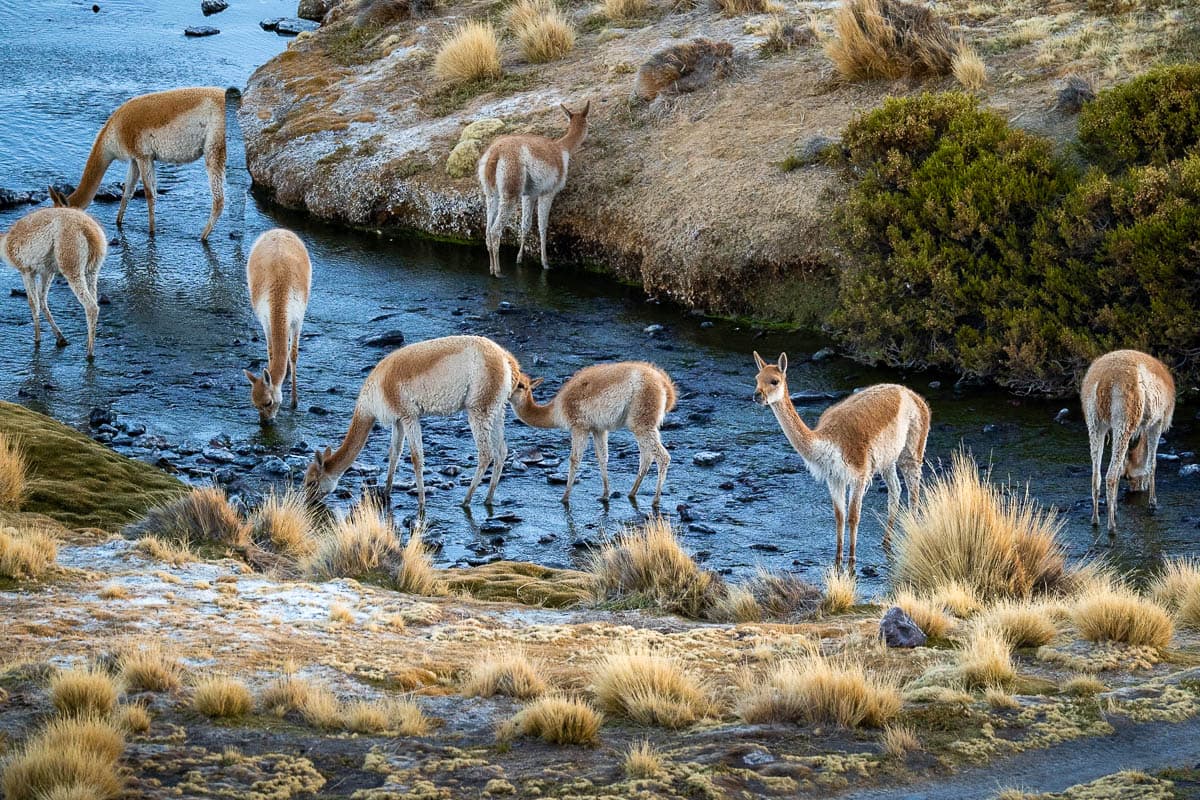
- Day 2: Seeing the Reserva Nacional de Fauna Andina Eduardo Avaroa and the surrounding desert, which is home to several vibrantly colored salt lagoons that attract flamingoes and vicuñas, plus other unique creatures, like chinchillas
- Day 3: Enjoying some of the geothermal features in the southern part of Bolivia, like walking through the steam of the geysers at Sol de Mañana or soaking in the Polques Hot Springs, and then driving back to Uyuni to board the bus back to La Paz in the evening.
Most Uyuni Salt Flats tours, like this three day tour from La Paz or this three day tour from Uyuni, will include your meals, transportation, and accommodations while you’re exploring the salt flats. All you have to do is show up and let your guide take the wheel (quite literally!).

Once your Uyuni tour is over, if you’ve opted for a tour that departs directly from La Paz, your operator will arrange for your transportation from La Paz’s bus station either back to your hotel in the city or to the El Alto International Airport.
Otherwise, if you’ve traveled independently, Uyuni has its own airport, Joya Andina Airport, which you can use to fly home or on to your next destination.
I hope this Bolivia itinerary helps you plan your trip to this incredible country! Do you have any questions about visiting Bolivia? Let us know in the comments below!
