

Iceland is a country that was built for road trips, with seemingly endless hikes, waterfalls, and hidden beaches to explore. One of the most popular ways to travel around Iceland is by renting a campervan, using an adventure mobile to serve as your accommodations AND transportation during your time in the country.
My husband, Justin, and I recently traveled for two weeks around Iceland in a campervan and found out, firsthand, ALL of the highs and lows of exploring this unique country this way, from showering on the road to cooking food on the go. If you’re considering traveling around Iceland in a campervan, here’s everything to know, from the pros and cons of exploring this stunning country with this form of transportation to things I wish I knew before we rented ours.

This post may contain affiliate links. If you make a purchase through them, we may receive a small commission, for which we are extremely grateful, at no extra cost to you.
Our Experience Renting a Campervan
Before diving into everything we learned about traveling around Iceland in a campervan, I thought it would be helpful to share a bit of background on how we explored the country in our home on wheels.
We had previously visited Iceland in 2018 for a long weekend, basing ourselves in Reykjavik, and yearned for the day that we could come back to the country to explore it more deeply. In 2025, the stars aligned for us, as we were departing from Reykjavik for a two week cruise to Greenland and decided to hang out in the country, after the cruise, for a full two week trip around the Ring Road, which circumnavigates the entire island country.

After doing a TON of research, we wound up renting from Happy Campers, based on their positive reviews, affordable prices, and thoughtful amenities (i.e., heater that pulls from the gas tank and unlimited Wifi hotspot).
We wrote a whole Happy Campers review, but, in a nutshell, we were really pleased with our experience with them. They’re clearly experts at what they do and anticipated everything we could possibly need while on the road, from lots of cozy blankets and sheets for our bed to pretty much every kind of kitchen utensil you could think of (e.g., can opener, spatula, everything you could ever need!).
Over the course of our two weeks in Iceland, we hit as many hot springs, waterfalls, hikes, viewpoints, beaches, and tiny fishing villages as we could squeeze in. We DEFINITELY had some problems along the way (e.g., Iceland decided to downpour and have low-hanging clouds for basically the entire two weeks we were there), but also had an opportunity to really dive in and more deeply experience Iceland—which was our goal!
Should you get a campervan to travel around Iceland?
Iceland is one of the best countries in the world to travel around via campervan. There’s tons of infrastructure, like campsites, gas stations, and campervan-friendly parking lots, located throughout the country, making this the perfect country to dip your toe into RVing.

That being said, this article is not intended to convince you that you should explore Iceland in a campervan. There are some travelers that I think will LOVE exploring the country this way—e.g., adventurous travelers that want flexibility to explore the country as they see fit—and those who would decidedly not love it—e.g., those who prefer a more luxurious experience.
In this article, we’re going to delve into the biggest pros and cons of exploring Iceland in a campervan and some things that I wish I knew before our road trip here that will hopefully help you decide whether it’s the right choice for you. We also have the unique perspective of people who live and travel full-time in an RV around the U.S. and Canada, so we’re intimately familiar with the highs and lows of traveling in a campervan more generally.
Pros of renting a campervan in Iceland
So, our experience of traveling around Iceland in a campervan was overall pretty positive and, in my opinion, better than using an Airbnb or hotel as a homebase. Let’s get into some of the perks of using a campervan here.
1. You’ll have more flexibility.
In our experience, the best aspect of having a campervan in Iceland is that you’ll have WAY more flexibility with your itinerary and schedule than if you’re beholden to staying in a particular Airbnb or hotel every night.

To be clear, you are not allowed to camp just anywhere in Iceland—and, in fact, can be fined more than $2,000 USD for wild camping. However, there are literally HUNDREDS of campgrounds sprinkled around Iceland—so many that it’s unnecessary to make a reservation at any of them, as it’s extremely unlikely they’ll run out of space.
Accordingly, if you need to shift around your travel plans—like if it downpoured on the day you were planning on doing an epic hike or you unexpectedly drive to a certain area of the country that’s having a crazy showing of the Northern Lights—you can effortlessly change where you’re staying at the drop of a hat. You simply just show up at the end of the night at a campground that’s best suited to your new plans—and that’s it!

During our most recent trip to Iceland, nothing really went to plan—Justin got really sick during the first couple of days we were in the campervan, and we got really unlucky with the weather for the majority of our trip. Our time in the country still wasn’t perfect, but it was definitely a LOT easier to skip certain areas or wait around others in hopes that the weather would clear up, without being tied to any specific accommodations each night.
2. It can be cheaper.
Okay, I’m going to be totally upfront and say that renting a campervan in Iceland isn’t always going to be cheaper than renting a more traditional accommodation and hiring a car, as there’s way too many variables to make a sweeping statement about which of these options is cheaper.
For example, the cheapest hostel dorm room and rental car you can find in Iceland is likely cheaper than the collective cost of even the cheapest campervan rental and campgrounds.

That being said, smaller campervans can definitely be more affordable than staying at mid-range hotels, which typically run around $200-250 per night, and hiring a rental car, which is typically around $50-100 USD per day.
Plus, you can usually save money in other ways with a campervan. For example, you can more easily cook your own meals while you’re on the go, instead of being forced to to eat out all the time (which REALLY adds up in Iceland). Additionally, you may use less gas, given you can usually find campgrounds really close to the attractions you’re visiting, instead of driving back and forth from a centralized base, like Reykjavik.
3. Because you can stay closer to most attractions, it’s easier to be the first person at a popular site.
You know how, on social media, you’ll see some woman running in front of a stunning waterfall or along a beautiful ridgeline in Iceland, with no one else in sight? Yeah, there’s a pretty good chance she and her Instagram husband got to that site at 5 AM, before anyone else is around.

Nobody really wants to wake up at 5 AM to get pretty photos, but, if you have a campervan, you do have a HUGE leg up as compared to most people who are staying in a regular ol’ hotel or Airbnb.
If you’re headed to a super popular place where you’d like to get photos or videos sans a billion other tourists, it’s pretty easy to find a campground nearby, park up for the night, and head there bright and early. I guarantee you’ll beat almost everyone that’s got to drive there all the way from Reykjavik!
For example, we booked the earliest tour in the morning to snorkel at Silfra in Thingvellir National Park, so that we didn’t have to wait in line for hours behind tons of other tour groups in our uncomfortable drysuits. So, the night before, we camped at Camping Thingvellir, right outside of the national park, and were able to drive less than five minutes to meet up with our tour group at 8:30 AM. SO much more convenient than having to drive over an hour from Reykjavik.
4. It’s easier to meet fellow travelers.
If you’re looking to meet fellow travelers on the road, campgrounds often have common areas, like kitchens, dining rooms, or lounges, where it’s usually pretty easy to strike up a conversation with some of the other guests.

One of my favorite memories of our recent trip to Iceland was at the Sæberg Hostel and Campground, in their hot spring, overlooking a nearby bay, and chatting with travelers from all over the world and hearing about their experiences in the country.
You may get similar experiences at hotels with shared public areas, like a hot tub or bar, but I imagine you have a better chance at campgrounds, given campers’ tiny living quarters and more adventurous spirit.
5. There are more creature comforts than a tent.
You might notice that most of these advantages are not unique to campervanning and could as easily apply to camping in general—i.e., staying in a tent.

While most campervans are inarguably not as comfortable as a hotel room (e.g., a smaller bed and less storage), they’re definitely WAY more comfortable than a tent. Most campervans have batteries that you can use to charge your electronics, a cushy mattress, a simple cooking setup, and, at a minimum, a dry place to sleep—I can’t IMAGINE sleeping in and packing up a soggy tent in the midst of all of the rainy weather during our last trip.
Plus, certain campervans might even have more than the bare minimum creature comforts. For example, Happy Camper campervans have a built-in gasoline-fueled heater that kept us nice and toasty every night!
Cons of renting a campervan in Iceland
1. It isn’t going to be as comfortable as a hotel or Airbnb.
Traveling around Iceland in a campervan can be reasonably comfortable—but, to be totally transparent, you are going to have to make some sacrifices in order to get around in your home-on-wheels.
For example, unless you get a larger RV, there won’t be a toilet or shower in your rig, meaning you’ll have to walk from your campervan to a campsite’s bathroom facilities anytime you need to use it. As another example, Justin and I were reasonably comfortable on the bed in our campervan, but definitely on the squished side—so, if you’re someone that needs a bit of breathing room while you’re sleeping, a small campervan may be a challenge for you.

Even the cheapest hotels usually have shared indoor toilets and showers and beds that are large enough to freely turn over if you feel like it—which may not be the case with the more affordable campervans in Iceland.
Because of the smaller and more uncomfortable space (and really, Cons #2 and #3 listed below, as well), I don’t think I’d generally recommend most families, especially with little kids, travel via campervan.
I’m sure it would be totally doable for some laidback kids that are good at adapting, especially if you can swing getting a bigger campervan. However, I think, in most instances, it would be easier to travel with kiddos in Iceland in a more traditional manner, using a hotel as a homebase and using a rental car to explore the country.
2. You can’t just leave in the morning.
If you’re staying in a hotel room, you can just leave whenever you want and abandon your toothbrush by the sink and a half-full coffee cup on your bedside table.
Not so, in a campervan—before you leave every day, you have to make sure everything is tucked away, organized, and tidy or it will wind up flying all over your campervan as you’re driving.

Same thing when you get to a campsite. In most smaller campervans, you’ll have to convert the space into your sleeping configuration. It usually doesn’t take longer than ten or so minutes, but, after a long day out exploring, it’s not always the most fun to have to shuffle around all of your stuff so that you can make your bed.
Speaking of shuffling, be prepared to do a LOT of it if you have a smaller campervan. If you don’t have sufficient storage space for your luggage or items that the rental company gives you, like extra blankets or bedding, you’ll spend a decent amount of time moving items to the front or back of the car, depending on where you need space. It may not sound like that big of a deal, but it can get pretty annoying, especially if you’re on a longer trip or you’re contending with nasty weather.
3. You’ll have a small space in the event of inclement weather.
Most campervans are on the smaller side, so, if you get unlucky with crappy weather, you’ll be stuck hanging out on an uncomfortable sofa bed, with extremely limited space and electricity.
Obviously, you don’t have to just hang out in your campervan if there’s gross weather, but, outside of the southwestern coastline of Iceland, there are limited coffee shops or cafes, where you can wait out nasty conditions. Some campgrounds have public spaces you can hang out in, but, of the ones that have indoor options, they’re often closed during the middle of the day.

Perhaps I’m just traumatized by our recent experience in Iceland, with the nonstop blustery rain, but having a tiny campervan as our homebase wasn’t the most comfortable or convenient place to hang out during all of the nasty weather we experienced.
4. Charging electronics can be a challenge.
Most campervans are equipped with a couple of 12V outlets and may have some USB-A or USB-C ports in the living quarters. Still, if you travel with much more than a cell phone, it can be a struggle to charge your devices, given the limitations on the outlets and power.
Justin and I probably have more electronics than most—as content creators, we have two cameras, a gimbal, a drone, an Insta360, two cell phones, and two laptops that we regularly used during our Iceland road trip.

Our Happy Camper campervan had a reasonably sized battery and we rented an inverter from them, to make charging our electronics with the 12V outlets easier. Still, it was always a bit of a headache, rotating which electronics needed to be charged on the one available outlet. And, if we needed to charge up our laptops for any extended period of time, the campervan’s battery wasn’t able to keep up with the power demand, meaning we’d have to turn on the van (and waste gas) to charge it back up.
Many campgrounds have outlets available in their public spaces so that you can charge devices, if needed, but there are usually way more people that want to use them as compared to available outlets. Plus, unless you feel comfortable leaving your device by itself while it charges, you just kind of need to hang out near it, which isn’t always the most ideal.
5. It can be more expensive than renting a hotel or Airbnb.
As mentioned above, the cost of campervan rentals varies widely, depending on the season and the type of campervan.
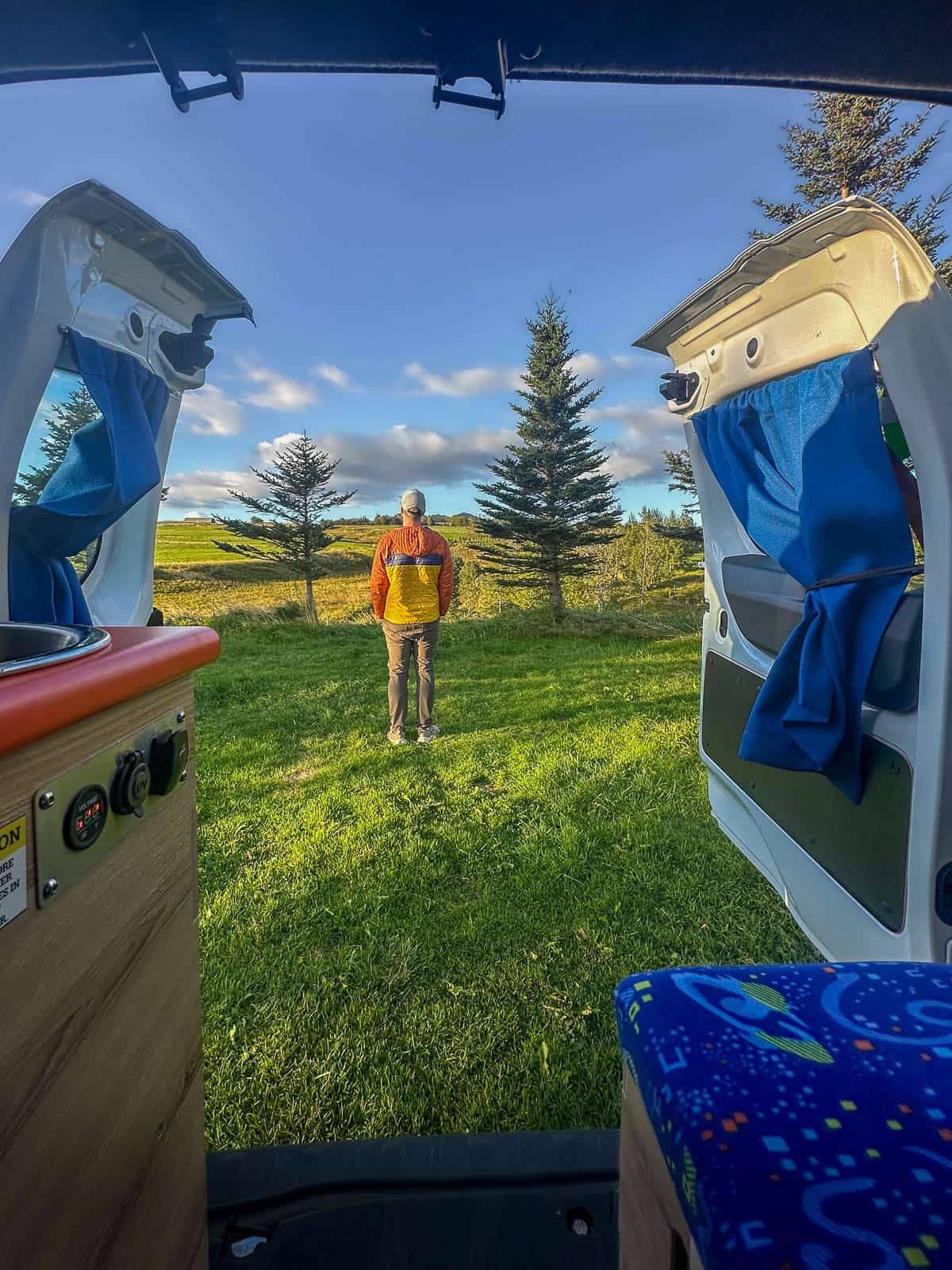
For example, you may be able to find a small campervan for around $50 USD per day during the slower winter season. On the other end of the spectrum, we were visiting Iceland in early September (which isn’t even THE most popular time to travel there) and were unable to find a campervan with 4WD (which you need to drive on the unpaved roads that access the Highlands of Iceland) that was less than $500 USD per day!
We wound up selecting the cheapest and smallest campervan that Happy Campers had, which still cost around $120 USD per day once we purchased insurance, and spent around $45 per night on campgrounds.
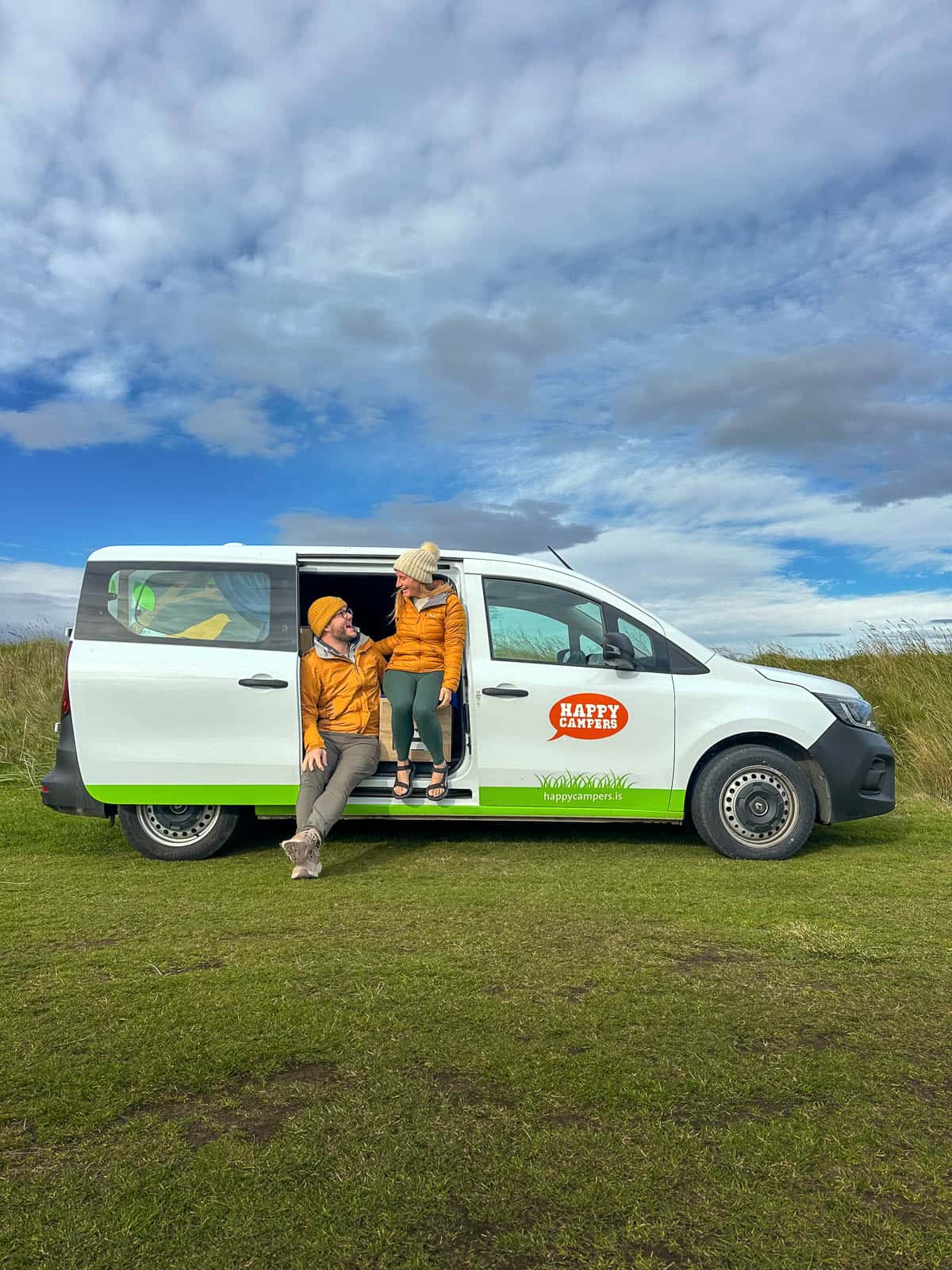
This is almost certainly more affordable than the collective cost of most hotels and rental cars in Iceland, but, if we had went with the option that we actually wanted (i.e., their largest model with 4WD), we would have easily spent over $600 USD per day, between the campervan rental, insurance, and campgrounds. For a vehicle that doesn’t have a toilet or shower in it, that’s pretty steep, if you ask me!
Things I Wish I Knew Before Renting a Campervan in Iceland
1. Campervanning is not a one size fits all experience.
What you need in a campervan for your trip around Iceland may not be the same as me and Justin or some random poster you saw on Reddit.
Justin and I were REALLY on the fence between renting from Happy Campers or another slightly cheaper rental company that had heaters that required electrical hook-ups in their campervans. We had friends that traveled around Iceland in a campervan right before us, who told us that they never used the heater in their van once and that it wasn’t something we should worry about.

For whatever reason, my gut told me to go with Happy Campers—and I’m so glad we did. We needed to use the heater in our van every single night. And, while we could’ve used the electric heater in the cheaper alternative, we would’ve been way more limited in the campgrounds and campsites that we chose and paid WAY more for sites with electrical hookups.
I say all this to encourage you to research the time of year that you’re visiting Iceland and what you’re hoping to experience during your trip. What’s the temperature going to be like? Do you want to drive to the Highlands? Do you have a lot of electronics you need to charge? What about mobility issues? Do you mind using electrical hook-ups, if need be?

Campervanning is seriously such a fun and immersive way to explore Iceland, but, if you don’t rent a campervan that meets your needs, you may have a less than ideal experience.
2. Campgrounds can be really expensive.
As mentioned above, Justin and I actually live and travel full-time in an RV around the United States and Canada, and thought we were familiar with all of the different flavors of campgrounds out there. But campsites in Iceland are totally different from the ones we’ve stayed in at home.
In the campsites we’re accustomed to, you pay a flat nightly rate for a campsite—usually between $20-40 for a non-electrical site and $50-100 (or more, in popular locations) for nicer campsites with hook-ups and other amenities.

In Iceland, on the other hand, you pay per person per night—usually, somewhere between $15-40 for non-electrical sites. This provides you a camping spot in an open field and access to the campground’s amenities, which usually includes a bathroom, potable water, and basic cooking facilities. Most campgrounds have warm showers, although some charge extra for them (usually, no more than around $5 USD per shower).
Electrical hookups are usually an extra $10-25 USD per night.
Some campgrounds in Iceland are REALLY cool. For example, Pakgil, near the town of Vik, is stunningly beautiful and has this cool dining room in a natural cave that’s lit up by a wood-burning fireplace and dozens of candles at night (it’s as magical as it sounds!) or the aforementioned Sæberg Campground, which has a two-tired hot spring that overlooks the neighboring bay.

Most of them, though, are just fine—perfectly adequate places to sleep, go to the bathroom, and maybe shower for the night, but are SHOCKINGLY expensive for what you get (in my opinion, anyway!). For example, we stayed at the Skaftafell Campground in Vatnajökull National Park, which was fine, but didn’t have any particularly note-worthy amenities. I was horrified when I had to pay the park ranger close to $75 USD for the two of us for our campsite—basically, just a glorified parking spot in a big grassy field.
Depending on where you are in the country, you may have a handful of different campgrounds to choose from, so you can pick the one that best fits your budget or offers the amenities you need. But there are other spots where you’re just going to have to suck it up and pay for that $75 USD for a campsite—so just be sure to budget appropriately!
3. Gas is REALLY expensive
Continuing on the expensive theme, one thing to consider is fuel economy.
Gas and diesel are PRICEY in Iceland—typically around $8-10 USD per gallon. Accordingly, a bigger campervan may be more comfortable, but it’s also likely to be pricier, both in terms of its rental cost and the amount of gas that has to be put into it.

We wound up spending about $800 USD on gas for our two week Ring Road trip in a pretty tiny campervan. So, if you wind up renting a more beefy model, I’d suggest budgeting at least $1,000 (and, honestly, probably even more!) for fuel.
4. Bring a decent eyemask and ear plugs
If you visit during the summer months, Iceland’s northerly location results in the country enjoying the Midnight Sun, with near 24 hours of daylight around the summer solstice. This is AWESOME for long hours of daylight to go out and explore and sunsets that seem to last for hours and hours—but it’s not so good for getting sleep, especially with the flimsy curtains that most campervan companies provide.

Accordingly, I’d strongly recommend bringing a solid sleeping mask to help get better shut-eye and, while you’re at it, some earplugs. People are coming and going from campgrounds at all hours of the night, so having something to block out the noise can definitely be helpful when you’re trying to sleep.
5. Google Maps is your friend in finding campgrounds
Before campervanning around Iceland, I heard TONS of people recommend relying on Happy Campers’ Campsite Map to find campgrounds around the country. This map is a free resource, which lists many of the campgrounds around Iceland, with helpful information, like what kind of amenities the properties have and if they’re subject to seasonal closures.
While I think their map is helpful, I found a lot of the information out-of-date and inaccurate—we’d often show up to sites that were close to double the price that was listed on Happy Campers’ map and noticed that many campgrounds were missing from it.

Instead, we mainly relied on Google Maps (i.e., searching in the area where we needed accommodations for the term “campground” and looking through recent reviews). iOverlander is another app that we frequently use in the U.S. and Canada that’s also helpful in Iceland, although, in our experience, many of the reviews and information are outdated as well.
Google Maps, FTW!
I hope you have a better idea of what it’s like to travel around Iceland in a campervan—it can be incredibly magical, but also has some serious drawbacks. Do you have any questions about trying vanlife in Iceland? Let us know in the comments below!
