

Point Reyes National Seashore is an absolute hidden gem, offering over 71,000 acres of windswept bluffs, seemingly endless rugged cliffs, and abundant wildlife. Located just an hour north of San Francisco, Point Reyes is the only national seashore in California and serves as the perfect coastal getaway, whether you’re looking for a day hike or to enjoy a disconnected weekend.
My husband, Justin, and I recently spent several days exploring this stunning preserve while we were driving the iconic Highway One. Here are 10 incredible things to do in Point Reyes National Seashore, one of the most spectacular places along the Northern California coast.
This post may contain affiliate links. If you make a purchase through them, we may receive a small commission, for which we are extremely grateful, at no extra cost to you.
Things to do in Point Reyes National Seashore
1. See the elephant seals at Drakes Beach
Point Reyes is home to a whopping 1,500 species of plants and animals, including the northern elephant seal. They’re the second largest seal species on the planet, weighing up to 5,100 pounds!
The California coast has several spots that are iconic for seeing these goofy-looking creatures, including Piedras Blancas Elephant Seal Rookery and Año Nuevo State Park.

But Point Reyes’ population at Drakes Beach is impressive, in its own right! You can see the seals here year round, but the colony is especially impressive in January and February, when up to 600 seals migrate to the beach for mating and pupping season.
During this timeframe, direct beach access is prohibited, but you can observe the seals from either the beach’s parking lot or from the Kenneth C. Patrick Visitor Center. We visited in March, which is well past the peak season here, but still saw dozens of elephant seals, snoozing on the sand.
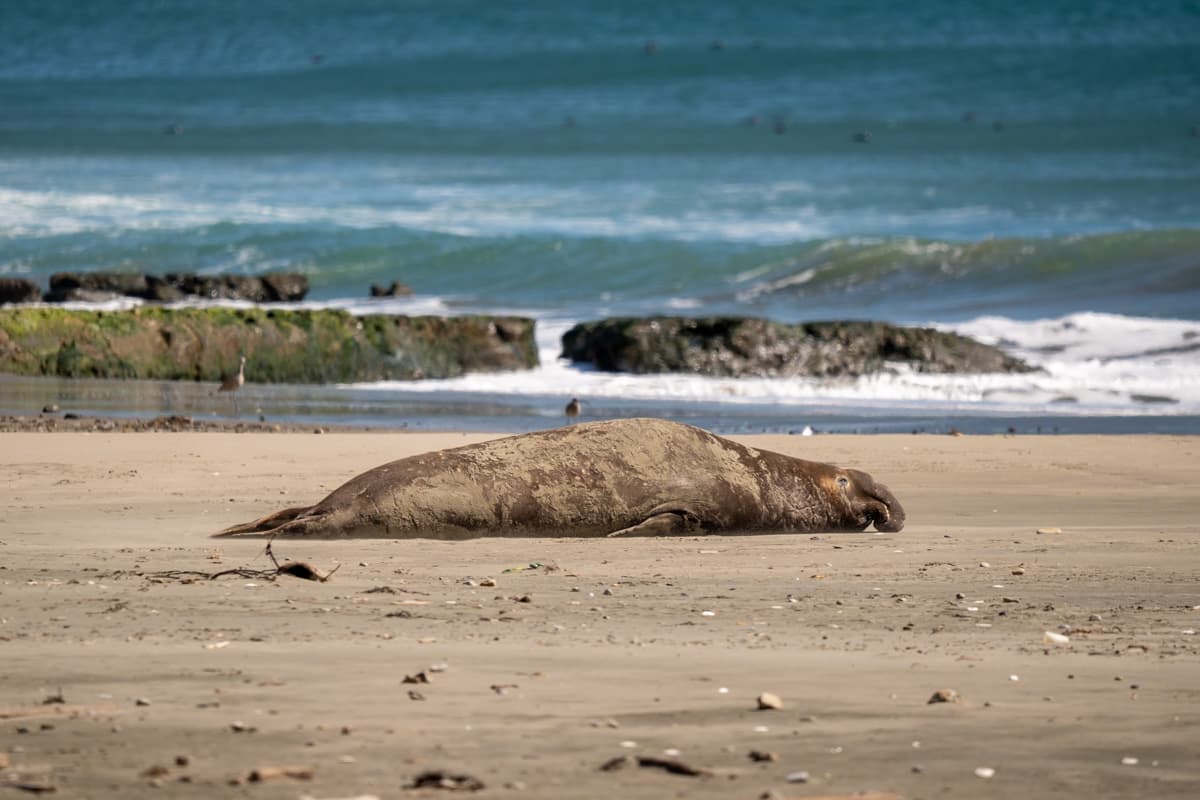
Even if there doesn’t happen to be any elephant seals during your visit, Drakes Beach is still worth a visit, with dramatic sandstone cliffs and gentler waves than most of the other beaches in Point Reyes (you’ll still need to exercise caution if playing near the water!).
2. Hike the Tomales Point Trail
Justin and I spent several weeks driving the entirety of Highway One and, after doing LOTS of hikes along the California coast, the Tomales Point Trail is still, BY FAR, our favorite hike.
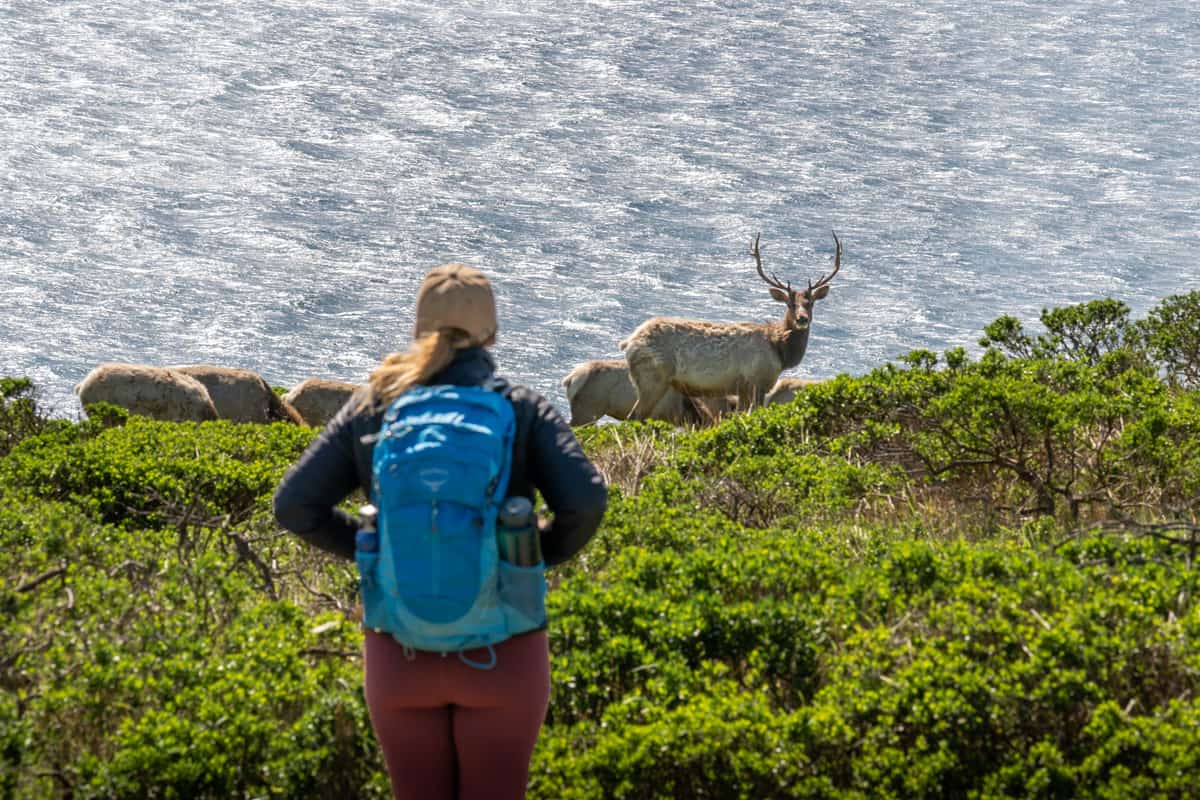
On this trail, you’ll hike along a coastal bluff on the Point Reyes Peninsula to its northernmost point, passing spectacular views of dramatic cliff sides, sea stacks, and untouched beaches. More importantly, you’ll hike through a special protected reserve, where over 300 tule elk live!

If you’re not familiar with tule elk, they’re actually the smallest species of elk in North America and are only found in California. In fact, Point Reyes is the only National Park Service unit where tule elk live!
Here are some quick stats on the hike:
- Length: 9.6 miles
- Elevation gain: 1,204 feet
- Difficulty: Moderate
- Dog-friendly? No, dogs are not allowed on the trail.
- Trail map
We spotted SO many elk on this trail, plus, we were blown away by the gorgeous views of the Pacific pretty much the entire hike!
3. Walk under the Cypress Tree Tunnel
Wandering under the cypress tree tunnel may be one of the most iconic things to do in Point Reyes, given how Instagram-famous this spot has become over the last few years.
The trees, planted back in 1930, are Monterey cypress, a unique species that is only natively found in two spots on the entire planet (both in Northern California!). They’re uniquely adapted to windy and damp coastal conditions here.
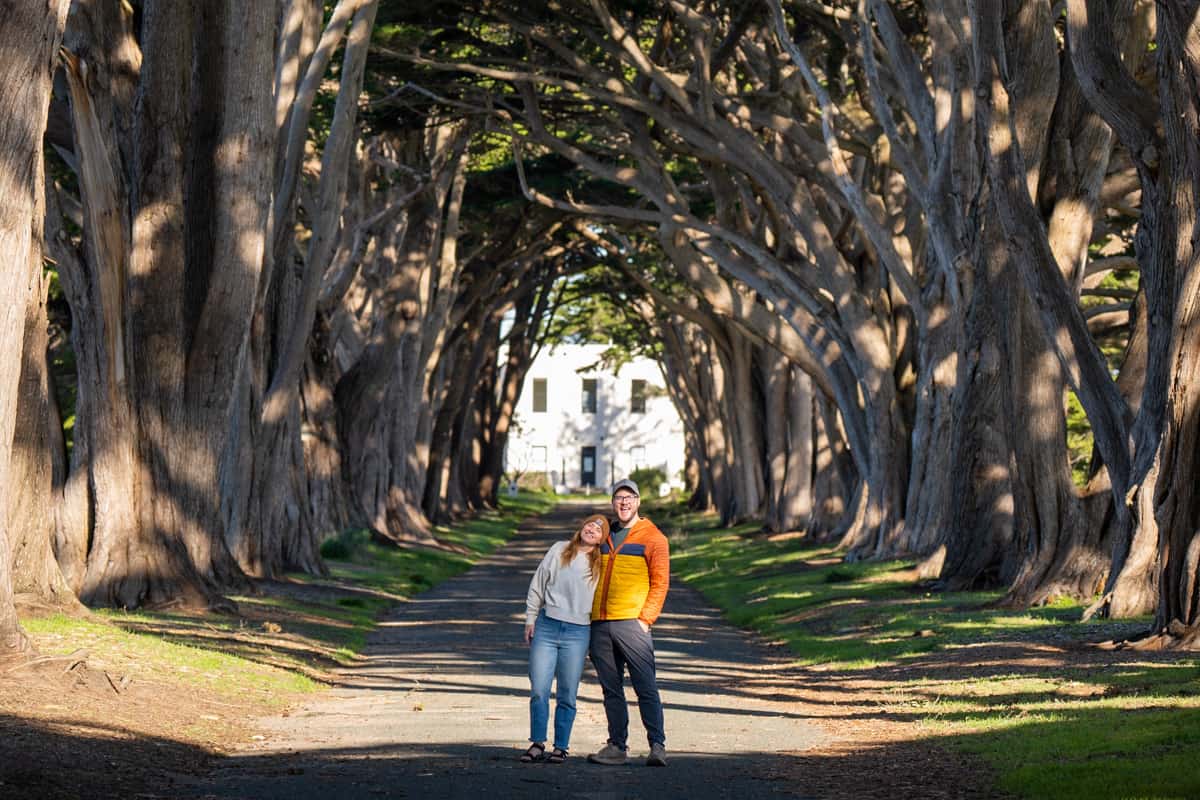
Over the years, the windswept trees grew to frame a short road that leads to the KPH Maritime Radio Receiving Station.
This Art Deco-style building facilitated ship to shore communication, using Morse code, for most of the 20th century. The Radio Receiving Station is no longer operational, but it is open to the public, from 12-4 PM every Saturday, with some interesting exhibits about the history of early maritime communications.
If you’d like to visit the cypress tree tunnel, keep your eyes peeled for a sign that says “North District Operations Center” along Sir Francis Drake Road. There’s a small pull-off on the northern side of the road to park.
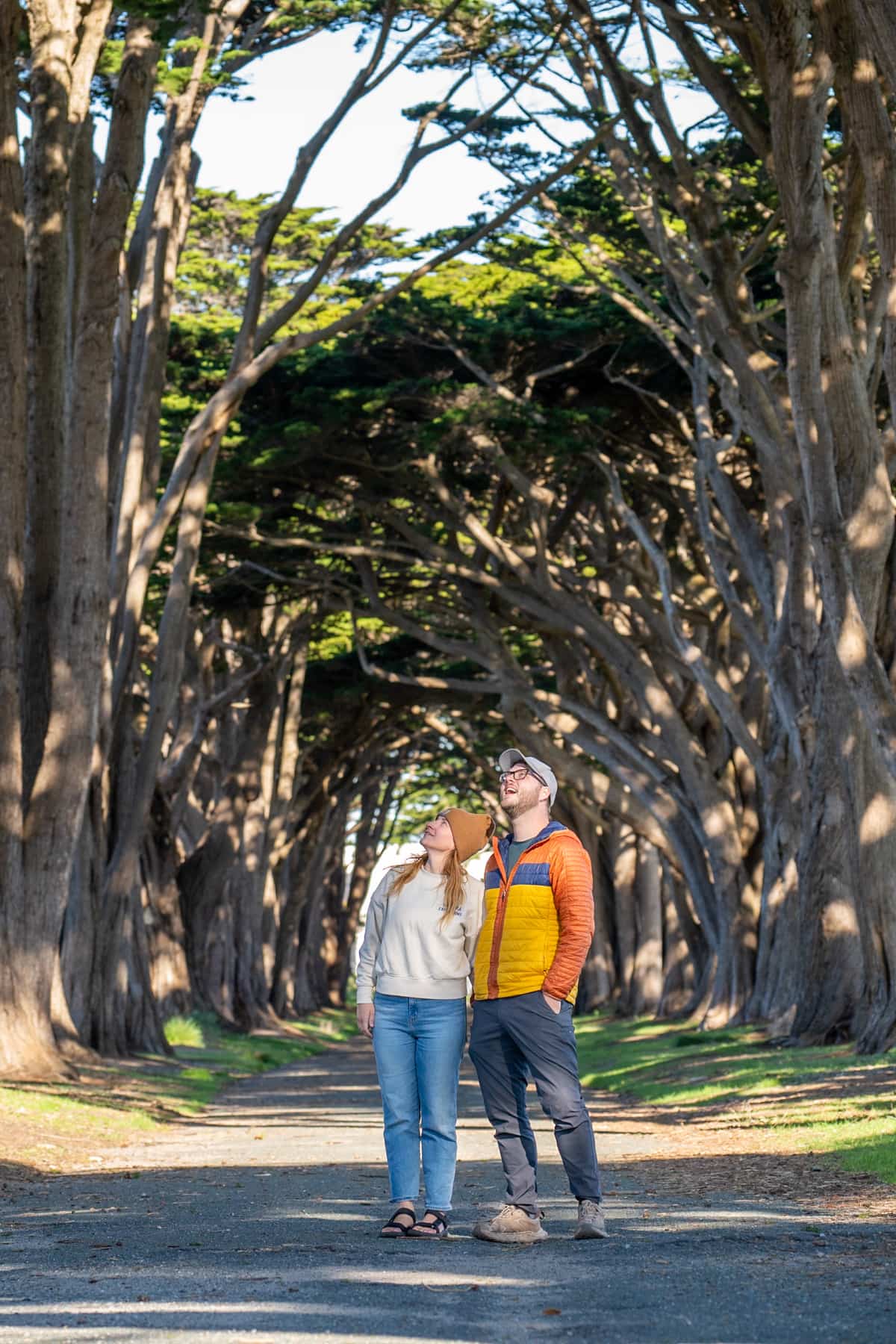
The most popular time to photograph the tunnel is at sunset, when soft glowy light peeks through the trees’ gnarled branches. The tunnel looks absolutely stunning at this time, but be prepared to share the area with LOTS of other photographers!
We visited mid-morning on a weekday and had the tunnel all to ourselves!
4. Visit the Point Reyes Lighthouse
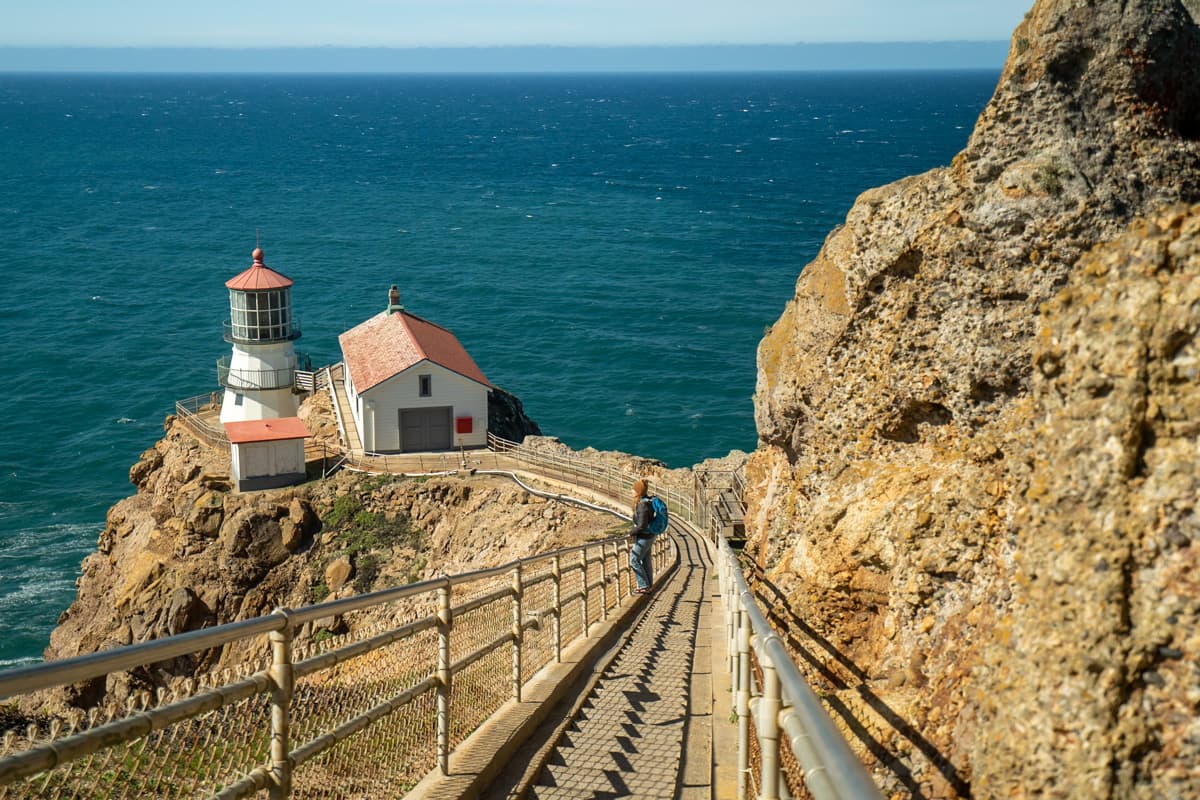
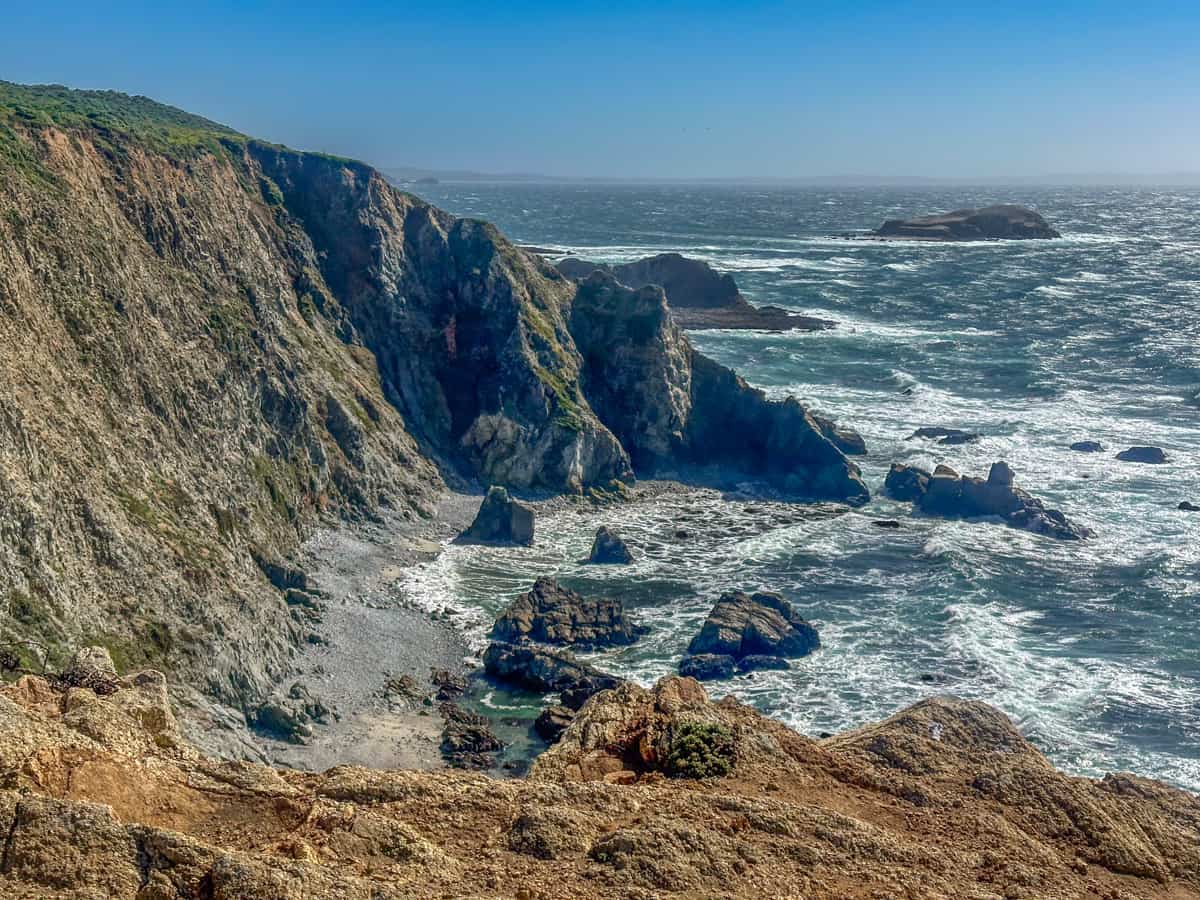
Point Reyes is home to one of the most picturesque lighthouses in California, located down a steep and rugged bluff on the southwestern side of the Point Reyes Peninsula.
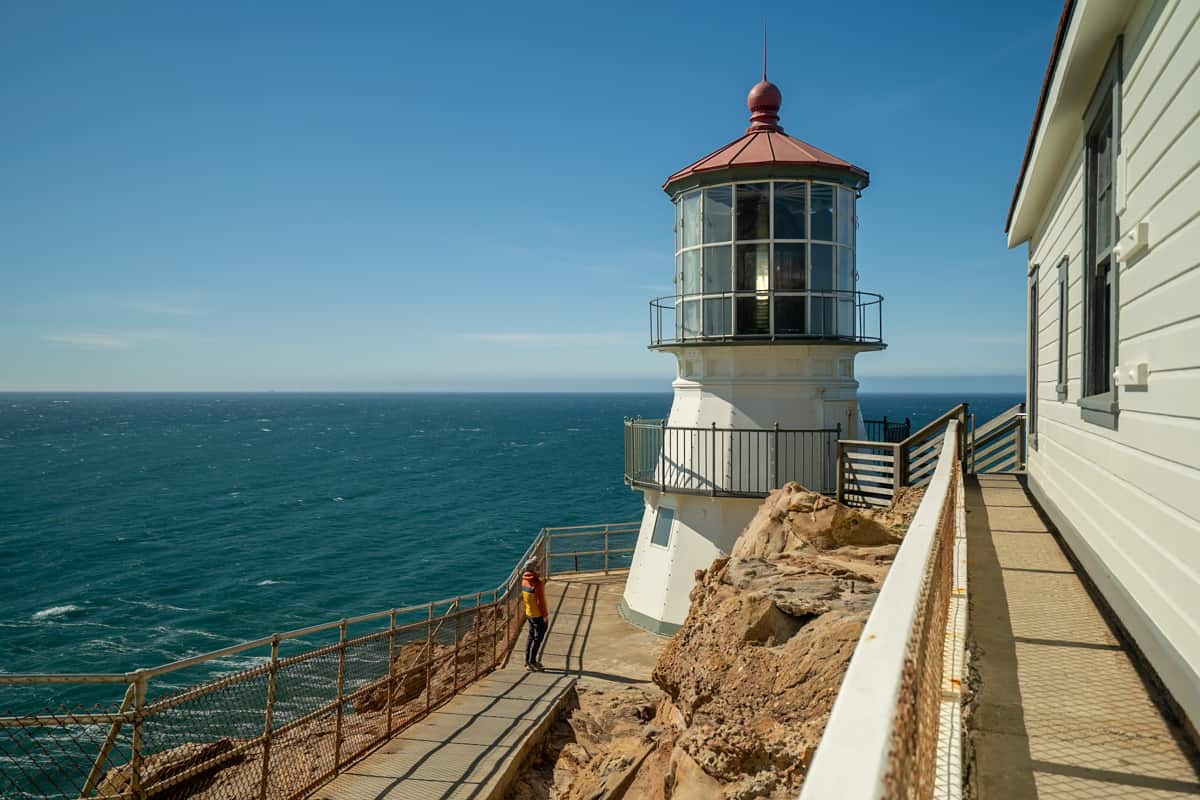
The Point Reyes Lighthouse was built in 1870 to warn passing ships about the surrounding headlands and continued serving as a navigational tool until it was decommissioned in 1975. Since then, it’s been under the management of the National Park Service, to help preserve this unique historical landmark.
To reach the lighthouse, you’ll need to park here and walk about half a mile uphill along a paved path.
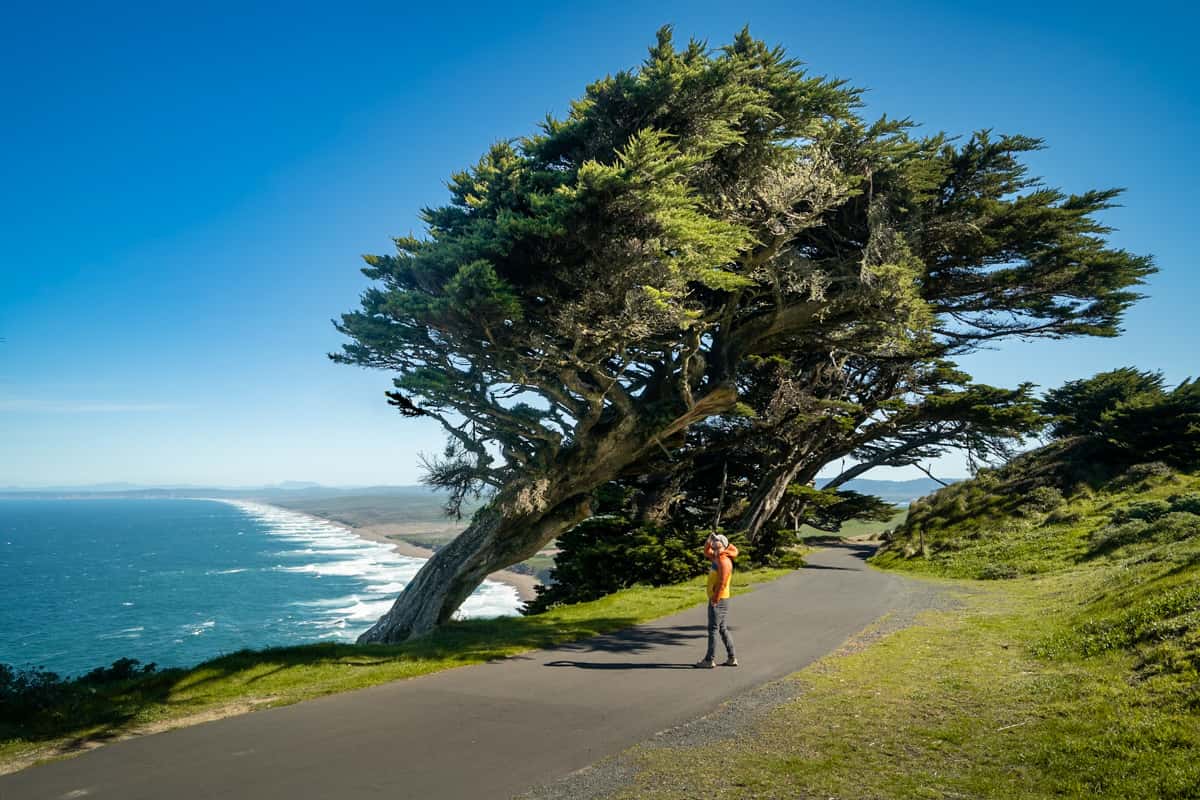
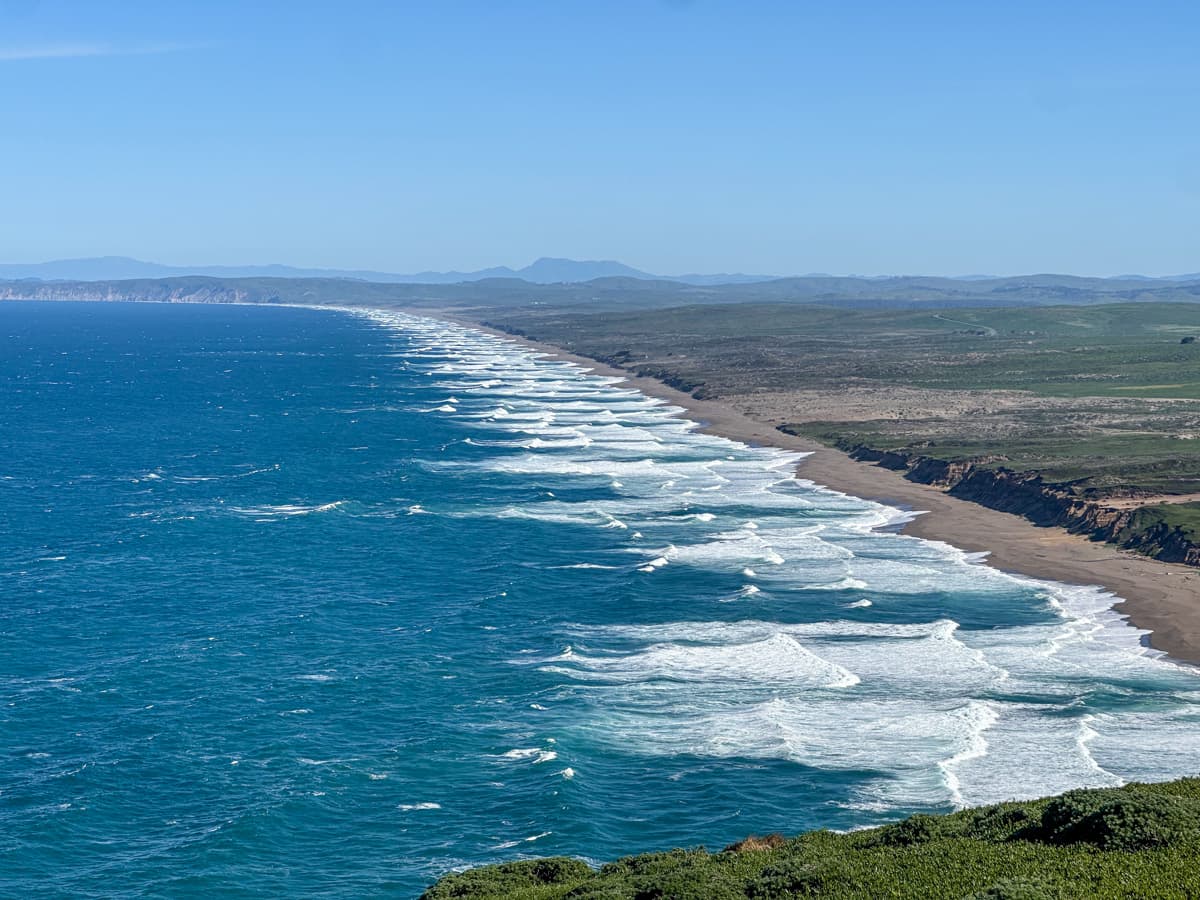
There are several points of interest as you climb along this pathway. For example, the South Beach Overlook provides sweeping views of an 11 mile stretch of beach that serves as the home to an elephant seal colony, in addition to some spectacular examples of “leaning trees”. Point Reyes is recognized as the windiest place on the Pacific coastline (and one of the windiest places in the world!), so, over the course of decades, the trees here have become so windswept, they’ve started growing sideways!
At the top of your climb, there’s a small visitor center with exhibits about the lighthouse’s history and some of the wildlife that you might spot along the way (open Thursdays through Monday, from 10 AM to 4 PM).
When the visitor center is open, the 330 stairs that lead down to the lighthouse are also typically open to visitors, so long as the winds don’t exceed 40 miles per hour (I told you it was windy here!!).
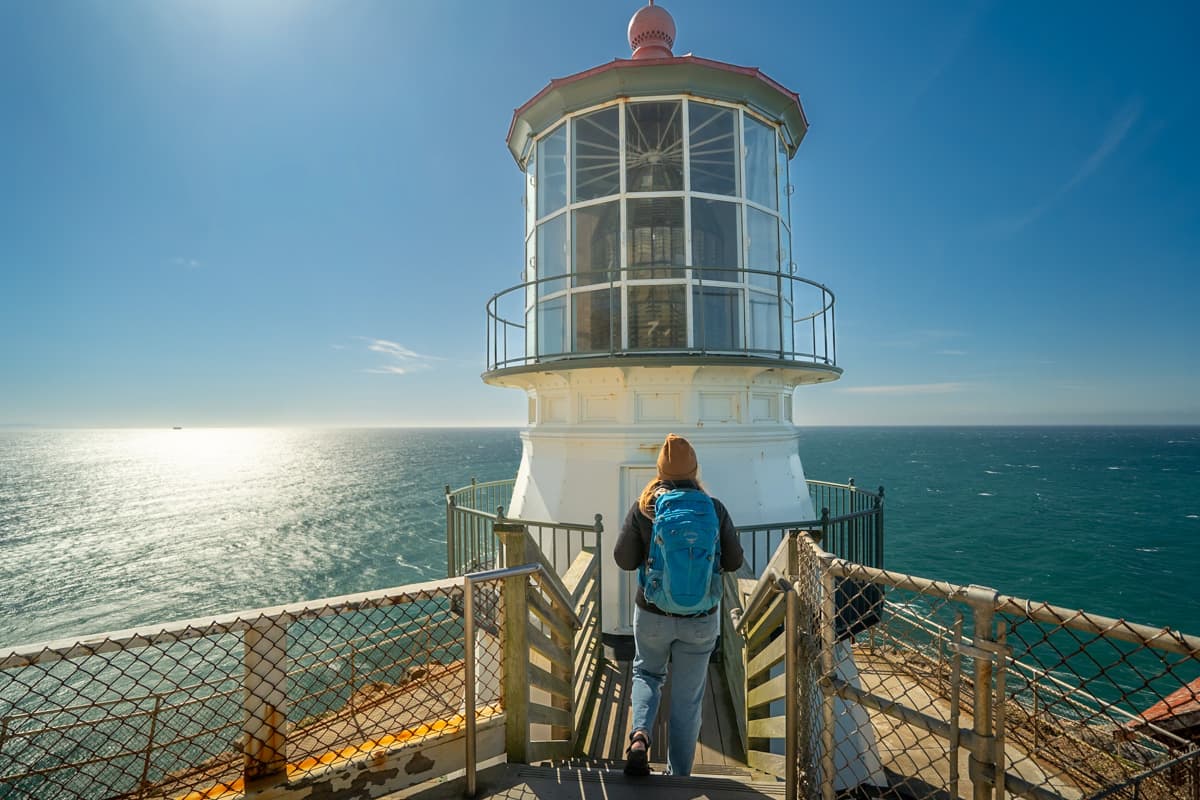
We really enjoyed climbing the stairs, searching for whales out in the surrounding water, and exploring around the lighthouse.
Just remember that you have to climb back up the stairs when you’re done, so bring plenty of water with you!
5. Hike the Elephant Seal Overlook Trail
While you’re visiting the Point Reyes Lighthouse, it’s worth stopping at the nearby Elephant Seal Overlook Trail, a flat, 0.25 mile (one-way) pathway. It ends with a viewpoint, which, true to its name, overlooks the elephant seal colony on Drakes Beach.
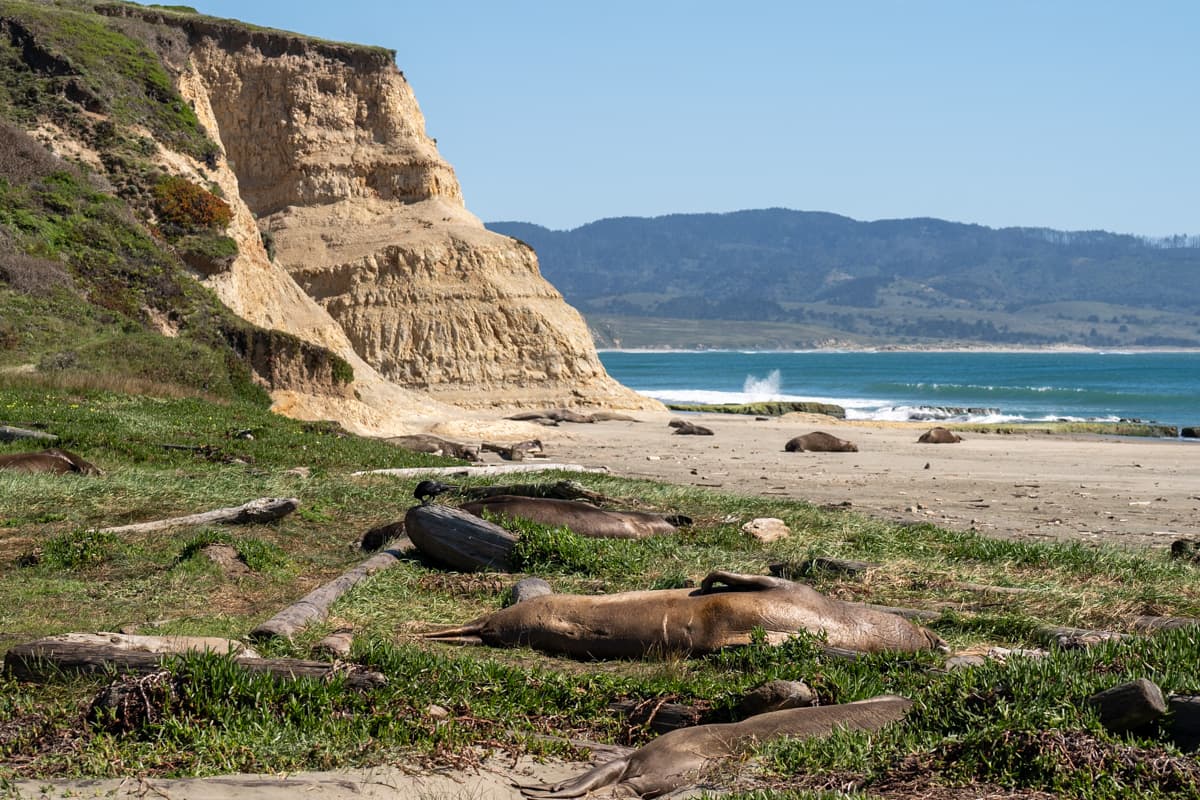
From our experience, you’ll definitely get closer views of the elephant seals from the parking lot for Drakes Beach, but this overlook provides you a more expansive view of the beach below and the surrounding sea cliffs, plus a better vantage point to spot any grey whales that might be migrating past. Bringing along a pair of binoculars is always a good idea!
6. Hike the Chimney Rock Trail
One of the most popular things to do in Point Reyes is to hike the Chimney Rock Trail, a mostly flat, 1.8 mile trail that follows a narrow ridgeline out to the eastern tip of the peninsula.
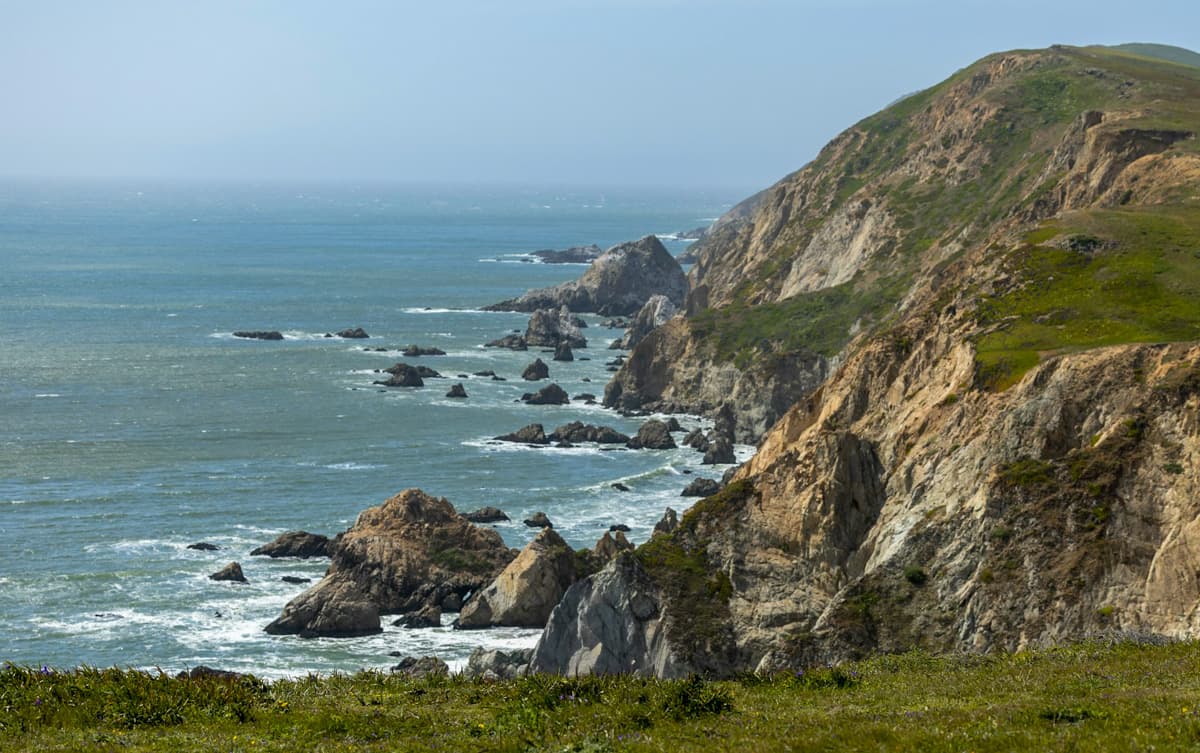
Along the way, you’ll get sweeping views of the Pacific, springtime wildflowers, and, if it’s anything like our visit, SO much wildlife. During our hike, we spotted dozens of elephant seals and sea lions, plus, from March through May, you can usually see some of the HUNDREDS of grey whales that migrate past the peninsula every day.
Be forewarned, if you’re an RVer, like us—vehicles longer than 24 feet are not allowed to drive on the narrow and windy road to the parking lot.
We happened to be towing our trailer when we visited, and a ranger was nice enough to let us leave it in the lighthouse’s parking lot, so that we could access the trailhead with our SUV. However, he specifically said this wouldn’t be allowed if we were visiting during a busier time, so leave your RVs at home for this one!
7. Walk along the San Andreas Faultline
One of the reasons that Point Reyes is protected as a National Seashore is its unique geological features, given that it’s located where the North American and Pacific tectonic plates grind against one another.
The best place to learn more about this process is along the Earthquake Trail, a short, paved pathway that offers tons of educational signage about several earthquakes that have happened here and the geological forces that caused them. You can actually see a fence that demarcates where the ground shifted a whopping 16 feet during the 1906 earthquake!
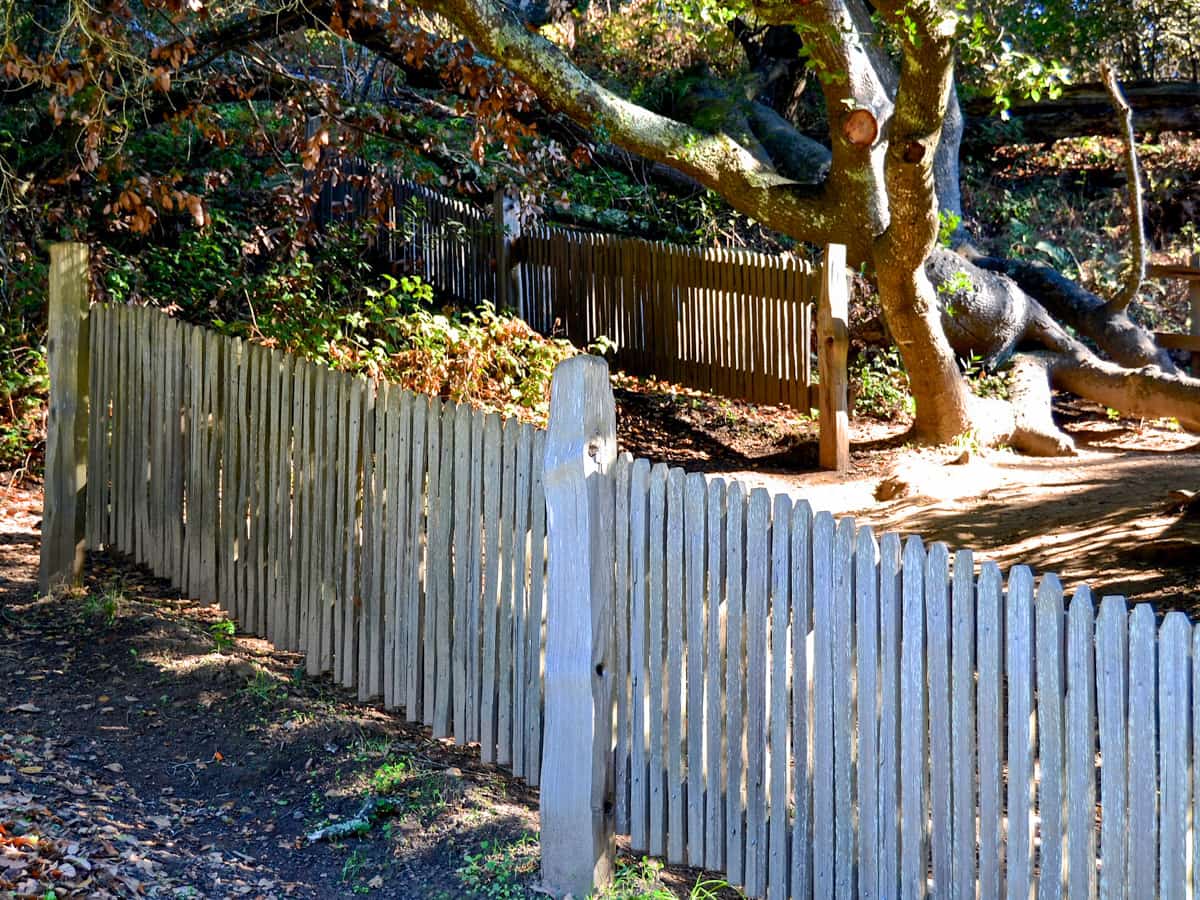
Unlike most of the other trails in Point Reyes, there’s limited coastal views here, but, if you’re a geology nerd or traveling with kiddos, this is a great option to learn more about what makes Point Reyes so special.
8. Enjoy some beach time at Limantour Beach
Listen, I would not recommend busting out your bikini for any of the beaches in Point Reyes.
But, if you are interested in wading in the (very chilly!) water or just relaxing on the beach, my go-to recommendation would be Limantour Beach, a wide, sandy expanse that stretches for four miles.
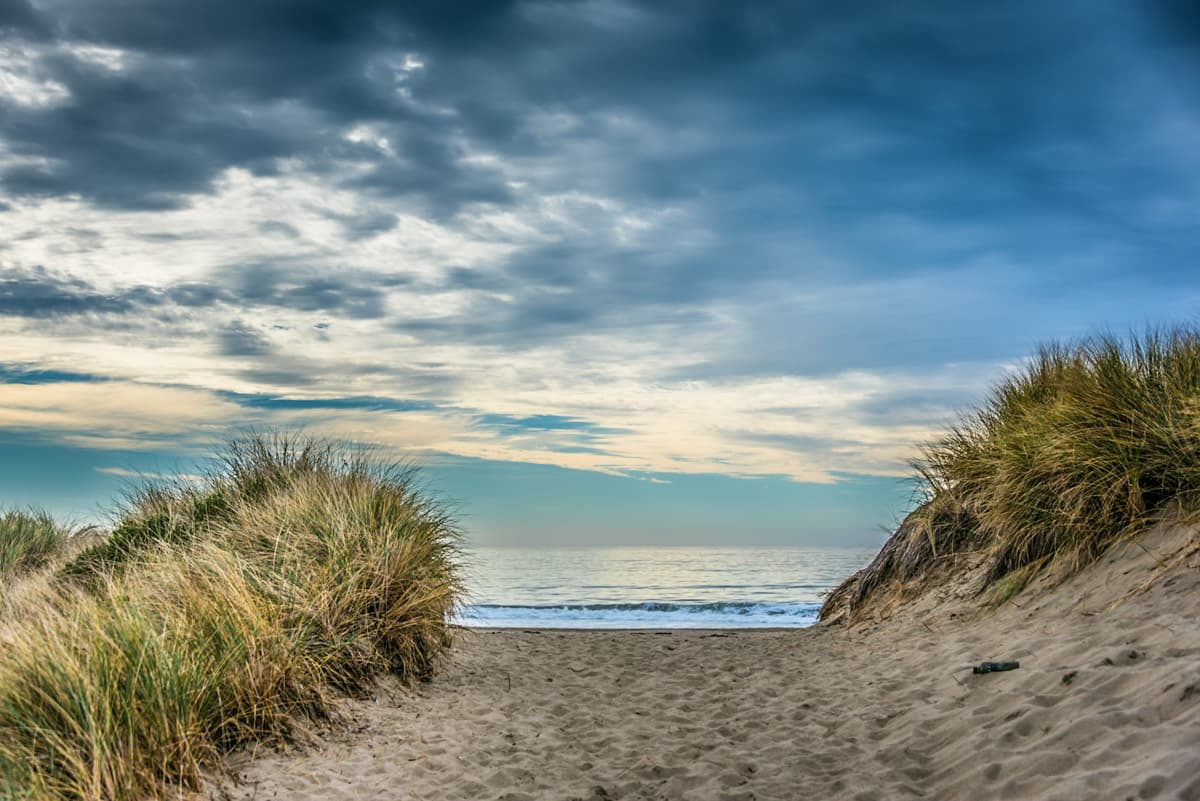
Due to its location in the relatively protected Drakes Bay, the waves are much calmer than most of the other beaches in Point Reyes (although you absolutely still need to exercise caution!).
If you’re a wildlife lover, I’d suggest walking west along the beach for a couple of miles to the mouth of Drakes Estero, where you can see seabirds and, oftentimes, harbor seals, playing in the water.
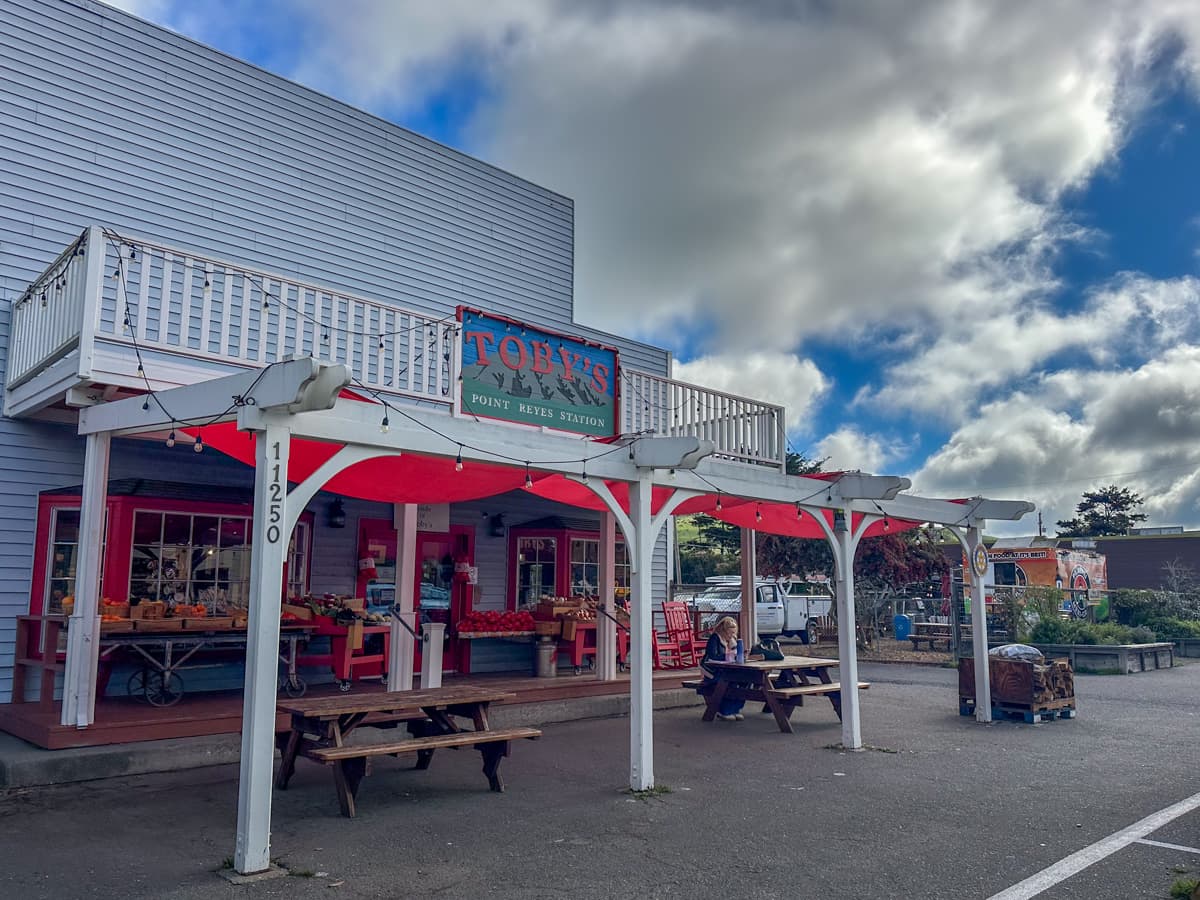
9. Explore Point Reyes Station
While you’re heading to the National Seashore, it’s absolutely worth stopping in Point Reyes Station, a teeny town of less than 1,000 residents, directly east of the preserve.
The town looks like something out of a Nancy Meyers or Hallmark movie, with early 20th century coastal buildings that house independent bookstores and bakeries. It’s the perfect place to stop to get lunch or dinner after exploring Point Reyes.

Some of our favorite stops are:
- Bar Auklet: The best restaurant in town, if you ask us, with fresh and locally-sourced seafood and creative offerings, like stone fruit poke.
- Heidrun Meadery: A local meadery, with grounds that are bursting with local wildflowers. You can enjoy a guided tasting of house-made meads for $25 or simply pick up a glass or bottle to enjoy on their beautiful patio. If you really want to learn more about the meadery, they also offer guided tours of their farm and production facility, every Saturday at 11:30 AM ($54 per person).
- Brickmaiden Breads: If you just want to grab a cup of coffee and a pastry before hitting Point Reyes, this would be our go-to recommendation, with artisanal croissants, scones, cakes, cookies, and more!
10. Snap a photo of the Point Reyes Shipwreck
As you’re driving to Point Reyes National Seashore, you’ll drive through another teeny town, Inverness. The town has a handful of galleries and stores, but the most notable thing here is actually the shipwreck of the SS Point Reyes, a 19th century cargo ship.
“Shipwreck” is probably the wrong word for the ship. The land’s previous owner dragged the boat onshore from Tomales Bay, with hopes of fixing it up, but eventually abandoned it. Officials were planning on removing the decaying boat, but local photographers with a keen eye advocated for it to stay put—and it’s been an Inverness landmark ever since!
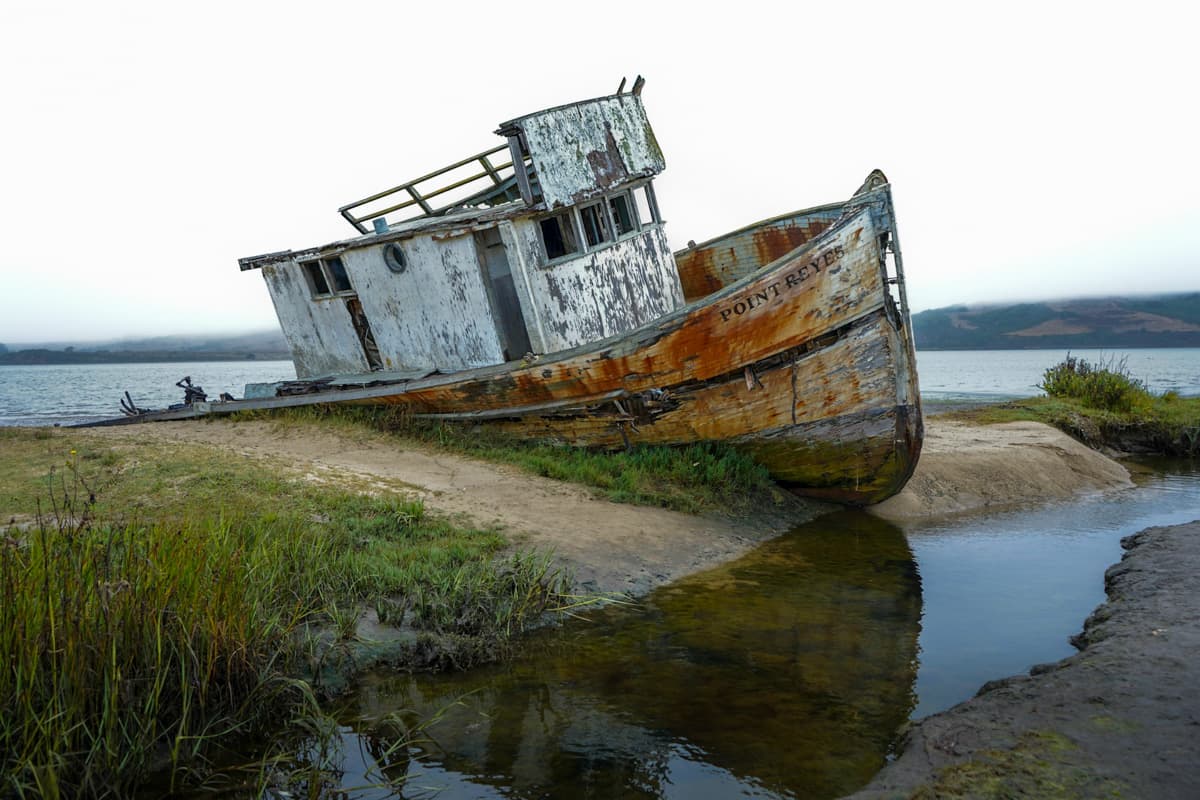
Pick up a sandwich for the day at The Inverness Store and, afterwards, wander behind the store to see the wreck for yourself.
The best time to visit is during low tide, when you can wander relatively close to the ship (you can see a tide chart here). Just don’t climb on it, as the structure is rotting and, frankly, dangerous!
Where to stay near Point Reyes National Seashore
For being a little over an hour north of San Francisco, Point Reyes National Seashore feels surprisingly remote, with nothing but teeny coastal towns surrounding it. Still, there are plenty of places to stay for a serene getaway from the bustling Bay Area, like:
Tomales Bay Lodge and Marina
This waterfront lodge, located in Inverness, is one of the closest accommodation options to the National Seashore and, in my opinion, one of the best options to feel immersed in the unique culture of the Northern California coastline. The property has a pool that’s basically inside the marina itself, plus other cool amenities, like a private beach, rooms with balconies and fireplaces, and a stunning sun deck, with views of Tomales Bay.
Lodge at Marconi
Located in the cute town of Marshall (and actually inside of Marconi State Historic Park) on the eastern coast of Tomales Bay, this lodge kind of feels like an adult summer camp, with a huge outdoor firepit that guests tend to gather around in the evenings, lawn games, and a location that’s hidden amongst the pine trees. Most of the lodges we’ve stayed at in state parks are on the dated side, but the Lodge at Marconi feels distinctly modern, with a trendy bar and restaurant onsite and an Instagrammable A-frame cabin that’s available to rent.
Olema House at Point Reyes
This boutique hotel has some very luxurious touches, like jetted tubs, a complimentary bottle of wine upon check-in, and rooms with terraces or balconies. Despite having more upscale vibes, the property still manages to mix in plenty of cozy touches, like a large communal firepit (that you can roast s’mores over, provided at reception) and Adirondack chairs next to a babbling creek.
How to get to Point Reyes National Seashore
Point Reyes National Seashore is located a little over an hour from San Francisco International Airport or Oakland San Francisco Bay Airport or about an hour and a half from San Jose Mineta International Airport.
If you happen to be flying in for your visit, I’d suggest renting a car, as there’s no public transit to get to or around Point Reyes.
The National Seashore is the PERFECT road trip stop and is actually located right off Highway One, otherwise known as the iconic Pacific Coast Highway. Justin and I stopped here for a few days, while driving the entirety of Highway One, along with lots of other cool stops, like Channel Islands, Solvang, Big Sur, and Mendocino.
I must say, though, Point Reyes was definitely one of our favorite stops along the way!
When to visit Point Reyes National Seashore
Point Reyes is pretty great to visit year round, but there are some seasons that may make for a more pleasant visit than others.
Fall is arguably the best season to visit Point Reyes, with warm, clear weather. The tule elk are also extremely active during this time, given it’s their mating season, so there’s a good chance you’ll see (and hear!) them, running and bugling around.

Winter brings the most precipitation, but, if you’re able to avoid the rainy days, you’ll be rewarded with pleasantly cool and clear weather. Plus, the rolling hills of the headlands are typically lush and green during this time of year. I’d just suggest bringing proper waterproof hiking boots (like this pair that Justin uses or this pair that I use), given the trails can get super muddy.
Additionally, winter can be an excellent time to spot wildlife, with migrating grey whales from mid-December through January and elephant seals from January and February.
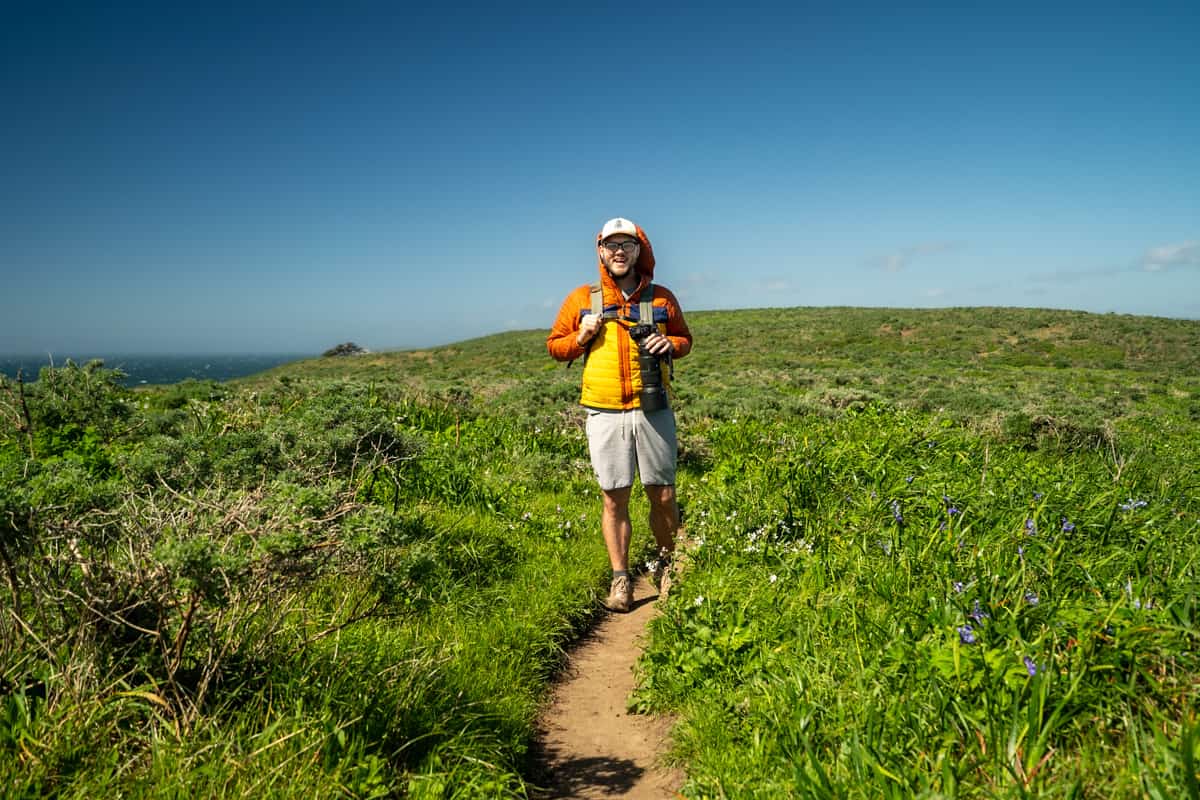
Springtime is also a contender for the best time to visit Point Reyes, with blooming wildflowers, abundant wildlife, and clear weather. We visited in March and LOVED it—the colorful wildflowers made the coastal views along the hiking trails that much more spectacular, plus we lucked out with cool, but pleasant temperatures for outdoor adventures.
Summer is actually, by far, the worst time to visit Point Reyes, due to the cloudy and foggy conditions that typically cover the coastline and obscure the spectacular views during this period (i.e., the infamous “June Gloom”). If you do visit during the summertime, I’d suggest visiting in the afternoon, when the marine layer has a chance to burn off.
There you have it—all the coolest things to do in Point Reyes National Seashore, which we think is such a hidden gem in California! Do you have any questions about visiting Point Reyes? Let us know in the comments below!
